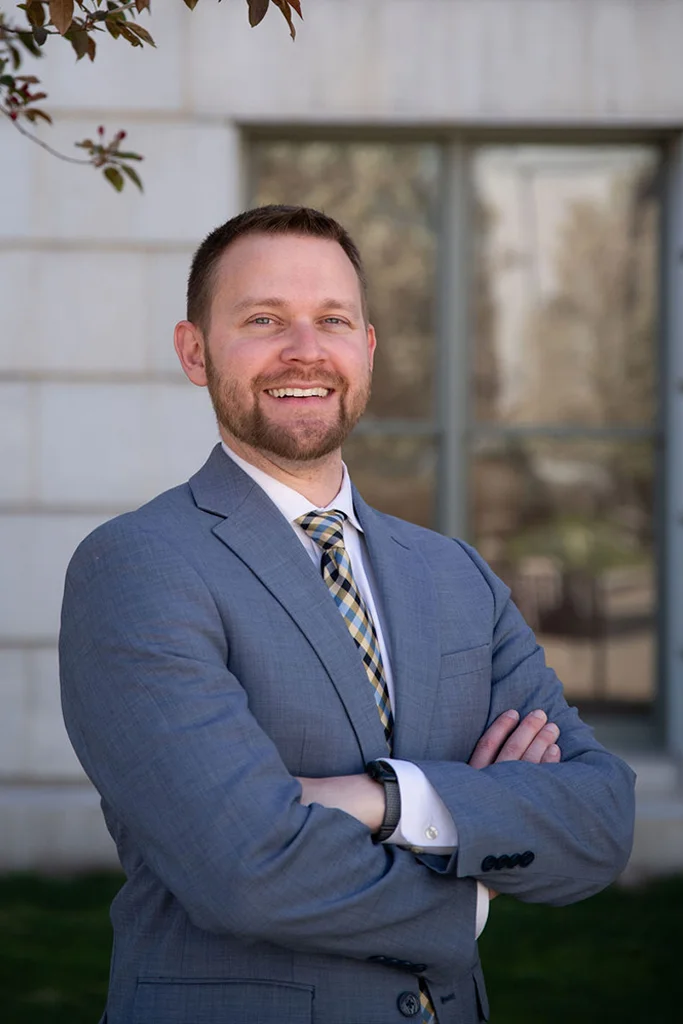
Wellington DUI Defense Lawyer
A traffic stop on Frontage Road or near Sixth Street can spiral into a DUI arrest faster than most people expect. One moment you are pulling over for a broken tail light or a lane drift, and the next you are sitting in the back of a Larimer County sheriff’s vehicle watching an officer fill out paperwork that will follow you for years. Wellington DUI defense lawyer Reid DeChant understands how disorienting that experience is, and he knows what it takes to build a defense that actually holds up when the case goes before a judge or jury.
Wellington sits in Larimer County, where the combination of agricultural routes, Fort Collins commuter traffic, and Interstate 25 creates a regular pattern of DUI enforcement. The Larimer County Sheriff’s Office and Colorado State Patrol both run patrols through the corridor, and the results feed into a courthouse system in Fort Collins where prosecutors take impaired driving seriously. Local geography matters. Local enforcement habits matter. A defense built around Wellington’s specific context is different from a generic DUI defense pulled from a template.
Reid DeChant built his practice on exactly this kind of precision. Before opening DeChant Law, he worked as a public defender handling high volumes of criminal cases in Denver, Broomfield, and Adams County courtrooms. He has tried DUI and DWAI cases through verdict, challenged DMV Express Consent hearings, and earned dismissals at both the criminal and administrative levels. That record is what you want standing between you and a conviction.
What a Wellington DUI Arrest Actually Triggers
Colorado’s DUI system has two parallel tracks running at the same time. One is the criminal case. The other is a DMV administrative proceeding that can revoke your driver’s license independently of whatever happens in court. Most people focus entirely on the criminal side and do not realize the DMV hearing has its own deadline, its own rules, and its own consequences.
When an officer arrests you for DUI or DWAI in Wellington, the Express Consent law requires you to submit to a chemical test of your blood or breath. If you refuse or if your test result meets the threshold for a per se violation, the DMV will move to revoke your license. You typically have a short window after the arrest to request a hearing to contest that revocation. Miss that window and the revocation proceeds automatically. Reid has earned dismissals in Express Consent DMV hearings on grounds including improper advisements, failure to administer the chemical test within the required timeframe, and procedural errors by the arresting officer. These are not minor technicalities; they reflect real enforcement failures that the law accounts for.
On the criminal side, the charge you face depends on your blood alcohol content and your history. DUI carries stiffer consequences than DWAI, and repeat offenses escalate penalties substantially. A third DUI conviction in Colorado carries mandatory jail time, a longer license revocation, and the possibility of felony charges depending on prior history. Even a first offense can mean fines, probation, community service, alcohol education classes, and the installation of an ignition interlock device. The consequences extend beyond the sentence itself. A DUI conviction on your record affects employment applications, professional licenses, and in some cases immigration status.
Why DeChant Law Is the Right Call for Wellington DUI Charges
Reid DeChant’s background separates him from the typical private defense attorney in ways that matter specifically in DUI cases. His time as a public defender meant handling an enormous caseload across multiple jurisdictions, including cases that went to trial. Trial experience is not a credential to take lightly. A DUI attorney who has never stood in front of a jury and cross-examined a forensic analyst or challenged a breathalyzer’s calibration records is a fundamentally different advocate than one who has done it repeatedly.
Reid is a graduate of the Trial Lawyers College, the program founded by Gerry Spence that focuses on authentic storytelling, psychodrama, and genuine human connection in the courtroom. In a DUI trial, that training means jurors hear a real person’s story, not a recitation of facts assembled to dispute a blood alcohol number. Juries acquit when they understand and believe the person in front of them. Reid’s approach is built to achieve that kind of understanding.
The firm’s case results reflect this preparation. DeChant Law has secured Not Guilty verdicts at trial in DUI cases in Jefferson County, Douglas County, and Broomfield County, among others. DMV Express Consent actions have been dismissed on multiple grounds, including improper advisements and failure to meet chemical testing deadlines. The firm has also earned outright dismissals in DUI cases across Arapahoe County, Douglas County, and Jefferson County. Past results do not guarantee future outcomes, but they do tell you something about how a lawyer approaches the work.
Reid is a member of the National Association of Criminal Defense Lawyers and the Colorado Criminal Defense Bar, organizations that keep him connected to the most current defense strategies and legal developments in Colorado DUI law.
Common DUI Charges and Situations in the Wellington Area
- Standard DUI (Driving Under the Influence): Colorado law defines DUI as operating a vehicle when alcohol or drugs have substantially impaired the person’s ability to drive, or when a chemical test shows a blood alcohol content at or above the legal threshold. Wellington-area stops often happen on I-25, Sixth Street, and the county roads running between Wellington and Fort Collins during late night and early morning hours.
- DWAI (Driving While Ability Impaired): A lesser charge than DUI but still a criminal offense in Colorado. DWAI applies when impairment, even to a slight degree, is evident but falls below the DUI threshold. Officers may cite field sobriety observations as the primary basis for this charge.
- DUI-Drugs: Charges based on impairment from prescription medications, marijuana, or controlled substances rather than alcohol. These cases often turn on blood test results and the qualifications of the toxicologist who analyzes the sample. Reid has obtained Not Guilty verdicts in DUI-Drug cases at trial.
- Repeat DUI Offenses: Second and third DUI charges carry significantly harsher mandatory penalties in Colorado. A third offense can cross into felony territory depending on prior conviction timing and circumstances. The defense strategy changes substantially for repeat charges, and experience with elevated-charge cases is essential.
- Underage DUI: Colorado applies a lower blood alcohol standard for drivers under 21. UDD (Underage Drinking and Driving) charges carry their own set of consequences, including impacts on driving privileges that matter to younger defendants who rely on transportation for school or work.
- DMV Express Consent Hearings: The administrative revocation process runs separately from the criminal case and has its own hearing procedures. Grounds for dismissal include improper advisement of rights, failure to administer the chemical test within two hours of driving, and errors in the refusal documentation process.
- DUI with Accidents or Injuries: When a DUI arrest follows a collision that caused property damage, injuries, or fatalities, the charges and consequences escalate dramatically. Vehicular assault while under the influence is a felony in Colorado, and the defense must address both the DUI elements and the causation questions tied to the accident.
What to Do After a DUI Arrest in Wellington
The first thing to understand is the DMV deadline. After a DUI arrest in Colorado, you have a limited number of days to request a DMV Express Consent hearing to contest your license revocation. That window is short and missing it means the revocation proceeds without any challenge. Contact a Wellington DUI attorney immediately, before that deadline passes, because requesting the hearing is a separate action from anything that happens in the criminal case.
Do not make statements to law enforcement beyond what is legally required. Anything you say after an arrest can be used in the criminal proceedings. That applies to statements made at the station, to officers at the scene, and to anyone else involved in processing your case. Politely decline to answer questions about where you were drinking, how much you consumed, or how you feel, and ask to speak with a lawyer.
The criminal case will be handled through Larimer County District Court in Fort Collins, located at the Larimer County Justice Center on Laporte Avenue. That courthouse handles DUI cases from Wellington and the surrounding Larimer County communities. The Larimer County District Attorney’s Office prosecutes these cases, and their attorneys are experienced with local enforcement patterns and local judges.
Preserve everything you can from the night of the arrest. This includes any receipts from where you were that evening, names and contact information for anyone who was with you, and any records of what you ate or drank. Write down everything you remember about the stop itself, including what the officer said, whether you were asked to perform field sobriety tests, which tests you did, and how the breath or blood test was administered. These details are the raw material a DUI defense attorney in Wellington uses to identify the arguments that fit your specific situation.
Do not drive on a revoked license while your case is pending. A separate traffic violation during the pendency of a DUI case compounds your problems significantly and signals to prosecutors and judges that you do not take the proceedings seriously.
Questions Wellington Residents Have About DUI Cases
What is the difference between DUI and DWAI in Colorado?
DUI requires proof of substantial impairment or a blood alcohol content at or above the legal per se threshold. DWAI requires proof of impairment to even the slightest degree, which can be established at lower blood alcohol levels. Both are criminal offenses, but DUI carries heavier penalties. Some cases begin as DUI and are negotiated down to DWAI, which is why the strength of the evidence at the beginning of the case matters so much.
Can I refuse the chemical test in Colorado?
Colorado’s Express Consent law means that by driving on public roads, you have already consented to chemical testing if lawfully arrested for DUI. Refusing the test does not make the case go away; it triggers an automatic license revocation and can be used as evidence of consciousness of guilt in the criminal case. The question of what to do in that moment is one worth discussing with a defense attorney before you ever find yourself in that situation.
What happens to my driver’s license after a DUI arrest?
Your license faces two separate threats. The DMV can revoke it through the administrative Express Consent process, and the criminal court can restrict or revoke it as part of a conviction. The DMV action moves independently and on its own timeline. Requesting a hearing promptly is the only way to contest that revocation before it takes effect.
How long does a DUI case in Larimer County typically take?
A straightforward first-offense DUI might resolve in a few months if it goes to a plea. Cases that involve contested hearings, suppression motions, or trial preparation take considerably longer, sometimes more than a year. The timeline depends on the complexity of the evidence, the volume of cases in the Larimer County court system, and whether the case is heading toward a negotiated resolution or a trial.
Will a DUI conviction show up on background checks?
Yes. A DUI conviction in Colorado is a criminal conviction and appears on standard background checks. This affects employment applications, professional license renewals, housing applications, and in some circumstances immigration status. Keeping a conviction off your record, whether through dismissal, a not guilty verdict at trial, or a deferred judgment arrangement, is worth pursuing aggressively for exactly this reason.
Can a DUI affect my commercial driver’s license?
A DUI or DWAI conviction triggers consequences for CDL holders that are more severe than those applied to standard license holders. Federal regulations set lower blood alcohol thresholds for commercial vehicle operation, and a conviction can result in CDL disqualification that affects your livelihood directly. This makes the stakes of a Wellington DUI case particularly high for professional drivers in the agricultural and freight industries common in Larimer County.
What if the field sobriety test was conducted improperly?
Standardized field sobriety tests must be administered according to specific protocols developed by the National Highway Traffic Safety Administration. Deviations from those protocols affect the reliability of the results and can form the basis for a challenge at trial or in a suppression hearing. Officers who administer the tests incorrectly, on improper surfaces, without accounting for physical limitations, or without following the exact instruction sequence may have produced results that should not be admitted.
Can a DUI charge in Colorado affect a professional license?
Colorado licensing boards for professions including nursing, teaching, law, real estate, and commercial transportation all have their own rules about criminal convictions. A DUI or DWAI conviction may trigger a reporting obligation and a licensing board review. The outcome varies by profession and by the specific circumstances of the case. Anyone holding a professional license should treat a DUI charge as a professional licensing issue as well as a criminal defense matter.
What is an ignition interlock device and when is it required?
An ignition interlock device is a breathalyzer installed in your vehicle that requires a clean breath sample before the engine will start. Colorado law requires interlock installation as a condition of license reinstatement following certain DUI convictions and, in some cases, as a condition of a restricted license during the pendency of the case. The device comes with ongoing costs and monitoring requirements that continue for a defined period after reinstatement.
Is it possible to get a DUI dismissed in Colorado?
Yes. DeChant Law has obtained outright dismissals in DUI cases across multiple Colorado counties, in addition to Not Guilty verdicts at trial and DMV Express Consent dismissals. Dismissals happen for various reasons, including unlawful stops, improper arrest procedures, constitutional violations, evidentiary problems with chemical test results, and failures in the chain of custody for blood samples. Whether dismissal is achievable depends on the specific facts of your case, which is exactly why early review of those facts by a Wellington DUI attorney matters.
Serving Wellington and the Broader Larimer and Weld County Region
DeChant Law represents clients facing DUI and DWAI charges throughout northern Colorado and the surrounding region. From Wellington itself, we serve clients in Fort Collins, Timnath, Windsor, Severance, and Eaton to the east. We represent clients in Loveland, Berthoud, and Longmont to the south, as well as those living in the communities along the I-25 corridor including Johnstown, Milliken, and Mead. Clients in Greeley and Evans in Weld County turn to our firm as well, as do those in smaller communities including Pierce, Ault, and Nunn that sit in the agricultural stretch east of Wellington. Whether the arrest happened on a county road outside of town, at a checkpoint near the Fort Collins border, or on the interstate itself, we are familiar with the enforcement patterns and court systems that handle these cases across the region. The drive to Fort Collins for a Larimer County court appearance is one many of our Wellington clients make alongside us.
Wellington DUI Attorney Ready to Review Your Case
The window after a DUI arrest is short and the decisions made during that window are consequential. A Wellington DUI attorney from DeChant Law can review the circumstances of your stop, identify the arguments that apply to your case, and handle the DMV Express Consent deadline before it closes. Reid DeChant brings public defender trial depth, Trial Lawyers College training, and a record of actual dismissals and not guilty verdicts to every DUI case he handles. Call DeChant Law to schedule a consultation and get a clear picture of where your case stands and what can be done about it.