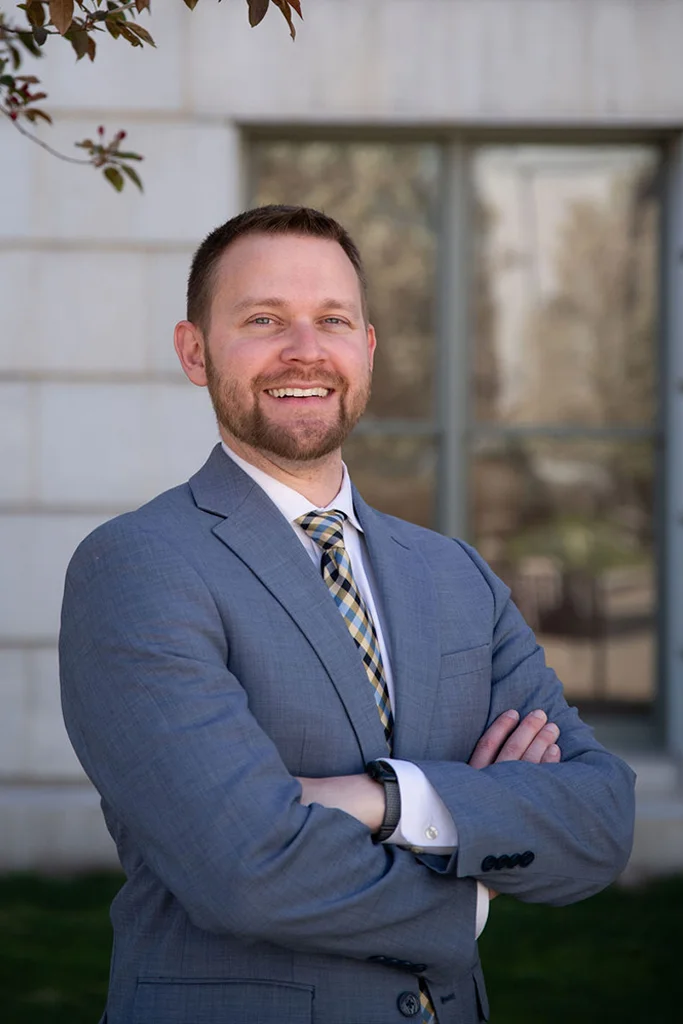
Thornton DWAI Lawyer
A DWAI charge in Thornton carries a different weight than most people expect when they first see it on paper. Colorado’s driving while ability impaired statute sits just below the DUI threshold, but the penalties, the license consequences, and the long-term record implications are real enough to demand serious attention. If you were stopped on I-25 near 104th Avenue, pulled over leaving a restaurant on Grant Avenue, or flagged at a checkpoint near the Thornton Parkway corridor, the charge you’re now facing did not come with a manual. This page exists to fill that gap. Thornton DWAI lawyer Reid DeChant at DeChant Law has handled impaired driving defense in Adams County and the surrounding jurisdictions extensively, and this page explains what you’re actually dealing with and what a defense looks like from the inside.
Colorado defines DWAI as driving when your blood alcohol content registers between 0.05 and 0.079, or when alcohol or drugs have impaired your ability to operate a vehicle to the slightest degree. That last phrase, “to the slightest degree,” is deliberately broad, and law enforcement uses it to charge people who do not meet the DUI threshold. First-time DWAI convictions can result in fines, license points, mandatory alcohol education programs, and potential jail time depending on the circumstances. The charge is a misdemeanor, but it stays on your record and it can escalate dramatically if you have prior traffic or alcohol-related offenses.
Adams County, where Thornton cases are typically filed, runs its criminal court through the Adams County Combined Courts in Brighton. Understanding how that courthouse operates, how local prosecutors approach DWAI cases, and where the defensible weaknesses appear in a typical traffic stop matters enormously when you’re deciding whether to fight the charge or accept a plea. Those decisions belong to you, but you should make them with a full picture of what’s possible.
What a DWAI Case Actually Looks Like in Adams County Court
Most DWAI cases originate with a traffic stop. An officer observes something, a lane drift near the interchange at I-25 and 84th, a wide turn coming off Washington Street, a failure to signal in a parking lot near the Thornton Town Center. The stop itself becomes the foundation of the case, because if the stop lacks legal justification, everything the officer collected during it may be suppressible. That includes field sobriety tests, statements you made, and the chemical test results.
Field sobriety tests are the centerpiece of most DWAI prosecutions because chemical tests frequently show a BAC below the DUI cutoff. The Horizontal Gaze Nystagmus test, the Walk-and-Turn, and the One-Leg Stand were standardized under specific conditions in controlled environments. When officers administer them on uneven road shoulders along Federal Boulevard, in cold temperatures that affect balance, or under the glare of overhead lights that naturally induce eye movement, the results lose their reliability. A Thornton DWAI attorney who understands the technical administration requirements for these tests can challenge whether the officer followed proper protocol and whether the results can be trusted.
Chemical tests in Colorado DWAI cases carry their own complications. The Express Consent law requires that you be advised of specific consequences before a chemical test is administered, and those advisements must be delivered correctly. DeChant Law’s case results include multiple DMV Express Consent actions that were dismissed because of improper advisement delivery, testing administered outside the required two-hour window, or other procedural errors. These aren’t abstract technicalities. They are the legally required conditions that make a chemical test result valid, and when those conditions aren’t met, the test result may not hold up.
Why DeChant Law Handles DWAI Defense Differently
Reid DeChant’s background in public defender work gave him something that private practice alone rarely produces: volume. He defended clients facing traffic offenses, DUI, DWAI, felony charges, assault, and more across Adams County, Denver, and Broomfield County courtrooms before moving to private practice. That kind of caseload means he has cross-examined law enforcement officers more times than many attorneys do across an entire career. He knows how officers describe field sobriety test administration, where their testimony is typically strong, and where it tends to break down under careful questioning.
Reid’s training at the Trial Lawyers College, founded by renowned attorney Gerry Spence, added a dimension that pure courtroom repetition doesn’t deliver on its own. The college trains lawyers to present cases as genuine human narratives rather than technical arguments. That approach shapes how Reid builds a defense. He is not looking only for suppression angles or procedural defects. He is building an account of who you are, what actually happened, and why the prosecution’s version of that night is incomplete or inaccurate.
He holds active membership in the National Association of Criminal Defense Lawyers and the Colorado Criminal Defense Bar, both of which provide ongoing exposure to the latest research on field sobriety testing, breathalyzer reliability, and suppression strategies. For someone facing a DWAI charge in Thornton, those connections translate directly into a defense built on current science and current law, not outdated assumptions about how these cases have to end.
Common Situations That Lead to DWAI Charges in Thornton
- Late-night traffic stops on major corridors: Officers patrol I-25, Washington Street, and Grant Avenue with increased frequency on weekend nights, targeting drivers leaving bars, restaurants, and entertainment venues near Thornton’s commercial strips.
- Post-accident BAC testing: A minor collision anywhere in Thornton can trigger a BAC test even without prior suspicion of impairment. If your reading falls in the DWAI range, you may face both a DWAI charge and civil liability simultaneously.
- Cannabis and polydrug DWAI cases: Colorado’s legal cannabis market has increased the number of DWAI cases involving marijuana, prescription medication, or combinations of substances. The legal standard for drug-related DWAI differs from alcohol-based cases, and the prosecution’s burden is harder to meet when no per se limit applies.
- Checkpoint stops: Adams County conducts sobriety checkpoints that can capture drivers whose BAC falls in the 0.05-0.079 range who might otherwise have continued driving without incident.
- Prior DUI or traffic history escalating the stakes: A DWAI charge that might ordinarily result in a modest fine and education class carries significantly harsher consequences when paired with a prior alcohol-related conviction. Colorado law increases penalties substantially for repeat offenders.
- Express Consent violations and DMV proceedings: Refusing or failing a chemical test in connection with a DWAI investigation triggers a separate DMV action against your driver’s license that runs parallel to the criminal case and requires its own defense.
- DWAI charges involving commercial drivers: CDL holders face federal disqualification thresholds that are far lower than Colorado’s DWAI cutoff. A commercial driver charged with DWAI after a stop anywhere in Thornton faces career consequences far beyond the criminal penalties.
After a DWAI Stop in Thornton: What Matters Most Right Now
The most consequential decisions in a DWAI case often happen in the first 48 to 72 hours after a stop. If you submitted to a chemical test, your reading and the circumstances surrounding the test are already part of the record. If you refused a test, the DMV has likely already initiated a license revocation proceeding. Either way, you have a short window to request a DMV hearing, and missing that deadline generally means automatic revocation of your driving privileges without any opportunity to contest it. Colorado’s Express Consent law ties the hearing request deadline to the date of the notice provided at the time of arrest, so do not assume you have unlimited time.
The criminal case moves on a separate track through Adams County Combined Courts at 1100 Judicial Center Drive in Brighton. Your arraignment will be scheduled there, and that first court appearance is where your plea is entered and where preliminary motions can begin to take shape. Coming to that arraignment without a DWAI defense attorney in Thornton means accepting the court’s framing of your case from the very beginning. That framing favors the prosecution.
In the meantime, document everything you can. Write down where the stop occurred, what the officer said, what you said, whether you were asked to perform field sobriety tests and what the conditions were like. Note the road surface, lighting, weather, and whether you were wearing shoes or had any physical limitation that might have affected performance. This information is most accurate within the first day or two and becomes less reliable as time passes.
One of the most common missteps in DWAI cases is assuming that a BAC below 0.08 automatically weakens the prosecution’s case. It does create a different legal threshold, but Colorado prosecutors still pursue DWAI convictions aggressively, particularly when field sobriety test observations support the charge. Do not mistake the lower chemical test reading for a minor problem. Bring the same commitment to your defense that the prosecution will bring to its case against you.
Questions Thornton Residents Ask About DWAI Charges
What is the difference between DUI and DWAI in Colorado?
DUI in Colorado applies when a driver’s BAC is 0.08 or higher, or when a driver is substantially incapable of safely operating a vehicle due to alcohol or drugs. DWAI applies when the BAC is between 0.05 and 0.079, or when the driver is impaired “to the slightest degree.” The DWAI standard is lower, which means it captures a broader range of situations, but the charge still carries real penalties including potential jail time, fines, license points, and mandatory education requirements.
Will a first DWAI conviction in Colorado stay on my record permanently?
Colorado does not offer an expungement process for adult DWAI or DUI convictions in most circumstances. A conviction becomes a permanent part of your criminal and driving record. This affects insurance rates, professional licensing, employment background checks, and the penalty structure of any future traffic or alcohol-related offense. The permanence of the record is one reason fighting the charge at the outset is worth examining carefully.
Can a DWAI affect my professional license in Colorado?
Yes. Colorado licensing boards for healthcare professionals, teachers, attorneys, financial advisors, and other regulated occupations frequently require disclosure of misdemeanor convictions, including DWAI. Depending on the licensing body, a conviction may trigger a disciplinary proceeding separate from any criminal penalty. If you hold a professional license in any regulated field, discussing your specific licensing board’s rules with a DWAI attorney in Thornton before entering any plea is important.
What happens if I refused the chemical test during my DWAI stop?
Refusal triggers an automatic license revocation under Colorado’s Express Consent law, and the revocation period for a first-offense refusal is longer than the revocation that follows a failed test. You retain the right to request a DMV hearing to contest the revocation, but that request must be made quickly. The criminal case proceeds separately, and the prosecution may argue that your refusal itself reflects consciousness of guilt. A defense attorney can counter that framing while simultaneously contesting the revocation at the DMV level.
Is DWAI a misdemeanor or a felony in Colorado?
A first, second, or third DWAI conviction is a misdemeanor under Colorado law. A fourth conviction, or a DWAI that results in serious bodily injury or death under vehicular assault or vehicular homicide statutes, can result in felony charges. The misdemeanor classification should not create false comfort. Misdemeanor DWAI convictions carry mandatory minimum penalties, points on your license, and permanent record consequences that are worth contesting.
How do field sobriety tests factor into a DWAI prosecution when the BAC is below 0.08?
When the chemical test reading falls in the DWAI range rather than above the DUI cutoff, the prosecution frequently leans more heavily on the officer’s field sobriety test observations to support the “slightest degree” impairment standard. The officer’s interpretation of your performance on the Walk-and-Turn, One-Leg Stand, or HGN test becomes central evidence. Because these tests require standardized administration and are sensitive to environmental factors, challenging them through cross-examination or expert testimony is a meaningful defense avenue in DWAI cases where the BAC reading alone might not sustain the charge.
Can I still drive after a DWAI arrest while my case is pending?
Whether you can continue driving depends on whether you submitted to or refused the chemical test, and whether you have requested and received a stay of the DMV revocation pending your hearing. In some cases, a temporary permit or restricted license may be available during the pendency of proceedings. This is one of the most practical and time-sensitive questions to resolve early, particularly if driving is essential to your work or family obligations.
Does a DWAI in Thornton affect my ability to cross into neighboring states?
Colorado shares information about driving convictions with other states through the Interstate Driver’s License Compact. A DWAI conviction recorded in Colorado will generally appear in your driving record and may be treated as an equivalent offense under the laws of your home state or any state you hold a license in. For drivers who live in Colorado but work or frequently travel in Wyoming, Nebraska, or Kansas, this has direct consequences for how a conviction registers on their out-of-state record.
What if I passed one field sobriety test but not others?
Officers typically administer multiple field sobriety tests and score them independently. Passing some and failing others creates a mixed record that can be used in either direction. The prosecution will emphasize the tests you failed. A defense attorney will highlight the ones you passed as evidence that you were not impaired to the slightest degree. The specific scoring of each test, whether the officer followed proper standardized procedures, and whether environmental conditions affected the results are all worth examining when any part of your performance was acceptable.
How long does a DWAI case typically take to resolve in Adams County?
A contested DWAI case in Adams County Combined Courts can take several months from arraignment to resolution, particularly if pretrial motions are filed challenging the stop, the field sobriety tests, or the chemical test results. Cases that involve a DMV hearing run parallel to the criminal proceedings and add their own timeline. Cases resolved through plea negotiations may conclude faster, but the decision to resolve through a plea versus litigating should be based on the specific evidence in your case, not on a desire for speed alone.
DWAI and DUI Defense Across Thornton and the Surrounding Communities
DeChant Law represents clients facing DWAI and impaired driving charges across Thornton and throughout the broader Adams County area. From the Federal Heights corridor and the neighborhoods along North Washington Street through Commerce City and into Westminster, our DWAI defense attorney serves drivers throughout this region of metropolitan Denver. We also represent clients in Northglenn, Brighton, Henderson, Derby, and the communities along the I-76 corridor including Lochbuie and Keenesburg. Cases filed in Broomfield County courts, including those arising from stops along US-36 or near the Broomfield Town Center, fall within our regular practice area as well. To the south and west, we handle matters in Westminster, Arvada, and Golden, and our representation extends into Denver County for cases arising from stops or incidents in the city proper. Adams County’s geography, stretching from the Denver border north toward Weld County, generates a wide range of DWAI cases across different jurisdictions, and Reid’s background in Adams County courtrooms specifically means he understands the local prosecution approach across the county.
Speak With a Thornton DWAI Attorney Before Your First Court Date
A Thornton DWAI attorney can make a meaningful difference in how your case unfolds, and that difference is most pronounced when defense work begins early. Evidence fades. Witnesses become harder to locate. The window to challenge field sobriety test protocols or question whether the stop itself was legally justified narrows once the case has moved through arraignment without a challenge. Reid DeChant at DeChant Law has built his practice on the kind of preparation, client communication, and courtroom presence that DWAI defense requires. Call DeChant Law to schedule a consultation. Come in knowing what happened, and leave knowing what your options actually are.