Teller County Criminal Defense Lawyer
Teller County sits at altitude in more ways than one. The communities here, from Cripple Creek to Woodland Park, carry a distinct character shaped by mountain living, tourism, and a tight-knit population where a criminal charge can follow a person far beyond the courthouse. When you’re facing prosecution in Teller County, the consequences can ripple through your job, your family, your standing in a small community, and your ability to stay in the place you’ve built your life. Teller County criminal defense lawyer Reid DeChant understands what’s at stake and brings the kind of serious, courtroom-tested advocacy that local cases demand.
The Fourth Judicial District, which covers Teller and El Paso Counties, handles criminal cases out of Colorado Springs, and that distance matters. Most people charged with crimes in Teller County don’t realize that their case may be heard in a court system built around an urban caseload, handled by prosecutors who know the law and move cases quickly. Having a defense attorney who understands how that district operates, who the players are, and what arguments actually move the needle is the difference between a rushed resolution and a defense that genuinely explores every avenue.
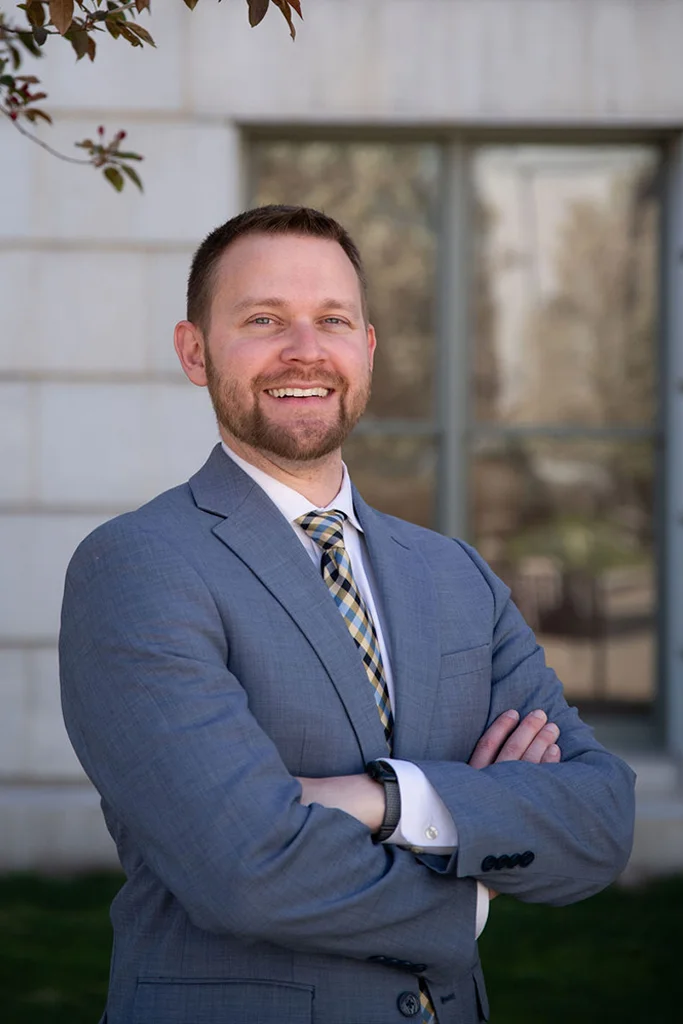
Reid DeChant founded DeChant Law after years as a public defender handling everything from misdemeanor traffic offenses to homicides. That background means he has spent more time in actual courtrooms than most private criminal defense attorneys in Colorado. He brings that experience to every Teller County case he takes.
How Cases Are Prosecuted in Teller County and the Fourth Judicial District
Understanding how your case will move through the system is not a formality. It directly affects your defense strategy. The Teller County Sheriff’s Office and the Woodland Park Police Department handle most local law enforcement. The Colorado State Patrol has a presence on the mountain highways, particularly Highway 24 and Highway 67, which are frequent sites of traffic stops and DUI arrests. When law enforcement in Teller County makes an arrest, that case is referred to the District Attorney’s office for the Fourth Judicial District, which prosecutes criminal matters for both Teller and El Paso Counties.
District court proceedings for Teller County are typically held at the Teller County Courthouse in Cripple Creek, located at 101 West Bennett Avenue. County court matters, including misdemeanors and petty offenses, may also be handled in Woodland Park. If you receive a summons or bond conditions requiring court appearances, it’s critical that you know which courthouse and which division your case is assigned to. Missing a court date in Teller County carries serious consequences, including a warrant for your arrest and potential bond revocation.
One practical reality of Teller County’s legal landscape is that it is a smaller jurisdiction. That can cut both ways. Judges may have longer memories of how cases were handled, and the community dynamics of a small county sometimes influence the atmosphere in a courtroom. A defense attorney who understands how to operate respectfully and effectively in that environment, without sacrificing your rights, is more valuable here than one who treats it as just another docket.
Criminal Charges DeChant Law Defends in Teller County
- DUI and DWAI on Mountain Roads: Highway 24 between Colorado Springs and Woodland Park and Highway 67 through Divide and Cripple Creek are active corridors for DUI enforcement, especially during ski season, summer tourism, and after events at the Cripple Creek casinos. Colorado law draws a clear line between DUI and the lower DWAI threshold, and the chemical test procedures used in these arrests are subject to meaningful legal challenge.
- Drug Possession and Distribution: Despite Colorado’s legalized recreational cannabis, serious drug charges involving fentanyl, methamphetamine, heroin, and cocaine remain prosecuted aggressively in Teller County. Possession charges can escalate quickly based on quantity, and proximity to a school or public park triggers enhanced penalties under Colorado law.
- Domestic Violence Charges: Colorado’s mandatory arrest policy for domestic violence situations means that law enforcement in Teller County will make an arrest even if the alleged victim does not want charges filed. A domestic violence designation adds a protective order, potential weapon restrictions, and federal firearm consequences that follow a conviction for life.
- Theft and Property Crimes: With Cripple Creek’s casino economy and the tourist traffic in Woodland Park and Divide, theft-related offenses arise in contexts ranging from shoplifting to more serious fraud allegations. The value threshold in Colorado determines whether a theft charge is a misdemeanor or a felony, and those lines matter enormously for sentencing.
- Assault and Menacing: Assaults in Colorado range from third-degree misdemeanor charges to felony assault with a deadly weapon. Menacing, which involves placing someone in fear through threat or display of a weapon, is commonly charged after disputes in rural areas where firearms are present in everyday life.
- Weapons Offenses: Teller County has a culture of firearm ownership, but federal and state laws impose strict limits on who can possess a weapon and under what circumstances. Prior felony convictions, domestic violence misdemeanor convictions, and restraining orders can all result in weapons possession charges that carry severe penalties.
- Traffic and Vehicular Offenses: Beyond DUI, reckless driving, vehicular assault, and hit and run charges are prosecuted in Teller County courts. Mountain road conditions contribute to accidents, and the distinction between a tragic accident and criminal conduct is not always as clear as a charging document makes it appear.
What to Do After an Arrest or Criminal Investigation in Teller County
The period immediately following an arrest is where most people make decisions they later regret. The most consequential of those decisions is speaking to law enforcement without an attorney present. Whatever you say to the Teller County Sheriff’s Office, Woodland Park Police, or any other agency can and will be used against you. This is not a formality. Officers are trained to build cases through statements, and even factually accurate statements made in your own defense can be taken out of context or mischaracterized in a police report. The moment you are detained or believe you are under investigation, ask for a lawyer and say nothing further.
If you were cited and released, you have time before your first court appearance to consult with a defense attorney in Teller County. Use that time. Don’t wait until the day before your arraignment to start the conversation. Critical evidence in criminal cases, including surveillance footage, witness memories, and physical evidence, begins to disappear or degrade quickly. A defense attorney who gets involved early can begin investigating while the trail is still fresh.
For bond conditions, Teller County’s bond hearings are handled quickly, and the conditions set at that initial hearing can govern your life for months. If you were charged with domestic violence, Colorado law imposes a mandatory protection order immediately, which can restrict your ability to return to your home or contact family members. A defense attorney can sometimes seek modification of overly restrictive conditions through the court, but only after a proper filing and hearing.
Gather whatever you remember about the circumstances of your arrest or the alleged incident. Write it down while it’s fresh. Identify anyone who was present and might have witnessed what happened. Preserve any text messages, photographs, or other documentation relevant to the situation. Bring all of that to your first meeting with your attorney. The more your lawyer knows early, the more thoroughly your defense can be constructed.
Why DeChant Law Brings Uncommon Depth to Teller County Defense Cases
Reid DeChant’s background is not a standard one. Before founding DeChant Law, he worked as a public defender across multiple Colorado jurisdictions, including Denver, Broomfield, and Adams County. That role exposed him to an extraordinary volume and variety of criminal cases, because public defenders carry heavy caseloads touching virtually every charge category the state prosecutes. That courtroom volume is the kind of experience that cannot be replicated simply by years in practice. Reid has cross-examined police officers dozens upon dozens of times. He has argued motions to suppress evidence. He has taken cases to jury trial that other attorneys might have pushed toward a plea.
Reid is also a graduate of the Trial Lawyers College, a selective program founded by Gerry Spence, the famed Wyoming trial attorney, that trains lawyers in courtroom storytelling, human psychology, and authentic advocacy. The program’s core premise is that juries respond to truth and genuine human narrative, not to legal argument dressed up in professional detachment. A Teller County criminal defense attorney who can stand in front of a jury and tell the honest, human story of what actually happened to a client has a different kind of tool than one who recites legal doctrine.
Reid holds memberships in the National Association of Criminal Defense Lawyers and the Colorado Criminal Defense Bar, organizations that give him access to the evolving strategies and legal developments that shape effective defense work. His case results include not guilty verdicts on DUI charges, domestic violence dismissals, not guilty verdicts on assault charges, and numerous DMV Express Consent hearing victories protecting his clients’ ability to drive. Those results reflect the commitment Reid brings to every case he accepts, whether it originates in Denver or in the mountain communities of Teller County.
Questions About Teller County Criminal Charges
What court handles criminal cases in Teller County?
Teller County is part of Colorado’s Fourth Judicial District, which it shares with El Paso County. Criminal cases are handled through the Teller County District Court in Cripple Creek for felonies and district-level matters, and through county court for misdemeanors and petty offenses. Some hearings may take place in Woodland Park or Cripple Creek depending on the nature of the charge and the assigned judge.
Can I be charged with DUI in Teller County even if I wasn’t on a highway?
Yes. Colorado’s DUI law applies to driving or operating a motor vehicle anywhere in the state, including parking lots, private roads open to public use, and any other location where you might operate a vehicle. The fact that you were on a side street or even a casino parking lot in Cripple Creek does not shield you from a DUI charge.
What is the difference between DUI and DWAI in Colorado?
Driving While Ability Impaired (DWAI) is a lesser offense triggered when a person’s ability to drive is impaired to the slightest degree, typically associated with a blood alcohol content between 0.05 and 0.079. DUI applies when a driver is substantially incapable due to alcohol or drugs, or when the BAC is 0.08 or higher. Both carry penalties, but DWAI is treated as a lesser offense for sentencing and record purposes. The distinction matters enormously in how a case is negotiated or defended.
What happens to my driver’s license after a DUI arrest in Teller County?
A DUI arrest in Colorado triggers two separate proceedings: the criminal case in court and a DMV Express Consent hearing. The DMV hearing concerns your driving privileges and is entirely separate from whether you are convicted of DUI. If you refuse a chemical test or fail one, you have a limited window after the arrest to request a DMV hearing. Missing that window can result in automatic revocation. DeChant Law has secured dismissals of multiple DMV Express Consent actions for clients facing license revocation.
Does a domestic violence charge in Teller County mean I have to leave my home?
Colorado’s mandatory protection order for domestic violence arrests typically restricts the accused from having contact with the alleged victim, and that often means you cannot return to a shared home. The order takes effect immediately upon arrest and remains in place throughout the case unless modified by the court. Violating the order is itself a crime. An attorney can request a hearing to seek modification of conditions that are particularly burdensome, but the standard courts apply is strict.
Will a criminal conviction in Teller County affect my ability to work in gaming or at a Cripple Creek casino?
Potentially, yes. Colorado’s Limited Gaming Act and the regulations administered by the Colorado Division of Gaming impose background check requirements on casino employees and license holders. Certain criminal convictions, particularly those involving dishonesty, controlled substances, or crimes of moral turpitude, can affect your eligibility for a gaming license or a gaming employee registration. If your livelihood is connected to Cripple Creek’s casino industry, the collateral consequences of a conviction deserve serious attention during your defense.
Can a felony charge in Teller County be reduced to a misdemeanor?
In some cases, yes. Colorado allows for deferred judgments and sentences in eligible cases, and prosecutorial discretion sometimes permits reduction of charges based on the strength of the evidence, mitigating circumstances, and the advocacy of defense counsel. Whether a reduction is achievable depends entirely on the specific charge, the facts, your history, and how the defense case is built. There is no universal answer, but it is always a goal worth pursuing aggressively from the moment you are charged.
How does Colorado’s mandatory arrest policy affect domestic violence situations where both parties were involved in a dispute?
Colorado law requires police to make an arrest when they have probable cause to believe a domestic violence incident occurred, even if the alleged victim declines to press charges or says the situation was mutual. Officers are supposed to identify the primary aggressor in a mutual combat situation, but that determination is made quickly and sometimes inaccurately. Being labeled the primary aggressor means you face charges while the other party does not, even if you believe the situation was more complicated. This makes early legal representation critical because the charging decision happens fast.
I was charged with a crime in Teller County but I live in Colorado Springs or Denver. Do I still have to appear in Cripple Creek?
Generally, yes, for any required court appearance. Colorado courts require personal appearance for most arraignments, motions hearings, and trials. An attorney may be able to waive your presence for certain procedural hearings, but for substantive proceedings, you will need to appear in Teller County. This is an important practical consideration when choosing a defense attorney. Reid DeChant represents clients throughout the Denver metro and across Colorado’s Front Range and mountain communities, and is prepared to appear in Fourth Judicial District court on behalf of Teller County clients.
Is it worth fighting a misdemeanor charge in Teller County or should I just accept a plea?
That depends entirely on the specific charge, your personal circumstances, and what a plea actually requires you to accept. A misdemeanor conviction in Colorado can carry jail time, fines, probation, and a permanent mark on your criminal record. If your work involves professional licensing, security clearances, or employment background checks, even a misdemeanor can have consequences that extend far beyond the courtroom. Before accepting any plea, it makes sense to have a complete assessment of whether the charge can be reduced, dismissed, or defeated at trial.
Representing Clients Across Teller County and the Mountain Communities of the Fourth Judicial District
DeChant Law represents clients throughout Teller County, including the city of Woodland Park, the historic mining community of Cripple Creek, the communities of Victor, Divide, Florissant, and Teller City. Cases arising in Green Mountain Falls, Cascade, and the unincorporated areas of the county along Highway 24 and Highway 67 are handled with the same attention. Clients who live in or near Manitou Springs, Colorado Springs, or elsewhere in El Paso County and face charges that carry into Teller County’s courts are also welcome to contact the firm. The broader mountain corridor, from the high plains west of Colorado Springs into the Pikes Peak region, is territory Reid knows well and where he is prepared to defend clients who find themselves facing state criminal charges.
Speak with a Teller County Criminal Defense Attorney About Your Case
A charge is not a conviction. What happens between the arrest and the resolution of a case depends heavily on how the defense is built, when it starts, and who is leading it. Reid DeChant is a Teller County criminal defense attorney with real courtroom experience, training from one of the most respected trial advocacy programs in the country, and a record of results in courts across Colorado. If you are facing criminal charges in Teller County, reach out to DeChant Law to schedule a consultation and begin building your defense today.