Rio Grande County Criminal Defense Lawyer
Rio Grande County sits in the heart of the San Luis Valley, a region of Colorado where the distances between towns, the presence of agriculture and ranching, and the limited availability of public transportation create a distinctive legal environment. When someone faces criminal charges here, whether in Monte Vista, Del Norte, or anywhere across the county, the consequences can ripple through tight-knit communities in ways that charges in a major metropolitan area simply do not. A record, a conviction, or even just a pending case can affect employment on a ranch, housing in a small town, professional licenses, and relationships with neighbors and family in ways that follow a person for years. That is why having a Rio Grande County criminal defense lawyer who takes every charge seriously, regardless of the level, matters so much.
The Rio Grande County District Court handles the full range of criminal matters filed in the county, from petty offenses and misdemeanors to class one felonies. Cases are prosecuted through the 12th Judicial District, which covers Rio Grande, Alamosa, Conejos, Costilla, Mineral, and Saguache counties. The prosecutors in this district are experienced, and they bring cases in front of judges who see the same defense arguments repeatedly. A defense attorney who understands how the 12th Judicial District actually operates, who the judges are, how prosecutors evaluate evidence, and where cases tend to resolve, can provide a defense that a generic, unfamiliar lawyer simply cannot.
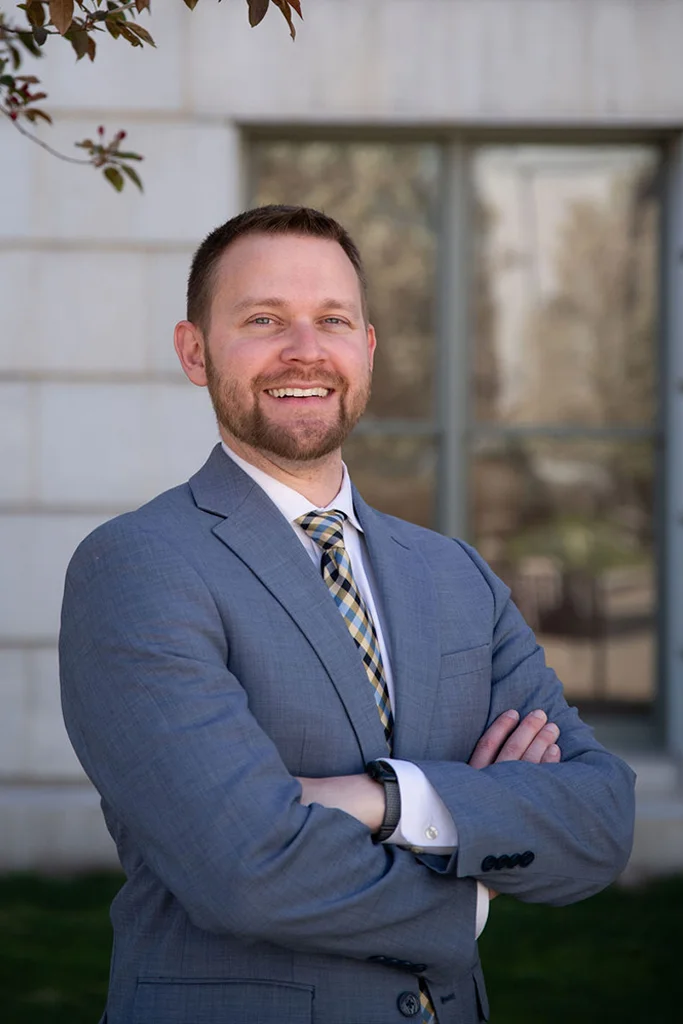
At DeChant Law, attorney Reid DeChant defends people across Colorado who are facing criminal charges, including clients in Rio Grande County and throughout the San Luis Valley region. Reid’s background as a former public defender means he has stood in courtrooms across the Denver metro, Broomfield, Adams County, and surrounding areas defending clients on everything from traffic offenses to homicide. That volume of trial experience, combined with his training at the Trial Lawyers College, shapes a defense philosophy built on genuine advocacy rather than case-processing. When you hire DeChant Law, your case does not get handed off to a junior associate. Reid handles it, and he handles it seriously.
Criminal Charges Commonly Filed in Rio Grande County
- DUI and DWAI: Impaired driving charges are among the most frequently filed criminal matters in rural Colorado. Highway 160, which runs through Monte Vista and Del Norte, sees regular law enforcement patrols, particularly during evening hours and around local events. Colorado law distinguishes between DUI (driving under the influence) and DWAI (driving while ability impaired), with the latter carrying a lower blood alcohol threshold. Both trigger not only criminal consequences but also separate DMV proceedings that can result in license revocation.
- Drug Possession and Distribution: The San Luis Valley has historically seen enforcement activity related to controlled substances passing through the region. Charges involving methamphetamine, fentanyl, cocaine, and prescription medications without a valid prescription can range from low-level misdemeanors to serious felonies depending on substance type, quantity, and alleged intent to distribute.
- Domestic Violence Charges: Domestic violence designations in Colorado attach to a charge rather than standing alone as a separate offense. An assault, harassment, or menacing charge that involves an intimate partner, household member, or co-parent automatically triggers mandatory arrest policies, no-contact orders, and restrictions on firearm possession. These cases require a defense that accounts for both the criminal charge and the collateral restrictions that come with the DV designation.
- Assault and Menacing: Physical altercations and threatening conduct charges arise in a variety of settings, from disputes between neighbors to incidents at local bars or community gatherings. The degree of the offense depends on the presence of weapons, the severity of any injury, and the relationship between the parties. Felony assault and felony menacing carry potential prison sentences that make early, aggressive defense critical.
- Theft and Property Crimes: Theft charges in Colorado are graded by the value of property allegedly taken, and the line between a misdemeanor and a felony can turn on a relatively modest dollar amount. Property crimes also include burglary, criminal mischief, and trespass, which arise in both residential and agricultural contexts across the county.
- Traffic Offenses and Vehicular Crimes: Driving on a revoked or suspended license, vehicular assault, and hit-and-run charges carry consequences that extend far beyond traffic tickets. In rural areas where driving is essential to employment and daily life, a conviction that results in license loss or a criminal record can be economically devastating.
- Weapons Offenses: Unlawful possession of a weapon, carrying a concealed weapon without authorization, and possession of a weapon by a previous offender are charges that arise across Colorado, including in smaller rural counties. Federal and state law interact on these charges, and the consequences of conviction can include the permanent loss of the right to possess firearms.
Why DeChant Law Defends Rio Grande County Cases Differently
Reid DeChant’s time as a public defender gave him something that is genuinely rare in private criminal defense practice: high-volume courtroom experience across a wide range of charge types. Most private criminal defense attorneys handle a fraction of the trial work that public defenders accumulate, because private clients often have more resources to resolve cases short of trial. Reid went through that trial-intensive environment and came out of it with courtroom instincts that only come from actually trying cases, cross-examining police officers, challenging forensic evidence, and arguing in front of judges and juries on a regular basis.
His training at the Trial Lawyers College, founded by legendary attorney Gerry Spence, added a dimension to his advocacy that purely technical legal training does not provide. That program teaches lawyers how to communicate with jurors as human beings, not as recipients of legal arguments. The difference between a lawyer who knows the law and a lawyer who can actually reach a jury is the difference between losing and winning cases that other lawyers would have conceded. Reid’s case results reflect that. DeChant Law has obtained not-guilty verdicts at trial on DUI charges, assault charges, domestic violence charges including strangulation, sex offense charges, and other serious matters. These are not results that come from making the right motions on paper. They come from knowing how to actually try a case.
Reid is a member of the National Association of Criminal Defense Lawyers and the Colorado Criminal Defense Bar, which keeps him connected to developments in criminal defense strategy, constitutional law, and emerging issues in evidence and procedure. For clients in Rio Grande County, that network means having access to defense thinking that extends well beyond what any single attorney in a small rural market would have exposure to on their own.
What to Do After a Criminal Arrest in Rio Grande County
The period immediately following an arrest or the filing of charges is the most important time in any criminal case, and it is also the time when people most often make decisions that hurt them later. The most significant of these is talking to law enforcement without an attorney present. Whatever explanation seems helpful in the moment, however reasonable it feels to clear things up on the spot, statements made to police officers become evidence. They get written into reports, sometimes summarized inaccurately, and used against defendants at trial. The right to remain silent exists precisely because the law recognizes how dangerous unrepresented statements are. Exercise it.
Criminal cases filed in Rio Grande County are handled at the Rio Grande County District Court, located in Del Norte, which serves as the county seat. The 12th Judicial District covers multiple counties, and district court judges rotate through the region. Understanding which judge is assigned, what that judge’s preferences are in hearings, and how the district attorney’s office approaches plea negotiations and trial preparation are all things that affect case outcomes in ways that cannot be learned by reading a statute. If you are facing charges and you have an initial appearance or bond hearing coming up, having representation at that appearance can significantly affect the conditions of your release and the trajectory of the case.
Gather and preserve anything that might be relevant to your defense from the very beginning. This includes text messages, social media exchanges, photographs, receipts that establish where you were, contact information for witnesses who saw what happened, and any physical evidence that supports your account of events. Evidence disappears. Surveillance footage gets overwritten. Witnesses move or change their recollections. The earlier your attorney can begin the process of investigation and preservation, the more your defense will have to work with. Do not wait until a court date is approaching to contact a criminal defense attorney serving Rio Grande County.
If your case involves a DUI charge, be aware that there are two separate proceedings you will face: the criminal case and the DMV Express Consent action to revoke your driver’s license. These run on different timelines, and the DMV hearing has its own deadline for requesting a hearing after the notice of revocation. Missing that deadline typically means automatic revocation, regardless of what happens in the criminal case. Reid DeChant has handled numerous DMV Express Consent hearings, including cases dismissed for improper advisement and procedural violations, and that parallel process is something he addresses from the beginning of DUI representation.
How Colorado Criminal Cases Actually Resolve
Most people, when they are first charged with a crime, want to know one thing: how does this end? The honest answer is that every case has its own path, shaped by the evidence, the charge, the client’s history, and the choices made along the way. But understanding the general landscape helps clients make informed decisions at each stage rather than reacting out of fear or confusion.
After an arrest, the first formal court event is typically an advisement, where charges are formally presented and bond conditions are set. Preliminary hearings apply to felony cases and involve the prosecution presenting enough evidence to show probable cause that a crime occurred. At the district court level, the discovery process gives the defense access to the prosecution’s evidence, which includes police reports, body camera footage, forensic results, witness statements, and any other material the government intends to rely on. Defense investigation runs parallel to this, building the factual record from the defense side.
Many cases resolve through plea negotiations, where the prosecution and defense reach an agreement on a reduced charge or a specific sentence recommendation. These negotiations are not passive. A prosecutor’s willingness to offer a meaningful plea depends heavily on their assessment of how the case would go at trial, which depends on the quality and credibility of the defense. When prosecutors know that the attorney across the table has a record of actually taking cases to trial and winning them, the calculus of negotiation changes. Reid’s trial record is not just a credential. It directly affects the leverage he brings to plea discussions.
When cases go to trial, whether in Rio Grande County District Court or any other jurisdiction, the outcome depends on how effectively the defense challenges the prosecution’s evidence, presents counter-evidence and testimony, and communicates a coherent and credible narrative to the jury. That is where Reid’s courtroom training, his experience cross-examining law enforcement officers, and his approach to juror communication come together. A not-guilty verdict is never guaranteed, but it is achievable when the defense is genuinely prepared to try the case.
Questions About Rio Grande County Criminal Defense
What happens at my first court appearance in Rio Grande County?
Your first appearance is typically an advisement hearing where you are formally informed of the charges against you and where the court addresses bond. In felony cases, bond conditions can include supervision, travel restrictions, no-contact orders, and other conditions. Having an attorney present at this hearing can affect the terms of your release and begins the process of setting expectations with the court and the prosecutor’s office.
Can charges be dismissed before trial?
Yes. Charges can be dismissed at multiple stages of a case, including before charges are formally filed, after preliminary hearings, through successful motions to suppress evidence, and through negotiations with the district attorney’s office. DeChant Law has obtained dismissals through a range of mechanisms, from exposing procedural violations in DUI cases to successfully arguing motions that remove key prosecution evidence.
What is the difference between a misdemeanor and a felony in Colorado?
Misdemeanors are classified into three classes in Colorado, with potential sentences ranging from short jail terms and fines up to 364 days in county jail. Felonies range from class six, the least serious, through class one, which includes murder. Felony convictions carry potential state prison sentences, mandatory parole, and significant long-term consequences for employment, housing, and civil rights including the right to vote and possess firearms.
Will a criminal conviction affect my ability to work in agriculture or ranching?
It can. Many agricultural employers, particularly those involved in federal programs, federal lands, or operations that require background checks, will scrutinize criminal records. Drug convictions, theft convictions, and violent offense convictions can affect employment eligibility, government program participation, and the ability to operate certain vehicles or equipment. The rural economy of the San Luis Valley makes these consequences particularly significant for residents of Rio Grande County.
What is the Express Consent law and how does it affect my DUI case?
Colorado’s Express Consent law requires any driver to submit to a chemical test of their blood, breath, or urine when requested by a law enforcement officer who has probable cause to believe they are impaired. Refusing the test triggers an automatic revocation of your license. Submitting to the test and registering above the legal limit also triggers a revocation proceeding. Both situations require requesting a hearing with the Colorado DMV within a specific window after the revocation notice, or the revocation becomes automatic regardless of the criminal case outcome.
Can a domestic violence charge be dropped if the alleged victim does not want to pursue it?
In Colorado, the decision to prosecute a domestic violence case rests with the district attorney’s office, not the alleged victim. Prosecutors routinely proceed with domestic violence charges even when the complaining witness has recanted or expressed a desire not to pursue the case. The prosecution may subpoena the alleged victim and use their prior statements, 911 recordings, and other evidence to proceed without their active cooperation. This makes early, informed legal representation essential in these cases.
How does a criminal charge affect a professional license in Colorado?
Many professional licensing boards in Colorado require disclosure of criminal charges or convictions, not just final dispositions. Depending on the license and the charge, a pending criminal case can trigger a licensing board investigation even before the criminal case is resolved. Convictions, especially for offenses involving dishonesty, controlled substances, or violence, can result in suspension or revocation of licenses in fields including healthcare, education, real estate, and financial services. Defense strategy should account for licensing consequences from the beginning.
Is it possible to seal a criminal record in Colorado after a case is resolved?
Colorado law provides for the sealing of criminal records in certain circumstances, including cases that are dismissed, cases where a not-guilty verdict is returned, and some cases where convictions are obtained. The eligibility rules depend on the charge type, the disposition, and the amount of time that has passed. Certain offense categories, particularly those involving violence or sex offenses, are generally not eligible for sealing. Record sealing can restore employment and housing opportunities, and it is worth discussing with an attorney as part of overall case strategy.
What should I look for when choosing a criminal defense attorney for a case in a rural Colorado county?
Experience trying cases, not just negotiating them, matters enormously. An attorney who has never taken a case to verdict has no credibility with prosecutors when threatening to go to trial, which removes the most powerful tool in any defense negotiation. Understanding how rural Colorado courts operate, the specific dynamics of the 12th Judicial District, and the practical consequences of conviction in a tight-knit agricultural community are also factors that distinguish effective representation from a transaction. Reid DeChant’s combination of trial experience, formal advocacy training, and membership in national defense organizations brings that depth to cases across Colorado.
How long does a criminal case typically take to resolve in the 12th Judicial District?
Timelines vary significantly depending on the charge level, the complexity of the evidence, court scheduling, and whether the case goes to trial. Misdemeanor cases may resolve within a few months. Felony cases, particularly those involving forensic evidence, multiple witnesses, or contested legal issues, can take considerably longer. Cases that proceed to trial generally take longer than cases resolved through negotiation. The 12th Judicial District, like other rural judicial districts in Colorado, has limited court days available, which can extend timelines compared to urban courts with more frequent settings.
Criminal Defense Representation Across Rio Grande County and the San Luis Valley
DeChant Law represents clients from Monte Vista, the county seat and largest city in Rio Grande County, through Del Norte, South Fork, Creede, and the smaller communities and rural areas throughout the region. The firm also defends clients across the broader 12th Judicial District, including Alamosa, Antonito, La Jara, Capulin, San Luis, and communities throughout Alamosa, Conejos, Costilla, Mineral, and Saguache counties. Whether charges originate from a traffic stop on Highway 160, a domestic incident in a rural subdivision, or a drug arrest along a major corridor through the valley, the geographic reach of DeChant Law’s representation covers clients across the entire region. The firm also represents clients from the Denver metro area, Broomfield, Jefferson County, Arapahoe County, Douglas County, Adams County, and surrounding jurisdictions, and extends that same representation to clients in outlying Colorado communities who need Denver-caliber criminal defense brought to their cases.
Talk to a Rio Grande County Criminal Defense Attorney About Your Case
A criminal charge in a small county, in a community where everyone knows everyone, carries a weight that statistics and sentencing ranges do not fully capture. The reputational stakes, the employment stakes, and the personal stakes are immediate and real. A Rio Grande County criminal defense attorney who approaches your case as more than a file number, who invests in understanding what is actually at stake for you and builds a defense around that understanding, is what DeChant Law offers. Reid DeChant has tried and won cases that others would have resolved with a plea, and he has negotiated dismissals and reductions in cases where the evidence made trial a difficult path. That judgment, built from real courtroom experience, is what you need on your side. Contact DeChant Law to discuss your case and learn how Reid can help you pursue the best available outcome.