Morgan County DUI Defense Lawyer
Morgan County sits along the I-76 corridor in northeastern Colorado, a stretch of highway that sees significant traffic enforcement year-round. Whether a stop happens near Fort Morgan on a weekend evening or along one of the county roads after an event at a local venue, a DUI arrest in this part of the state carries consequences that go well beyond a fine. A Morgan County DUI defense lawyer is the person who stands between a driver and a system that moves fast toward conviction once the handcuffs go on.
Colorado DUI law applies statewide, but every county handles these cases with its own prosecutors, its own courtroom culture, and its own approach to plea negotiations. Morgan County is no exception. The 13th Judicial District, which covers Morgan County, processes DUI cases at the Morgan County courthouse in Fort Morgan. Knowing how cases move through that system, who the players are, and where charges typically fall apart matters enormously for anyone trying to build a real defense rather than just plead guilty and hope for leniency.
The consequences of a DUI conviction in Colorado are layered in ways most people do not realize until it is too late. There is the criminal case, yes, but there is also a parallel DMV process that threatens your driver’s license independently of what happens in court. Losing on either front can affect your job, your family, your insurance rates, and your future. Getting both tracks handled by a lawyer who genuinely understands both is not optional, it is the difference between an informed defense and a surrender dressed up as legal help.
What DeChant Law Brings to a Morgan County DUI Case
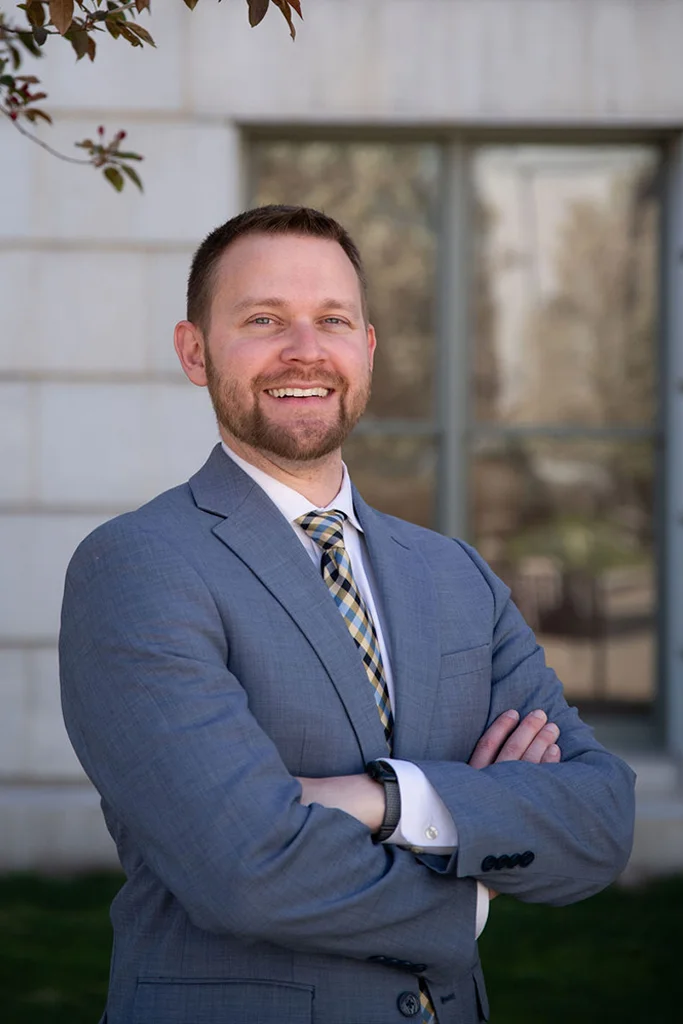
Reid DeChant built his practice on a foundation that most DUI attorneys in Colorado cannot replicate. As a former public defender, Reid handled a substantial volume of DUI and DWAI cases across multiple Colorado counties, including in the courtrooms of the Denver metro area and beyond. That background means Reid has stood at the defense table, cross-examined officers, challenged breath and blood test results, and tried DUI cases to verdict far more times than most private criminal defense attorneys accumulate over an entire career.
The case results visible on the DeChant Law website make this concrete. Reid has obtained not guilty verdicts at trial on DUI charges, secured dismissals of DUI cases out of Jefferson, Douglas, Arapahoe, and Broomfield counties, and repeatedly won DMV Express Consent hearings that preserved clients’ driving privileges. Those aren’t paper victories secured by a favorable plea deal. Several of them came after trial, which is where legal preparation and courtroom skill actually get tested. The DMV hearing results are particularly significant because many attorneys simply concede the license revocation while focusing only on the criminal case, leaving clients without the ability to drive during an already difficult period.
Reid is a graduate of the Trial Lawyers College, the training program founded by legendary attorney Gerry Spence. The curriculum teaches lawyers how to connect with juries through genuine storytelling and human understanding rather than legal jargon and procedural maneuvering. For DUI defendants, who are often viewed by jurors through a lens of pre-existing assumptions, having a lawyer who knows how to humanize a client and challenge the prosecution’s narrative authentically can change everything. Reid is also a member of the National Association of Criminal Defense Lawyers and the Colorado Criminal Defense Bar, keeping him connected to the best defense strategy and research available nationally. When you hire DeChant Law, a Morgan County DUI attorney with real trial experience and a demonstrated track record is actually handling your case.
DUI Charges Morgan County Residents and Visitors Commonly Face
- Standard DUI (BAC at or above .08): This is the most common charge, typically triggered by a breath or blood test result at or above the legal limit. Colorado law makes this a per se offense, meaning the test result alone can support the charge without additional proof of impairment.
- DWAI (Driving While Ability Impaired): Colorado also prosecutes drivers whose BAC falls between .05 and .08 if there is evidence that their ability to drive was even slightly impaired. DWAI is often overlooked as a “lesser” charge, but it still carries criminal penalties and DMV consequences.
- DUI-Drugs: Colorado law applies DUI statutes to driving impaired by marijuana, prescription medications, or controlled substances. With legal recreational cannabis in Colorado, drug DUI charges have become more frequent and are often harder to defend because roadside impairment testing for drugs is far less standardized than alcohol testing.
- Felony DUI: A fourth DUI offense in Colorado is charged as a class 4 felony, regardless of how long ago the prior convictions occurred. Even prior out-of-state convictions can count. The penalties include mandatory prison time, and the stakes of these cases require a defense attorney who handles felonies, not just traffic court regulars.
- DUI with Accident or Injury: When a DUI arrest follows a traffic collision, additional charges often accompany the impaired driving allegation. Careless driving causing injury, vehicular assault, and related offenses can transform a standard DUI case into something far more serious in terms of sentencing exposure.
- Underage DUI and UDD: Colorado applies a stricter standard to drivers under 21, with zero-tolerance provisions that make even trace amounts of alcohol actionable. These cases require a different defense approach and carry consequences that can follow a young person into their adult life, affecting college enrollment, scholarships, and professional licensing.
- Express Consent Refusal Cases: Colorado’s Express Consent law requires drivers to submit to chemical testing when lawfully requested. Refusing triggers a separate DMV revocation process, often with longer license suspension periods than a failed test. These refusal cases can still be challenged, and the grounds for dismissal at a DMV hearing are often overlooked by attorneys who do not regularly practice in this space.
After a Morgan County DUI Arrest: What Actually Needs to Happen
The DMV clock starts ticking the moment a Colorado peace officer takes your driver’s license and issues a notice of revocation. You have seven days from the date of that notice to request a hearing with the Colorado DMV. If you miss that window, your license revocation becomes automatic, regardless of what happens in the criminal case. Requesting the hearing does not guarantee you win it, but it preserves your right to contest the revocation and typically delays the suspension while the hearing is pending. This is the first deadline that matters, and it comes before most people have even begun looking for a lawyer.
Your DUI criminal case will be handled at the Morgan County Justice Center, located in Fort Morgan, which serves as the seat of the 13th Judicial District. Initial appearances typically happen within days of arrest, and bond conditions may include restrictions on alcohol use, ignition interlock requirements, or even electronic monitoring depending on the circumstances and prior record. Understanding what those conditions mean and whether they can be challenged is part of competent representation from day one, not something to sort out weeks later.
One of the most common mistakes people make after a DUI arrest is waiting too long to consult a defense attorney. This is not about creating urgency artificially. The evidence in DUI cases begins degrading immediately. Body camera footage gets overwritten, witness memories fade, and the officer’s recollection of the stop sharpens into a rehearsed narrative. If there were problems with the traffic stop, issues with how the roadside sobriety tests were administered, or questions about the calibration and maintenance records of the breath testing device used, those issues need to be identified early while records are still obtainable.
Documents that your attorney will need include the officer’s report, any dashcam or bodycam footage, the portable breath test result if one was used at the scene, the certified breath or blood test result, and the Colorado DMV notice of revocation. Gathering these early, and preserving your own recollection of events in writing while memory is fresh, gives your defense team the raw material to find what went wrong before the prosecution had time to shore up its case.
How Blood and Breath Evidence Gets Challenged in Colorado DUI Cases
A positive test result feels definitive. It often isn’t. Colorado DUI defense lawyers who focus on this area of law know that the reliability of both breath and blood testing depends on a long chain of procedural compliance, equipment maintenance, and proper technique, any link of which can break down.
Breath testing instruments used at police stations must be properly calibrated and certified. The Intoxilyzer 9000 is the primary device used by many Colorado law enforcement agencies, and its results can be affected by calibration failures, residual mouth alcohol from a recent burp or vomit, medical conditions such as acid reflux or diabetes, certain dietary patterns, and improper observation periods before testing. Officers are required to observe a driver for a specific period before administering the test, and deviations from that protocol can undermine the result.
Blood testing carries its own vulnerabilities. Chain of custody errors, improper storage of the blood sample, contamination, fermentation of the sample over time, and lab analyst errors all create grounds to challenge whether the reported BAC accurately reflects what was in the driver’s blood at the time of driving. Colorado requires blood samples to be preserved, which allows for independent testing by a defense expert. Challenging the lab’s methodology or the analyst’s qualifications at a suppression hearing is a legitimate and sometimes successful defense strategy.
Beyond the chemical test, the traffic stop itself must pass constitutional muster. Officers need reasonable articulable suspicion to initiate a stop. If the stop was pretextual, if the officer lacked sufficient basis to extend a routine stop into a DUI investigation, or if Miranda warnings were not provided at the appropriate time, suppression of evidence obtained after that point may be possible. Reid DeChant has successfully challenged DMV Express Consent proceedings on grounds including improper Miranda timing, demonstrating that procedural compliance is not merely a technical nicety but an actual line of defense in real cases.
Questions People Ask About Morgan County DUI Cases
What is the difference between DUI and DWAI in Colorado?
DUI requires proof that the driver was substantially incapable of safely operating the vehicle due to alcohol or drugs, or that the driver’s BAC was at or above .08. DWAI (Driving While Ability Impaired) is a lower threshold offense requiring only that the driver’s ability was impaired even slightly by alcohol or drugs. A BAC between .05 and .08 creates a rebuttable presumption of DWAI. Both carry criminal penalties and DMV consequences, and both should be taken seriously in terms of building a defense.
Will I lose my driver’s license automatically after a Morgan County DUI arrest?
Not automatically, but you must act quickly. After a DUI arrest involving a breath or blood test result, the Colorado DMV initiates a revocation proceeding. You have seven days from the notice of revocation to request a hearing. If you request the hearing in time, your driving privileges are typically stayed while the hearing is pending. If you miss the deadline, the revocation takes effect automatically. A successful hearing result can prevent any license suspension at all.
Can I refuse a breath or blood test in Colorado?
You can decline, but Colorado’s Express Consent law makes refusal itself a basis for license revocation, often with longer suspension periods than a failed test would trigger. The law imposes an implied consent obligation on anyone who drives in Colorado, and refusing the test does not prevent prosecution. The refusal can also be mentioned at trial as evidence of consciousness of guilt, though a defense attorney can argue against that inference.
What happens if this is my second or third DUI in Colorado?
Prior DUI convictions escalate both the mandatory penalties and the sentencing discretion available to judges. A second DUI triggers minimum jail requirements that cannot be suspended, longer license revocation periods, and mandatory ignition interlock installation. A third DUI results in even longer minimum incarceration and additional requirements. A fourth DUI, as noted above, becomes a class 4 felony under Colorado law. Prior convictions from other states can also count toward this escalation, which surprises many people who moved to Colorado after earlier offenses elsewhere.
How long does a DUI case take to resolve in the 13th Judicial District?
Timeline varies significantly depending on whether the case goes to trial or resolves through plea negotiations, how backed up the court docket is at the time, and whether motions to suppress or other pretrial litigation are filed. Cases that resolve through a plea deal may close within a few months of arraignment. Cases that go to trial typically take considerably longer. During that time, an ignition interlock requirement on your license may be in effect depending on the circumstances of the arrest.
Can a DUI conviction in Morgan County affect my commercial driver’s license?
Yes, and the consequences for CDL holders are more severe than for regular license holders. Federal regulations impose their own BAC limits and disqualification rules for commercial drivers, and a DUI conviction can result in CDL disqualification even if the driver was operating a personal vehicle at the time. For anyone whose livelihood depends on a CDL, the employment stakes of a DUI case dramatically exceed the criminal penalties alone.
What if I was stopped on I-76 near Fort Morgan and the officer didn’t read me my Miranda rights?
Miranda warnings are required before custodial interrogation, meaning before police ask questions of someone who is in custody. The timing of when Miranda obligations arise in a DUI stop is legally nuanced and has been the subject of significant litigation. In Reid DeChant’s own case history, an Express Consent DMV hearing was dismissed because the driver was advised of Miranda before receiving the Express Consent advisement, which affected the voluntariness of the consent. Whether Miranda violations apply to suppress evidence in your specific situation depends on the detailed facts of the stop and interrogation sequence.
Does a DUI in Colorado affect professional licenses?
It can. Colorado licensing boards for professions including nursing, law, education, real estate, and many others have independent reporting and review obligations that can be triggered by a criminal conviction. Some boards require self-reporting of arrests or charges before any conviction even occurs. If you hold a professional license, the professional consequences of a DUI case may rival or exceed the criminal penalties, and the defense strategy should account for that reality from the beginning.
Is it worth fighting a DUI if I failed the breath test?
Yes, and the track record at DeChant Law illustrates why. A failed test is evidence, but it is not always reliable evidence, and the process that produced it does not always comply with the legal requirements that make it admissible. Testing equipment malfunctions, improper procedures, and constitutional violations during the stop can all provide grounds to challenge or suppress a test result. Even in cases where suppression is not achievable, an attorney who understands the prosecution’s evidence in detail is better positioned to negotiate a more favorable outcome than a client appearing without representation.
What should I say to the officer if I’m stopped for DUI in Morgan County?
You are required to provide your identification, license, and registration when lawfully stopped. Beyond that, you have a constitutional right to remain silent, and you should exercise it. Politely declining to answer questions about where you have been, what you have had to drink, or how you feel is not obstruction. Roadside questioning in a DUI investigation is specifically designed to gather evidence, and statements made at the side of the road are typically used against the driver at trial. You can invoke your right to counsel and decline to participate in voluntary field sobriety tests, though some consequences flow from that decision and the specifics matter.
DUI Defense Representation Across Northeastern Colorado and the 13th Judicial District
DeChant Law represents DUI clients throughout Morgan County and the surrounding region. Fort Morgan is the primary venue for cases arising from arrests anywhere in the county, and the firm serves clients from across the county, including those from Brush, Wiggins, Log Lane Village, Weldona, and the rural communities throughout the Morgan County area. Cases along the I-76 corridor, Colorado Highway 34, and the county road network east and west of Fort Morgan all fall within the firm’s representation area.
Beyond Morgan County itself, DeChant Law handles DUI cases across the greater northeastern Colorado region and into the Denver metropolitan area and surrounding counties. Clients from Adams County, Weld County, Arapahoe County, Jefferson County, Douglas County, Broomfield County, and Denver County have been represented by Reid DeChant, with case results documented across those jurisdictions. Whether the arrest happened on the eastern plains or in the Denver metro, the same rigorous approach to evidence review, DMV hearing strategy, and courtroom advocacy applies.
Speak with a Morgan County DUI Attorney at DeChant Law
A DUI charge in Morgan County puts your license, your record, and in some cases your freedom at risk. The seven-day DMV deadline alone makes delay a costly choice. Reid DeChant is a Morgan County DUI attorney who has tried these cases, won them, and developed the kind of courtroom and administrative hearing experience that actually matters when a case gets contested. That experience, combined with the Trial Lawyers College training that shapes how Reid approaches every client relationship and every courtroom presentation, is what separates real representation from going through the motions.
Reach out to DeChant Law as soon as possible after an arrest or upon receiving a notice of revocation from the Colorado DMV. The earlier the defense work begins, the more options remain available. Call or schedule a consultation to speak directly with Reid about your case and what a genuine defense looks like for your specific situation.