Manitou Springs DUI Defense Lawyer
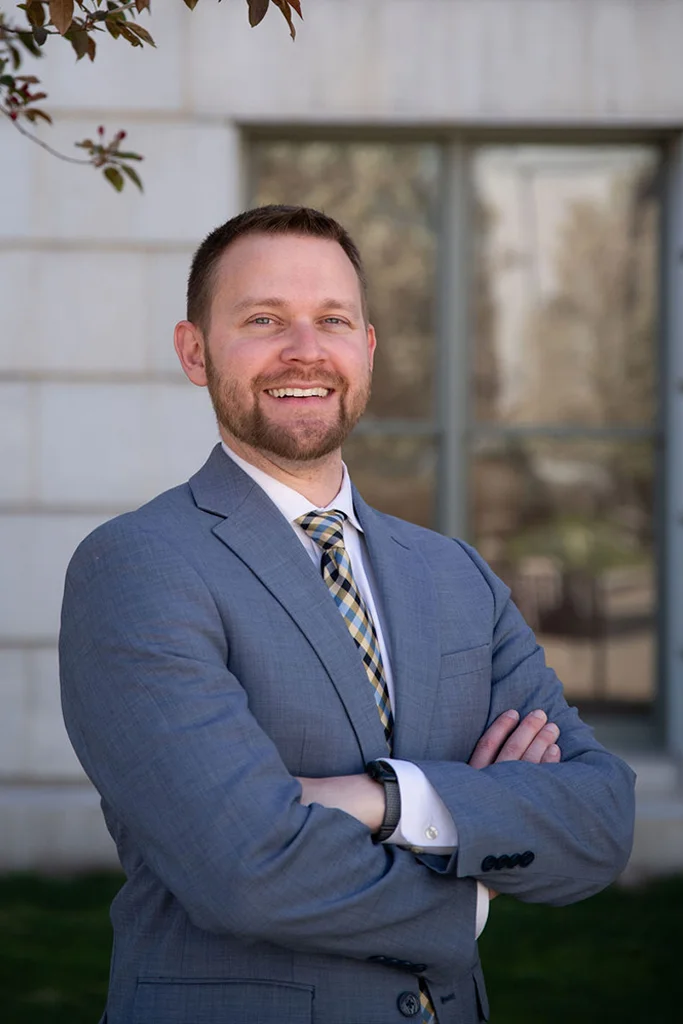
The stretch of Highway 24 climbing west toward Manitou Springs sees concentrated law enforcement activity, particularly on weekends, holidays, and during the summer festival season when Manitou draws visitors from across the Front Range. A DUI stop along that corridor, or anywhere in the Pikes Peak region, can trigger consequences that extend far beyond a single court date. Manitou Springs DUI defense lawyer Reid DeChant of DeChant Law represents people facing these charges with the courtroom depth that comes from defending hundreds of DUI and DWAI cases across Colorado’s metro and mountain communities.
El Paso County processes DUI arrests through the 4th Judicial District, and the prosecutors there are experienced with the full range of impaired driving charges, including standard DUI, DWAI, DUI-D (driving under the influence of drugs), and aggravated cases involving accidents, injuries, or prior convictions. What makes Manitou Springs DUI cases distinct is the combination of winding mountain roads, tourist activity, altitude, and concentrated enforcement near Old Colorado City and the Manitou Avenue corridor. These are not the same conditions as a flat Denver street stop, and the defense strategy should reflect that.
Reaching out to a Colorado DUI defense attorney early matters because two separate proceedings run on parallel tracks after an arrest: the criminal case in court and the administrative action against your driver’s license through the Colorado Division of Motor Vehicles. Missing the deadline to request a DMV hearing can cost you your license before your criminal case has even been scheduled. Understanding both tracks, and how to fight on both of them, is where DeChant Law has built a clear track record.
What Makes DeChant Law the Right Choice for a Pikes Peak Region DUI Case
Reid DeChant’s background is unusually well-suited to DUI defense. As a former public defender, Reid spent years in high-volume courtrooms defending clients against traffic offenses, DUI, DWAI, and the full spectrum of criminal charges across Denver, Broomfield, and Adams County. That volume of trial experience means Reid has cross-examined law enforcement officers on field sobriety procedures, challenged breathalyzer calibration records, and argued DMV express consent hearings at a pace that most private defense attorneys never approach. The case results on DeChant Law’s website reflect that depth: multiple DUI cases dismissed outright, DMV express consent actions dismissed for procedural failures, DUI-Drugs cases resulting in not guilty verdicts at trial, and a third-time DUI charge resolved not guilty after a full trial in Jefferson County.
Reid is also a graduate of the Trial Lawyers College, the intensive training program founded by Gerry Spence that focuses on narrative advocacy, authentic client communication, and the kind of jury persuasion that cannot be faked with talking points and rehearsed arguments. For someone facing a Manitou Springs DUI charge, that means your attorney is not just technically competent. He knows how to present your story to a judge or jury in a way that lands. Reid maintains active membership in the National Association of Criminal Defense Lawyers and the Colorado Criminal Defense Bar, which keeps his strategy current as DUI law and enforcement technology continue to evolve.
DUI and DWAI Charges That Arise in and Around Manitou Springs
- Standard DUI (BAC at or above 0.08): Colorado law sets the per se DUI threshold at a blood alcohol content of 0.08 or higher, meaning the result of a chemical test alone can support the charge without other evidence of impairment, making the integrity of the testing process critically important to the defense.
- DWAI (BAC between 0.05 and 0.08): Colorado’s driving while ability impaired statute covers drivers whose ability is even slightly affected by alcohol or drugs, a lower bar than DUI, and one that Colorado is nearly alone in prosecuting aggressively as a separate offense with its own penalty structure.
- DUI-Drugs and Dual Impairment: Colorado prosecutes impaired driving caused by marijuana, prescription medications, methamphetamine, and other substances under the same framework as alcohol-related DUI, though the evidentiary challenges around drug impairment, particularly cannabis given Colorado’s legal marijuana laws, create distinct defense angles.
- Aggravated DUI and Repeat Offenses: A second or third DUI conviction carries mandatory jail time and escalating license consequences. Cases involving accidents, child passengers, or extremely high BAC readings can trigger enhanced penalties even for a first offense.
- Underage DUI and Zero Tolerance: Colorado applies strict standards to drivers under 21, with lower BAC thresholds triggering charges and license consequences that can affect educational and employment opportunities for years.
- DMV Express Consent License Actions: Separate from any criminal charge, the DMV can move to revoke your license following a DUI arrest, and Colorado law requires you to request a hearing within a short window after the arrest or the revocation proceeds automatically.
- Felony DUI: Colorado law elevates DUI to a felony when a driver has three or more prior DUI convictions, exposing defendants to potential prison sentences and permanent record consequences that require an entirely different level of defense preparation.
What You Should Do Immediately After a DUI Arrest Near Manitou Springs
The first decision point comes before you even leave the roadside: Colorado’s express consent law means that by driving on Colorado roads, you have already agreed to submit to a chemical test when lawfully requested by an officer. Refusing the test triggers an automatic license revocation that is separate from and independent of the criminal charge, and in many cases it results in a longer suspension than a DUI conviction itself. This does not mean your options are limited. It means understanding what you agreed to, and what the officer was required to do correctly in administering the test, matters enormously.
After processing, one of the most time-sensitive obligations is requesting a DMV hearing. Colorado law gives you a narrow window after the arrest to formally request an administrative hearing challenging the license revocation. If that deadline passes without action, the revocation takes effect automatically. DeChant Law handles DMV express consent hearings and has secured dismissals in these proceedings for reasons including improper advisement of rights, failure to administer the chemical test within the required time after driving, and procedural defects in how the officer handled the stop. These are not technicalities for their own sake. They are the enforcement of rules that exist to keep the process honest.
Criminal DUI cases in Manitou Springs and the surrounding El Paso County area are handled in the El Paso County Combined Courts located in Colorado Springs, at 270 South Tejon Street. Charges can be filed in either county court (for misdemeanor DUI and DWAI) or district court (for felony cases). Knowing which courtroom your case will land in, which judge may be assigned, and how the 4th Judicial District DA’s office approaches plea negotiations versus trial are all things that matter practically to your case outcome.
Do not discuss the details of your stop or arrest on social media, and be cautious about what you say to family members who might be called as witnesses. The version of events you put in writing before you have legal counsel can and does come up later. The better approach is to preserve your memory of the stop accurately, write down what you remember while it is fresh including the location of the stop, what the officer said, how the tests were administered, and anything unusual about road or lighting conditions, and bring that account to your first consultation.
How Field Sobriety Tests and Breathalyzers Actually Work in a DUI Defense
Much of the government’s case in a DUI prosecution rests on two categories of evidence: the officer’s observations during the traffic stop and any chemical test result. Both categories have real vulnerabilities that a prepared defense attorney can exploit.
Standardized field sobriety tests, including the horizontal gaze nystagmus test, the walk and turn, and the one-leg stand, were designed and validated under controlled conditions. On a mountain road at elevation, in the dark, on uneven pavement, with traffic passing, the performance of these tests by a completely sober person becomes meaningfully less reliable. Colorado courts have examined how these tests were administered in determining whether they should be admitted and what weight they should receive. An officer who did not administer the instructions correctly, did not account for the physical conditions, or scored the tests in a way that does not match the officer’s own video footage has created openings for a skilled Manitou Springs DUI attorney to challenge the evidence before the jury ever sees it.
Breath testing instruments require regular calibration, proper maintenance records, and correct administration by the officer. Blood tests require proper chain of custody, correct storage, and careful handling by the laboratory. In Colorado, the Colorado Bureau of Investigation maintains records related to these testing procedures, and accessing those records is a standard part of building a DUI defense. DeChant Law has obtained dismissals in DMV proceedings specifically because of failures in chemical test administration, including a case dismissed for failure to administer the test within the required two-hour window after driving. The same type of analysis applies in the criminal case.
Questions People Ask About DUI Cases Near Manitou Springs and Colorado Springs
What is the difference between DUI and DWAI under Colorado law?
DUI applies when a driver is substantially incapable of safely operating a vehicle due to impairment, or when a chemical test shows a BAC of 0.08 or above. DWAI applies when impairment is only slight but the driver’s ability was affected to even the slightest degree, typically associated with a BAC between 0.05 and 0.08. Both are criminal charges with real penalties, though DUI carries the heavier consequences for a first offense. Colorado prosecutes DWAI more aggressively than most states, so the charge should not be underestimated.
Can I lose my driver’s license before my criminal case is decided?
Yes. The DMV license revocation and the criminal case move on separate tracks. The DMV can revoke your license based on the arrest alone, independent of any criminal conviction. That is why requesting the administrative hearing promptly after a DUI arrest is one of the most time-critical steps. Winning the DMV hearing does not guarantee a win in court, and vice versa, but fighting both proceedings gives you the best overall outcome.
What happens if I refused the breathalyzer or blood test?
Colorado’s express consent law treats refusal as a separate revocation basis, and the revocation period for refusal is typically longer than for a test failure. However, the refusal does not necessarily help the prosecution in the criminal case, and there are still defenses available. The case becomes more complex in both the DMV and criminal proceedings, but it is not unwinnable.
Will a DUI conviction in Colorado show up on a background check?
Yes. Colorado DUI convictions are criminal convictions that appear on standard background checks. They can affect employment applications, professional licensing, housing, and other matters. Sealing a DUI record in Colorado is subject to significant restrictions, which makes the outcome of the original case critically important to your long-term record.
How does Colorado handle marijuana-related DUI charges?
Colorado has a reference level of 5 nanograms of active THC per milliliter of blood for a permissible inference of impairment in DUI-D cases, but unlike alcohol, this is not a per se legal limit. The scientific relationship between blood THC levels and actual impairment is contested, and juries have returned not guilty verdicts in cannabis DUI cases where the defendant’s THC level was above that threshold. The defense approach in DUI-D marijuana cases is distinct from alcohol DUI defense and requires specific preparation.
Is it possible to get a DUI dismissed in the 4th Judicial District?
Dismissal is a real outcome in DUI cases, though it depends entirely on the specific facts of the case, the evidence the prosecution has, and the legal arguments available. DeChant Law has obtained outright case dismissals in DUI prosecutions in multiple Colorado counties. The grounds range from constitutional problems with the traffic stop, to evidentiary defects in the chemical test, to prosecutorial decisions after a full defense challenge to the evidence.
What is the sentencing exposure for a first-time DUI conviction in Colorado?
A first-offense DUI misdemeanor conviction in Colorado carries potential penalties including jail time, fines, community service, alcohol education requirements, and license revocation. The actual sentence varies based on circumstances including BAC level, driving conduct, and the specific judge and court. An attorney with local 4th Judicial District experience can speak to how sentencing typically plays out in practice in El Paso County, as opposed to the statutory maximum range.
Does altitude affect breathalyzer accuracy in Colorado mountain communities?
This is a legitimate and contested area of DUI science. Some research has examined whether higher altitude affects breath testing instruments and whether physiological changes at altitude, including hematocrit differences, can influence BAC readings. Whether an altitude argument is viable in a specific case depends on the device used, the available scientific evidence, and the judge’s willingness to consider it. A defense attorney handling Colorado mountain DUI cases should be familiar with this issue even if it applies to a limited number of cases.
Can a DUI affect my professional license in Colorado?
Yes, depending on your field. Colorado licensing boards for healthcare professionals, teachers, attorneys, real estate agents, commercial drivers, and others may treat a DUI conviction as a reportable event and can take disciplinary action, including suspension or conditions on your license. If you hold a professional license, that dimension of your case should be part of the conversation with your DUI defense attorney from the start.
If I was in an accident and later charged with DUI, is my case more serious?
Generally yes. A DUI involving an accident, particularly one with property damage, injuries, or a fatality, can result in enhanced charges and significantly different sentencing exposure. Cases involving injury to another person can be charged as vehicular assault, which is a felony in Colorado. The complexity of these cases, combining DUI defense with accident reconstruction, civil liability exposure, and enhanced criminal penalties, requires careful attention from the earliest stage of the case.
Representing DUI Clients Across Manitou Springs, Colorado Springs, and the Surrounding Region
DeChant Law represents clients throughout El Paso County and the Pikes Peak region, including Manitou Springs, Colorado Springs, Old Colorado City, Fountain, Security-Widefield, Peyton, Black Forest, Monument, Palmer Lake, Woodland Park, and Cascade. The firm also handles DUI cases in Teller County communities including Cripple Creek and Victor, as well as cases arising in Douglas County and the broader Denver metro area including Jefferson, Adams, Arapahoe, and Broomfield counties. Whether the arrest happened on Highway 24, Manitou Avenue, Garden of the Gods Road, Nevada Avenue, or anywhere along the I-25 corridor through El Paso County, DeChant Law can appear in the courts that handle these cases. Reid’s experience extends to DMV hearings, misdemeanor county court proceedings, and district court felony DUI trials across these jurisdictions.
Talk to a Manitou Springs DUI Attorney About Your Case
A DUI charge in Colorado carries real stakes across multiple fronts, and the decisions you make in the earliest days after an arrest shape every outcome that follows. Reid DeChant is a Manitou Springs DUI attorney who brings the trial depth and technical preparation that these cases require. He has handled the full range of DUI proceedings, from DMV hearings to not guilty verdicts at trial, across Colorado’s mountain and metro communities. Reach out to DeChant Law to schedule a consultation and get a clear-eyed assessment of your case, your options, and what an experienced Colorado DUI defense attorney can do for you.