Lakewood DWAI Lawyer
A DWAI charge in Lakewood carries consequences that most people do not fully appreciate until it is too late to make the right decisions. Driving While Ability Impaired is a distinct charge from DUI under Colorado law, requiring a lower blood alcohol threshold to prosecute, and it brings its own set of criminal penalties, DMV license consequences, and long-term collateral damage to insurance rates and employment records. If you were stopped on Kipling Street, along Colfax Avenue near the Lakewood edge, or anywhere in Jefferson County and received a DWAI citation, the direction you take in the next several days will matter far more than most people expect. A Lakewood DWAI lawyer who understands both the criminal court process and the separate DMV proceeding can be the difference between a conviction on your record and a case that gets dismissed or reduced before it defines your future.
Colorado draws a legal line at a BAC of 0.05 grams per 100 milliliters, which is the threshold at which a DWAI charge can be filed. That level is reachable after one or two drinks for many adults, particularly those who are smaller in stature, had not eaten, or were fatigued. Law enforcement officers in Lakewood and throughout Jefferson County are trained to build a DWAI case not just from a breath or blood test, but from observations at the roadside including field sobriety tests, driving patterns, and the officer’s subjective interpretation of whether the driver’s ability was impaired to the slightest degree. That phrase, “to the slightest degree,” is the operative legal language in Colorado, and it gives officers and prosecutors broad latitude to pursue charges even when a driver feels entirely capable of operating a vehicle. Understanding how the state actually builds these cases, and where those cases are vulnerable, is what separates effective DWAI defense from simply accepting whatever outcome the prosecutor initially offers.
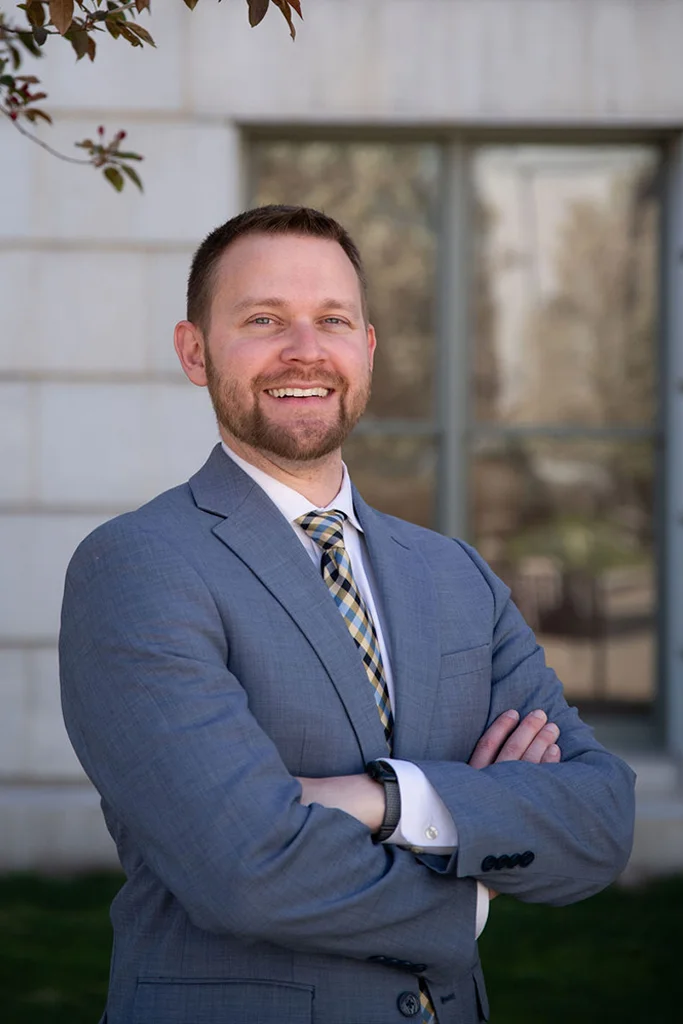
Reid DeChant has represented clients facing impaired driving charges in Jefferson County courts and throughout the Denver metro area, including the cases that reach Lakewood City Court and Jefferson County District Court. His background as a former public defender means he has worked through more impaired driving cases, roadside stops, and DMV hearings than most private attorneys will encounter across their entire careers. That volume of courtroom experience is worth something real when your license, your employment, and your record are all at stake simultaneously.
What DWAI Charges Actually Look Like in Lakewood and Jefferson County
Lakewood is the largest city in Jefferson County and sits along several high-traffic corridors that see regular DUI and DWAI enforcement, particularly after events at venues like Red Rocks Amphitheatre nearby or games at Ball Arena in neighboring Denver. The Colorado State Patrol operates in force along I-70 and US-285 through the area, and the Lakewood Police Department runs its own enforcement operations throughout the city’s extensive road network. Checkpoints and saturation patrols on Wadsworth Boulevard, Alameda Avenue, and South Kipling Parkway are not unusual, especially on weekend evenings and during holidays. Officers stopping drivers for minor traffic violations, rolling stops, or unusual lane movements will frequently extend those stops into DWAI or DUI investigations based on observations they begin noting before they even approach your window.
A first-offense DWAI in Colorado is a traffic offense rather than a misdemeanor at its base level, but that classification is misleading if you interpret it to mean the charge is insignificant. A conviction carries fines, points on your driving record, potential jail time, and mandatory public service. Those penalties escalate substantially if there are prior impaired driving convictions on your record, and even a single prior offense can elevate the consequences dramatically. Beyond the courtroom, the Colorado DMV operates its own separate administrative process, and failing to request a hearing within seven days of a license revocation notice can result in losing your license before your criminal case is even resolved. Managing both processes simultaneously, and doing so correctly within tight deadlines, requires someone who handles these cases regularly.
Why DeChant Law Is the Right Firm for Lakewood DWAI Defense
Reid DeChant has focused his training and professional development specifically on fighting impaired driving charges, and that focus is visible in the results his clients have achieved. The firm’s case results include multiple DMV Express Consent actions dismissed across different counties, dismissals for improper Express Consent advisements, a dismissal for failure to administer a chemical test within the required two-hour window, and a Not Guilty verdict at trial in a DUI and Careless Driving case. These outcomes were not achieved through paperwork and negotiation alone; Reid has the trial experience to take a case all the way through verdict when the facts and law support doing so.
Reid trained at the Trial Lawyers College, the program founded by legendary trial attorney Gerry Spence that emphasizes authentic storytelling, genuine client relationships, and courtroom advocacy rooted in real human connection. That approach matters in DWAI defense because juries and judges do not evaluate these cases in a vacuum. They evaluate the person in front of them, the credibility of the arresting officer, and whether the government’s evidence actually holds together under rigorous examination. Reid holds membership in the National Association of Criminal Defense Lawyers and the Colorado Criminal Defense Bar, giving him ongoing access to the most current defense strategies and legal developments in this field. For someone charged with a DWAI in Lakewood, having a Lakewood DWAI attorney with this depth of preparation and trial readiness means you are never simply hoping the prosecutor offers a reasonable deal. You have someone prepared to fight if they do not.
Common Charge Categories and Legal Issues in Lakewood DWAI Cases
- Standard DWAI charges: Filed under Colorado’s impaired driving statute when a driver’s BAC tests at or above 0.05 but below 0.08, or when officer observation supports an impairment finding even below those thresholds; these charges carry criminal penalties despite their traffic classification.
- DWAI with drug impairment: Colorado prosecutes DWAI charges based on impairment by prescription medications, cannabis, or controlled substances as well as alcohol, and the evidence in drug-impaired cases often relies heavily on Drug Recognition Evaluator officer opinions that can be challenged effectively.
- Express Consent chemical test issues: Colorado law requires specific advisements before requesting a breath or blood test, and any deviation from the required procedure can form the basis for suppressing test results or dismissing the DMV action against your license.
- Field sobriety test reliability: Standardized field sobriety tests including the walk-and-turn, one-leg stand, and horizontal gaze nystagmus tests have documented limitations and are administered under roadside conditions that affect performance independent of impairment.
- DMV Express Consent hearing: Separate from the criminal case, this administrative proceeding gives the Colorado DMV authority to revoke driving privileges; the seven-day deadline to request a hearing is absolute, and missing it costs you the right to contest the revocation.
- Prior conviction sentence elevation: A DWAI following a prior impaired driving conviction is treated significantly more harshly under Colorado law, with mandatory minimums and potential reclassification; understanding where your prior record fits in the sentencing framework is critical to evaluating any plea offer.
- Breath test margin of error and timing: Breathalyzer devices must be properly calibrated and maintained, and tests must be administered within the two-hour window after driving; errors in either area can undermine the government’s evidence substantially.
What to Do After a DWAI Stop in the Lakewood Area
The decisions that matter most in a DWAI case happen very close together in time. If you were stopped in Lakewood and received a DWAI citation or were taken in for a chemical test, one of your first concerns should be the DMV deadline. Colorado law gives you seven days from the date you received notice of a license revocation to request a hearing. That deadline is not flexible, and missing it means the revocation proceeds automatically regardless of what happens in your criminal case. Contact a DWAI defense attorney in Lakewood before that window closes, because the DMV hearing is often where the first real legal arguments about your case are tested.
Your criminal case will proceed through the Lakewood City Court if the charge is a municipal matter, or through Jefferson County District Court at the Jefferson County Combined Courts located at 100 Jefferson County Parkway in Golden if the case involves a state charge or prior conviction history. Understanding which venue controls your case matters because the procedural timelines, the prosecutors involved, and the local practices differ. Reid DeChant has experience in Jefferson County courts and understands how these cases are processed through both the municipal and district court systems.
In the meantime, preserve everything you can. If you took photographs at the scene, kept the written notice from the officer, or have medical records reflecting a condition that could have affected your performance on field sobriety tests, those materials may become important. Note anything you remember about the stop itself: how you were driving, whether the officer explained the field sobriety tests correctly, how long you had been driving before the stop, and what you consumed and when. Do not discuss the stop on social media, and be cautious about discussing the details with anyone other than your attorney. Statements made outside of privileged attorney-client communication can surface in ways that complicate your defense.
How DWAI Defense Actually Works: What Makes Cases Winnable
The single most common misconception about DWAI cases is that a positive test result ends the matter. It does not. A breath or blood test result is one piece of evidence that must be evaluated in the context of how it was obtained, how it was stored in blood test cases, how the testing device was maintained, and whether the officer’s conduct throughout the stop was lawful. Reid DeChant has secured dismissals at the DMV level for failure to administer a chemical test within two hours of driving and for improper Express Consent advisements. Those procedural requirements exist because the legislature recognized that the evidence-gathering process has to meet specific standards to be reliable and fair.
Beyond the test results, every DWAI case involves an assessment of whether the officer had reasonable articulable suspicion to initiate the stop in the first place. If the stop itself was not legally justified, everything gathered after that moment may be suppressible. Similarly, field sobriety tests are not pass-fail instruments in the way a layperson might assume. They are scored using specific criteria, and officers who deviate from standardized administration protocols may produce results that do not accurately reflect impairment. An attorney working as a Lakewood DWAI defense lawyer will obtain the officer’s training records, the video footage from the patrol car or body camera, the maintenance logs for the breathalyzer, and the chain of custody documentation for any blood draw. When those records reveal problems, prosecutors often cannot sustain the charge at the level they initially filed.
There is also a negotiation dimension that runs parallel to the litigation strategy. A DWAI conviction on your record carries different consequences than a reduced charge or a deferred resolution depending on your employment, professional licensing situation, and personal history. Prosecutors in Jefferson County will sometimes consider reductions or alternative dispositions when the defense has raised credible legal issues. Reid’s track record of taking cases to trial and winning not guilty verdicts means that when he engages in those negotiations, the option of going to trial is not theoretical. That changes the conversation in ways that benefit clients.
Questions About DWAI Charges in Lakewood
What is the difference between a DUI and a DWAI in Colorado?
Colorado law separates driving while ability impaired from driving under the influence primarily by threshold. DUI is charged when a driver’s BAC is at or above 0.08, or when the driver is substantially incapable of operating a vehicle safely. DWAI is charged at a BAC of 0.05 or above, or when the driver’s ability was impaired to the slightest degree. Both charges can be based on alcohol, drugs, or any combination. While DWAI is technically treated as a traffic offense rather than a misdemeanor at the first-offense level, it still carries real penalties including fines, license points, potential jail time, and mandatory public service hours.
Can a DWAI be reduced or dismissed in Jefferson County?
Yes, reductions and dismissals do occur in Jefferson County, and they are more likely when the defense attorney has identified specific weaknesses in the government’s case: improper advisements, breathalyzer calibration issues, unlawful stops, or problems with field sobriety test administration. Prosecutors do not automatically offer reductions, and they are unlikely to do so if the defense has not demonstrated a credible legal challenge. The strength of the case matters, and so does whether the defense attorney has a track record of actually litigating these issues at trial.
What happens if I refused to take the chemical test?
Colorado’s Express Consent law means that by driving on Colorado roads, you have implicitly consented to chemical testing when a law enforcement officer has probable cause to believe you are impaired. A refusal triggers a longer automatic revocation period under DMV rules than a test failure would, and it can also be used as evidence against you in the criminal case. However, the government still has to prove that the officer provided the required advisement properly, that probable cause existed, and that the refusal was properly documented. A refusal is not automatically fatal to a defense.
How does a DWAI conviction affect my car insurance?
Insurers treat a DWAI conviction as a serious traffic offense and will typically increase premiums substantially, in some cases requiring an SR-22 filing for a period of years. The specific increase depends on the insurer and your prior driving history, but premium increases of several hundred dollars annually or more are common. A conviction stays on your driving record and may be visible to insurers for up to seven years depending on how insurers access Colorado records. Avoiding or reducing the conviction has direct, measurable financial value beyond the court-imposed penalties.
Will a DWAI show up on a background check?
A DWAI conviction at the municipal level may or may not appear on standard background checks depending on how the conviction was recorded and what the background check service accesses. A state-level conviction will generally appear. For employment purposes, particularly in fields involving professional licensing, transportation, childcare, or government work, a DWAI conviction can have consequences beyond what the court itself imposes. Discussing your specific employment situation with your attorney before accepting any plea is important because the collateral consequences vary significantly by profession.
What is an Express Consent hearing and how is it different from my court date?
An Express Consent hearing is an administrative proceeding before the Colorado Division of Motor Vehicles, entirely separate from your criminal court case. It addresses only whether your driving privilege should be revoked. The two proceedings run on parallel tracks with different deadlines and different decision-makers. The DMV hearing is in front of a hearing officer, not a judge, and the rules of evidence differ. Winning at the DMV hearing does not automatically resolve your criminal case, and a criminal conviction does not automatically determine the DMV outcome. Managing both proceedings strategically and simultaneously is one of the central challenges of DWAI defense in Colorado.
I only had one or two drinks. How can I be convicted of DWAI?
Colorado’s DWAI threshold of 0.05 BAC is reachable after one or two drinks depending on body weight, metabolism, time elapsed, and whether food was consumed. Beyond the BAC number, the “slightest degree” impairment standard means an officer who observes any deviation from a driver’s normal ability, based on their own subjective assessment, can support a DWAI charge without a test result at all. This is precisely why challenging the officer’s observations, the validity of the stop, and the administration of field sobriety tests matters so much. A low BAC case where the officer’s conduct was problematic or the field tests were poorly administered can be defended effectively.
Does a DWAI conviction count as a prior offense if I am ever charged with DUI later?
Yes. Under Colorado law, a prior DWAI conviction counts as a prior impaired driving offense for sentencing purposes in any future DUI or DWAI case. That means the mandatory minimum penalties and the potential for elevated charges apply even if the prior offense was a DWAI rather than a full DUI conviction. This makes the decision about how to resolve a first DWAI charge especially significant, because accepting a conviction to avoid short-term inconvenience may create much more severe consequences if you face any impaired driving allegation in the future.
Can my DWAI charge affect a commercial driver’s license?
Commercial driver’s license holders face significantly stricter standards under federal transportation regulations, and a DWAI conviction can trigger CDL disqualification even though the charge arose from driving a personal vehicle. Federal regulations governing CDL disqualification operate independently of Colorado state law and can result in consequences that end a professional driving career. If you hold a CDL, your DWAI defense needs to account for the federal regulatory dimension as well as the state criminal and DMV proceedings.
How long does a DWAI case typically take to resolve in Jefferson County?
The timeline varies significantly based on whether the case goes to trial, whether motions are filed to suppress evidence, and the current court docket in Jefferson County. Cases that resolve by plea at an early stage may conclude within a few months. Cases that involve contested motions or go to trial can take considerably longer, sometimes a year or more from arrest to resolution. The DMV hearing process typically runs faster on its own track. An attorney can give you a more specific estimate after reviewing the nature of the charge, the evidence available, and the court in which your case is pending.
DeChant Law Serves DWAI Clients Across Lakewood and Jefferson County
DeChant Law represents clients facing DWAI charges throughout Lakewood and across the communities that make up Jefferson County and the surrounding metro area. This includes clients from the Belmar and Union Square neighborhoods of Lakewood, as well as those stopped along Wadsworth Boulevard, Alameda Avenue, Kipling Street, and the major corridors connecting Lakewood to the rest of the Denver metropolitan area. The firm also serves clients from neighboring communities including Golden, Wheat Ridge, Arvada, Littleton, Englewood, and the Westminster area. Clients from Edgewater, Morrison, Evergreen, and the mountain communities along US-285 and I-70 who find themselves facing Jefferson County charges also rely on DeChant Law for their defense.
Whether your DWAI stop occurred near a Red Rocks event, along the light rail corridor through Lakewood, or on a quiet neighborhood street at an unexpected hour, the legal principles and the procedural requirements that govern your case are the same. Reid DeChant handles cases at Lakewood City Court, Jefferson County District Court in Golden, and the DMV administrative hearing offices that handle Jefferson County Express Consent matters. Clients from across the Denver metro area, including those whose charges originate in Adams County, Arapahoe County, Broomfield County, and Douglas County, have also turned to DeChant Law when facing impaired driving charges.
Talk to a Lakewood DWAI Attorney Before the DMV Deadline Passes
The seven-day window to request a DMV hearing moves fast, and so does the criminal case that follows a DWAI stop in Lakewood. Contacting a Lakewood DWAI attorney immediately after a stop or citation gives Reid DeChant the time to evaluate both the criminal charge and the DMV action before either one forecloses options that might otherwise be available. Reid will review the stop, the advisements, the test administration, and the evidence the government intends to use, and he will tell you honestly what he sees and what can be done. DeChant Law represents clients as partners in their own defense, keeping you informed about every development and every decision so that you are never left wondering what is happening with your own case. Call DeChant Law today to get that conversation started.