Lakewood DMV Hearing Lawyer
A DMV hearing is not a formality. It runs on a separate track from your criminal DUI case, operates under its own rules, and if you miss the deadline to request it, your license is revoked automatically, no hearing, no argument, no second chance. For drivers in Lakewood and the surrounding Jefferson County area, that deadline is seven days from the date of arrest. Seven days to call, request the hearing, and put the brakes on an administrative process that is already moving against you. A Lakewood DMV hearing lawyer does not just show up and argue your case at the hearing. The work starts immediately, because the deadline is the first fight you need to win.
Colorado’s Express Consent law requires that any driver on public roads has implicitly agreed to chemical testing when a law enforcement officer has probable cause to believe impairment is present. When you either take the test and register above the legal limit, or refuse the test altogether, the Colorado Department of Revenue’s Division of Motor Vehicles initiates a license revocation proceeding. This is an administrative proceeding, separate from the Jefferson County District Court criminal case. You can win your criminal case and still lose your license if the DMV hearing is mishandled, and you can beat the DMV action and still face criminal penalties. They are two distinct fights, and both require serious attention.
Lakewood sits in Jefferson County, and the vast majority of DUI traffic stops that trigger DMV hearings happen along corridors like Wadsworth Boulevard, Colfax Avenue as it runs through Edgewater and Lakewood, West Alameda Avenue, and the stretch of US-285 heading into the foothills. Officers from the Lakewood Police Department, the Jefferson County Sheriff’s Office, and the Colorado State Patrol all make DUI arrests in this corridor regularly. The administrative consequences that follow those arrests are handled by DMV hearing officers, not courtroom judges, and the rules of evidence and procedure at those hearings are different from what you would encounter in a courtroom. Having a DMV attorney in Lakewood who understands those differences is what separates a license saved from a license lost.
What DeChant Law Brings to Your Lakewood DMV Hearing
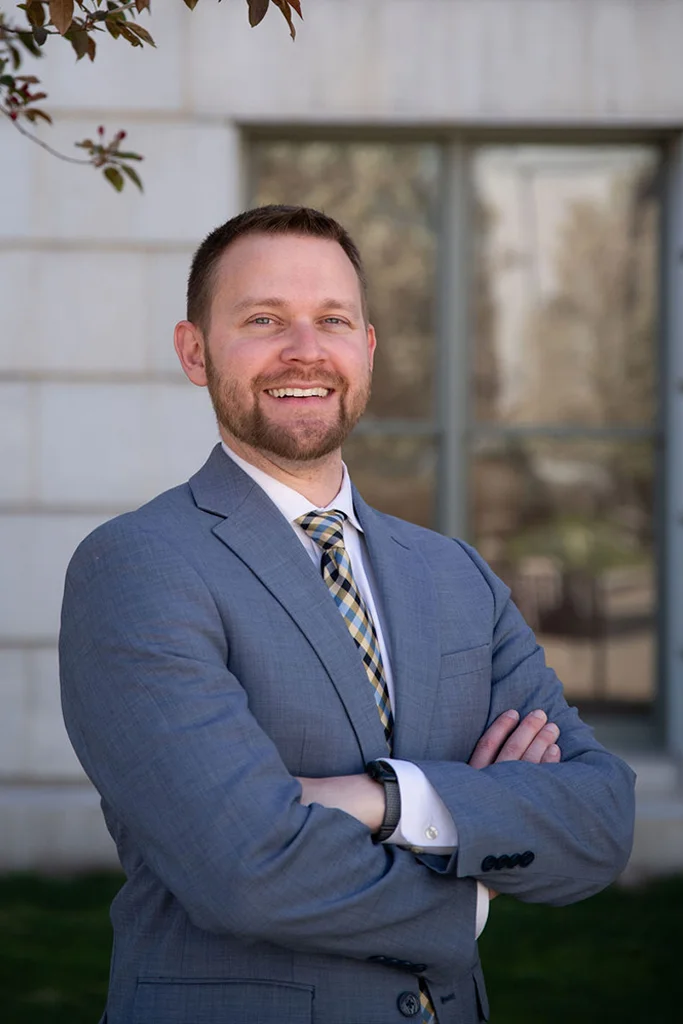
Reid DeChant built his practice around DUI defense and administrative hearings, and his background is genuinely uncommon in this area of law. Before entering private practice, Reid worked as a public defender handling enormous caseloads in Denver, Broomfield, and Adams County, where he spent more time inside courtrooms cross-examining police officers than most private attorneys will accumulate over entire careers. That volume of actual litigation experience matters at DMV hearings, because the hearing officer is not your ally, and the arresting officer’s sworn report is not unchallenged evidence. Reid knows how to question the foundation of a stop, probe the validity of an Express Consent advisement, and challenge whether a chemical test was administered within the required two-hour window.
The firm’s case results reflect this approach in practice. DeChant Law has obtained dismissals in DMV Express Consent proceedings on multiple grounds: improper Express Consent advisements, failure to administer the chemical test within the statutory timeframe, Miranda advisement issues that affected the Express Consent process, and procedural defects in how the hearing itself was initiated. These are not lucky outcomes. They are the product of knowing what to look for in the paperwork, the officer’s report, and the chronology of events from the traffic stop through the arrest and testing sequence.
Reid is also a graduate of the Trial Lawyers College, a program founded by legendary attorney Gerry Spence that trains lawyers in genuine storytelling and human connection as advocacy tools. At a DMV hearing, you are not addressing a jury, but you are presenting a human being’s situation to someone with the power to take away their ability to drive to work, take their kids to school, and function in daily life. Reid carries members of the National Association of Criminal Defense Lawyers and the Colorado Criminal Defense Bar, and those connections keep him current on the latest strategies and procedural developments in Colorado administrative license proceedings.
DMV Hearing Issues That Appear Most Frequently in Jefferson County DUI Cases
- The Seven-Day Request Deadline: Colorado law requires drivers to request a DMV hearing within seven days of the arrest date. Missing this deadline results in automatic revocation, with no opportunity to contest the action. This clock starts running immediately, which is why contacting a DMV attorney in Lakewood on the day of arrest or the morning after is so critical.
- Express Consent Advisement Defects: Officers are required to advise drivers of their Express Consent rights in a specific manner. If the advisement was given incorrectly, out of sequence, or after Miranda warnings were issued, those procedural errors can be grounds for dismissal of the DMV action, as reflected in several of DeChant Law’s past results.
- The Two-Hour Testing Requirement: Colorado requires that a chemical breath or blood test be administered within two hours of the driving. If the officer’s timeline shows the test occurred outside that window, the DMV action may be subject to dismissal on that basis alone.
- Blood Test Chain of Custody and Accuracy: Blood tests must be handled, stored, and analyzed under specific protocols. Breaks in the chain of custody, improper storage conditions, or issues with the testing laboratory’s procedures can call the reliability of the result into question at the hearing.
- Breathalyzer Maintenance and Calibration Records: Colorado requires that breath testing instruments be maintained and calibrated according to strict standards. If calibration records are missing, incomplete, or show the instrument was outside of tolerance, that creates an avenue to challenge the test result.
- The Basis for the Initial Traffic Stop: Everything in a DUI case, including the DMV action, flows from whether the officer had lawful grounds to initiate the traffic stop. A stop based on insufficient reasonable suspicion can unravel both the criminal charge and the administrative proceeding, because without a lawful stop, the evidence that followed is compromised.
- Refusal Cases and Their Consequences: Refusing a chemical test triggers a longer revocation period than a failed test, and the hearing dynamics are somewhat different. However, refusal cases still carry procedural requirements that must be followed, and the same advisement and stop validity issues apply.
What to Do After a DUI Arrest in the Lakewood Area
The most consequential mistake drivers make after a DUI arrest is waiting. The seven-day deadline is not flexible, and the Division of Motor Vehicles does not grant extensions because you were confused about the process or thought your criminal attorney was handling it. The DMV proceeding and the criminal proceeding are separate, and an attorney you hire for your Jefferson County District Court case is not automatically handling your DMV hearing unless you have specifically engaged them for that purpose.
When you are released after a DUI arrest, you will typically receive a yellow or pink DMV form that serves as a temporary driving permit and also contains the information about your right to request a hearing. Hold onto that document. It has the dates and case identification information that will be needed to request the hearing. Do not assume anything from that document; call a Lakewood DMV defense attorney immediately and let them review it, because what you interpret as straightforward may contain details that affect the deadline calculation or the nature of the revocation being pursued.
DMV hearings for Jefferson County arrests are handled through the Colorado Division of Motor Vehicles. The hearing itself is typically conducted by phone or, in some instances, in person. The hearing officer is a DMV employee, not a judge, and the standard rules of evidence that apply in courtrooms do not fully govern these proceedings. That informality can work against unrepresented drivers who assume the process is simple because it is not in a courthouse. The hearing officer will have the officer’s sworn report and supporting documentation. Your attorney’s job is to identify the weakest points in that paperwork and build arguments around them before the hearing takes place.
In the meantime, preserve everything related to the night of your arrest. Text messages, receipts, video footage from bars or restaurants if applicable, contact information for any witnesses who were present, and anything that documents where you were, when you were there, and what you consumed. Even at the administrative level, factual context can matter, especially in cases where the officer’s account contains errors or inconsistencies.
What Actually Happens at a Colorado DMV Hearing
Unlike a criminal trial, a Colorado DMV hearing does not require the state to prove its case beyond a reasonable doubt. The standard is lower, which means the DMV does not need to meet the same threshold the prosecutor faces in criminal court. The hearing officer is looking at whether there is sufficient credible evidence that the statutory requirements for revocation were met: that the officer had probable cause to believe the driver was under the influence, that the driver was properly advised, and that the driver either tested above the legal limit or refused. This lower burden is precisely why procedural defects matter so much. A flaw in the advisement process or the testing sequence can defeat the case even when the facts seem straightforward.
At the hearing, your attorney can subpoena the arresting officer to appear and cross-examine them. This is an often-overlooked opportunity in DMV proceedings. When an officer fails to appear, the hearing can sometimes be dismissed for that reason alone. When an officer does appear, cross-examination creates a record and an opportunity to expose inconsistencies between the officer’s written report and their recollection of the stop, the advisement, and the testing sequence. This is exactly the kind of work that requires someone who has spent real time cross-examining law enforcement officers, not someone learning on the job.
If the revocation is upheld at the hearing, there may be options for obtaining a restricted license that allows driving for essential purposes during the revocation period, particularly for first-offense situations. This interlock-based restricted license program has specific eligibility requirements, and the availability of that option depends on the facts of your case. A Lakewood DMV attorney can walk through what those options look like specifically for your situation.
Questions Lakewood Drivers Ask About DMV Hearings
How is a DMV hearing different from my criminal DUI case?
They run completely separately. Your criminal DUI case will proceed through the Jefferson County District Court system, with prosecutors, a judge, and potentially a jury. Your DMV hearing is an administrative proceeding run by the Colorado Division of Motor Vehicles. A conviction or dismissal in one does not automatically determine the outcome in the other. You need to actively defend both proceedings to protect yourself fully.
What happens if I miss the seven-day deadline to request a hearing?
Your license is automatically revoked on the effective date shown on the DMV paperwork you received at your arrest. There is no administrative appeal of that revocation simply because you missed the deadline. The opportunity to challenge the revocation before it takes effect is gone. This is why contacting an attorney immediately after a DUI arrest is essential, not optional.
Can I request the hearing myself without a lawyer?
You can request the hearing yourself, yes. Whether you should represent yourself at the hearing is a different question. The hearing officer is not there to help you, the process moves quickly, and the officer’s report is already in front of the hearing officer before you say a word. Attorneys who handle these hearings regularly know how to request and review the evidence file, spot procedural defects, and conduct cross-examination. Self-represented drivers rarely catch those issues in time.
If I refused the breathalyzer, is there any point in requesting a DMV hearing?
Yes. Refusal cases carry longer revocation periods, but the same procedural requirements apply to them. If the officer gave an improper Express Consent advisement, failed to give you a proper opportunity to consult with an attorney before deciding on the test, or if the initial traffic stop lacked legal justification, those issues can be raised in a refusal case just as in a failed test case. Refusal cases are not automatically lost causes.
How long does a Colorado DMV hearing take, and when will I know the result?
The hearing itself typically runs between thirty minutes and an hour, depending on whether the officer is subpoenaed and whether there are significant issues to address. The hearing officer issues a written decision after the hearing, which can take a few days to a few weeks. During that waiting period, your temporary driving permit typically remains valid unless the officer revokes it at the conclusion of the hearing.
Can winning my DMV hearing help my criminal DUI case?
In some ways, yes. Cross-examination testimony given by the officer at a DMV hearing becomes a sworn record that your defense attorney can use in the criminal case to challenge the officer’s account if the story shifts. A DMV hearing, handled properly, is not just about the license. It is an opportunity to create a record early in the process before the officer has had months to refine their account through preparation with a prosecutor.
What if my blood test was taken at a hospital rather than at a police station?
Hospital blood draws arise in accident cases and situations where a driver was injured and transported before any testing could be done at the station. Hospital draws involve different protocols than law enforcement-administered tests, and the chain of custody, handling, and analysis standards that apply to those samples are worth scrutinizing carefully. These cases require attention to both the medical records and the DMV file.
Does a DMV hearing revocation affect my commercial driver’s license differently?
Yes. Commercial driver’s license holders face substantially more severe consequences from a DUI arrest even when they are driving a personal vehicle. Federal regulations impose disqualification requirements that operate independently of Colorado’s standard revocation rules, and the thresholds that trigger action are lower for CDL holders. If you hold a CDL and were arrested for DUI anywhere in the Lakewood or Jefferson County area, contacting an attorney who handles DMV proceedings before the deadline is especially critical.
What if the officer who arrested me is no longer with the department?
An officer leaving law enforcement does not automatically invalidate the DMV action. However, it can create complications around obtaining the officer’s appearance at a hearing, which in some circumstances can work in the driver’s favor. This is a fact-specific situation that an attorney needs to evaluate based on the particulars of the case.
Does a dismissed DMV case mean the DUI charge is also dismissed?
No. As described earlier, they are separate proceedings. A successful DMV hearing saves your license administratively. The criminal DUI case in Jefferson County District Court continues on its own track. The facts and arguments that led to the DMV dismissal may be useful in the criminal defense, but the dismissal of one does not automatically produce a dismissal of the other.
Serving Lakewood and Jefferson County DMV Hearing Clients Throughout the Region
DeChant Law represents drivers facing DMV hearings and DUI charges across Lakewood and the broader Jefferson County area, including clients from the Belmar district, the Green Mountain neighborhoods, Bear Creek, Edgewater, and the areas along Wadsworth Boulevard and West Colfax Avenue where traffic enforcement is concentrated. The firm also serves clients from Wheat Ridge, Arvada, Golden, Evergreen, Conifer, Morrison, Littleton, Ken Caryl, and the communities along US-285 heading into the foothills. Drivers from the Applewood area, the Lakewood Townhomes district, and the West Alameda corridor have all found themselves facing DMV proceedings following stops in those areas.
Beyond Jefferson County, DeChant Law handles DMV hearing representation for clients throughout the Denver metropolitan area, including Denver County, Adams County, Arapahoe County, Broomfield County, and Douglas County. Whether your stop happened on I-70, I-25, C-470, or a local Lakewood surface street, the firm is prepared to step in immediately, request the hearing, and begin building the challenge from day one.
Talk to a Lakewood DMV Hearing Attorney Before That Seven-Day Window Closes
The administrative case against your license moves on a calendar that does not pause while you decide what to do. A Lakewood DMV hearing attorney from DeChant Law can request the hearing on your behalf, pull the evidence file, identify every procedural issue worth challenging, and put you in the strongest possible position before that hearing ever takes place. Reid DeChant has obtained dismissals in DMV Express Consent proceedings across Jefferson County and the Denver metro area, and the results documented on this site reflect what dedicated, prepared advocacy actually looks like in these administrative cases.
Do not let the administrative revocation of your license become a default outcome simply because the deadline passed. Reach out to DeChant Law today and speak directly with Reid about what happened, where the potential challenges in your case lie, and what defending your license through a DMV hearing will actually involve.