Greeley DWAI Lawyer
A DWAI charge in Greeley is not the lesser charge many people assume it is. Colorado’s Driving While Ability Impaired statute captures drivers at blood alcohol concentrations as low as 0.05, well below the threshold that most people associate with impaired driving arrests. That gap between what drivers expect and what Colorado law actually punishes creates a situation where people walk into the legal process seriously underestimating what they are facing. A Greeley DWAI lawyer who understands how Weld County prosecutes these cases can make a meaningful difference in how yours resolves.
Greeley sits at the center of Weld County, one of the most active law enforcement jurisdictions along the Front Range corridor. Highway 34, US-85, and the stretch of 10th Street running through central Greeley see consistent DUI and DWAI enforcement, particularly on weekends, during Stampede season, and near the University of Northern Colorado campus. The Weld County District Attorney’s Office prosecutes these cases with real resources and a track record of pushing for convictions. A first-time DWAI may feel minor on paper, but between fines, license consequences, mandatory alcohol education, probation conditions, and the permanent nature of a criminal record in Colorado, the real-world impact of a conviction accumulates quickly.
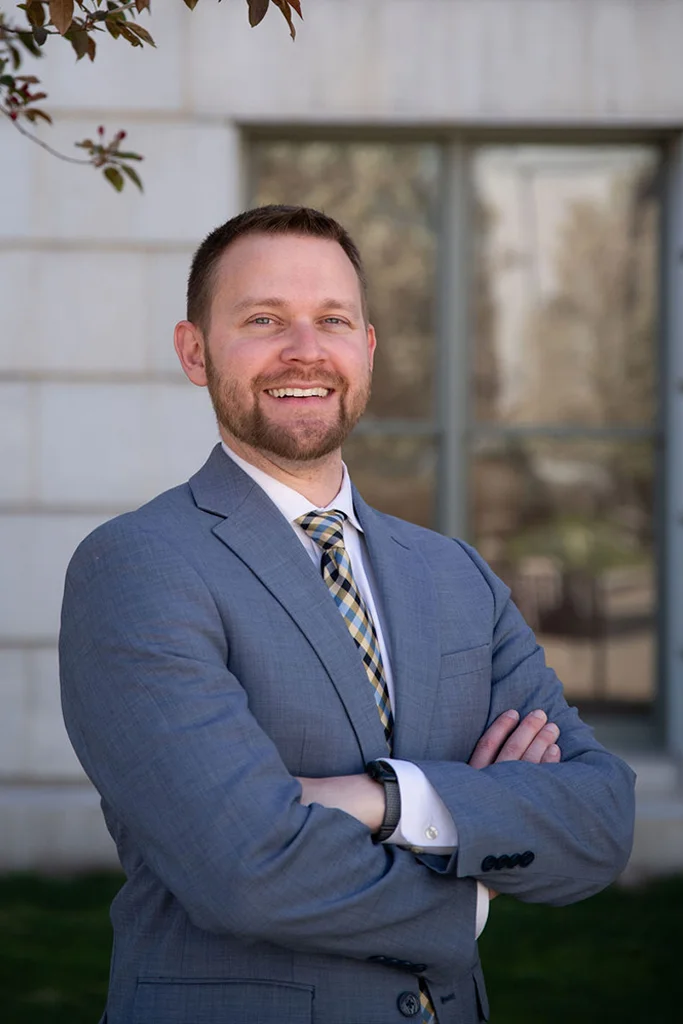
DeChant Law defends DWAI cases throughout Greeley and Weld County, bringing the kind of trial-tested preparation that changes outcomes. Attorney Reid DeChant’s background as a former public defender means he has handled the full spectrum of impaired driving cases across multiple Colorado jurisdictions, including charges where the evidence looked strong at the outset and still came apart under close scrutiny. The difference between a conviction and a dismissal often comes down to how carefully someone examines the traffic stop, the field sobriety tests, the breath test administration, and the officer’s reported observations, and that kind of review requires someone who has done this work repeatedly in actual courtrooms.
What Separates DWAI From DUI in Colorado, and Why That Distinction Matters in Your Case
Colorado draws a sharper line between DUI and DWAI than most states, and understanding that line is essential to building a defense. A DUI charge in Colorado applies when a driver’s blood alcohol content reaches 0.08 or above, or when alcohol or drugs substantially incapacitate the driver’s ability to operate a vehicle safely. DWAI, by contrast, applies at BAC levels between 0.05 and 0.079, or when the driver is affected to even the slightest degree. That phrase, “to the slightest degree,” is the part of the statute that catches people off guard. It is deliberately broad, and prosecutors use it to pursue cases based on officer observation alone, even when chemical test results do not clearly support a DUI.
The practical implication is that DWAI cases often rest heavily on the officer’s subjective account. Red eyes, a faint odor of alcohol, slight unsteadiness during field sobriety tests, a perceived hesitation in speech. These observations form the core of many DWAI cases, and they are far more contestable than a defendant might expect. A DWAI attorney in Greeley who has deposed law enforcement officers and cross-examined them at trial knows exactly how to challenge the reliability of these field observations and whether the standardized field sobriety tests were administered correctly under the National Highway Traffic Safety Administration protocols those tests require.
DWAI also carries consequences that are often misunderstood at the outset. Even a first-offense DWAI results in points added to your driving record, the possibility of license suspension through DMV Express Consent proceedings, mandatory alcohol education enrollment, fines and court costs, and a criminal conviction that does not automatically disappear. Colorado has no automatic expungement mechanism for adult DWAI convictions. Once convicted, that record follows you into employment background checks, professional licensing reviews, rental applications, and immigration proceedings if applicable.
How DWAI Cases Are Built and Where They Can Break Down
- Traffic Stop Legality: Every DWAI arrest begins with a traffic stop, and that stop must be supported by reasonable articulable suspicion. Stops based on vague observations, equipment violations that cannot be substantiated, or officer bias rather than actual traffic law violations can be challenged, and an unlawful stop can result in suppression of all evidence gathered afterward.
- Field Sobriety Test Administration: Colorado law enforcement officers use standardized tests including the Horizontal Gaze Nystagmus, Walk and Turn, and One Leg Stand. These tests are only reliable when administered exactly as trained and under appropriate conditions. Uneven pavement, poor lighting, the driver’s footwear, or the officer’s failure to demonstrate the test properly can all compromise validity.
- Breath Test Accuracy: Roadside preliminary breath tests are not admissible as evidence of BAC at trial, though they can factor into probable cause determinations. Evidentiary breath tests administered at the station are admissible but require strict machine calibration records, proper officer certification, and compliance with Colorado’s testing protocols.
- Blood Test Chain of Custody: When blood is drawn, Colorado law requires specific procedures for collection, storage, and laboratory analysis. Breaks in chain of custody, improper storage temperatures, lab error, or the failure to preserve a sample for independent testing by the defense can each undermine the prosecution’s evidence.
- Express Consent Hearing at the DMV: A DWAI arrest triggers a separate DMV proceeding to revoke your driver’s license, which runs parallel to your criminal case. This hearing has its own deadline and its own procedural requirements, and it is entirely separate from what happens in Weld County District Court. Missing the request window forfeits your right to a hearing and almost guarantees revocation.
- Drug-Related DWAI Charges: Colorado’s DWAI statute covers impairment by drugs as well as alcohol, including legally prescribed medications and cannabis. Drug-DWAI prosecutions often rely on Drug Recognition Expert evaluations, which are based on a series of clinical observations rather than a simple chemical number. These evaluations involve complex methodology and have recognized vulnerabilities that a prepared defense attorney can explore.
- Prior Offense Enhancement: A prior DUI or DWAI from anywhere in Colorado or from certain other jurisdictions can significantly elevate the consequences of a current DWAI charge. Prior convictions affect sentencing ranges, mandatory minimum jail requirements, and whether a charge can be resolved through certain diversion or deferred judgment options.
What to Do After a DWAI Arrest in Weld County
The window immediately following a DWAI arrest contains some of the most consequential deadlines you will face. On the criminal side, your first appearance in Weld County District Court, located at 901 9th Avenue in Greeley, will come quickly, and how you proceed at that hearing shapes the rest of your case. Appearing without counsel and entering an uninformed plea can foreclose options that would otherwise have been available to you, including certain diversion programs or charge negotiations that require early engagement with the prosecution.
Simultaneously, Colorado’s Express Consent law means your license situation is developing on its own track. When a law enforcement officer requests a chemical test and you either refuse or provide a result above the statutory threshold, the officer typically takes your license and issues a temporary driving permit. From that date, you have a strict deadline to request a hearing with the Colorado Division of Motor Vehicles. Missing that window means automatic revocation proceeds without any opportunity to contest it. Reid DeChant has a documented record of successfully challenging Express Consent actions in DMV hearings, and securing that hearing requires prompt action.
On the evidence side, the period right after an arrest is also when you should be preserving everything you remember. That includes the location and time of the stop, what the officer said and asked, whether you were given any instructions before field sobriety tests, whether you were read your rights before any questioning, whether you observed any issues with how the breath or blood test was administered, and any witnesses who were present. Write this down while it is fresh. Details that seem insignificant to you may become significant in a legal context, and memories fade quickly. Avoid discussing the facts of your case on social media or with people outside your legal representation, as those communications do not carry privilege and can be used against you.
Common mistakes in the early stages of a DWAI case include assuming the evidence is conclusive and that no defense exists, waiting too long to consult with a defense attorney and losing the DMV hearing window, and confusing the DWAI charge with a traffic infraction and treating it as something that can simply be paid off. A conviction carries a criminal record. That is not something a fine resolves.
Why DeChant Law for a Greeley DWAI Case
Reid DeChant built his practice around the kind of criminal defense that requires genuine trial readiness. His time as a public defender placed him in front of judges and juries across Denver, Broomfield, Adams County, and surrounding jurisdictions, handling DUI and DWAI cases alongside every other category of criminal charge. That volume of actual courtroom work gives him a reference point that many private practitioners never accumulate: he knows how these cases are prosecuted, how the evidence is typically presented, and where it tends to be vulnerable.
Reid’s training at the Trial Lawyers College, founded by attorney Gerry Spence, informed a defense philosophy built on understanding each client’s story and presenting it in a way that connects authentically with the people who decide these cases. Impaired driving charges are not purely technical exercises, even though the technical elements matter. How a jury or a judge receives the human being sitting at the defense table matters enormously, and Reid’s approach accounts for that. He is also recognized by the National Association of Criminal Defense Lawyers and the Colorado Criminal Defense Bar, reflecting a sustained commitment to the standards of this work rather than a credential collected and shelved.
The firm’s documented case results include multiple dismissed DMV Express Consent actions, DUI acquittals at trial across Jefferson, Arapahoe, and Douglas Counties, and dismissals in cases where prosecutors had what looked like solid evidence at the outset. Past results do not guarantee what happens in any future case, but they reflect a consistent pattern of preparation, advocacy, and genuine effort on behalf of people who needed it most. If you are looking for a DWAI defense attorney in Greeley who will treat your case with that same level of investment, DeChant Law is worth a direct conversation.
Questions People Ask About Greeley DWAI Cases
Is a DWAI in Colorado a criminal charge or just a traffic violation?
A DWAI is a criminal charge, not a civil traffic infraction. A first-offense DWAI is a Class B traffic misdemeanor in Colorado. That means it carries potential jail time, fines, mandatory alcohol education requirements, probation, and a permanent criminal conviction if you are found guilty. Unlike a speeding ticket, a DWAI conviction cannot simply be paid off and forgotten.
What happens to my driver’s license after a DWAI arrest in Greeley?
Your license situation is handled through two separate processes. The criminal court in Weld County handles the charge itself. The Colorado Division of Motor Vehicles handles the administrative revocation through what is called an Express Consent hearing. You must request this hearing within a strict deadline from the date of your arrest. If you do not request the hearing in time, the DMV will revoke your license automatically. Even if you are ultimately acquitted of the criminal DWAI charge, the DMV revocation can still stand unless you successfully contest it separately.
Can I be charged with DWAI if I was under the legal DUI limit?
Yes. Colorado’s DWAI statute covers drivers with a BAC between 0.05 and 0.079, which is below the 0.08 DUI threshold. It also covers any level of impairment, even if your BAC is below 0.05, if the officer’s observations support a finding that alcohol or drugs affected your driving ability to any degree. You can be arrested for DWAI without a chemical test result in that traditional range.
How does Weld County typically prosecute first-offense DWAI cases?
The Weld County District Attorney’s Office handles a significant volume of impaired driving cases given the county’s geographic spread along major highway corridors. Prosecutors generally approach DWAI cases with standard charging documents and plea offers, but the specifics vary based on the facts of the stop, the defendant’s history, the chemical test results, and the quality of the officer’s observations. Having a DWAI attorney in Greeley who has handled cases in this jurisdiction allows for a more calibrated assessment of what the prosecution is likely to offer and whether that offer is worth accepting.
What are the penalties for a first-offense DWAI in Colorado?
A first-offense DWAI carries up to 180 days in jail (with a mandatory minimum of two days if convicted), fines and surcharges, mandatory enrollment in an alcohol education and therapy program, up to two years of probation, and the addition of eight points to your driving record. License revocation may also occur through the separate DMV process. These penalties increase substantially for second and subsequent offenses.
Does a DWAI conviction affect professional licenses in Colorado?
It can, depending on the profession. Many licensing boards in Colorado, including those governing healthcare workers, teachers, attorneys, real estate professionals, and others, require disclosure of criminal convictions and have authority to take action against a license following a conviction. The impact is not automatic across all fields, but it is a real consideration that should factor into how aggressively you pursue a defense. A conviction that seems manageable in the short term can have professional consequences that last far longer.
Can a DWAI charge be reduced or dismissed in Weld County?
Yes, in some cases. Outcomes depend on the specific facts of each case, the strength or weakness of the prosecution’s evidence, the defendant’s prior record, and the quality of the defense presented. Cases with problematic stops, improperly administered field sobriety tests, chain of custody issues with blood samples, or constitutional violations during the arrest process have greater potential for reduction or dismissal. A careful, early review of the full case file is the starting point for identifying those opportunities.
What is a deferred judgment and is it available for DWAI in Colorado?
A deferred judgment is a type of resolution where the defendant enters a guilty plea that is held in abeyance while they complete a period of supervision and comply with specific conditions. If they successfully complete the deferred period, the case is dismissed and they can apply to have the record sealed. Deferred judgments are not available in every case and are subject to prosecutorial discretion, but in some first-offense situations without aggravating factors, they represent a viable path that avoids an outright conviction. Eligibility and whether this option is worth pursuing requires a close look at the specific facts and the defendant’s individual circumstances.
Will a Colorado DWAI show up on out-of-state background checks?
Yes. A DWAI conviction is a criminal conviction and will appear in national criminal background databases used by most employers, landlords, and licensing agencies. It is not limited to Colorado records systems. People who travel for work, hold security clearances, or work in regulated industries should treat a DWAI charge with the same seriousness they would give any other criminal matter, because from a background check perspective, that is exactly what it is.
I refused the chemical test. Does that make my case better or worse?
Refusal creates a different set of challenges. On the license side, Colorado’s Express Consent law treats a refusal as a basis for automatic revocation, typically for a longer period than a failed test. On the criminal side, prosecutors can comment on the refusal as consciousness of guilt, and a jury is permitted to draw inferences from it. However, refusal also means there is no BAC number for the prosecution to present, which can complicate their ability to establish the level of impairment required. Whether refusal helped or hurt your position depends on the totality of the evidence in your case, and that assessment requires a detailed review by a DWAI defense attorney.
Serving Greeley and Weld County DWAI Clients Across Northern Colorado
DeChant Law represents clients facing DWAI charges throughout Greeley and across the full reach of Weld County. From Evans and Windsor to the north through Johnstown, Milliken, and Mead, and eastward through Kersey, Platteville, and Fort Lupton, the firm handles cases arising from enforcement on every major corridor in the county. Clients from Ault, Eaton, Severance, and Hudson also reach out when they need representation in Weld County District Court. The firm also serves clients in neighboring Larimer County communities including Loveland and Fort Collins, as well as Morgan County and the surrounding northern Colorado region. Wherever your DWAI stop occurred along the stretch of I-76, Highway 34, US-85, or the agricultural roads that cross Weld County, DeChant Law can appear in the relevant court and represent you through both the criminal case and any parallel DMV proceedings.
Speak With a Greeley DWAI Attorney About Your Case
A DWAI charge in Greeley deserves a serious response from the moment the arrest occurs. The deadlines are real, the consequences are lasting, and the prosecution is not waiting. Reid DeChant is a Greeley DWAI attorney who has handled these cases at trial, at DMV hearings, and through the full range of resolutions that fall between those two endpoints. If you have been charged with DWAI in Weld County or anywhere in northern Colorado, call DeChant Law to schedule a consultation and get a clear picture of where your case stands and what options are actually available to you.