Greeley Drug Crimes Lawyer
Weld County prosecutors pursue drug charges with the kind of persistence that surprises many people who assume a first arrest, or a small quantity, will lead to a slap on the wrist. It rarely works that way. Colorado law divides drug offenses into a structured tier system with real prison exposure at the felony level, and even misdemeanor drug convictions carry consequences that follow a person into employment background checks, professional licensing reviews, and housing applications for years. A Greeley drug crimes lawyer who understands how Weld County cases are actually prosecuted can make a decisive difference in how yours resolves.
Greeley sits at the center of a region where law enforcement activity around drug offenses is robust. The U.S. 34 corridor, Highway 85, and the areas around the JBS meatpacking facility and the University of Northern Colorado campus all generate significant police contact. Agricultural and energy sector workers, students, and longtime residents all find themselves caught up in drug investigations that range from simple possession stops on Tenth Street to more complex distribution allegations tied to interstate trafficking routes. Whatever brought you to this point, the path forward starts with understanding what you are actually facing and who you want in your corner when it matters.
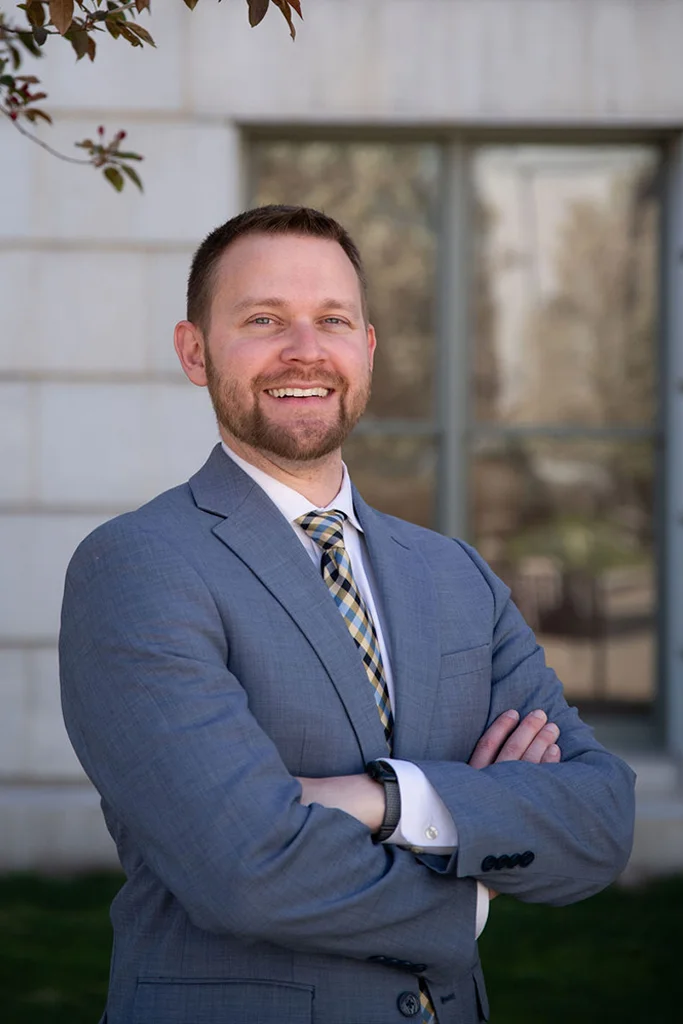
At DeChant Law, Reid DeChant has defended clients against drug charges across the Denver metro and along the Front Range, bringing the same trial-ready approach to every case. Reid trained at the Trial Lawyers College, an intensive program founded by Gerry Spence, and spent formative years as a public defender where high-volume caseloads meant constant courtroom work, cross-examinations of officers, and contested suppression hearings. That background is directly relevant when your freedom hinges on whether a traffic stop was constitutional, whether a search warrant was supported by actual probable cause, or whether the evidence the prosecution is counting on can withstand serious scrutiny.
Drug Offense Categories That Come Through the Weld County Courts
- Simple Possession of a Controlled Substance: Colorado classifies possession of drugs like cocaine, methamphetamine, fentanyl, and heroin as a drug misdemeanor in many circumstances, but prior convictions or the involvement of certain substances in higher quantities can push charges into felony territory with significant prison exposure.
- Possession of a Schedule I or II Substance with Intent to Distribute: When weight, packaging, cash, or communications suggest more than personal use, prosecutors charge distribution. Weld County has seen increased enforcement tied to fentanyl distribution, and Colorado law treats these cases as serious felonies regardless of whether a transaction was ever observed.
- Drug Paraphernalia Charges: Pipes, scales, baggies, and similar items can result in standalone paraphernalia charges or accompany possession and distribution counts. While often treated as minor, paraphernalia convictions appear on records and can complicate professional licensing matters.
- Methamphetamine Offenses: Meth production, distribution, and trafficking charges carry some of the heaviest penalties under Colorado law. Weld County, given its proximity to agricultural areas and remote properties, has historically seen meth-related enforcement activity, and the penalties at the manufacturing or trafficking level can reach into the decade-plus sentencing range.
- Prescription Drug Violations: Possessing prescription opioids, benzodiazepines, or stimulants without a valid prescription, or obtaining them through fraud, is a criminal offense under Colorado law. These cases often arise from traffic stops or workplace incidents and catch people off guard who did not consider their conduct criminal.
- Marijuana-Related Offenses Still Prosecuted: While Colorado has legalized recreational cannabis, criminal exposure remains real for possession over the legal limit, sale without a license, providing cannabis to minors, and cannabis-related DUI offenses. Weld County courts handle these cases regularly, and the legal framework is more complicated than many people assume.
- Drug Trafficking Charges: When weight exceeds threshold amounts or federal jurisdiction becomes involved, trafficking charges carry mandatory sentencing exposure. Interstate corridors running through Weld County draw federal attention, and cases that begin with a state stop can escalate into federal prosecution territory quickly.
How Evidence Gets Challenged in Greeley Drug Prosecutions
Drug cases are built almost entirely on physical evidence, and physical evidence only reaches a jury if it was obtained legally. That is not a technicality, it is a constitutional guarantee, and it is one of the most productive areas of defense work in drug crime cases. Before accepting any outcome in a drug prosecution, your attorney should have examined every layer of how law enforcement encountered you, how they justified any search or seizure, and whether the chain of custody for the substances involved is clean from collection through testing.
Traffic stops are the most common starting point for drug arrests in the Greeley area, and they are also among the most legally vulnerable. An officer who stops a vehicle must have reasonable articulable suspicion of a traffic violation or criminal activity. If that threshold was not genuinely met, everything discovered afterward can be suppressed through a motion filed in Weld County District Court. Reid DeChant has extensive experience cross-examining officers about the specific facts they observed before initiating a stop, and juries and judges pay close attention to those details when they are laid out carefully. A patrol officer’s claim that a driver was “weaving” or had a “minor equipment violation” does not automatically satisfy constitutional standards, and a drug crimes attorney in Greeley who challenges those claims vigorously forces the prosecution to justify what they did.
Search warrants deserve equal scrutiny. An affidavit submitted to a Weld County judge to obtain a warrant must contain specific, credible facts, not boilerplate language or the vague opinion of a confidential informant who has never been verified. When warrants are obtained through misleading or legally insufficient affidavits, the resulting evidence can be suppressed. Similarly, when officers conduct searches without warrants by claiming consent or exigent circumstances, those claims can be challenged. The prosecution cannot build its case on unconstitutionally obtained evidence, and making that argument effectively requires a lawyer with genuine motion practice and suppression hearing experience.
Laboratory analysis of suspected substances is another area where defense attorneys can raise meaningful challenges. Crime lab results are not automatically reliable. Issues of chain of custody, contamination, analyst qualifications, and proper testing protocols have all led to suppression or exclusion of drug evidence in Colorado courts. A Greeley drug crimes attorney who understands forensic evidence and is willing to retain independent experts when necessary gives clients options that most public defenders, carrying enormous caseloads, simply cannot deliver with the same depth of individual attention.
What to Do After a Drug Arrest in Weld County
The first decision you make after a drug arrest is also the most important one: whether to say anything to law enforcement. The answer is no. This applies regardless of how cooperative you want to appear, regardless of whether you think the situation can be explained, and regardless of what the officer suggests about how things might go easier if you talk. Politely decline to answer questions beyond providing identifying information and ask for an attorney. Everything said in a police car, a booking room, or a jail cell can be used, and statements made in those settings rarely help and frequently cause damage that cannot be undone later.
Drug cases in Weld County are handled through the 19th Judicial District, which encompasses Weld County. The courthouse for criminal proceedings is located in Greeley, and it is where your arraignment, motions hearings, and any trial would be held. Depending on the nature of the charges, your case may proceed in county court for misdemeanor matters or district court for felony charges. Understanding which track your case is on helps set realistic expectations about timelines, which in Weld County can range from a few months for straightforward misdemeanors to well over a year for complex felony cases headed toward trial.
After an arrest, your attorney will want to gather several categories of information quickly. The police report, body camera footage if it exists, dashcam recordings, any search warrant and supporting affidavit, lab reports on any seized substances, and your criminal history are all foundational documents. Some of this material requires timely discovery requests. Body camera footage, in particular, can be subject to retention limitations, so the sooner a defense attorney gets involved and makes formal requests, the better. If your arrest involved a traffic stop, any footage from that stop is particularly valuable because it captures the officer’s actual stated justification for the encounter in real time.
Drug convictions in Colorado can also trigger license consequences and affect professional credentials held through state licensing boards. Healthcare workers, teachers, CDL holders, and others in regulated professions face the possibility of board action triggered by a criminal conviction entirely separate from the criminal court proceedings. Addressing the criminal case aggressively is not just about avoiding incarceration; it is about preserving the professional life and career you have built.
Why DeChant Law for Greeley Drug Charges
Reid DeChant built his practice on a foundation of real courtroom experience, the kind that comes from standing up in front of judges and juries repeatedly, not from observing or advising from the sidelines. His time as a public defender in Denver, Broomfield, and Adams County courtrooms meant handling everything from misdemeanor possession cases to serious felonies under conditions that required constant, decisive legal work. That volume of courtroom exposure is something few private attorneys accumulate, and it directly translates to drug crime defense because these cases so frequently turn on suppression motions, evidentiary challenges, and the ability to hold officers accountable during cross-examination.
Reid’s training at the Trial Lawyers College sets his approach apart in a way that matters to clients beyond just courtroom mechanics. The college, founded by Gerry Spence, trains lawyers to understand their clients as human beings and to communicate those human realities to juries. Drug cases are often prosecuted in a way that strips away context, presenting defendants as categories rather than people. Reid’s approach works in the opposite direction, building a defense narrative that reflects who a client actually is and why the circumstances of their arrest look different when fully examined. His case results include Not Guilty verdicts in DUI-Drug cases out of Jefferson County and Broomfield County, as well as dismissals across multiple drug-adjacent impaired driving charges, demonstrating the effectiveness of this approach in courts across the Front Range.
Reid is also a member of the National Association of Criminal Defense Lawyers and the Colorado Criminal Defense Bar, professional organizations that keep him connected to evolving defense strategies, changes in Colorado drug law, and the network of expert resources that can matter in a contested case. These are not ceremonial credentials. They reflect a genuine investment in staying current and connected in a practice area where law and strategy both shift regularly.
Questions People Ask About Greeley Drug Crime Cases
Is simple drug possession a felony in Colorado?
Not always. Colorado law distinguishes between levels of drug offense, and simple possession of many controlled substances is currently classified as a drug misdemeanor for first and second offenses in many circumstances. However, prior convictions, the type of substance, and the quantity involved can elevate charges significantly. Possession of certain substances above threshold amounts can result in felony charges with prison exposure. The specific facts of your case determine what level of offense applies.
Can a drug charge be dismissed if the search was illegal?
Yes. This is one of the most meaningful avenues of defense in drug cases. If law enforcement conducted a search that violated your Fourth Amendment rights, whether through an invalid traffic stop, a warrantless search without a valid exception, or a warrant obtained through an insufficient affidavit, your attorney can file a motion to suppress the evidence. If that motion succeeds, the prosecution may lose the physical evidence it needs to proceed, which often results in dismissal or a significant reduction in charges.
What are the penalties for drug distribution in Weld County?
Distribution of controlled substances is a felony in Colorado, and the penalty range depends on the substance, the quantity, and your criminal history. At the more serious end of the spectrum, distribution charges involving significant quantities of methamphetamine, heroin, fentanyl, or cocaine can carry substantial prison sentences. Colorado courts also have discretion in some circumstances to consider drug treatment alternatives to incarceration, particularly for cases that involve addiction rather than commercial distribution activity.
What happens at my first court appearance for a drug charge in Greeley?
Your first appearance in Weld County court will typically be an advisement or arraignment where the charges are formally stated, bail is addressed, and future hearing dates are set. For felony charges, there may be a preliminary hearing at which the prosecution must show probable cause. This early stage is important because bail conditions affect your freedom while the case is pending, and certain conditions like drug testing or restrictions on associations can be negotiated or challenged if they are unreasonable given your circumstances.
Will a drug conviction affect my CDL or professional license in Colorado?
Yes, in many cases it will. Commercial driver’s license holders face federal disqualification rules that are triggered by drug-related convictions, even for offenses that occur in a personal vehicle. Professionals licensed by Colorado state boards, including healthcare workers, educators, and those in financial services, may face board investigations and disciplinary proceedings following a drug conviction. The criminal case and the licensing matter run on separate tracks, which is why resolving the criminal charge favorably has consequences that extend well beyond the courtroom.
Can a drug case be transferred to drug court in Weld County?
Weld County has drug court programming available for eligible defendants, typically those charged with possession or low-level offenses who have substance use issues and no significant violent criminal history. Drug court involves intensive supervision, treatment, and compliance requirements in exchange for the possibility of reduced charges or dismissal upon successful completion. Not everyone qualifies, and the decision about whether drug court serves your interests requires honest analysis of the specific charges and likely outcomes at trial.
What if I was stopped on Highway 34 or I-76 and drugs were found in my car?
Traffic stops on major corridors running through Weld County are common starting points for drug investigations, and law enforcement in these areas is experienced at attempting to extend routine stops into drug investigations. The legality of the stop itself, the justification for any search, and whether consent was truly voluntary are all questions a defense attorney needs to examine immediately. Roadside drug investigations follow specific legal protocols, and departures from those protocols create defense opportunities that are worth pursuing aggressively.
How long does a felony drug case typically take in Weld County District Court?
Timelines vary considerably. Cases that resolve through a negotiated plea can move relatively quickly once discovery is complete and both sides have had time to evaluate the evidence, sometimes within a few months of arraignment. Cases that proceed toward trial, particularly those involving suppression motions, expert testimony, or complex factual disputes, regularly take a year or more from arrest to resolution. How aggressively the defense pursues pretrial motions, how backlogged the court’s docket is, and whether the prosecution modifies its position in response to defense challenges all affect the timeline in ways that are difficult to predict at the outset.
Does Colorado still prosecute marijuana offenses?
Yes. While recreational cannabis is legal in Colorado, criminal marijuana charges remain very real in specific circumstances. Possession over the legal limit, sale without a license, providing cannabis to anyone under 21, and operating a vehicle while impaired by cannabis are all still prosecuted. Weld County courts handle marijuana-related DUI cases regularly, and the science behind cannabis impairment testing is far less settled than alcohol testing, which creates both challenges and defense opportunities that an experienced drug crimes attorney can explore.
What if the drugs found were not mine?
This is a common and genuinely contested defense in cases involving shared vehicles, shared living spaces, or situations where multiple people were present. Colorado requires the prosecution to prove that you knowingly possessed the substance, meaning that mere proximity to drugs is not automatically sufficient for conviction. Constructive possession cases, where the prosecution argues you had control over drugs that were not found on your person, require more factual development and can be vigorously contested when the evidence of knowing possession is thin or circumstantial.
DeChant Law’s Drug Crime Defense Across Weld County and Surrounding Communities
DeChant Law serves clients facing drug charges throughout Greeley and across the broader Weld County region. This includes residents and workers in Evans, Windsor, Milliken, Johnstown, Fort Lupton, Kersey, Platteville, Gilcrest, La Salle, Ault, Eaton, and Pierce. The firm also extends representation to clients in communities along the Weld and Larimer County border areas including Severance and the northern reaches of the Loveland and Fort Collins corridor where cases may be filed in either jurisdiction depending on where the alleged offense occurred.
Agricultural workers across the county’s farming communities, energy sector employees, and students attending the University of Northern Colorado all find themselves navigating the Weld County court system in circumstances they did not anticipate. Distance from Denver does not mean distance from serious defense representation. Reid DeChant handles cases throughout the Front Range and northern Colorado, appearing in Weld County District Court and bringing the same preparation and trial readiness he brings to every jurisdiction where he practices.
Talk to a Greeley Drug Crimes Attorney About Your Case
Drug charges in Weld County move quickly once they are filed, and the decisions made in the early stages of a case have real consequences for how it unfolds. A Greeley drug crimes attorney who gets involved early can preserve evidence, challenge the legality of the arrest and search before critical opportunities close, and begin building a defense strategy grounded in the actual facts of your situation rather than a generic playbook.
Reid DeChant represents clients in Greeley and throughout Weld County with the same trial-ready preparation and genuine client investment he brings to every case. Call DeChant Law to schedule a consultation and discuss what your case actually involves, what the prosecution is likely to do with it, and what a serious defense looks like from this point forward.