Grand Junction Felony Lawyer
A felony charge in Mesa County is a different category of legal problem than anything most people have encountered before. We are not talking about fines or a weekend in county jail. A felony conviction in Colorado can mean years or decades in the Department of Corrections, a permanent mark on your record that closes doors to employment and housing for the rest of your life, loss of the right to possess firearms, and in some cases, registration requirements that follow you long after your sentence ends. When the charge involves a violent offense, a drug trafficking allegation, or a serious property crime, the Grand Junction courts move fast and the district attorney’s office moves methodically. What you do in the weeks immediately following an arrest can determine whether your case ends in a plea that protects you or a conviction that defines you. If you are looking for a Grand Junction felony lawyer, the decision deserves far more thought than a quick online search.
Grand Junction sits at the heart of Mesa County’s 21st Judicial District. The 21st Judicial District handles felony cases with its own rhythms, local prosecutors, and judicial preferences that any defense lawyer worth retaining should understand from actual courtroom experience. The distance from Denver, both geographic and institutional, matters. Prosecutors in Mesa County handle cases involving agriculture, energy industry workers, construction laborers, and a demographic mix that differs substantially from urban Front Range counties. Understanding the local context of a case is not a soft skill; it is a foundational requirement for building a defense that has any chance of resonating with a Grand Junction jury or persuading a Mesa County judge to consider alternatives to incarceration.
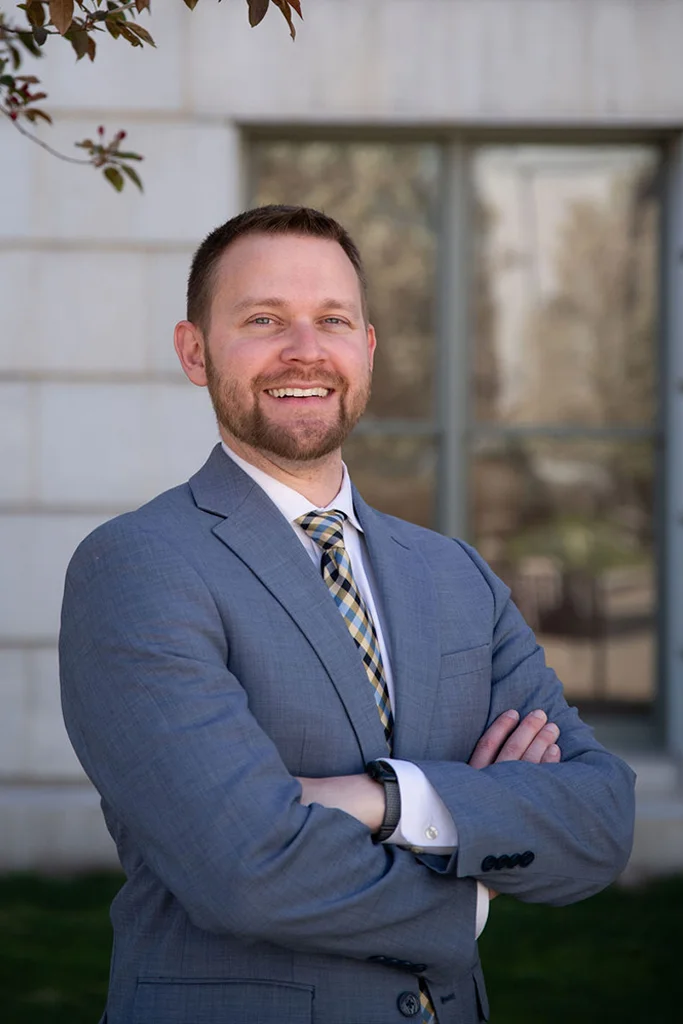
At DeChant Law, Reid DeChant brings a background rooted in extensive public defender trial experience across multiple Colorado jurisdictions, training at the Trial Lawyers College under the method developed by Gerry Spence, and a track record that includes not-guilty verdicts on serious violent felony charges. Reid’s approach to a felony case is built around understanding exactly who you are, what actually happened, and what the prosecution’s weaknesses are, then building a defense narrative from that foundation rather than reflexively seeking a deal.
What Felony Charges in Mesa County Actually Look Like
- Drug Distribution and Trafficking Charges: Mesa County’s position along I-70 and its proximity to Utah make it an active area for controlled substance interdiction. Charges involving distribution or trafficking of methamphetamine, fentanyl, heroin, or cocaine carry some of the most severe sentencing ranges in Colorado’s felony classification system, with higher-level felonies carrying potential sentences of years to decades in the Department of Corrections.
- Felony Assault and Violent Crime: Assault charges escalate to felony level based on the nature of the alleged injury, the use of a weapon, or the identity of the victim. Cases involving domestic violence allegations attached to a felony charge carry additional complications, including mandatory protection orders and enhanced sentencing provisions that can limit a court’s discretion.
- Felony DUI (DUI with Prior Convictions or Causing Injury): A DUI charge that involves serious bodily injury to another person, or a third or subsequent DUI conviction, can be charged as a felony in Colorado. These cases combine the procedural complexity of impaired driving defense with the higher stakes of felony sentencing, including potential prison time.
- Theft and Property Crimes at the Felony Threshold: Colorado’s felony theft threshold means charges based on property values above a certain dollar amount, as well as certain types of fraud and identity theft, can land in district court. Cases involving agricultural theft, equipment theft from job sites, or financial fraud have appeared with regularity in Mesa County’s felony docket.
- Weapons Charges: Unlawful possession of a firearm following a prior conviction, menacing with a weapon, and prohibited use charges all reach felony status under Colorado law. A prior felony conviction makes even a simple firearms possession case a serious new charge with significant penalties.
- Sex Offenses: Felony sexual assault and related charges carry mandatory registration requirements, potential civil commitment proceedings, and the harshest social consequences of any criminal conviction. Defense of these cases requires meticulous attention to how evidence was gathered, how witnesses were interviewed, and whether constitutional protections were observed throughout the investigation.
- Failure to Register as a Sex Offender: This charge, which carries its own felony-level consequences in Colorado, can arise even when the underlying original offense was resolved years earlier. Reid DeChant has a documented not-guilty verdict on this exact charge type.
Why DeChant Law for a Mesa County Felony Defense
Reid DeChant’s background is not common among private criminal defense attorneys. Before building his private practice, Reid worked as a public defender, handling a high volume of cases across Denver, Broomfield, Adams County, and surrounding jurisdictions. That caseload put him inside courtrooms constantly, cross-examining officers, challenging evidence, and trying cases to verdict under conditions that most private attorneys simply never experience at the same pace. That exposure to serious charges, including felony assault, homicide, sexual assault, DUI, and drug cases, gives Reid a working knowledge of how the system operates that cannot be replicated by a lawyer whose experience is primarily behind a desk.
The Trial Lawyers College, where Reid trained, is an exclusive program with a demanding curriculum focused on authentic courtroom storytelling. The method, developed by Gerry Spence, is built on the premise that the most powerful courtroom advocacy connects the jury to the human being on trial, not just the legal arguments. This is not an abstract philosophy. When a Mesa County jury is deciding whether to send someone to prison, they are responding to a story. Reid’s practice centers on building that story honestly, from genuine knowledge of the client, and presenting it with the kind of credibility that moves juries toward acquittal. The case results documented by DeChant Law reflect that approach: not-guilty verdicts on charges including two counts of assault with a deadly weapon, DUI cases tried to acquittal, strangulation charges dismissed at trial, and multiple successful outcomes in serious domestic violence felony cases.
For clients facing felony charges in Grand Junction specifically, working with a Colorado felony defense attorney who knows how to take a case to trial is not optional. Prosecutors in any jurisdiction, including Mesa County, make plea offers with an eye toward who they are dealing with on the other side. A defense attorney with a documented trial record and the demonstrated willingness to take a case to verdict changes the negotiating dynamic before the first plea offer ever arrives.
If You Have Been Charged With a Felony in Grand Junction, Here Is What Needs to Happen
Felony cases in Mesa County are handled at the Mesa County District Court, located at 125 North Spruce Street in Grand Junction. Your first court appearance after a felony arrest will typically be an advisement, where you are told the charges, bond conditions are set, and preliminary dates are assigned. This happens quickly, sometimes within 72 hours of arrest, which means that by the time most people are thinking clearly enough to search for a Grand Junction felony attorney, they may already have a court date on the calendar. Do not wait for that first appearance to pass before getting counsel involved.
Bond conditions in felony cases can include no-contact orders, travel restrictions, pretrial supervision requirements, and GPS monitoring. These conditions are worth fighting early because they affect your ability to work, live at home, and maintain the relationships that your defense will depend on. A defense attorney who appears at your advisement or bond reduction hearing can make arguments that meaningfully change how restrictive your pretrial conditions are.
In the weeks following arraignment, your case will move into a discovery phase. This is the period when your lawyer is reviewing police reports, body camera footage, interview recordings, lab results, and whatever other evidence the prosecution intends to use. This is also when the most consequential work in a felony case happens: identifying suppression issues, challenging the sufficiency of the investigation, and locating defense witnesses. Do not let this window pass while you are waiting to see if the prosecution might just dismiss the charges on their own. They will not.
Common mistakes people make at this stage include speaking to law enforcement without counsel present after arrest (anything you say can be used against you regardless of whether it sounds innocent), discussing the case on social media or with people who are not your attorney, and missing appearances that lead to arrest warrants. If a no-contact order is part of your bond conditions and you violate it, even at the request of the alleged victim, you face a separate charge and revocation of your bond. These practical realities are part of what a felony defense attorney walks you through from day one.
Felony Sentencing in Colorado and Why Pretrial Work Changes Outcomes
Colorado organizes felonies into classes that carry different sentencing ranges. Class 1 felonies, including first-degree murder, carry the most severe consequences. Class 6 felonies, the lowest tier, still carry potential prison time and a permanent record. The specific class of felony you are charged with, combined with any aggravating factors such as use of a weapon, prior convictions, or the status of the victim, determines the presumptive range a court is working within at sentencing.
What often gets overlooked is how much the pretrial phase shapes the outcome even in cases that do not go to trial. A defense attorney who has identified a suppression issue, challenged the chain of custody on drug evidence, or demonstrated through investigation that a witness account is inconsistent, walks into plea negotiations from a fundamentally different position than one who simply reviewed the paperwork and accepted the prosecution’s version of events. In Mesa County, where jury pools reflect the conservative demographics of western Colorado, knowing when to negotiate hard and when to take a case to trial requires judgment that comes from genuine experience in the system.
Colorado also has a range of possible consequences beyond prison or probation, including deferred judgments, diversion programs, and alternative sentencing options that some felony defendants may qualify for. Whether any of these apply to a specific case depends on the charge, the criminal history, and the facts. An attorney representing you in Mesa County’s 21st Judicial District should know what the local prosecutors and judges have historically been willing to consider and where they draw their lines.
Questions About Felony Defense in Grand Junction
What is the difference between a misdemeanor and a felony in Colorado?
Colorado distinguishes between petty offenses, misdemeanors, and felonies primarily by the potential sentence. Felonies are offenses that carry the possibility of incarceration in the state Department of Corrections rather than county jail. They also result in a conviction record that carries collateral consequences including loss of firearm rights, potential deportation for non-citizens, and restrictions on professional licensing that misdemeanor convictions do not always trigger at the same level.
Can a felony charge be reduced to a misdemeanor in Mesa County?
Yes, charge reductions do occur in Colorado, though they are not automatic and depend heavily on the specific charge, the evidence, the defendant’s history, and the strength of the defense. A deferred judgment that is later dismissed, a negotiated plea to a lesser charge, or a jury verdict on a lesser included offense can all result in a misdemeanor disposition on what began as a felony charge. These outcomes require active advocacy throughout the case.
How long does a felony case typically take in Mesa County District Court?
Timelines vary considerably depending on the complexity of the case, the availability of evidence, and whether the case goes to trial. A case that resolves by plea agreement might conclude in a matter of months. A case that proceeds to jury trial can take a year or longer from arrest through verdict, depending on scheduling at the Mesa County District Court and how many continuances are granted for discovery and pretrial motions.
What happens at a preliminary hearing in a Colorado felony case?
A preliminary hearing is a proceeding at which the prosecution must demonstrate probable cause that the charged offense occurred and that the defendant committed it. The standard is lower than proof beyond a reasonable doubt, but a defense attorney can cross-examine witnesses at a preliminary hearing, which creates a record that can be used later at trial if those witnesses change their accounts. In some cases, charges have been reduced or dismissed at this stage.
Will a felony conviction affect my ability to work in the energy or construction industry around Grand Junction?
Almost certainly yes. The Piceance Basin energy sector and the construction industry that supports western Colorado’s infrastructure both involve employer background checks and, in many cases, work on federal land or with federal contractors. A felony conviction can disqualify candidates from those positions, affect professional licenses required for certain trades, and create immigration consequences for workers who are not U.S. citizens. These collateral consequences are part of why the defense strategy matters, not just whether you avoid the maximum sentence.
What if law enforcement searched my vehicle or home without a warrant?
Colorado and federal constitutional protections apply to searches and seizures by law enforcement. If evidence in your case was obtained through a search that violated those protections, a motion to suppress that evidence can be filed before trial. If the motion is granted, the prosecution may be left without the evidence it needs to proceed, which can result in a dismissal or a significantly reduced charge. The strength of a suppression argument depends on the specific facts, which is why early review of all police reports and body camera footage is essential.
Can a domestic violence designation on a felony charge be removed?
The domestic violence designation in Colorado is attached to a charge when the offense is alleged to have been committed against an intimate partner or family member. This designation triggers mandatory protections under Colorado law and creates additional federal firearm consequences. In some cases, the designation can be challenged or the underlying charge can be reduced or dismissed, but the designation itself is part of the charge, not an add-on that can simply be set aside independently of the case’s outcome.
Do I have to accept the first plea offer the prosecution makes?
No. A plea offer is the prosecution’s opening position, and like any negotiation, it is subject to change based on what develops in the case. Discovery can reveal weaknesses in the prosecution’s case. Pretrial motions can change the evidence landscape. The credibility of witnesses can be challenged. A defense attorney who communicates clearly to the prosecution that the case will be contested at trial often creates conditions for a better offer, or for no offer being necessary at all.
What does it mean that Reid DeChant trained at the Trial Lawyers College?
The Trial Lawyers College, founded by Gerry Spence, is an invitation-only program that trains lawyers in a method of courtroom advocacy built around authentic human connection, storytelling, and psychodrama techniques designed to help lawyers genuinely understand and communicate their clients’ experiences. Graduates are a select group, and the training has a documented influence on how attorneys approach jury selection, opening and closing arguments, and witness examination. For a felony defendant facing a Grand Junction jury, the difference between a lawyer who argues and a lawyer who tells a credible, coherent human story can determine the verdict.
Is it possible to get probation instead of prison for a felony in Colorado?
For many felony classifications in Colorado, probation is a possible outcome, particularly for first-time offenders and charges that do not involve mandatory sentencing provisions. Certain violent offenses, drug distribution charges above specific weight thresholds, and crimes involving particularly vulnerable victims may carry presumptive prison terms that require specific findings for a court to depart. An attorney familiar with Mesa County’s judges and the 21st Judicial District’s practices can assess early in a case what realistic sentencing alternatives exist given the specific charge and facts.
Serving Grand Junction and Western Colorado Felony Clients
DeChant Law represents clients facing serious felony charges across the western slope and Colorado’s Front Range. In and around Grand Junction, we work with clients from Fruita, Clifton, Palisade, Orchard Mesa, and the surrounding Mesa County communities. Our representation also extends to clients in Montrose, Delta, and the broader Delta County area, as well as clients in Glenwood Springs and the Garfield County region. From Rifle and Silt along the I-70 corridor to Rangely and the communities of Rio Blanco County, felony charges in any of these jurisdictions carry life-altering consequences that require dedicated and experienced defense. We also represent clients from the Durango area and La Plata County who need a Colorado felony defense attorney willing to appear in courts outside the Denver metro area. The geographic reach of DeChant Law reflects a commitment to serving Colorado clients wherever a serious criminal charge arises, not just in the counties most conveniently located near a downtown Denver office.
Talk to a Grand Junction Felony Attorney Before Your Next Court Date
The period between a felony arrest and the first hearing is one of the most consequential stretches of time in any criminal case. Decisions made, statements given, and opportunities missed during those days can shape everything that follows. As a Grand Junction felony attorney, Reid DeChant is prepared to step into a case at any stage, but the earlier he is involved, the more options exist for challenging the charges before they harden into a fixed prosecution narrative. If you or someone you know is facing a felony charge in Mesa County or anywhere in western Colorado, contact DeChant Law to have a direct conversation about the charges, the process, and what a realistic defense looks like for your specific situation.