Granby Criminal Defense Lawyer
Granby sits at the gateway to Rocky Mountain National Park and the headwaters of the Colorado River, drawing tourists, seasonal workers, outdoor enthusiasts, and year-round residents into a community that operates under Grand County’s justice system, not Denver’s. When a criminal charge lands in Grand County, the dynamics are genuinely different from what people expect if they have only dealt with urban courts. A Granby criminal defense lawyer who understands how cases move through the Grand County District Court, how local law enforcement operates along U.S. Highway 40 and State Highway 34, and what prosecutors in a smaller rural county tend to prioritize can make a substantial difference in how your case resolves.
Grand County sees a specific mix of criminal activity shaped by its geography and economy. DUI and DWAI arrests are common on mountain highways where patrol frequency increases during ski season, summer festival weekends, and holiday travel periods. Drug charges, assault allegations, and domestic violence accusations arise in communities where tight-knit social circles and remote living create their own pressures. The charges that follow a Grand County arrest carry the same statutory penalties as anywhere else in Colorado, which means the consequences are serious whether you are a local resident, a seasonal worker, or someone passing through who got stopped on the way back from Winter Park.
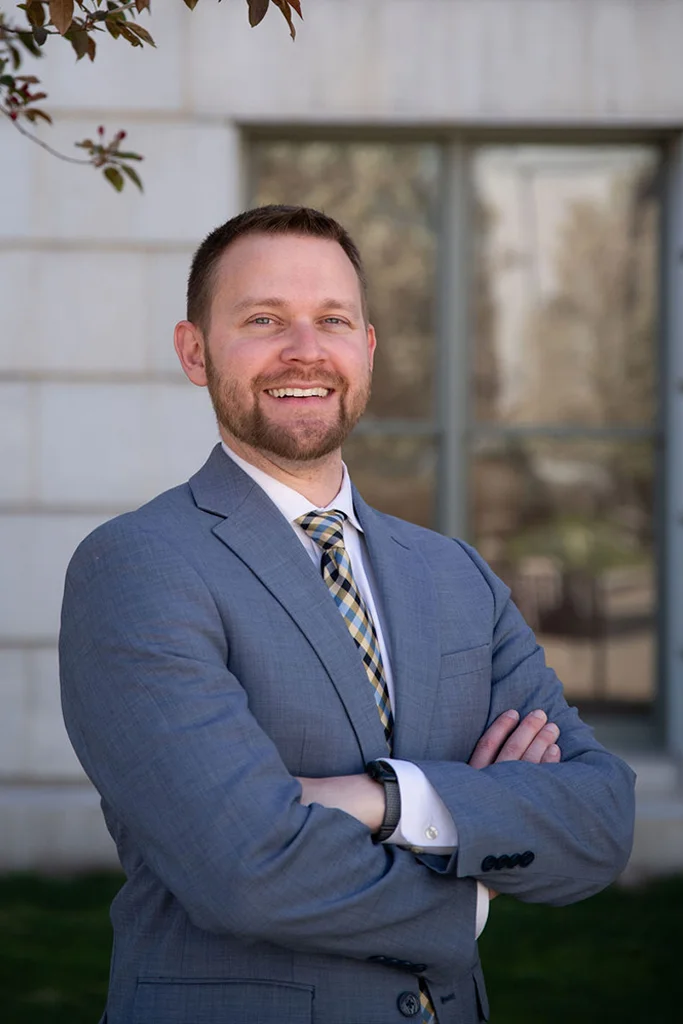
Reid DeChant and DeChant Law represent clients in Granby and throughout Grand County who need a defense attorney with genuine courtroom depth. This is not a firm that files paperwork and recommends you take whatever deal the prosecution offers. Reid built his practice on the trial experience he developed as a public defender and sharpened through training at the Trial Lawyers College, a program founded by legendary attorney Gerry Spence that focuses on authentic storytelling and genuine human connection in court. That background translates directly into a defense that takes your situation seriously from day one.
Criminal Charges Common in Granby and Grand County
- DUI and DWAI on Mountain Highways: U.S. 40 through Granby and the surrounding passes sees heavy law enforcement presence during peak travel seasons. Colorado statute distinguishes between DUI (driving under the influence, BAC of 0.08 or higher) and DWAI (driving while ability impaired, BAC between 0.05 and 0.08), and both carry license consequences through a separate DMV Express Consent proceeding that runs parallel to the criminal case.
- Drug Possession and Distribution: Grand County’s resort economy attracts a transient population, and drug charges involving controlled substances like methamphetamine, cocaine, fentanyl, and prescription medications without valid prescriptions arise regularly. Colorado law classifies controlled substance offenses based on the substance and quantity, with penalties ranging from petty offenses to serious felonies.
- Domestic Violence Allegations: Colorado’s mandatory arrest statute means that when law enforcement responds to a domestic dispute and finds probable cause, an arrest is required. A domestic violence designation attaches to any underlying charge, which can include assault, harassment, or criminal mischief, and carries collateral consequences including firearm restrictions under federal law.
- Assault and Harassment: Disputes that escalate at bars, on ski slopes, or in rural neighborhoods can result in assault charges ranging from third-degree misdemeanor offenses to class three felony assault with a deadly weapon, depending on the circumstances and any injuries alleged.
- Theft and Property Crimes: Grand County’s vacation rental economy and high-value recreational equipment create a particular environment for theft-related charges. Colorado grades theft by the value of the property allegedly taken, with the line between misdemeanor and felony set at a relatively low threshold.
- Failure to Appear and Warrant Issues: Seasonal workers and visitors who receive citations or are released on summons sometimes leave the county before their court date, resulting in bench warrants issued by Grand County courts that can follow someone across state lines and complicate future encounters with law enforcement anywhere in Colorado.
- Sex Offenses and Registration Requirements: Charges involving unlawful sexual contact or related offenses carry some of the most severe and lasting consequences in Colorado law, including mandatory sex offender registration requirements that can affect where a person lives, works, and travels for years or decades after a conviction.
What to Do After an Arrest in Grand County
The decisions made in the first hours after an arrest in Granby or anywhere in Grand County matter more than most people realize. The first and most important step is to stop talking to law enforcement about the facts of your case. Colorado law gives you the right to remain silent, and invoking that right clearly and calmly is not an admission of guilt. It is the single most effective thing you can do to protect yourself before your attorney is involved.
Criminal cases in Grand County are handled in the Grand County District Court, located in Hot Sulphur Springs, which serves as the county seat. Hot Sulphur Springs is a roughly 20-minute drive from Granby, and that courthouse is where arraignments, preliminary hearings, motions practice, and trials take place. If your charge originated as a citation or summons, your first court appearance will be set there. Missing that date creates additional legal problems and results in a bench warrant that compounds everything else you are dealing with.
If you were charged with DUI or DWAI, Colorado’s Express Consent law triggers a separate proceeding before the Colorado DMV that operates on its own timeline. You typically have a limited window from the date of your arrest to request a DMV hearing, or your license will be automatically revoked on a schedule set by statute. This hearing is separate from the criminal case, and failing to request it in time waives your right to contest the revocation. An attorney who handles both the criminal and DMV sides of DUI defense simultaneously gives you a real advantage over a lawyer who only addresses one piece.
Gather any documentation you have as soon as possible: citation paperwork, arrest reports if they were provided to you, contact information for any witnesses, and any video footage from your own phone, a business, or a dashcam that may have captured what happened. Evidence disappears quickly. Surveillance footage gets overwritten, witnesses’ memories fade, and the prosecution begins building its file from the moment the arrest report is filed. Starting your defense early is not a luxury. It is a practical necessity in any criminal case, and it is especially true in smaller county courts where cases can move faster than people expect.
How Reid DeChant Approaches a Granby Criminal Defense Case
Reid DeChant’s background is worth understanding not as a credential exercise but because it explains how he actually handles cases. As a former public defender, Reid spent years inside Colorado courtrooms defending clients across a wide range of charges, from traffic matters and DUI to felony assault, sexual assault, and homicide. That volume of trial experience is rare among private defense attorneys, most of whom never see the inside of a courtroom as often in an entire career as Reid did during his public defender years. Cross-examining police officers, challenging the reliability of field sobriety tests, contesting the chain of custody on evidence, and delivering closing arguments to juries are skills Reid has developed through actual courtroom repetition, not theory.
His training at the Trial Lawyers College added a dimension that separates his practice from attorneys who rely purely on procedural strategy. The College teaches lawyers to approach each client as a full human being, to listen deeply, and to bring that authentic understanding into the courtroom in a way that connects with jurors. Juries decide cases based on whether they understand and believe the person in front of them, not simply on the legal arguments laid out on paper. Reid’s approach to building a defense begins with understanding your story, not just the facts that appear in the police report.
Reid is also a member of the National Association of Criminal Defense Lawyers and the Colorado Criminal Defense Bar, affiliations that keep him connected to developing trends in defense strategy and give him access to the best legal minds working on criminal defense issues across the country. For someone facing charges in Grand County, working with a Granby criminal defense attorney who has these resources behind him means your case benefits from more than one person’s thinking.
DeChant Law has achieved case results including dismissed DUI charges, not guilty verdicts on assault and domestic violence allegations, dismissed DMV Express Consent actions, and not guilty verdicts in cases involving drug offenses and other serious felonies. Past results do not guarantee future outcomes, and every Grand County case will turn on its own facts, but this track record reflects a consistent commitment to taking cases to trial when trial is the right path, rather than defaulting to plea agreements because they are easier.
Questions People Ask About Criminal Defense in Granby
Will my case be handled in Granby or in Hot Sulphur Springs?
Criminal cases arising in Granby are handled by the Grand County District Court in Hot Sulphur Springs, the county seat. That is where arraignments, hearings, and trials are conducted. Citations and summons issued in Granby will include a court date and location that directs you to the Hot Sulphur Springs courthouse, and your attorney will appear there on your behalf for scheduled proceedings.
What is the difference between a DUI and a DWAI in Colorado?
Colorado law treats these as distinct offenses. DUI requires proof that your blood alcohol concentration was 0.08 or higher, or that alcohol or drugs substantially impaired your ability to operate a vehicle. DWAI is charged when your BAC was between 0.05 and 0.08, or when alcohol or drugs impaired your ability to any degree. DWAI carries lighter penalties than DUI at the first offense level, but both trigger the DMV Express Consent process and both create a criminal record if not successfully defended.
Can a domestic violence charge be dropped if the alleged victim does not want to press charges?
In Colorado, the decision to prosecute a domestic violence case belongs to the prosecutor, not the alleged victim. Because Colorado uses a mandatory arrest and mandatory prosecution framework for domestic violence offenses, a case can and often does proceed even when the person who called law enforcement later recants or refuses to cooperate. Defense strategy in this situation involves challenging the evidence the prosecution has independently of the alleged victim’s participation.
How quickly do I need to act if I was arrested for DUI and want to keep my license?
The window to request a DMV Express Consent hearing in Colorado is short after a DUI arrest, and missing it means the revocation proceeds automatically. Because this deadline runs from your arrest date, not your first court appearance, you need to contact an attorney immediately after your arrest, not after your arraignment. Your attorney handles the hearing request directly and represents you through both the DMV and criminal proceedings simultaneously.
What happens if I was arrested in Granby but I live in another state?
An arrest in Grand County results in a case that must be resolved in Colorado courts regardless of where you live. If you fail to appear for scheduled court dates, a bench warrant will be issued in Colorado and will remain active until resolved. Your attorney can often appear on your behalf at pre-trial hearings so that you do not need to travel back to Colorado for every court date, but this requires an attorney who is licensed in Colorado and familiar with Grand County court procedures.
Are drug charges in Grand County treated more leniently because Colorado has recreational marijuana laws?
Colorado’s legalization of recreational marijuana applies only to cannabis and only within specific possession and use limits. Charges involving other controlled substances, including methamphetamine, cocaine, fentanyl, heroin, and prescription medications without a valid prescription, are prosecuted aggressively. Even cannabis charges can arise from possession above the legal limit, public consumption, or distribution without proper licensing. Do not assume that Colorado’s cannabis laws change the landscape for other drug offenses.
If I accepted a plea deal years ago, can anything be done about my record now?
Colorado has record sealing provisions that apply to certain categories of convictions and dismissals. Whether a conviction from a plea agreement is eligible for sealing depends on the charge type, the time elapsed, and your conduct since. A Granby criminal defense attorney can review your specific record and advise whether a sealing petition is viable. Not all offenses qualify, but many people are surprised to find that charges they assumed were permanent can be addressed through the sealing process.
What is the Trial Lawyers College, and why does it matter for my defense?
The Trial Lawyers College is a highly selective training program founded by Gerry Spence, one of the most accomplished trial attorneys in American legal history. The program focuses on teaching lawyers to connect authentically with clients and juries, to tell human stories rather than make abstract legal arguments, and to approach each case from a place of genuine understanding rather than detached professionalism. Reid DeChant’s completion of this training shapes how he prepares cases, communicates with clients, and presents defenses in court. It is a meaningful differentiator, not a line item on a resume.
Is it worth hiring a private attorney for a misdemeanor charge in Grand County?
Misdemeanor convictions in Colorado create a criminal record, can affect employment background checks, may trigger consequences for professional licenses, and in some cases result in jail time and fines. In Grand County specifically, where community ties are often closer and professional reputations travel quickly, a conviction that might feel minor can have outsized local consequences. Working with an attorney who understands how to negotiate effectively with Grand County prosecutors or take a misdemeanor to trial when the facts support it is worth considering for any charge, not just felonies.
How does Reid DeChant handle clients who are going through an extremely stressful time?
Reid’s approach is built around treating each client as a full person, not a file number. Clients at DeChant Law are kept informed at every stage of their case, consulted on decisions, and treated as partners in their own defense. The firm’s commitment to transparent communication is not a slogan. It reflects how Reid actually practices, because a client who understands what is happening and why is better positioned to make decisions that serve their own interests throughout the process.
Representing Clients Across Grand County and the Surrounding Mountain Communities
DeChant Law represents clients facing criminal charges throughout Grand County and the broader mountain region of Colorado. From Granby itself through the nearby communities of Grand Lake, Fraser, Winter Park, Tabernash, and Hot Sulphur Springs, the firm handles cases arising across the county. Clients also come from Kremmling, Parshall, and the ranching communities along the Colorado River corridor. The firm serves people who spend time in the Grand Lake area near Rocky Mountain National Park, workers employed at Winter Park Resort and surrounding hospitality operations, and year-round residents throughout the Williams Fork and Blue River valleys. Beyond Grand County, DeChant Law extends its criminal defense representation to clients in neighboring Summit County, Eagle County, and Routt County, as well as clients who were charged in mountain communities but live and work along the Front Range in the Denver metro area, Jefferson County, Broomfield, and Adams County. Wherever a client is located, Reid provides consistent, direct communication and thoughtful legal strategy tailored to the specific court and prosecution handling their case.
Speak with a Granby Criminal Defense Attorney Before Your Next Court Date
A charge filed in Grand County will not resolve itself, and the longer you wait to get an attorney involved, the narrower your options become. Reid DeChant is a Granby criminal defense attorney who has tried cases across Colorado courts, challenged DUI arrests from roadside stop to trial, defended domestic violence allegations prosecutors were determined to take forward, and stood beside clients facing the most serious felony charges the system can bring. DeChant Law is ready to hear what happened in your case, explain what your options look like, and help you make informed decisions about how to move forward. Call today to speak with Reid directly about your situation.