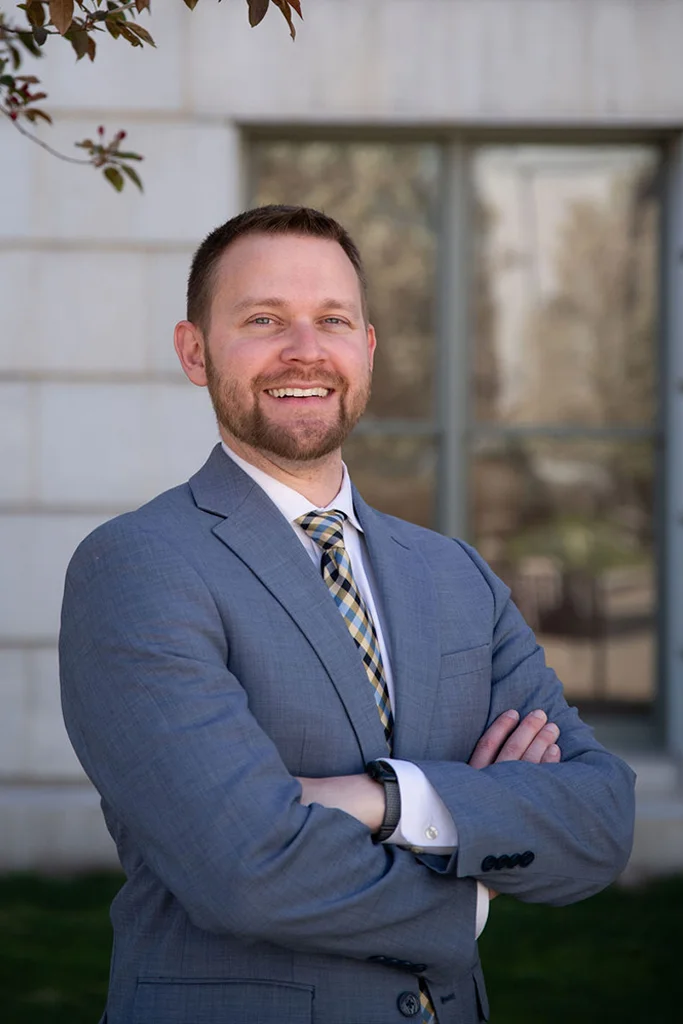
Golden DMV Hearing Lawyer
A DMV hearing in Colorado is not a formality. When law enforcement initiates an express consent action against your license following a DUI stop, the Colorado Division of Motor Vehicles runs a parallel process completely separate from your criminal case, and losing it means your driving privileges are gone regardless of what happens in court. For residents of Golden and Jefferson County, that distinction matters because the timeline is brutally short. You have seven days from the date of your arrest to request a hearing, and if you miss that window, your license gets revoked automatically without anyone examining whether the stop was lawful, whether the chemical test was properly administered, or whether the officer followed the correct procedures.
That is where a Golden DMV hearing lawyer becomes essential. These hearings have their own rules of evidence, their own burdens, and their own procedural landmines. A driver who shows up without representation and tries to navigate the process alone is almost always at a disadvantage, not because the facts are against them, but because they do not know which facts to challenge or how to get them in front of the hearing officer. The DMV process rewards preparation and procedural knowledge in ways that a single poorly framed objection can determine the outcome.
Jefferson County drivers face an enforcement environment shaped by major corridors like US-6, C-470, and the stretch of Colfax Avenue that runs through the county. Patrols increase around events at Red Rocks, along the I-70 mountain corridor on weekend nights and holiday weekends, and near the concentrated bar and restaurant scene in downtown Golden. These are the circumstances that generate express consent actions, and the specific facts of each stop create distinct opportunities for a hearing attorney who knows what to look for.
What the DMV Hearing Actually Decides, and Why It Is Harder Than It Looks
Colorado’s express consent law requires any driver who operates a motor vehicle on public roads to submit to chemical testing when a law enforcement officer has reasonable grounds to believe the driver is impaired. If you refuse, your license faces a longer revocation period than if you take the test. If you take the test and register above the legal limit, the officer submits a notice of revocation, and the clock starts running on your seven-day request window.
At the hearing itself, the DMV hearing officer is not deciding whether you are guilty of DUI. That is the criminal court’s job. The hearing officer is deciding a narrower set of questions: Was there a valid stop? Did the officer have reasonable grounds to request testing? Were you properly advised under express consent law? Was the chemical test administered within the required time window? Was the test equipment properly maintained and the procedure correctly followed? These questions sound simple on paper. In practice, each one opens into a body of regulations, training standards, and procedural requirements that provide real grounds for challenge when a DMV hearing attorney in Golden examines the record closely.
DeChant Law has a documented track record in exactly these hearings. The firm’s results include multiple dismissed DMV express consent actions, including dismissals for improper express consent advisement, dismissals for failure to administer the chemical test within the required two-hour window, and dismissals where the officer administered Miranda warnings before giving the express consent advisement, which can create grounds for exclusion. These are not theoretical arguments. They are the kinds of issues that arise from real patrol stops and real procedural failures, and they only get identified if someone with hearing experience reviews the materials before the hearing date.
Why DeChant Law Handles DMV Hearings Differently Than Most Defense Firms
Most criminal defense attorneys treat DMV hearings as secondary to the criminal case. Some advise clients not to bother requesting a hearing at all, particularly when the evidence appears strong on the surface. Reid DeChant approaches it differently, because the DMV hearing record has strategic value beyond just keeping your license. Testimony and evidence developed at the hearing can be valuable in the criminal proceedings that follow, and a successful DMV outcome can shift the trajectory of the entire case.
Reid’s background as a former public defender gave him a volume of courtroom and hearing experience that most private practitioners do not accumulate in the same timeframe. He has handled cases ranging from traffic offenses and DUI to serious felonies, and his focus on impaired driving defense reflects deliberate specialization rather than a generalist’s approach. His training at the Trial Lawyers College, founded by Gerry Spence, sharpened an approach to advocacy that centers on honest storytelling and genuine engagement with the facts, not just procedural maneuvering.
The firm’s case results in DMV proceedings speak directly to the quality of that preparation. Multiple express consent actions have been dismissed across hearings involving Jefferson County and surrounding jurisdictions. Recognition from national legal organizations, including membership in the National Association of Criminal Defense Lawyers and the Colorado Criminal Defense Bar, reflects a commitment to staying current on defense strategy in this area. When you are looking for a DMV hearing attorney serving Golden and Jefferson County, that combination of trial experience, dedicated DUI focus, and actual hearing results is the relevant measure.
The DMV Hearing Issues That Determine Outcomes in Jefferson County Cases
- Lawfulness of the traffic stop: Before any express consent analysis begins, the officer must have had a lawful basis to stop the vehicle. Equipment violations, lane changes, and speed-related stops along US-6 or the C-470 corridor can all be scrutinized for whether the officer’s stated justification holds up under the applicable reasonable suspicion standard.
- Proper express consent advisement: Colorado law requires officers to advise drivers of their rights and consequences under express consent in a specific manner. Errors in how or when this advisement is given, including situations where Miranda warnings were provided first, have resulted in hearing dismissals in DeChant Law cases.
- Two-hour testing requirement: The chemical test must be administered within two hours of the time of driving. If law enforcement delayed testing due to a traffic backup, a long roadside investigation, or transport issues, and that delay pushed the test beyond the two-hour mark, the result may be challengeable and the action dismissible.
- Breath test equipment and calibration: Colorado’s Intoxilyzer devices must be maintained and calibrated according to specific regulatory standards. Records of maintenance, calibration checks, and the operator’s certification all become relevant at the hearing.
- Blood draw procedures and chain of custody: When a blood test is used rather than a breath test, the draw must be performed by a qualified person using approved procedures, and the sample must be properly handled through the lab process. Breaks in chain of custody or procedural errors in collection can affect the admissibility and weight of the result.
- Refusal circumstances: If the DMV is seeking revocation based on a refusal rather than a test result, the hearing examines whether the driver actually refused, whether the refusal was knowing and voluntary, and whether the officer completed all required steps before recording the refusal. Medical conditions, communication barriers, and officer conduct can all be relevant.
- Officer testimony and cross-examination: The hearing officer must often subpoena the arresting officer to testify. Cross-examination of the officer’s observations, field sobriety test administration, and decision-making during the stop can reveal inconsistencies that matter both at the hearing and in the criminal case.
What to Do Right Now If You Were Just Arrested for DUI in Golden or Jefferson County
The seven-day request deadline is not a soft guideline. Under Colorado law, if a hearing is not requested within seven days of the express consent action, the revocation proceeds automatically. The day your arrest happens is when that window opens. Do not wait to speak to an attorney, do not assume the criminal defense process will handle the license issue automatically, and do not assume the two proceedings are the same or overlap in a way that protects you without action on both fronts.
Once a hearing is requested, the DMV will schedule it before a hearing officer. In Jefferson County matters, hearings are handled through the Colorado DMV’s hearing division, and the specific location can vary. Your attorney will subpoena the officer’s reports, the express consent advisement records, the chemical test maintenance records, and any other documentation that forms the evidentiary basis of the action. This preparation phase is where most of the hearing’s outcome is determined.
Gather everything you have from the night of the arrest: the paperwork you were handed, any written notices, your copy of the express consent advisement form if one was given to you, and any details you remember about the stop itself including the time, location, how long you were on the roadside, and the sequence of events. Write this down while it is fresh. The specific details that seem minor now, such as whether you were told to pull over before or after leaving a parking lot near downtown Golden, or whether you waited for an extended period before any test was offered, can become significant in the hearing record.
Do not make statements to law enforcement or insurance companies about the underlying incident beyond what is required. The DMV hearing record is separate from the criminal record, but anything you say can have implications across both proceedings. An attorney reviewing the matter early is the most reliable way to avoid missteps that close off defenses before they are even identified.
Questions People Ask About Golden DMV Hearings
What happens to my driving privileges immediately after a DUI arrest in Colorado?
When an officer submits an express consent action, the DMV initiates a revocation process. If you took the test and registered above the legal threshold, you typically receive a temporary permit allowing you to drive for a limited period while you have the opportunity to request a hearing. If you refused the test, similar temporary provisions may apply. The key point is that your license is not automatically revoked the night of the arrest. The revocation takes effect after the hearing process concludes, or after the deadline passes without a hearing request.
Is the DMV hearing the same as my criminal DUI case?
No. They are entirely separate proceedings with different standards, different decision-makers, and different consequences. The criminal case is handled by the Jefferson County District Attorney’s office and proceeds through the Jefferson County Combined Courts. The DMV hearing is an administrative proceeding handled by a DMV hearing officer. Winning one does not automatically resolve the other, and losing one does not predetermine the outcome of the other. You need to address both.
Can I lose my license even if my DUI charge gets dismissed in criminal court?
Yes. Because the DMV hearing operates under administrative law rather than criminal law standards, the hearing officer applies a different burden of proof than a criminal court. A prosecutor may decline to pursue a DUI charge or a jury may acquit, and the DMV revocation can still proceed independently based on the administrative record. This is one of the main reasons the hearing deserves serious attention on its own terms rather than being treated as secondary to the criminal case.
What is the difference between a DUI revocation and a DWAI revocation at the DMV level?
Colorado distinguishes between DUI and DWAI based on the blood or breath alcohol concentration level. The express consent action and DMV revocation process can be triggered at the DUI threshold level. DWAI charges in criminal court are based on a different standard and typically do not trigger express consent revocations in the same way, but the specific circumstances of your case determine exactly which actions are initiated. An attorney reviewing the actual paperwork from your arrest can clarify which proceedings apply to your situation.
How long does a DMV hearing take and when will I know the result?
The hearing itself is typically scheduled within a few weeks of the request, though timelines can vary based on scheduling and whether continuances are needed to gather subpoenaed records. The hearing itself may last anywhere from under an hour to several hours depending on how contested the issues are and whether the officer appears and testifies. Hearing officers typically issue written decisions within a short period after the hearing concludes. Your attorney will notify you of the outcome and explain what comes next.
What happens if the arresting officer does not show up at the hearing?
If the officer was properly subpoenaed and fails to appear, the hearing officer may dismiss the action. This is not guaranteed, and hearing officers have discretion in how they handle non-appearances. The officer’s appearance is often critical because without live testimony, the DMV may struggle to satisfy its burden on the lawfulness of the stop and the propriety of the express consent advisement. Your attorney should subpoena the officer as standard practice so that the non-appearance option is preserved.
Does requesting a DMV hearing help my criminal case in any way?
Yes, in several ways. The hearing requires the production of police reports, testing records, and other documentation early in the process. Cross-examination of the officer at the hearing creates a sworn transcript that can be used in the criminal proceedings. Inconsistencies the officer makes at the DMV hearing can be used to impeach their testimony later. Even a hearing that does not result in dismissal often produces useful information for the defense of the criminal case.
Can I get a restricted license to drive to work if my license is revoked?
Colorado offers options for limited driving privileges during and after the revocation period, depending on the circumstances of the action and your prior record. An interlock-restricted license may be available. The specific eligibility requirements depend on whether the revocation stems from a test result or a refusal and whether you have prior DUI-related revocations. An attorney handling your DMV matter can advise on which restricted license options apply and how to pursue them alongside or after the hearing.
What if I was driving on I-70 through Jefferson County when I was stopped, not specifically in Golden?
The specific road where you were stopped does not determine which attorney you need or which DMV process applies. Jefferson County encompasses a broad area including parts of I-70, C-470, US-6, and dozens of other roads. The express consent action is initiated by the arresting officer regardless of which jurisdiction within the county was the site of the stop. A Golden DMV hearing attorney handles actions arising from stops throughout Jefferson County and the surrounding area.
Is it worth requesting a hearing even if I think the evidence against me is strong?
Requesting the hearing preserves your ability to contest the revocation and buys time before any revocation takes effect. It also creates the discovery and hearing record described above. Even in cases where the chemical test result appears unfavorable, there may be procedural or foundational issues with how the evidence was gathered. An attorney reviewing the specific materials from your case is the only way to assess what grounds for challenge exist. Skipping the hearing because the surface evidence looks bad is one of the most common and costly mistakes drivers make.
Jefferson County and Golden-Area Clients DeChant Law Represents
DeChant Law represents clients facing DMV hearings and DUI-related matters throughout Jefferson County and the broader Denver metropolitan area. From the city of Golden itself through Lakewood, Wheat Ridge, and Arvada, and extending into Edgewater, Applewood, and the unincorporated communities along the foothills, the firm handles DMV matters arising from stops anywhere in Jefferson County. Clients from Evergreen, Morrison, Conifer, and the mountain communities along US-285 and US-6 face the same express consent timelines and procedures, and DeChant Law represents drivers from those communities as well. The firm also serves clients in Westminster, Thornton, Northglenn, and throughout Adams County, as well as Denver proper, Broomfield, Arapahoe County, and Douglas County. If your arrest happened in the Jefferson County area or anywhere in the surrounding jurisdictions, the firm has the hearing experience and geographic familiarity to handle your DMV matter effectively.
Speak With a Golden DMV Hearing Attorney Before Your Deadline Passes
The seven-day window to request your hearing is not negotiable, and it closes faster than most people expect. DeChant Law has handled express consent actions across Jefferson County and the greater Denver area, with documented dismissals on procedural and substantive grounds. Reid DeChant’s background in public defender work and dedicated DUI defense, combined with training from the Trial Lawyers College, means your DMV hearing will be approached with the same preparation and attention that a serious criminal case demands. Contact DeChant Law today to speak with a Golden DMV hearing attorney before your deadline passes and your options narrow.