Glendale Vehicular Assault/Homicide Defense Lawyer
A vehicular assault or vehicular homicide charge carries a weight unlike almost any other criminal accusation. You were behind the wheel of a vehicle, not holding a weapon, and yet the state of Colorado is now treating you like someone who deliberately harmed or killed another person. The collision itself may have been a split second, but the criminal case that follows can take years to resolve and carry consequences that reshape every aspect of your life, from your freedom to your career to your ability to drive again. If you or someone you know is facing these charges after an incident in or around Glendale, what happens next depends enormously on who is handling the defense and how quickly that defense begins.
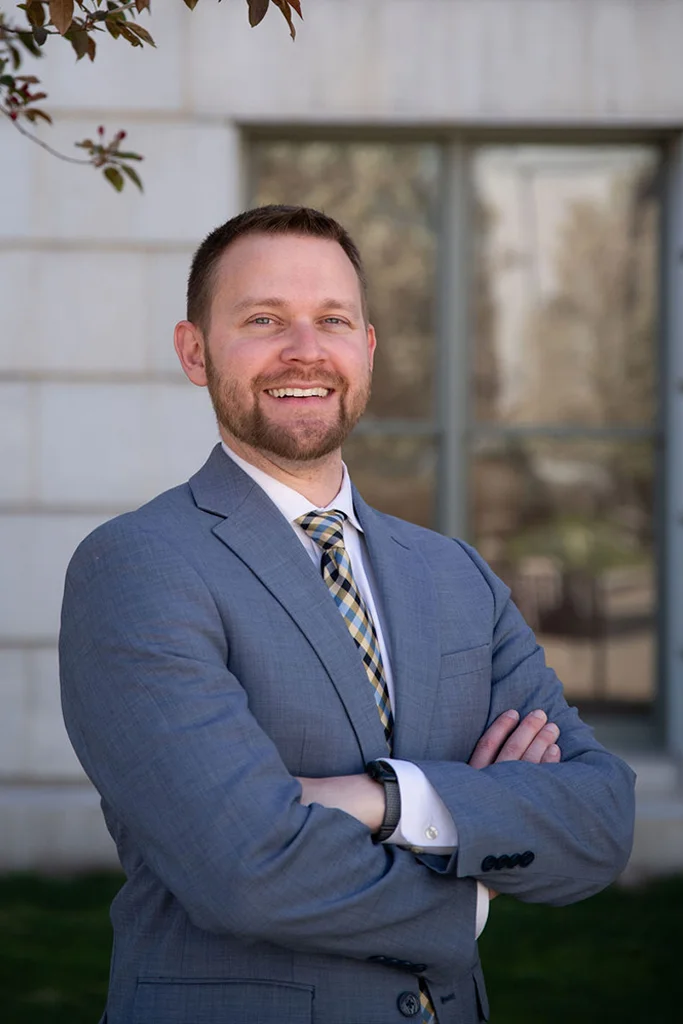
The Glendale vehicular assault/homicide defense lawyer at DeChant Law, Reid DeChant, approaches these cases with the combination of courtroom depth and case-specific preparation that this category of charge demands. Vehicular assault and homicide prosecutions are not simple cases. They involve accident reconstruction specialists, toxicology reports, law enforcement determinations about speed and cause, and witnesses whose memories and perceptions differ in ways that prosecutors will try to flatten into a single narrative. Reid’s job is to challenge that narrative with the evidence, the experts, and the advocacy that can actually move the needle in court.
Glendale is a small, densely trafficked city surrounded by Denver, positioned along corridors like East Colfax Avenue, South Colorado Boulevard, and Leetsdale Drive where vehicle speeds, pedestrian activity, and nightlife intersect constantly. The geography itself creates conditions where serious accidents happen, and where law enforcement often arrives looking for someone to blame. That determination of blame becomes your charge sheet. It does not have to become your conviction.
What Reid DeChant Brings to Vehicular Assault and Homicide Cases in Glendale
Reid DeChant built his practice on trial experience that most private criminal defense attorneys simply do not have. As a former public defender, Reid handled an extensive volume of cases across Denver, Broomfield, and Adams County courtrooms, defending clients facing charges that ranged from traffic offenses and DUI to assault and homicide. That volume of actual trial work, standing before judges, cross-examining police and forensic witnesses, and representing real people whose liberty was at stake, is the foundation on which his private practice now rests.
Reid is also a graduate of the Trial Lawyers College, the intensive advocacy training program founded by Gerry Spence that teaches attorneys how to build a defense around genuine human storytelling rather than procedural technicalities alone. That training matters in vehicular homicide cases because juries in these cases arrive with grief and sympathy for victims already in place. The defense must do more than attack the state’s evidence. It must present the defendant as a full human being, not just the driver of a vehicle. Reid’s approach, shaped by Trial Lawyers College methodology, is built for exactly that kind of case.
Reid is recognized by national legal organizations and maintains active membership in the National Association of Criminal Defense Lawyers and the Colorado Criminal Defense Bar, keeping him connected to developments in forensic science challenges, DUI defense strategy, and trial technique that directly bear on vehicular assault and homicide cases. DeChant Law has secured Not Guilty verdicts at trial in DUI cases and obtained dismissals in both criminal and DMV proceedings, including multiple cases in which the government’s procedural failures were identified and used to collapse the prosecution’s case entirely. That record of winning does not guarantee any specific outcome, but it reflects a practice built around actually fighting, not around encouraging clients to take whatever plea is offered first.
Colorado Vehicular Charges: The Offenses Glendale Defendants Actually Face
- Vehicular Assault (Alcohol or Drugs): Under Colorado law, a driver who operates a vehicle while under the influence of alcohol or drugs and causes serious bodily injury to another person faces vehicular assault, a class four felony carrying potential prison time and significant fines. This charge does not require intent to harm, only that the driver was impaired and the injury resulted.
- Vehicular Assault (Reckless Driving): A driver who causes serious bodily injury through reckless operation of a vehicle, even without any alcohol or drug involvement, can face a class five felony charge. The distinction between reckless driving and ordinary negligence is contested territory that a defense attorney must challenge with specific evidence about the driver’s actual conduct.
- Vehicular Homicide (DUI/DWAI): When a driver under the influence of alcohol or drugs causes the death of another person, the charge escalates to vehicular homicide, classified as a class three felony in Colorado. This is among the most serious felony charges that result from vehicle-involved incidents, and it is prosecuted aggressively by both the Denver County and Arapahoe County District Attorney’s offices depending on where the incident occurred.
- Vehicular Homicide (Reckless): Where death results from reckless driving without the impairment element, the charge carries class four felony status. Prosecutors frequently attempt to establish recklessness through evidence of speed, phone use, traffic violations preceding the collision, or prior driving behavior.
- Aggravated Driving with a Revoked License Causing Death: Colorado recognizes a separate charging category for drivers whose license was revoked, particularly for prior DUI-related offenses, when that driver is involved in a fatal collision. This charge can be layered on top of vehicular homicide allegations.
- Leaving the Scene of an Accident Involving Injury or Death: Separate from the primary vehicular assault or homicide charge, prosecutors will often file additional counts for any delay in rendering aid or any movement of the vehicle from the scene. These secondary charges carry their own felony penalties and complicate an already serious case.
- DUI as a Predicate Offense: In nearly every vehicular assault or homicide case involving alleged impairment, a standalone DUI or DWAI charge accompanies the primary vehicular offense. The DUI charge also triggers a parallel DMV hearing process that can result in license revocation independent of the criminal outcome.
How Vehicular Assault and Homicide Cases Are Actually Built and Challenged
The prosecution’s case in a vehicular assault or homicide matter typically rests on several categories of evidence that a defense attorney must examine critically from the moment of engagement. The first is the accident reconstruction report. Law enforcement agencies, often working with Colorado State Patrol reconstructionists, will prepare a technical analysis of the collision that assigns cause and sometimes fault. These reports carry significant authority with juries, but they are not infallible. The assumptions built into reconstruction models, the data collected from vehicle event data recorders, and the methods used to calculate speed and braking all represent areas where an independent expert can find genuine disagreement with the government’s conclusions.
Toxicology is the second major battleground in impairment-related cases. If blood was drawn from the driver following the accident, the timing of that draw matters enormously, particularly in DUI cases where the state must connect the defendant’s blood alcohol level to the time of driving rather than the time of the blood draw. The two-hour window for chemical testing is a specific procedural requirement, and as the case results reflected in DeChant Law’s record demonstrate, failures to adhere to that window have resulted in dismissals at the DMV hearing level. Those same arguments can bear on the criminal case when the blood evidence is the cornerstone of the prosecution.
Witness testimony presents its own vulnerabilities. Accident witnesses are often themselves shaken, operating from partial vantage points, and recounting what they experienced through the distorting filter of shock and adrenaline. Defense counsel must depose these witnesses, examine inconsistencies in their accounts, and in some cases present expert testimony about the limits of eyewitness reliability in fast-moving accident scenarios. The defendant’s own account of events, properly preserved through counsel from the earliest point in the case, is also critical evidence that must be handled with care from the moment of contact with law enforcement.
Cases arising from incidents along Glendale’s major corridors, particularly those occurring near the intersection of Colorado Boulevard and Leetsdale where commercial traffic, rideshare vehicles, cyclists, and pedestrians create complex road environments, often involve questions about road conditions, signage, visibility, and the conduct of other parties. A thorough defense does not limit its inquiry to the defendant alone. It asks what every other party, including the victim, the road design, and the environment itself, contributed to the outcome. Colorado’s comparative fault framework applies in civil cases, and the principle that causation is often shared rather than singular is an argument that carries real weight in the criminal context as well when pursuing reasonable doubt.
What to Do After a Serious Accident Involving Injury or Death in Glendale
Glendale sits within Arapahoe County for most official purposes, meaning that serious criminal charges arising from incidents in the city are typically filed in the Arapahoe County District Court in Centennial. The Arapahoe County District Attorney’s Office handles the prosecution of felony vehicular assault and homicide cases, and those prosecutors are experienced with the kind of evidence that serious accident investigations generate. Understanding which court will handle the case from the outset allows defense counsel to begin tracking the case correctly and preparing for the specific judges and procedures in that courthouse.
The single most consequential decision a person can make after a serious accident is to stop talking to law enforcement about the substance of what happened. Officers investigating a crash that involved injury or death are not conducting a neutral fact-finding exercise. They are building a case. Anything said at the scene, during a voluntary interview, or in any informal conversation with investigators can and will be used. Cooperate with the physical requirements of the stop, including providing license, registration, and insurance, and comply with legally required chemical testing obligations, but do not describe the events of the crash in detail without counsel present.
Contact an attorney before any formal interview with detectives, before any contact from the Colorado State Patrol accident reconstruction team, and before any follow-up visit or call from law enforcement. The investigation into a fatal or serious injury accident continues for days or weeks after the incident itself, and statements made during that window without legal guidance are among the most damaging things defendants in these cases face at trial. DeChant Law accepts contacts from defendants and their families immediately following serious incidents, and early engagement allows the defense to preserve evidence, identify witnesses, and protect the client’s legal position before the government has fully assembled its case.
Also be aware that a serious accident triggering criminal charges will almost certainly prompt a parallel DMV action to revoke the driver’s license. Colorado requires a specific administrative hearing request within a tight deadline following a DUI-related license action, and missing that deadline waives the right to contest the revocation. Coordinating the criminal defense with the DMV proceeding from the beginning avoids the mistake of treating them as separate problems to be solved separately.
Questions People Ask About Vehicular Assault and Homicide Cases in Colorado
What is the difference between vehicular assault and vehicular homicide in Colorado?
The distinction comes down to the severity of the injury. Vehicular assault involves serious bodily injury to another person, meaning injury that creates a substantial risk of death, causes permanent disfigurement, or results in protracted loss or impairment of a body part or organ. Vehicular homicide involves the death of another person. Both offenses exist in impairment and recklessness variants under Colorado law, with the impairment-based versions carrying heavier felony classifications.
Can I be charged with vehicular homicide even if I was not drunk?
Yes. Colorado’s recklessness-based vehicular homicide statute does not require any impairment. A driver who is found to have operated a vehicle recklessly, meaning with a conscious disregard of a substantial and unjustifiable risk, can face felony vehicular homicide charges even if their blood alcohol level was zero. Speeding well above posted limits, running red lights, aggressive lane changing, or distracted driving that causes a fatality can all form the basis of a recklessness charge.
What does “serious bodily injury” mean for vehicular assault purposes?
Colorado defines serious bodily injury as injury that involves a substantial risk of death, permanent disfigurement, or protracted loss or impairment of the function of any body part or organ. A broken arm that heals fully may not qualify. Spinal injuries, traumatic brain injuries, injuries requiring extended hospitalization, or injuries causing lasting functional impairment are more likely to satisfy the statutory definition. Whether the victim’s injury meets that threshold is sometimes a contested issue in vehicular assault cases.
Will I lose my license even if the criminal case is dismissed?
Possibly. The DMV proceedings in Colorado operate independently of the criminal court process. A dismissal of criminal charges does not automatically restore a license that has been revoked through the administrative hearing process. Conversely, prevailing at a DMV hearing does not prevent the criminal case from proceeding. Both tracks must be addressed simultaneously, and the strategic decisions made in one proceeding can affect the other.
How does accident reconstruction evidence get challenged at trial?
Defense counsel can retain an independent accident reconstruction expert to review the government’s methodology, challenge the assumptions built into their speed or causation calculations, and present alternative conclusions. Reconstruction reports rely on measurements, vehicle damage patterns, tire mark analysis, and sometimes data downloaded from the vehicle’s event data recorder. Each of those inputs is subject to challenge based on how it was gathered, how it was interpreted, and whether the resulting conclusions are scientifically sound. Cross-examination of the government’s expert at trial is a primary vehicle for exposing weaknesses in the reconstruction analysis.
What happens to my commercial driver’s license if I am charged with vehicular homicide?
Commercial driver’s license holders face additional consequences beyond those applicable to ordinary license holders. A felony conviction arising from operation of a motor vehicle, including vehicular homicide, can result in lifetime disqualification from holding a CDL under federal motor carrier safety regulations. Even a first offense involving a fatality or serious injury can disqualify a commercial driver for extended periods. For CDL holders, the stakes of a vehicular homicide charge extend far beyond the criminal sentence and into the complete destruction of a commercial driving career.
Can I be charged federally for vehicular homicide if it happened on federal property?
Yes. If the incident occurred on federal land, such as a federally controlled highway corridor, military installation, or national park, federal jurisdiction may apply and federal prosecutors rather than state prosecutors would handle the case. Federal vehicular homicide statutes carry their own penalty structures and procedural rules. Most incidents in Glendale proper will fall under Colorado state law, but the question of jurisdiction can arise in specific geographic circumstances.
Does it matter that the other driver may have also been at fault?
It matters significantly for the defense. Shared causation is a legitimate argument in vehicular assault and homicide cases, even though Colorado criminal law does not use the comparative fault percentages applied in civil litigation. If evidence shows that the other driver ran a red light, was speeding, or otherwise contributed materially to the collision, that evidence can undermine the prosecution’s argument that the defendant’s conduct was the proximate cause of the injury or death. Causation is an element the state must prove, and introducing evidence that another party’s conduct broke or contributed to the causal chain is a real and important defense strategy.
What role does the victim’s family play in the criminal case?
In Colorado, crime victims and their families have statutory rights under the Victim Rights Act, including the right to be notified of proceedings, to be heard at sentencing, and to submit impact statements. The victim’s family does not control the prosecution’s charging or plea decisions, but their input carries real weight, particularly at sentencing where a judge has discretion over the specific sentence within the statutory range. Effective defense counsel is aware of the victim’s family’s role and addresses it in the context of any plea negotiations and at sentencing hearings.
Is probation a realistic outcome in a vehicular assault case in Colorado?
It depends heavily on the specific charge, the defendant’s prior history, and the facts of the incident. For a class five felony vehicular assault based on recklessness with no prior criminal history, probation can be a realistic outcome, particularly when the defense presents mitigating factors effectively. For a class three felony vehicular homicide involving alleged DUI, Colorado law imposes presumptive prison sentencing ranges that judges apply with less flexibility, and the path to a non-prison outcome requires a compelling defense and mitigation strategy. The range of possible outcomes varies enough that speaking with a Glendale vehicular assault attorney as early as possible is critical to understanding what is actually achievable in a specific case.
DeChant Law’s Vehicular Assault Defense Representation Across the Glendale Area and Beyond
DeChant Law represents clients facing vehicular assault and homicide charges throughout the Glendale area and the broader Denver metropolitan region. Clients come to the firm from Glendale’s residential neighborhoods along Cherry Creek Drive and East Mississippi Avenue, from the commercial district near Colorado Boulevard, and from adjacent communities throughout Arapahoe County and Denver County. The firm defends clients from Cherry Hills Village, Englewood, Sheridan, and Greenwood Village, as well as from the closer-in Denver neighborhoods of Capitol Hill, Congress Park, Hilltop, Virginia Village, and Montclair that border Glendale directly. Clients from Aurora, Centennial, Littleton, and Parker facing felony charges in Arapahoe County District Court have also turned to DeChant Law for defense representation. The firm extends its practice to cases arising in Jefferson County, Douglas County, Broomfield County, and Adams County, covering the full range of Denver metropolitan courthouses where serious vehicular felonies are prosecuted.
Talk to a Glendale Vehicular Assault Attorney Before the Government Builds Its Case Further
A vehicular assault or vehicular homicide charge represents one of the most serious situations a person outside of an intentional violent crime case can face in Colorado’s courts. The evidence gathering happens quickly, the prosecution’s theory of the case solidifies fast, and the window for the defense to shape the record closes sooner than most people realize. A Glendale vehicular assault attorney from DeChant Law can begin reviewing the circumstances of the incident, identifying the weaknesses in the government’s emerging case, and protecting your rights before the next court appearance arrives. Contact DeChant Law to speak directly with Reid DeChant about what happened and what a defense looks like from here.