Glendale DUI Defense Lawyer
Glendale sits tucked between Denver and Aurora along the South Colorado Boulevard corridor, a stretch that sees heavy enforcement from both the Glendale Police Department and Colorado State Patrol, particularly on weekends and following events at nearby venues. If you were stopped somewhere along Cherry Creek Drive, Leetsdale Drive, or the stretch of Colorado Boulevard that runs through this small but densely active municipality, you are now dealing with two separate systems moving simultaneously against you: a criminal prosecution and a Colorado DMV proceeding that can strip your driving privileges regardless of how the criminal case resolves. A Glendale DUI defense lawyer who understands both tracks, how they interact and how to fight on each front, is not a luxury in this situation. It is a practical necessity.
Colorado DUI law operates through a framework that punishes not just egregious conduct but borderline cases just as harshly. A blood alcohol content at or above 0.08 supports a DUI charge. A reading between 0.05 and 0.079 can still result in a DWAI, driving while ability impaired, which carries its own criminal consequences and DMV penalties. Add to that the possibility of drug-related impairment charges, and the range of people who find themselves in this position extends far beyond those who made an obviously reckless decision. Many people stopped in Glendale had dinner nearby, had a glass of wine after a long week, or were driving completely within the law when a checkpoint or a following officer decided otherwise. The charge exists before any of that context gets heard.
The seven-day window that triggers your right to request a DMV Express Consent hearing begins running from the moment your license is taken at the scene. If that deadline passes without action, your license revocation becomes automatic, independent of anything happening in criminal court. Reid DeChant handles both the criminal case and the DMV hearing, which means every piece of evidence, every procedural issue, and every potential challenge is evaluated from the very beginning, not in isolation.
How DeChant Law Approaches Glendale DUI Cases
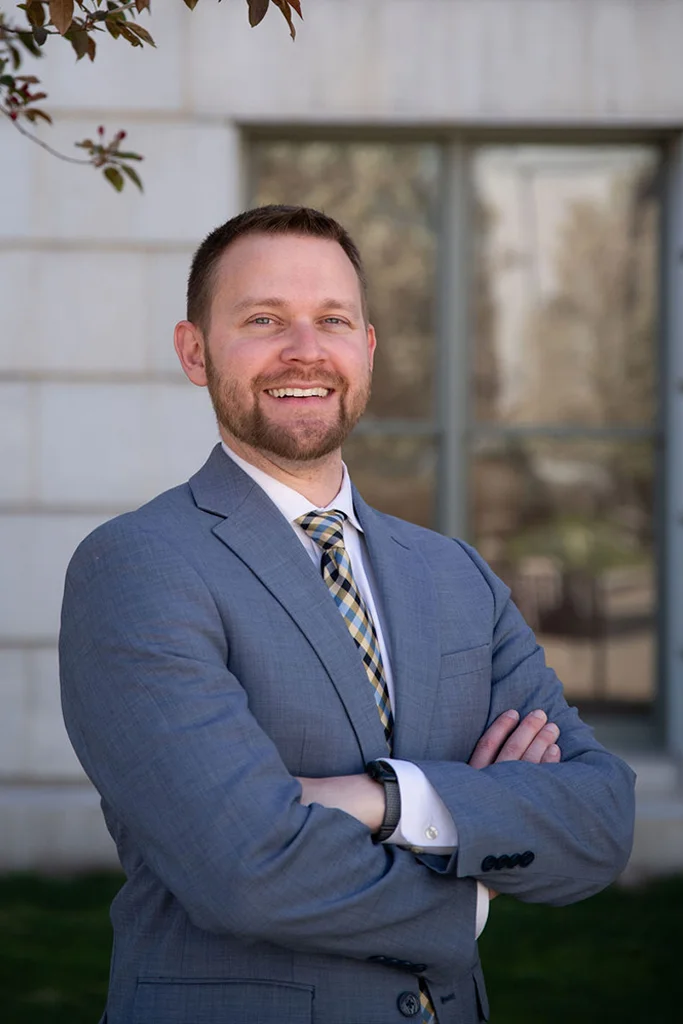
Reid DeChant built his practice on a foundation that most defense attorneys simply do not have. Before entering private practice, Reid worked as a public defender, handling an enormous volume of cases across Denver, Broomfield, Adams County, and surrounding courts. That kind of repetition inside actual courtrooms, cross-examining officers, arguing suppression motions, and trying cases to verdict, produces a type of trial-ready judgment that no amount of theoretical preparation can replicate. Reid has tried DUI cases to not guilty verdicts, secured outright dismissals in court, and won at the DMV level on grounds ranging from improper Express Consent advisements to chemical tests administered outside the required two-hour window.
Those outcomes are drawn directly from DeChant Law’s case results. DMV Express Consent actions have been dismissed for multiple procedural grounds, including improper advisements, Miranda-related violations, and failure to administer the chemical test within the legally required timeframe. DUI cases in Arapahoe County, Jefferson County, Douglas County, and Broomfield have been dismissed or resulted in not guilty verdicts at trial. These are real results from real cases, not statistical abstractions. For someone facing a DUI arrest in Glendale, working with an attorney whose track record includes precisely these types of outcomes means something tangible.
Reid is also a graduate of the Trial Lawyers College, the program founded by Gerry Spence that trains attorneys in narrative advocacy, authentic human connection, and the psychology of persuasion in the courtroom. The practical effect of that training is that when Reid stands before a jury or argues to a judge, the approach is not a recitation of legal technicalities. It is an honest presentation of who you are, what actually happened that night, and why the government’s version of events does not hold together. Reid maintains membership in the National Association of Criminal Defense Lawyers and the Colorado Criminal Defense Bar, both of which reflect active engagement with evolving defense strategy at the national level.
Charges and Consequences That Arise from Glendale DUI Stops
- Standard DUI: A first-offense DUI in Colorado, typically based on a BAC at or above 0.08, carries potential jail time, mandatory public service hours, fines, and a license revocation period. Glendale enforcement is active along Colorado Boulevard and Leetsdale Drive, corridors connecting nightlife districts to residential areas.
- DWAI: Driving while ability impaired applies when a driver’s BAC falls between 0.05 and 0.079, or when any amount of alcohol or drugs has impaired the driver to even the slightest degree. DWAI carries its own criminal penalties and DMV consequences, and many people are surprised to learn that a reading below the legal limit can still result in charges.
- DUI-Drugs: Colorado law prohibits driving under the influence of any substance, including legal marijuana, prescription medications, and controlled substances. Drug-related DUI charges carry penalties equivalent to alcohol-based charges and present distinct evidentiary challenges around impairment testing and timeline.
- Persistent Drunk Driver Status: A BAC at or above 0.15 triggers a “persistent drunk driver” designation under Colorado law, which results in enhanced penalties including mandatory alcohol treatment and ignition interlock requirements even on a first offense.
- Felony DUI: A fourth or subsequent DUI conviction in Colorado becomes a felony, with potential prison time and consequences that extend into employment, housing, and civil rights. Prior offenses from other states may count toward this threshold.
- Express Consent and DMV Proceedings: Colorado’s Express Consent law requires that drivers submit to chemical testing when law enforcement has reasonable grounds to believe impairment has occurred. Refusal triggers its own revocation period. The DMV hearing is a separate administrative proceeding with its own deadlines, procedural rules, and grounds for dismissal.
- Commercial Driver License Consequences: CDL holders face a much lower BAC threshold and more severe licensing consequences than standard drivers. A single DUI conviction can end a commercial driving career, making early and aggressive defense especially critical for professional drivers working routes through Glendale and the greater Denver metro.
What to Do After a DUI Arrest in Glendale
The most important thing to understand is that the DUI process in Colorado does not pause while you decide what to do. The seven-day clock on your DMV hearing request is already running. If your license was confiscated at the scene and you received a temporary driving permit, that permit and that deadline are your first practical concern. Contacting a Glendale DUI attorney before that window closes is not about strategy for later; it is about preserving options that vanish automatically if the deadline passes without action.
DUI cases arising from Glendale arrests are typically processed through Arapahoe County courts, given Glendale’s jurisdictional boundaries. The Arapahoe County Justice Center, located in Centennial, handles criminal matters for this area. Knowing which court your case is in matters because court-specific procedures, prosecutorial practices, and local practices around plea negotiations all affect how a case moves and what options exist at each stage. Your initial advisement hearing will be scheduled fairly quickly after arrest, and you do not want to appear at that hearing without counsel who has already reviewed the arrest report, the chemical test records, and any video footage from the stop.
Preserve everything you can remember about the stop. The time, location, reason the officer gave for pulling you over, how you were asked to perform field sobriety tests, whether you were read any advisements and in what order, and what happened during the chemical testing process. These details may not feel significant to you right now, but they can surface legal issues that change the entire direction of the case. Officers are required to follow specific procedures during a DUI stop, including proper administration of field sobriety tests according to standardized protocols and correct sequencing of Express Consent advisements. Deviations from those requirements have resulted in case dismissals.
Avoid posting anything about your arrest on social media and resist the instinct to discuss the details with anyone other than your attorney. Statements made in informal settings have a way of becoming evidence. The time between your arrest and your first court date is not idle time; it is when the most important groundwork gets laid.
How Colorado DUI Defense Actually Works at the Evidence Level
There is a widespread assumption that a chemical test result essentially settles a DUI case. That assumption does not reflect how these cases are actually litigated. Breathalyzer equipment must be properly calibrated and maintained according to regulatory requirements, and those maintenance records are discoverable. Blood draw procedures must follow strict chain-of-custody protocols, and deviations create questions about sample integrity. The physiological assumptions embedded in breath-testing technology do not account for individual variables like hematocrit levels, body temperature, or the presence of certain medical conditions, all of which can affect how reliably a breath result translates to actual blood alcohol content.
Field sobriety tests present a different category of challenge. The Horizontal Gaze Nystagmus test, the walk-and-turn, and the one-leg-stand are standardized assessments with specific administration requirements. An officer who delivers instructions incorrectly, scores the test improperly, or conducts the evaluation on an uneven surface introduces reliability problems that a competent defense attorney will surface. These tests also require a subjective judgment call by the officer about whether performance was impaired, and that judgment can be challenged with dashcam or bodycam footage, cross-examination, and expert analysis.
The traffic stop itself must be lawful. Colorado’s constitution, alongside the Fourth Amendment, requires that law enforcement have reasonable articulable suspicion before initiating a stop. A stop based on an officer’s hunch, a vague traffic infraction that did not actually occur, or a pretextual reason cannot support everything that flows from it. If the stop was unlawful, a motion to suppress the evidence gathered during it, including the chemical test, can effectively end the case. These motions require careful legal work and familiarity with how courts in this jurisdiction evaluate the sufficiency of stop justifications, which is exactly the type of motion a Glendale DUI defense attorney with actual trial experience is positioned to bring.
Questions People Ask About DUI Defense in Glendale
What happens at the DMV Express Consent hearing?
The Express Consent hearing is an administrative proceeding before a DMV hearing officer, separate from your criminal case. The issues are narrower than a criminal trial: whether the officer had reasonable grounds to believe you were impaired, whether you were properly advised of your rights under the Express Consent law, and whether the chemical test was properly administered. Winning at this hearing prevents or reduces the license revocation. Losing does not automatically mean you will be convicted in criminal court, but both forums need to be contested on their own terms.
Can I get a restricted license to drive to work during a DUI suspension?
Colorado allows for early reinstatement with an ignition interlock device in many DUI situations. The specific eligibility and timing depend on your BAC level, whether you refused testing, and your prior record. An attorney can help you navigate the interlock reinstatement process alongside the criminal defense so that license-related disruptions to your employment are minimized while the case is pending.
How is a first-offense DUI different from a second or third offense in Colorado?
Penalties escalate significantly with each subsequent conviction. A first offense may result in probation, public service hours, and a fine structure that, while significant, does not typically involve lengthy incarceration. Second and third offenses bring mandatory minimum jail time, longer revocation periods, and more restrictive probation requirements. Reaching a fourth offense brings felony exposure. Prior convictions within a lookback period directly affect what the prosecution and the court consider when negotiating or sentencing.
What if I refused the breath or blood test in Glendale?
Refusing a chemical test in Colorado triggers its own DMV revocation, which is actually longer than the revocation that follows a test failure for a first offense. The refusal itself can also be used as evidence in the criminal case. That said, refusing a test is not an automatic conviction, and the circumstances of the refusal, including whether the Express Consent advisement was properly given before the request was made, can create grounds for the DMV hearing to be dismissed.
Will a Glendale DUI affect my professional license?
It can. Colorado licensing boards for healthcare professionals, attorneys, real estate agents, financial advisors, teachers, and others have their own reporting and review processes when a licensee is charged with or convicted of a criminal offense. The specific consequences depend on your profession, the licensing board’s regulations, and whether the offense resulted in a conviction. Addressing the criminal case aggressively affects the outcome of any licensing board inquiry as well.
Is marijuana DUI treated the same as alcohol DUI in Colorado?
Colorado law sets a permissible inference of impairment when a driver’s blood THC concentration is at or above five nanograms per milliliter. However, unlike breath testing for alcohol, THC blood levels are measured through a blood draw, and THC metabolizes differently across individuals, meaning a regular cannabis user might test above that threshold without being functionally impaired at the time of driving. This creates genuine scientific and legal disputes that a knowledgeable DUI attorney serving Glendale can raise in both the criminal case and any administrative proceedings.
How long does a Glendale DUI case typically take to resolve?
Cases resolved through guilty pleas can move through the court system in a matter of months. Cases that proceed through contested motions, hearings, or trial take considerably longer. The timeline depends on the complexity of the evidence, whether motions are filed, the court’s docket, and what resolution is being pursued. Cases worth fighting are worth giving time to fight properly, and an attorney who pushes for early resolution without fully evaluating the evidence may not be serving your actual interests.
Can a DUI from another state count against me in Colorado?
Yes. Colorado courts and the DMV can consider prior DUI or DWAI convictions from other states when determining penalties, designation as a persistent drunk driver, or whether a current charge should be elevated to a felony. If you have prior history from another jurisdiction, disclosing that to your attorney immediately and accurately is important so the defense strategy accounts for how that history will factor into the prosecution’s approach.
What if the dashcam or bodycam video contradicts the police report?
Video evidence that contradicts an officer’s written account is exactly the kind of material that can change the outcome of a case. Requesting all available video footage, including in-car cameras, bodycams, and footage from nearby businesses or traffic cameras, is part of the defense investigation process. When what an officer wrote does not match what the video shows, that discrepancy goes to the officer’s credibility and can be central to a suppression motion or a trial defense.
What does it mean that Reid DeChant trained at the Trial Lawyers College?
The Trial Lawyers College is a selective program founded by Gerry Spence that trains attorneys in the psychological and narrative dimensions of courtroom advocacy. The method focuses on understanding the human story behind a case and presenting it in a way that connects with jurors on a genuine level rather than relying purely on legal argument. For a DUI defendant, that approach means a lawyer who can present your experience of that night, the context of the stop, and the gaps in the government’s case in a way that jurors actually absorb and believe.
Serving Glendale and the Surrounding Denver Metro Communities
DeChant Law represents clients facing DUI charges throughout Glendale and the broader metro area surrounding it. From the Virginia Village and Wellshire neighborhoods just west of Glendale through Cherry Creek and Congress Park into central Denver, the firm handles cases arising from enforcement activity across this entire corridor. Clients from Hilltop, Belcaro, and the South Moorhead area frequently face charges processed through Arapahoe County, as do those coming from the Hampden Avenue and Iliff Avenue corridors further south.
The firm also represents clients from Aurora, Englewood, Sheridan, Greenwood Village, and Centennial, communities where enforcement patterns on major routes like Havana Street, Parker Road, and Hampden Avenue generate significant DUI case volume. To the north and west, representation extends to Denver neighborhoods including Capitol Hill, Five Points, Sunnyside, and Berkeley, as well as Jefferson County jurisdictions including Lakewood, Wheat Ridge, Golden, and Arvada. Cases arising from stops along I-70, I-25, and the C-470 corridor through Douglas County are also handled regularly. If your stop occurred anywhere in the greater Denver metro area, the distance between where it happened and where DeChant Law can appear is not a barrier.
Talk to a Glendale DUI Attorney Before Your Next Court Date
The period immediately following a DUI arrest is when the most consequential decisions get made, and the most consequential mistakes get made as well. Working with a Glendale DUI attorney who has actually tried these cases, won at the DMV level, and challenged the evidentiary foundations of chemical testing means those decisions get made with full information and real advocacy behind them. Reid DeChant brings public defender trial depth, Trial Lawyers College training, and a record of real case results to every client who walks through the door of DeChant Law.
Do not let the DMV deadline pass and do not walk into your first court date without representation that is prepared. Reach out to DeChant Law to speak directly with Reid about your case, what happened during the stop, and what options exist for your defense.