Glendale Drug Crimes Lawyer
Glendale sits just east of Denver proper, a dense, walkable community pressed up against the city’s borders along Leetsdale Drive and South Colorado Boulevard. The Arapahoe County Sheriff’s Office patrols this municipality, and drug enforcement in Glendale can move fast, particularly near the commercial corridors, apartment complexes, and nightlife venues that define the area. A stop near the bars along East Virginia Avenue or an encounter in one of the parking lots off Leetsdale can escalate into a serious drug charge before you have had any real opportunity to think through your options. If you are dealing with a drug arrest or investigation in Glendale, the decisions you make in the days immediately following contact with law enforcement will shape everything that comes next.
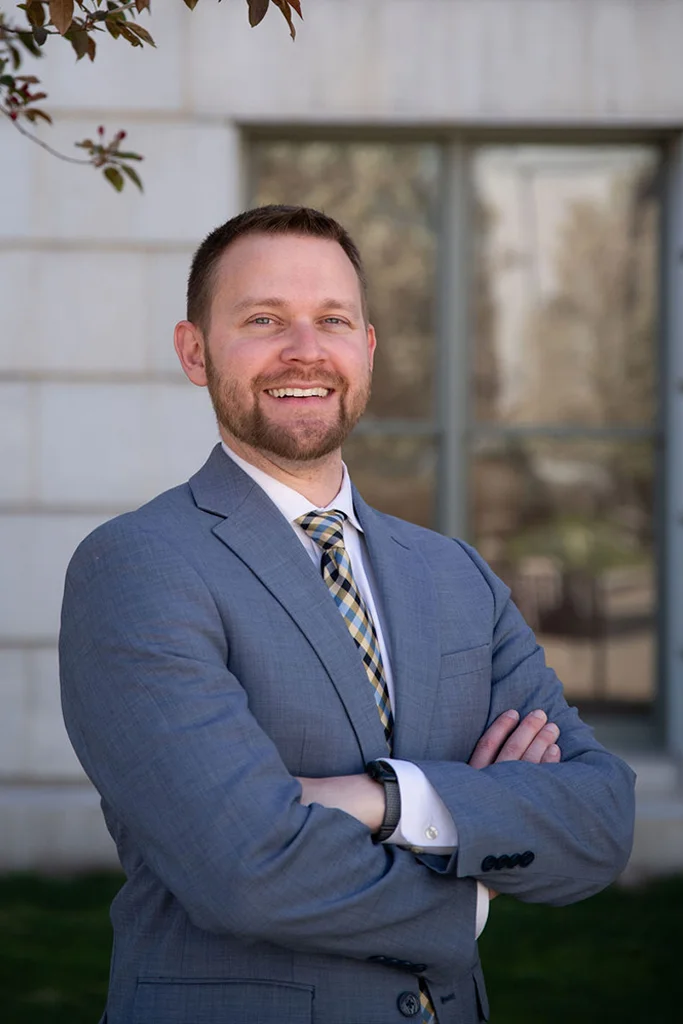
A Glendale drug crimes lawyer who has spent meaningful time inside Colorado courtrooms, not just preparing for them, brings a qualitatively different kind of help. At DeChant Law, attorney Reid DeChant has defended clients facing the full spectrum of drug charges, from simple possession through distribution and trafficking allegations, and he has done it across the range of courthouses that handle Glendale cases. Glendale sits within Arapahoe County’s jurisdiction for many purposes, and Reid’s background as a former public defender in multiple front-range counties gives him direct familiarity with how these prosecutions unfold, how law enforcement agencies document their investigations, and where those investigations tend to fall short under real scrutiny.
Colorado’s drug laws have evolved considerably in recent years, but that evolution has not eliminated consequences. Certain convictions still carry prison time, significant fines, mandatory treatment requirements, driver’s license suspensions, and collateral damage to employment and housing. Working with a Glendale drug crimes attorney who understands both the current statutory landscape and the practical realities of prosecution in this corner of the metro area is not a luxury. It is the most rational move you can make under the circumstances.
Drug Offenses That Come Through Glendale and Arapahoe County Courts
- Possession of a Controlled Substance: Colorado classifies controlled substances into schedules, and possession of Schedule I or Schedule II substances such as heroin, cocaine, methamphetamine, fentanyl, or unauthorized prescription opioids can result in felony charges depending on quantity and prior record. Glendale enforcement often originates from traffic stops on Colorado Boulevard or Leetsdale, where officers develop reasonable suspicion from minor traffic infractions and then conduct searches that turn up controlled substances.
- Possession with Intent to Distribute: When law enforcement believes the quantity or packaging suggests distribution rather than personal use, a possession charge can become an intent charge. The evidentiary difference often comes down to how drugs were packaged, whether cash or scales were found nearby, and how officers characterize the circumstances. These details matter enormously and are often contestable.
- Drug Distribution and Delivery: Delivering or selling a controlled substance is prosecuted more aggressively than possession and carries steeper sentencing exposure. Distribution charges in Glendale sometimes arise from controlled buys conducted by undercover officers or from information provided by informants, which creates a distinct set of defense issues related to entrapment, informant reliability, and chain of custody.
- Prescription Drug Crimes: Prescription fraud, obtaining controlled substances by deception, or possessing prescription medications without a valid prescription are distinct but commonly charged offenses in Arapahoe County. These cases often involve pharmacies, medical providers, or digital prescription records as evidence, and the defense requires careful analysis of what law enforcement actually gathered and how they gathered it.
- Drug Paraphernalia Offenses: Possession or sale of paraphernalia is a separate charge under Colorado law and is frequently added on top of substantive drug charges. While treated as less serious, a paraphernalia conviction carries its own record consequences and is sometimes used as a plea negotiation tool by prosecutors.
- Drug-Related DUI (DWAI-Drugs): Driving while impaired by any controlled substance or combination of substances is prosecutable in Colorado even when no alcohol is involved. Glendale’s proximity to Denver nightlife means DWAI-drugs cases arise with regularity along South Colorado Boulevard and the Leetsdale corridor. These cases involve blood testing rather than breath testing and require scrutiny of the testing methodology and chain of custody.
- Felony Drug Charges Involving Minors or School Zones: Colorado law provides for enhanced penalties when drug offenses occur in proximity to schools or involve minors. Given the residential density of Glendale, these enhancements can arise in cases that might otherwise be charged at lower levels.
What Actually Happens After a Glendale Drug Arrest
Arrests in Glendale are typically processed through the Arapahoe County system. Depending on the nature of the charge, a person may be held at the Arapahoe County Detention Facility in Centennial or released with a summons to appear. The Arapahoe County Justice Center at 7325 South Potomac Street in Centennial handles criminal proceedings for cases arising in Glendale. Arraignments, preliminary hearings, motions, and trials for felony drug charges originating in Glendale flow through that courthouse, and familiarity with how judges and prosecutors there approach drug cases is part of what a well-prepared defense looks like.
One of the most consequential mistakes people make after a drug arrest is speaking freely to law enforcement before consulting a lawyer. Officers may frame the conversation as an opportunity to explain the situation or to cooperate, but anything said becomes part of the investigation record. Exercising the right to remain silent and requesting counsel immediately is not an admission of guilt. It is the single most protective step available at that moment. Do not agree to searches, do not volunteer information about where you have been or who you were with, and do not assume that cooperating informally will be rewarded in any meaningful way by the charging decision.
After the initial arrest and release or bond, the critical window for building your defense opens. Your attorney needs access to the police report, any available body camera or dashcam footage, the warrant application if a search warrant was used, lab results for any substances tested, and any information about informants or undercover activity. Colorado has discovery rules that require the prosecution to disclose this material, but getting it quickly and reviewing it carefully is the foundation of any challenge to the charges. Waiting weeks to hire a lawyer means waiting weeks to start that work, and evidence can degrade, memories fade, and procedural deadlines pass in the meantime.
Colorado also has statutory provisions that allow some defendants to access treatment-based alternatives to traditional incarceration, particularly for possession offenses. Drug court and deferred prosecution agreements are real options in Arapahoe County, but they are not automatic, and the path to those outcomes runs through an attorney who knows how to present a client’s circumstances persuasively to prosecutors and judges who have the discretion to offer them.
How Reid DeChant Approaches Drug Defense in the Denver Metro
Reid DeChant built his practice on the kind of trial experience that most private defense lawyers simply have not accumulated. His years as a public defender meant handling high volumes of drug cases in courtrooms across the Denver metropolitan area, including in Arapahoe County courts that handle Glendale matters. That experience is not just biographical detail. It means Reid has cross-examined the kinds of officers who conduct drug stops in Glendale communities, challenged the reliability of laboratory testing procedures used by Colorado law enforcement, and litigated suppression motions targeting unlawful searches and seizures that formed the basis of drug charges.
Reid also trained at the Trial Lawyers College, an intensive program built around authentic advocacy and the ability to tell a client’s story in a way that resonates with judges and juries rather than simply reciting legal arguments. Drug prosecutions often hinge not just on whether the evidence is legally admissible but on how a jury understands the full context of a person’s life and circumstances. A Glendale drug crimes attorney who can do both the technical legal work and the human storytelling work is genuinely more effective in these cases than one who operates on only one of those levels.
Reid is a member of the National Association of Criminal Defense Lawyers and the Colorado Criminal Defense Bar. These are not ceremonial affiliations. They connect him with the most current thinking on drug defense strategy, including challenges to emerging testing technologies, evolving case law on search and seizure, and developments in sentencing alternatives that benefit clients facing possession and distribution charges. He has handled cases ranging from misdemeanor possession to serious felony drug allegations and has achieved dismissals, not-guilty verdicts at trial, and favorable plea outcomes across a wide range of circumstances.
At DeChant Law, clients are not managed from a distance through a rotating cast of associates. Reid handles your case. You know who is working on your matter, you are informed at each stage of the process, and you participate in the decisions that shape your defense. That direct relationship matters in drug cases, where the factual details of an arrest, the specific circumstances of a search, and the personal history of the person charged are all relevant to building the most effective response.
Questions About Drug Charges in Glendale, Answered
Will I go to prison for a drug possession charge in Colorado?
Not necessarily, and in many cases the answer is no. Colorado has moved toward treatment-based approaches for possession offenses, particularly for first-time or low-level offenders. Felony possession charges can in some circumstances result in probation, deferred sentencing, or drug court rather than prison. The specific substance, the quantity, your prior record, and the strength of your defense all factor into the outcome. Distribution and trafficking charges carry significantly more incarceration risk, which is why how the charge is framed matters from the very beginning.
What is the difference between a drug felony and a drug misdemeanor in Colorado?
Colorado categorizes drug offenses into drug felony levels (DF1 through DF4) and drug misdemeanor levels (DM1 and DM2). The classification depends on the substance involved, the quantity, and the nature of the offense (possession versus distribution). Higher-level drug felonies carry potential sentences measured in years rather than months and may include mandatory parole periods after release. A drug misdemeanor typically carries shorter potential jail time and smaller fines, though any conviction still creates a permanent record unless successfully sealed.
Can my drug charge be dismissed if the police violated my rights during the stop or search?
Yes, and this is one of the most productive areas of drug defense. The Fourth Amendment protects against unreasonable searches and seizures, and Colorado courts take these protections seriously. If an officer stopped your vehicle without adequate justification, searched your person or property without consent or a valid warrant, or failed to properly execute a search warrant, the evidence obtained through that unlawful search may be suppressed. When the drugs themselves are excluded from evidence, the prosecution frequently cannot proceed, and charges are dismissed. Evaluating whether a suppression motion is viable is one of the first things a drug defense attorney should do after reviewing the police report and any available footage.
What happens to my driver’s license after a drug conviction in Colorado?
A drug conviction can trigger a driver’s license suspension through the Colorado Division of Motor Vehicles, separate from any criminal court sentence. The length of suspension varies based on the offense and your prior record. This is a collateral consequence that is sometimes overlooked in the rush to resolve the criminal case, but it has real practical impact on your ability to work, travel, and manage daily life. A complete defense strategy addresses DMV consequences alongside the criminal case.
Can a drug conviction affect my ability to rent an apartment in Glendale?
Yes, and this is one of the most underestimated consequences of a drug conviction. Most apartment management companies in the Glendale and Denver metro area run background checks, and a felony drug conviction will appear prominently. Many landlords have blanket policies against renting to individuals with felony records. Even misdemeanor drug convictions can raise flags with certain property managers. Colorado law does allow for sealing of some drug records after certain waiting periods and upon completion of the sentence, which can restore access to housing in the longer term, but avoiding a conviction in the first place is always the better outcome.
I was charged with drug possession near a school in Glendale. Does that automatically mean enhanced penalties?
Colorado law does provide mechanisms for enhanced treatment of drug offenses that occur in specified areas or involve specified circumstances, including proximity to schools. Whether those enhancements actually apply depends on the specific facts, including the distance from the school property, the time of the alleged offense, and how the charge is filed. These are exactly the kinds of details that need to be examined carefully, because charging decisions are sometimes made broadly and then refined through the defense process.
If I was in a car with other people and drugs were found, can I be charged even if they were not mine?
Yes, and this happens with some regularity. Constructive possession, meaning possession of drugs that are accessible to and known by you even if not physically on your person, is a real legal theory that Colorado prosecutors use. However, proving constructive possession requires the government to show knowledge and control, which is harder in a shared vehicle with multiple occupants. Challenging the attribution of contraband in a multi-occupant vehicle situation is a meaningful defense avenue, particularly when the drugs were found in an area not exclusively associated with you.
Is drug court available in Arapahoe County for Glendale cases?
Arapahoe County does have drug court programs that offer eligible defendants the opportunity to participate in supervised treatment and monitoring in lieu of traditional prosecution. Successful completion of drug court typically results in reduced charges or dismissal rather than conviction and incarceration. Eligibility depends on the nature of the charge, your criminal history, and the prosecution’s assessment of your case. Drug court is not offered automatically. It requires an affirmative effort to pursue it, and having an attorney who understands the program’s requirements and can advocate for your participation is essential to accessing that option.
How long does a drug case in Arapahoe County typically take to resolve?
The timeline varies considerably based on the complexity of the charge, whether suppression motions are filed, the court’s docket, and whether the case resolves through a plea or proceeds to trial. A straightforward possession case might resolve in a few months. A more complex distribution or trafficking case with contested evidence issues can take a year or more. One thing that consistently slows cases down is waiting to retain counsel, because the defense investigation and motion practice cannot begin until an attorney is engaged and has access to the case materials.
Will a drug charge show up on a background check if the case is dismissed?
A dismissal does not automatically remove the arrest record from public databases. The arrest itself may still appear in background check results until the record is formally sealed. Colorado allows petitioning for record sealing in many circumstances, including cases that are dismissed and in some circumstances after successful completion of a sentence. The sealing process requires a separate legal proceeding and has its own eligibility rules and waiting periods. Your attorney can advise you on whether and when you are eligible to pursue sealing after your case concludes.
Representing Drug Defense Clients Across Glendale and the Surrounding Communities
DeChant Law represents clients facing drug charges throughout Glendale and the broader Denver metropolitan area. From the Cherry Creek and Virginia Village neighborhoods bordering Glendale to the residents of Wellshire, University Hills, and Hampden South, the firm handles cases that arise across the southeastern Denver urban core. Clients in the communities of Englewood, Sheridan, and Cherry Hills Village, as well as those in the Centennial, Greenwood Village, and Lone Tree areas further south in Arapahoe County, also rely on Reid DeChant for drug offense representation. The practice extends into Jefferson County courts serving Lakewood, Arvada, and Golden, and into Adams County courts serving Thornton, Commerce City, and Westminster. Cases arising in Denver County, Broomfield County, and Douglas County are also within the firm’s regular practice footprint. Whether a client’s case is pending at the Arapahoe County Justice Center in Centennial, the Lindsey-Flanigan Courthouse in Denver, or another front-range facility, DeChant Law is prepared to appear and advocate at every stage of the proceeding.
Glendale Drug Crime Attorney Ready to Review Your Case
A drug arrest does not define the outcome of your case. What happens next depends in large part on the quality of the defense you build and how quickly you start building it. Reid DeChant is a Glendale drug crime attorney who has spent his career in Colorado courtrooms defending people at exactly the kind of crossroads you may be facing right now. He brings genuine trial experience, deep familiarity with the courts that handle Glendale cases, and a commitment to representing each client as a person whose full story deserves to be heard. Contact DeChant Law to schedule a consultation and start understanding your options.