Glendale Criminal Defense Lawyer
Glendale is a small, densely populated city enclosed within the City and County of Denver, and the courts that handle criminal charges filed there operate with the same seriousness and prosecutorial force as any major metro jurisdiction. A charge that begins with a traffic stop on Virginia Avenue or an incident outside one of Glendale’s many bars and restaurants along East Alameda can escalate quickly into a matter with real consequences for your freedom, your job, and your future. If you are searching for a Glendale criminal defense lawyer, you are likely past the point of wondering whether the situation is serious. You already know it is.
What many people do not realize about criminal cases in and around Glendale is how quickly prosecutors move to build a file and how few opportunities exist to undo early missteps. Glendale sits within the jurisdiction of Arapahoe County for some matters and interfaces closely with Denver County courts for others, depending on the charge and where the arrest occurred. That jurisdictional complexity alone is reason enough to work with an attorney who has real courtroom experience across these courts, not someone who has handled a handful of cases and calls it familiarity. The distinction matters at every stage, from bond hearings to motions practice to trial.
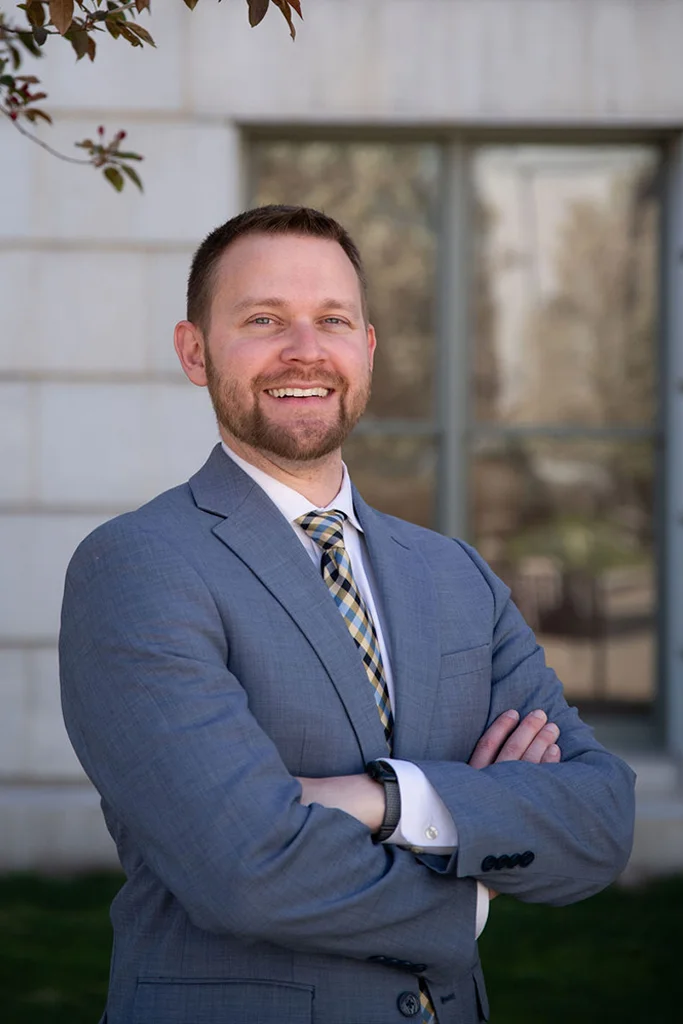
DeChant Law represents people facing criminal charges in Glendale and throughout the surrounding Denver metro area. Attorney Reid DeChant brings public defender trial experience and private practice focus together in a way that is genuinely uncommon in this market. He has defended clients at every level of the criminal system and knows what it takes to challenge evidence, cross-examine officers, and tell a client’s story in a way that resonates with a judge or jury.
What DeChant Law Brings to Your Glendale Criminal Case
Credentials matter most when they are directly tied to the kind of case you are actually facing. Reid DeChant’s background was built handling high volumes of criminal cases in Denver, Broomfield, and Adams County courtrooms as a public defender, which means he has appeared in the kinds of proceedings where most private attorneys rarely set foot. He cross-examined police officers. He argued motions. He tried cases. That experience translates directly into the ability to assess weaknesses in the government’s case against you and exploit them before things go further than they need to.
Reid is a graduate of the Trial Lawyers College, the rigorous training program founded by legendary trial attorney Gerry Spence. The program focuses on authentic courtroom storytelling, psychodrama, and human connection with jurors. Most defense attorneys approach a trial as an argument to be won on paper. Reid approaches it as a story to be told honestly and powerfully. The distinction is visible in how he builds a case file, how he prepares witnesses, and how he speaks to juries. His case results reflect this: Not Guilty verdicts at trial in DUI cases, assault cases, and sex offender registration cases, as well as dismissals in domestic violence prosecutions and DMV license revocation hearings. Those outcomes did not happen because of luck or procedural technicalities alone. They happened because of preparation and advocacy.
Reid is also a member of the National Association of Criminal Defense Lawyers and the Colorado Criminal Defense Bar, organizations that keep him connected to the leading criminal defense strategies being developed nationwide. For someone facing charges in Glendale or anywhere in the Denver metro, these are the credentials that should matter when choosing who to trust with their case.
Criminal Charges Commonly Filed Against Glendale Residents and Visitors
- DUI and DWAI charges: Glendale’s dense bar and restaurant corridor along South Colorado Boulevard and East Alameda Avenue generates significant impaired driving enforcement, particularly late at night and around weekend events. Colorado law distinguishes between DUI and the lesser DWAI offense based on measured impairment levels, and both charges carry license consequences handled separately through DMV Express Consent hearings that must be requested within a strict deadline after arrest.
- Assault and domestic violence offenses: Colorado’s mandatory arrest law in domestic violence situations means officers who respond to calls in Glendale residential properties and apartments have little discretion once they determine probable cause exists. Third-degree assault, felony menacing, and strangulation charges are among the most common filings, and the domestic violence designation carries mandatory restraining order conditions that affect housing, custody, and firearms rights from the moment of arrest.
- Drug possession and distribution: Despite Colorado’s legal cannabis framework, possession and distribution of controlled substances including cocaine, methamphetamine, fentanyl, and unprescribed pharmaceuticals remains criminally prosecuted. Charges range from petty offenses to serious felonies depending on the substance classified under Colorado’s schedule system and the quantity involved.
- Theft and property crimes: Retail theft, auto theft, and burglary cases filed out of Glendale’s commercial corridors can carry felony exposure depending on the value of property involved. Colorado’s theft statute aggregates values in some circumstances, meaning what might appear to be minor incidents can produce a felony charge when combined.
- Traffic offenses and vehicular crimes: Careless driving, reckless driving, vehicular assault, and hit-and-run charges arise frequently on Glendale’s major roadways and at intersections connecting to Denver’s broader street grid. These offenses vary considerably in severity but can result in license revocation, points accumulation, and in serious cases, felony prosecution.
- Weapons charges: Unlawful possession of a firearm, prohibited use of a weapon, and related charges can arise in a variety of circumstances in Colorado. Prior felony convictions, domestic violence designations, and certain mental health histories can create federal and state firearm prohibitions that people are not always aware of until they are charged.
- Failure to register as a sex offender: Colorado’s sex offender registration requirements are strict and unforgiving. Failure to register or update registration information on time constitutes a separate felony offense, and Reid DeChant has obtained a Not Guilty verdict at trial in this specific charge type.
After an Arrest in Glendale: What to Do Before Making a Mistake That Cannot Be Undone
The hours immediately following an arrest are the most consequential and the most mishandled. The most important thing to understand is that nothing you say to law enforcement after an arrest helps your case. Officers are trained to gather statements, and anything you offer, even an explanation that seems reasonable, can be used against you. Invoking your right to remain silent and your right to an attorney is not an admission of guilt. It is the legally protected choice that keeps your options open.
If charges were filed following a Glendale incident, the case may be processed through Denver County courts at the Lindsey-Flanigan Courthouse, located at 520 West Colfax Avenue in Denver. In other circumstances involving Glendale addresses that fall under Arapahoe County jurisdiction, proceedings may be held at the Arapahoe County Justice Center in Centennial. Knowing which courthouse is handling your matter and what the scheduling deadlines look like is something an attorney can clarify immediately. Arraignment dates and bond conditions are set quickly after an arrest, and missing them or failing to understand them can result in a warrant being issued for your arrest even if you were already released.
For DUI arrests specifically, Colorado’s Express Consent law creates a parallel DMV proceeding entirely separate from the criminal case. You have a narrow window after arrest to request a hearing to contest the revocation of your driver’s license. If that deadline passes without action, the revocation becomes automatic regardless of how your criminal case resolves. Reid DeChant has had multiple DMV Express Consent actions dismissed at hearing, and that work begins only if the request is made in time.
Gather whatever documentation you can as soon as possible. If you were injured, photograph injuries. If there were witnesses who can contradict what officers reported, get their contact information before people move on. Save text messages, call logs, or any other records relevant to the incident. Preserve surveillance footage requests if applicable, because video from commercial businesses or residential cameras is frequently overwritten within days. None of this replaces legal counsel, but these steps preserve the raw material that a defense attorney needs to build your case.
How Colorado’s Criminal Process Actually Unfolds and Where Defense Work Happens
Colorado’s criminal process moves through several defined stages, and the quality of your defense at each stage determines what options remain open at the next. After an initial appearance and advisement of charges, most cases proceed through a preliminary hearing or grand jury stage for felonies, followed by arraignment, pretrial motions, and either a plea resolution or trial. The pretrial phase is where experienced defense attorneys often do their most consequential work, through motions to suppress evidence obtained through unlawful stops or searches, challenges to the sufficiency of probable cause, and requests for discovery that force the prosecution to reveal the full scope of their evidence.
In DUI cases, for example, the stop itself must have been legally justified. If an officer lacked reasonable suspicion to pull a driver over on South Colorado Boulevard or near the Cherry Creek corridor that borders Glendale, everything that followed, including field sobriety tests and chemical testing, may be suppressible. Reid DeChant’s record of DUI dismissals and Not Guilty verdicts reflects an understanding of where these arguments succeed and how to make them credibly in front of judges who hear them regularly.
In assault and domestic violence cases, the prosecution often proceeds even when the alleged victim does not wish to cooperate. Colorado prosecutors are trained to pursue these cases independently using statements made at the scene, 911 recordings, officer observations, and photographic evidence. A defense attorney who understands how to challenge each category of evidence and who has actually obtained dismissals and acquittals in these cases, as Reid has in Adams County, Denver, and elsewhere, is not approaching the same problem the same way every other defense attorney does. That specificity of experience is what changes outcomes.
Questions Glendale Criminal Defense Clients Actually Ask
What is the difference between a misdemeanor and a felony in Colorado?
Colorado classifies misdemeanors into different classes with penalties ranging from small fines and short jail terms to up to 364 days in county jail. Felonies are more serious and are divided into classes as well, with potential prison sentences ranging from one year to life depending on the class and any sentencing enhancements that apply. Felony convictions carry consequences beyond incarceration, including loss of voting rights while incarcerated, firearms prohibitions, and immigration consequences. The classification of a charge determines the court that handles it and the procedural rights available to you.
Can a criminal charge from Glendale be expunged or sealed in Colorado?
Colorado law allows for the sealing of certain criminal records, including arrests that did not result in conviction and some conviction records after a waiting period. The eligibility rules depend on the specific offense, the outcome of the case, and how much time has passed. Drug convictions, petty offenses, and misdemeanors may qualify under different timelines. Felonies involving violence or sex offenses are generally not sealable. An attorney can assess your specific record and identify what relief may be available.
Will a DUI from Glendale affect my driver’s license even if I am not convicted?
Yes. The DMV Express Consent process in Colorado is a civil administrative proceeding completely separate from the criminal case. Your license can be suspended through the DMV process even if criminal charges are later reduced or dismissed. Requesting a DMV hearing promptly after arrest is the only way to contest the administrative revocation, and that hearing has its own standards and procedures different from what happens in court.
How does a domestic violence designation affect my criminal case in Colorado?
When law enforcement classifies an incident as domestic violence, a mandatory protection order is issued immediately upon arrest. This order typically prohibits contact with the alleged victim and may require you to vacate a shared residence. The designation also triggers mandatory participation in a domestic violence treatment program as a condition of any probation sentence, and it creates a federal prohibition on firearm possession under federal law. These consequences attach before any conviction and remain in effect throughout the case.
What happens if the alleged victim in my Glendale assault case does not want to press charges?
In Colorado, the decision to prosecute belongs to the district attorney’s office, not the alleged victim. Prosecutors are trained specifically in domestic violence and assault cases to pursue charges using available evidence even when a complaining witness recants or declines to cooperate. This does not mean the case becomes simple for the prosecution, but it does mean the case does not disappear just because the alleged victim changes their mind. Defense strategy in these situations focuses on the admissibility and reliability of the other evidence the prosecution intends to use.
Can drug charges in Colorado be resolved through treatment instead of incarceration?
Colorado courts, including those handling cases originating in Glendale, have developed drug court programs and deferred sentencing options for certain eligible defendants. Whether these alternatives are available depends on the specific charge, the defendant’s criminal history, and prosecutorial discretion. First-time possession offenses may qualify for programs that result in dismissal upon successful completion of treatment. These options require careful negotiation and are not automatically offered, particularly for charges involving distribution or more serious controlled substances.
Is it possible to challenge the results of a breathalyzer or blood test in a Colorado DUI case?
Yes. Chemical test results in DUI cases are subject to legal challenge on several grounds. The testing device must be properly calibrated and certified. The blood draw must be administered within the required time window after driving. The chain of custody for blood samples must be maintained properly. The officer administering the breath test must follow established protocols. In DMV Express Consent hearings, Reid DeChant has obtained dismissals based on defects in how the chemical test was administered or how the advisement was given. These are fact-specific challenges that require both legal knowledge and an understanding of how law enforcement actually conducts these tests.
What does it mean that Reid DeChant trained at the Trial Lawyers College?
The Trial Lawyers College is a selective program founded by attorney Gerry Spence that trains lawyers in courtroom storytelling, psychodrama, and genuine human connection with jurors. The program is not a standard continuing legal education course. It is an intensive, methods-focused training designed to help trial lawyers communicate their client’s story in a way that cuts through legal formality and reaches jurors as human beings. Very few Colorado criminal defense attorneys have completed this training, and it reflects a different philosophy of what trial advocacy actually requires.
How long does a criminal case in the Denver metro area typically take to resolve?
The timeline varies considerably based on the charge, the complexity of the evidence, the court’s docket, and whether the case proceeds to trial. Misdemeanor cases may resolve within a few months if a negotiated outcome is appropriate. Felony cases frequently take six months to a year or longer, and cases that go to trial can take considerably more time depending on scheduling. The pace of litigation is not something that should drive the strategy; the goal is the best outcome for the client, not the fastest resolution.
Can a criminal conviction affect my professional license or employment in Colorado?
Yes, and this is one of the most underappreciated consequences of a criminal conviction. Many professional licenses in Colorado, including those for healthcare workers, teachers, real estate professionals, contractors, and financial industry employees, have separate regulatory processes that can be triggered by a criminal conviction. Employers in certain industries conduct background checks that will reveal arrests and convictions. These collateral consequences are important to understand before accepting a plea deal, because the criminal sentence is sometimes less damaging than the downstream professional effects.
Representing Clients Across Glendale and the Broader Denver Metro Area
DeChant Law represents clients facing criminal charges throughout Glendale and the surrounding communities that make up the Denver metro. From Cherry Creek and Capitol Hill through Washington Park, Congress Park, and into the Hilltop and Hale neighborhoods, residents throughout this corridor have access to the same quality of defense representation regardless of where their case is being prosecuted. The firm also serves clients in Englewood, Aurora, Lakewood, Wheat Ridge, Thornton, Northglenn, Westminster, Broomfield, Arvada, Golden, Littleton, Centennial, Parker, and Castle Rock. In the northern metro area, DeChant Law handles cases arising in Commerce City, Brighton, and communities throughout Adams County. Cases filed in Jefferson County courts, Arapahoe County courts, Douglas County courts, and Denver County courts all fall within the geographic range of this firm’s criminal defense practice.
Whether your case is being handled at the Lindsey-Flanigan Courthouse in Denver, the Arapahoe County Justice Center in Centennial, the Jefferson County courthouse in Golden, or another local courthouse, Reid DeChant has courtroom experience in these venues. That familiarity matters in ways that go beyond knowing where to park. It means understanding how particular judges manage their courtrooms, how local prosecutors approach different charge categories, and how to navigate the specific procedural culture of each jurisdiction.
Glendale Criminal Defense Attorney Ready to Help
A criminal charge does not wait for a convenient time, and neither should your defense. The decisions made in the earliest stages of a case, about what to say, who to contact, and which legal strategy to pursue, have consequences that last long after the case concludes. Working with a Glendale criminal defense attorney who has the trial experience, the training, and the genuine commitment to understand your situation is the foundation of any defense that has a real chance of succeeding.
DeChant Law is ready to hear what happened and give you an honest assessment of where things stand and what options exist. Contact the firm today to schedule a consultation and take the next step toward a thoughtful, aggressive defense of your case.