Gilpin County DUI Defense Lawyer
Gilpin County sits at altitude, both literally and legally. The combination of mountain roads, Central City and Black Hawk casinos, and Colorado’s impaired driving statutes creates a DUI enforcement environment unlike anything you’ll encounter in Denver or the suburbs. A Gilpin County DUI defense lawyer needs to understand not just the law, but the specific dynamics of how these cases are stopped, investigated, and prosecuted in a small mountain county with limited resources and significant gaming traffic. The stakes are real: a DUI conviction in Colorado carries license revocation, fines, possible jail time, mandatory classes, and an ignition interlock requirement, and that is before you factor in what it does to your insurance, your employment, and your record.
What happens in the first hours and days after an arrest in Gilpin County matters enormously. Law enforcement in this area includes the Gilpin County Sheriff’s Office and Black Hawk and Central City police departments, all of which have become increasingly aggressive about DUI enforcement given the volume of visitors who drive up Highway 6 or Highway 119 after spending time on the casino floor. The traffic patterns here mean officers are watching for impaired driving along routes that wind through elevation changes, tight curves, and conditions that can affect field sobriety test performance even for completely sober drivers.
Colorado DUI law involves two separate tracks simultaneously: the criminal case filed in court and the DMV administrative action against your license. Both have their own timelines, their own proceedings, and their own consequences. Missing a deadline in either one can cost you your driving privileges before you ever set foot in a courtroom. Getting the right defense attorney in place early is not just advisable, it is the only way to make sure nothing slips through the cracks.
What DeChant Law Brings to Gilpin County DUI Cases
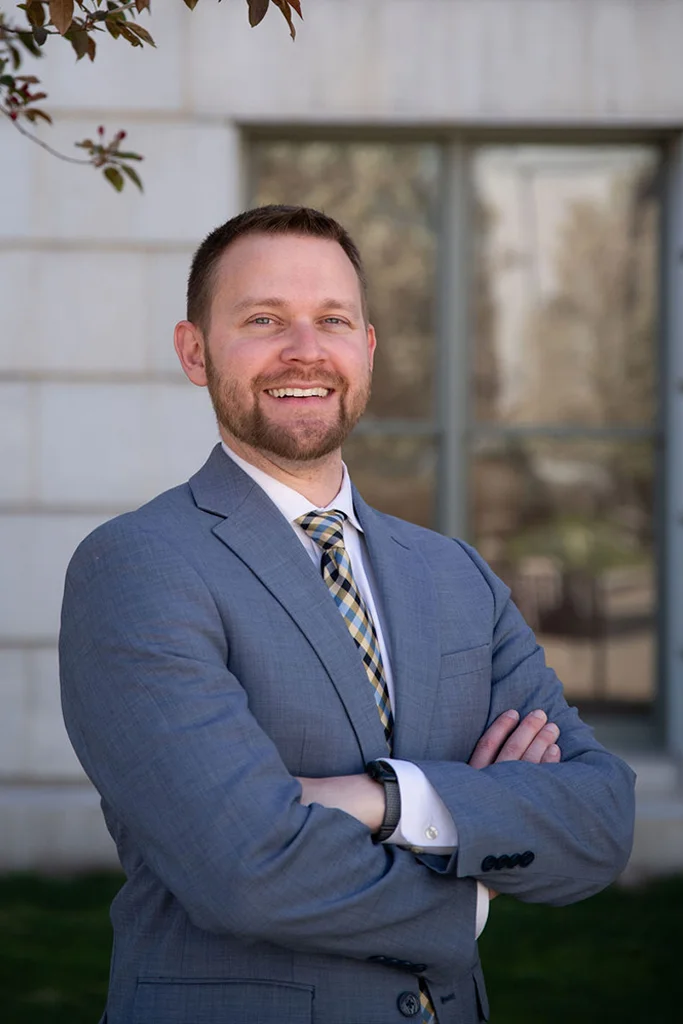
Reid DeChant built his practice on the kind of trial experience that most private defense attorneys simply do not have. His background as a former public defender meant handling high volumes of DUI cases across Denver, Broomfield, Adams County, and surrounding Colorado courtrooms, giving him direct familiarity with how prosecutors evaluate evidence, how judges run hearings, and how to cross-examine the law enforcement officers who conduct traffic stops and administer chemical tests. That courtroom depth translates directly into knowing where DUI cases fall apart for the government, and how to find those pressure points in your specific situation.
Reid is also a graduate of the Trial Lawyers College, the exclusive training program founded by legendary attorney Gerry Spence. That training shapes how Reid approaches every case: not as a legal file to process, but as a human story that needs to be told accurately and compellingly to a judge or jury. The case results on DeChant Law’s record speak to what that approach produces. DUI cases dismissed in Arapahoe County, Douglas County, Jefferson County, and Broomfield. DUI-Drugs charges resulting in Not Guilty verdicts at trial in Jefferson County. Multiple DMV Express Consent actions dismissed for procedural failures, including improper advisements and failure to administer chemical tests within the legally required window. These are not lucky outcomes; they reflect a lawyer who understands both the technical and the human dimensions of impaired driving defense.
Reid holds membership in the National Association of Criminal Defense Lawyers and the Colorado Criminal Defense Bar, staying current on defense strategy at both the state and national level. For someone arrested on a winding Gilpin County mountain road and now facing a case in a small county courthouse, having that level of preparation in your corner matters.
DUI Charges That Arise in Gilpin County
- DUI (Driving Under the Influence): Colorado law defines DUI as operating a vehicle while substantially incapable of safely doing so due to alcohol, drugs, or a combination. A BAC of 0.08 or above triggers a per se DUI presumption, though prosecutors can and do pursue DUI charges at lower BAC levels when other impairment evidence exists.
- DWAI (Driving While Ability Impaired): Colorado’s DWAI statute covers drivers whose ability to operate a vehicle is even slightly impaired by alcohol or drugs. A BAC between 0.05 and 0.08 creates a DWAI presumption. DWAI is often charged alongside DUI or as a reduced charge, and it carries its own penalties including points, fines, and possible jail time.
- DUI-Drugs: With Colorado’s cannabis laws, drug-impaired driving cases have grown significantly. Law enforcement in Gilpin County may call in a Drug Recognition Evaluator when they suspect cannabis or other substance impairment. DRE evaluations involve a multi-step protocol and are subject to meaningful legal challenge.
- Aggravated DUI: Certain factors can elevate DUI charges and penalties, including a very high BAC, having a minor in the vehicle, or causing injury. Cases on Highway 6 or Highway 119 involving accidents can quickly shift from a standard DUI charge into something more serious.
- Repeat DUI Offenses: Second and third DUI convictions in Colorado carry mandatory minimum jail time and longer license revocations. Prior convictions from any state count toward Colorado’s repeat offender calculations, and prosecutors in small counties can be just as aggressive about prior records as those in major metro jurisdictions.
- DMV Express Consent Proceedings: Separate from the criminal case, Colorado’s Express Consent law requires you to submit to chemical testing when lawfully arrested for DUI. Refusing or failing triggers an automatic DMV revocation process. You have only seven days from the date of arrest to request a hearing to contest that revocation, and this deadline does not pause for the criminal case.
- Out-of-State Driver DUI Arrests: Many Gilpin County DUI arrests involve visitors from other states who drove up to the casinos. A Colorado DUI conviction can trigger license consequences in your home state through the Interstate Driver License Compact, and the entire process unfolds while you are back home, making remote legal representation essential.
The Gilpin County DUI Process and What You Should Do Right Now
Gilpin County criminal cases are heard at the Gilpin County Combined Courts, located in Central City. The courthouse handles both the district court and county court dockets, meaning everything from misdemeanor DUI to more serious felony matters runs through a compact facility with its own rhythms and judicial expectations. Knowing the local courthouse environment matters when building a defense strategy.
The single most time-sensitive action after a DUI arrest in Gilpin County is requesting a DMV Express Consent hearing within seven days of the arrest date. If you do not request this hearing, the revocation becomes automatic regardless of what happens in the criminal case. This seven-day window runs from the moment the officer served you with the notice of revocation, not from when you hire a lawyer or figure out what to do. Contact DeChant Law immediately after an arrest so this deadline can be managed correctly from the start.
While the DMV clock is ticking, you should also be preserving everything connected to the stop itself. If you remember details about the road conditions, the lighting, whether you had consumed anything before driving, what instructions the officer gave you during field sobriety tests, and how those tests were conducted, write all of that down before the memory fades. Field sobriety tests administered on an uneven mountain roadside, in cold temperatures or high altitude, can produce misleading results that a trained defense lawyer can challenge effectively. The National Highway Traffic Safety Administration protocols for field sobriety testing are specific, and deviations from those protocols matter.
You should also avoid making statements about your driving or your drinking to anyone other than your attorney. Roadside admissions often appear in police reports in ways that are selectively framed, and what feels like a straightforward answer can become a significant piece of evidence against you. Your right to counsel is real, and invoking it is not an admission of guilt.
On the criminal side, Gilpin County DUI cases typically move through a first appearance, advisement, preliminary hearing if applicable, pretrial conferences, and then either a resolution or trial. Having a defense attorney who has actually tried DUI cases to verdict, not just negotiated pleas, changes how prosecutors approach your case from the beginning.
How Colorado DUI Law Creates Defense Opportunities in Mountain County Cases
There are specific characteristics of Gilpin County DUI arrests that create real defense opportunities. Altitude is a legitimate physiological factor. Studies have documented that alcohol is absorbed differently at elevation, and symptoms that officers associate with impairment can appear in sober individuals who are simply at a higher altitude than they are accustomed to. If a field sobriety test was performed on the side of a mountain highway at four thousand feet or above, that context belongs in your defense.
The roadways themselves present issues. Highway 6 through Clear Creek Canyon and Highway 119 from Boulder through Nederland into Black Hawk are winding, narrow, and technically demanding. Walking a straight line, balancing on one foot, or following an officer’s pen with your eyes while standing on the shoulder of one of these roads at night is a different physical challenge than the same test performed on flat pavement in controlled conditions. Defense attorneys who know how to frame those conditions for a judge or jury understand that field sobriety test results are not simply pass or fail grades.
Chemical test results also carry their own vulnerabilities. As DeChant Law’s case results demonstrate, DMV Express Consent actions have been dismissed for failure to administer the chemical test within the legally required two-hour window, for improper Express Consent advisements, and for procedural failures at the time of the stop. Breathalyzer equipment requires proper calibration and maintenance records. Blood draw procedures must follow specific chain of custody protocols. These are not technicalities in a dismissive sense; they are the procedural safeguards that Colorado law actually built into the DUI framework, and when law enforcement does not follow them, the evidence they produce is unreliable.
A Gilpin County DUI attorney who approaches your case with genuine attention to these technical dimensions, combined with an understanding of how to present your story to a judge or jury as a complete human being rather than just a defendant, is working the full spectrum of available defense strategy.
Questions About Gilpin County DUI Cases
What court handles DUI cases in Gilpin County?
DUI cases in Gilpin County are handled at the Gilpin County Combined Courts in Central City. Misdemeanor DUI and DWAI cases are heard in county court, while felony DUI matters, such as a fourth offense or a DUI involving serious bodily injury, proceed through district court. Both operate out of the same courthouse facility.
How long do I have to request a DMV hearing after a DUI arrest in Colorado?
Seven days from the date of arrest. That deadline is firm. If you miss it, the DMV revocation proceeds automatically and independently of whatever happens in the criminal case. This is one of the primary reasons to contact a DUI defense attorney as quickly as possible after an arrest.
Will a DUI conviction in Gilpin County affect my license if I live in another state?
Almost certainly yes. Colorado participates in the Interstate Driver License Compact, which means a Colorado DUI conviction is reported to your home state’s DMV. Your home state then applies its own rules about what that out-of-state conviction means for your driving privileges there. If you live in a neighboring state and drove up to Black Hawk or Central City, you are dealing with two separate licensing systems at once.
Can I be charged with DUI in Colorado if my BAC was under 0.08?
Yes. Colorado’s DWAI statute covers impairment at lower BAC levels, and a BAC between 0.05 and 0.08 creates a legal presumption of DWAI. Beyond alcohol, you can face DUI charges based on drug impairment even with no detectable alcohol in your system. Cannabis is the most common example in Colorado, but any substance affecting your ability to drive safely can support a DUI charge.
What happens to my commercial driver’s license if I get a DUI in Gilpin County?
CDL holders face a stricter threshold under federal regulations, with a BAC of 0.04 triggering CDL-specific consequences even when driving a personal vehicle. A DUI conviction can result in CDL disqualification for a period of time on a first offense, and a second offense can mean lifetime disqualification. If you hold a CDL, the stakes of a Gilpin County DUI are significantly higher than they are for a standard driver’s license holder.
Does the altitude in Gilpin County actually matter to a DUI defense?
It can, and a defense attorney who takes these cases seriously will think carefully about it. The physiological effects of altitude on alcohol absorption and metabolism are documented, and the physical conditions of mountain roadways affect field sobriety test performance. These factors do not guarantee a particular outcome, but they are legitimate grounds for challenging how impairment was assessed in your specific case.
Can a DUI charge in Colorado be reduced to a lesser offense?
In some cases, yes. Prosecutors and defense attorneys sometimes negotiate reductions to DWAI or to careless driving when the evidence has weaknesses, when the defendant has a clean record, or when pretrial motions have undermined the government’s case. However, Colorado law limits plea agreements in DUI cases in certain circumstances, and prosecutors in smaller counties vary in their willingness to negotiate. Having a defense lawyer who is genuinely prepared to take the case to trial often affects how seriously those negotiations are treated.
What is a Drug Recognition Evaluator and how does it affect a DUI-Drugs case?
A Drug Recognition Evaluator is a law enforcement officer with specialized training in identifying drug impairment through a multi-step evaluation protocol. DRE evidence is used in DUI-Drugs cases when chemical testing alone does not establish per se impairment, particularly in cannabis cases where the legal per se limit remains contested scientifically. DRE evaluations are subject to challenge based on how they were conducted, whether the evaluating officer followed the established protocol, and the reliability of the conclusions drawn.
If I refused the breathalyzer or blood test, is my case hopeless?
No. A refusal triggers an automatic DMV revocation process and can be used against you as consciousness of guilt in court, but it does not end your case. Officers must have had lawful grounds to arrest you before the Express Consent obligation even arises, and if the stop or the arrest itself was improper, both the refusal and any other evidence gathered may be suppressible. Defense challenges to the underlying stop are often the most powerful tools available in Colorado DUI cases.
How does a DUI conviction affect employment in Colorado?
The impact varies significantly by industry. Drivers, healthcare workers, educators, government employees, and anyone holding a professional license face elevated consequences because many licensing boards treat DUI convictions as relevant to character and fitness. Employers who conduct background checks will see a DUI conviction on a criminal record. If your job involves driving a company vehicle, even a misdemeanor DUI can affect your employability. These downstream consequences are part of why fighting the charge rather than simply accepting a conviction matters.
Representing DUI Clients Across Gilpin County and the Mountain Communities
DeChant Law represents clients facing DUI and DWAI charges throughout Gilpin County and the surrounding region. In Gilpin County itself, this includes Black Hawk, Central City, Rollinsville, and the unincorporated areas along Highway 119 and Highway 46. We also represent clients who were arrested while traveling through the corridor connecting Denver to the mountains, including those stopped on Clear Creek Canyon Road and the approaches to Gilpin County through Jefferson County. Many of our clients travel through or live in Nederland, Blackhawk, the Peak to Peak Highway communities, and nearby Clear Creek County locations including Idaho Springs, Georgetown, and Empire. We serve clients throughout Jefferson County, including Evergreen, Conifer, Golden, and Lakewood, as well as Boulder County clients in Lafayette, Louisville, and Longmont who drove through the mountain corridors. Our representation also extends into Denver, Broomfield, Adams County, Arapahoe County, and Douglas County, reflecting the reality that mountain DUI arrests often involve people whose lives and licenses are rooted in the metro area. Wherever you live and wherever you were arrested, the same level of preparation and attention applies to your case.
Talk to a Gilpin County DUI Attorney at DeChant Law
A DUI arrest does not define what happens next. The evidence, the procedure, and the strategy behind your defense all shape where this ends up. Reid DeChant is a Gilpin County DUI attorney with the trial experience, the technical training, and the genuine investment in his clients to handle these cases the way they deserve to be handled. Both the criminal case and the DMV proceeding have deadlines that will not wait, and the sooner you have a defense lawyer reviewing what happened, the more options remain available. Contact DeChant Law to schedule a consultation about your case.