Georgetown DUI Defense Lawyer
Georgetown sits at nearly 8,500 feet elevation in Clear Creek County, tucked along I-70 in a corridor that sees constant traffic from skiers, hikers, outdoor recreationists, and commuters moving between Denver and the mountains. Law enforcement on that stretch of highway is active year-round, and DUI stops happen with real regularity, especially on weekends, holidays, and after events at nearby ski resorts and mountain towns. A Georgetown DUI defense lawyer familiar with how these cases unfold in Clear Creek County courts can make a significant difference in what happens next.
Colorado DUI law is not friendly to the accused. A conviction carries license revocation, mandatory alcohol education programs, fines, possible jail time, and an ignition interlock device requirement. A second or third offense raises those stakes considerably. And Clear Creek County, despite its small population, does not soft-pedal impaired driving prosecutions. The courts there take these cases seriously, and the process moves on its own timeline regardless of whether you feel ready for it.
What makes mountain corridor DUI cases different from cases in urban Denver is the specific context: the roads, the enforcement patterns, the testing conditions, and the fact that altitude can affect how alcohol metabolizes and how field sobriety tests actually go. These are real variables, and they matter to a defense. Getting counsel who understands the full picture from the moment of the stop through DMV proceedings and criminal court is not optional if you care about your outcome.
How DeChant Law Approaches Georgetown DUI Defense
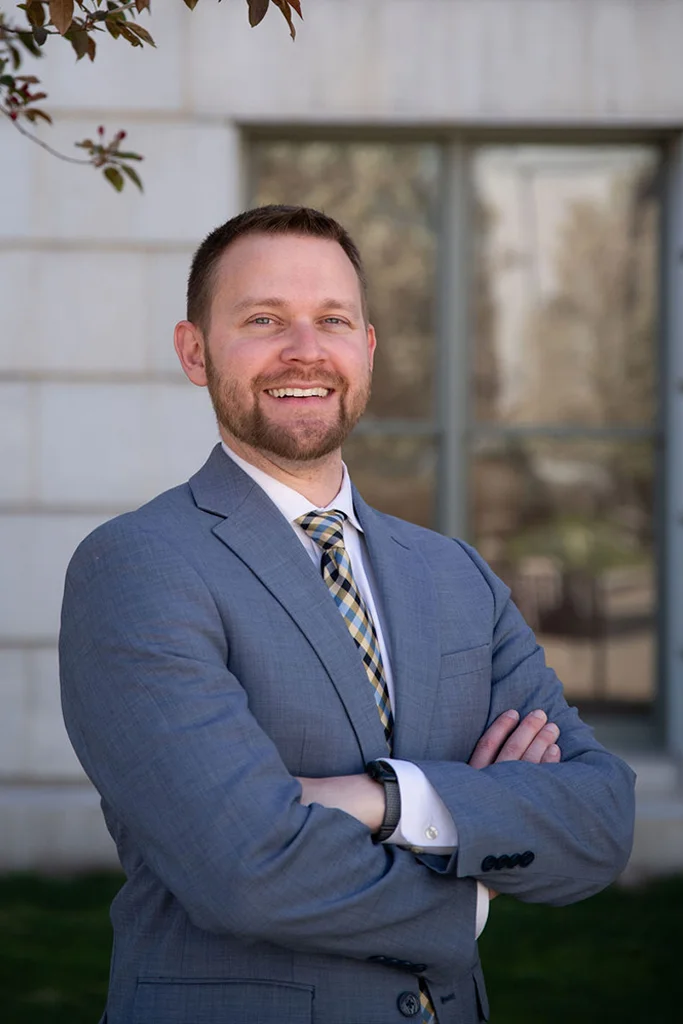
Reid DeChant built his practice on a foundation that genuinely separates him from attorneys who handle DUI cases as an afterthought. As a former public defender who handled cases across Denver, Broomfield, and Adams County, Reid spent years in front of judges, cross-examining officers, and litigating suppression hearings in real courtrooms. That volume of trial experience is rare in private practice, and it matters when your case reaches a critical juncture.
Reid is a graduate of the Trial Lawyers College, the program founded by legendary attorney Gerry Spence that trains lawyers in storytelling, psychodrama, and authentic human connection in court settings. The difference between a lawyer who argues facts and a lawyer who connects a jury to a real person’s circumstances is not small. It can be the difference between a conviction and a not guilty verdict. Reid has earned not guilty verdicts in DUI trials, case dismissals in both criminal court and DMV proceedings, and a track record of results that speaks to what focused, aggressive DUI defense actually looks like in practice.
The firm’s results page includes multiple DMV Express Consent action dismissals, DUI cases resolved not guilty at trial, and DUI charges dismissed outright from counties across the Denver metro and mountain region. Reid also holds membership in the National Association of Criminal Defense Lawyers and the Colorado Criminal Defense Bar, keeping his DUI defense strategies current with the best thinking in the field. For someone facing a DUI charge along the I-70 mountain corridor, that combination of trial experience, specialized training, and track record of results is exactly what a defense demands.
DUI Charges in the Georgetown Area: What You May Be Facing
- DUI (Driving Under the Influence): Colorado’s DUI statute applies when a driver’s blood alcohol content is 0.08 or higher, or when the driver is substantially incapable of safely operating a vehicle due to alcohol or drugs. Arrests along I-70 near Georgetown, Silver Plume, and Idaho Springs are common, particularly in the late evening and on weekend nights after mountain recreation.
- DWAI (Driving While Ability Impaired): Colorado’s DWAI threshold is 0.05 BAC, one of the lowest in the country. A driver can be charged with DWAI even when a breathalyzer or blood test shows a reading below the DUI threshold. This charge carries its own penalties and should not be treated as minor.
- DUI-Drugs: Colorado law includes impairment by prescription medication, marijuana, or other controlled substances under the DUI statute. With the state’s legal cannabis environment, drug DUI charges along mountain corridors have increased, and they often involve contested toxicology evidence that requires expert scrutiny.
- Aggravated DUI / Prior Offense Enhancement: A second or third DUI conviction in Colorado carries mandatory jail time, longer license revocations, and higher fines. For repeat offense charges, the stakes rise sharply and so does the need for an experienced DUI defense attorney from the first appearance.
- DMV Express Consent Revocation Proceedings: A DUI arrest in Colorado triggers two separate legal proceedings: the criminal case and a DMV hearing that can revoke your driving privileges independently. The hearing request deadline is short, and missing it means automatic revocation. Reid DeChant has successfully dismissed multiple Express Consent actions on procedural and substantive grounds.
- Underage DUI and Zero-Tolerance Offenses: Colorado applies stricter per se thresholds for drivers under 21. A young person caught after a day of skiing near Georgetown faces a process with long-term licensing and record consequences that are worth fighting aggressively from the start.
What to Do Immediately After a DUI Arrest Near Georgetown
The hours after a DUI arrest on I-70 or in the Georgetown area move fast, and some of the most important deadlines in your case arrive sooner than you expect. The DMV Express Consent revocation process begins the moment you took or refused a chemical test. You have a limited window, generally seven days from the date of arrest, to request a hearing with the Colorado Department of Revenue’s Division of Motor Vehicles if you want to contest the revocation of your driving privileges. That deadline does not move for anyone. Missing it eliminates a critical layer of your defense before the criminal case even begins.
Clear Creek County criminal cases are handled in the Clear Creek County Combined Court in Georgetown, located at 405 Argentine Street. This is a small but active courthouse, and DUI cases in that system follow Colorado’s criminal procedure with all the usual arraignment, motions, and potential trial phases intact. Knowing the local court from the start helps your attorney approach hearings and negotiations with the right calibration for how this specific court operates.
After an arrest, preserve everything you can remember about the stop: where it happened, the time, what the officer said, what tests were requested, how the field sobriety test was conducted, and any conditions that may have affected your performance, including the altitude, the cold, uneven roadway surfaces, or any footwear you were wearing. These details are not trivial. Field sobriety tests designed for sea-level conditions can produce misleading results in high-altitude environments, and an experienced DUI attorney knows how to examine that evidence critically.
Do not discuss your case on social media, with acquaintances, or with anyone other than your attorney. Statements you make can be used against you. The most common mistake people make after a DUI arrest is assuming the evidence is too strong to fight or that the process is too straightforward to require real legal help. Neither is accurate. Chemical test results can be challenged on chain of custody grounds, on the timing of administration, on equipment calibration, and on the proper advisement of Express Consent rights. Officers can and do make procedural errors that lead to case dismissals. Reid DeChant has achieved those dismissals before, and they do not happen by accident.
How Altitude and Mountain Conditions Factor Into DUI Defense
Georgetown’s elevation is not just a geographic fact; it is a legitimate factor in how DUI arrests and tests should be evaluated. At high altitude, the relationship between alcohol consumption, blood alcohol concentration, and observable impairment can differ from what standardized testing assumes. The National Highway Traffic Safety Administration’s field sobriety tests were designed and validated at lower elevations, and some researchers have noted that the horizontal gaze nystagmus test and divided attention tasks may be affected by altitude-related factors including fatigue, reduced oxygen levels, and cold air exposure.
Beyond field sobriety tests, breathalyzer accuracy in cold weather and at altitude has been a legitimate topic in DUI litigation. Blood tests avoid some of these concerns but introduce others, including storage, handling, fermentation, and testing methodology issues that require scrutiny. For cases involving chemical evidence collected on I-70 between Denver and the Eisenhower Tunnel, a defense attorney who understands how to work with toxicology experts and challenge the science of impaired driving evidence is not a luxury. That expertise is the core of a real defense.
Reid DeChant’s approach to DUI cases begins with a thorough review of every piece of evidence: the officer’s written reports, dashcam or bodycam footage, the chemical test records and device maintenance logs, the advisement given at the time of the stop, and whether probable cause actually existed for the initial traffic stop or DUI investigation. A stop that begins without legal justification can result in all subsequently gathered evidence being suppressed, which changes the trajectory of the entire case.
Questions People Ask About Georgetown DUI Defense
What is the difference between DUI and DWAI in Colorado?
DUI applies at a BAC of 0.08 or higher, or when a driver is substantially incapable of safe vehicle operation. DWAI applies at a lower threshold, starting at 0.05 BAC, and covers situations where driving ability is even slightly impaired. Both are criminal offenses, but they carry different penalty ranges and should be treated seriously regardless of which charge you face.
Do I have to take a breathalyzer or blood test at a Georgetown DUI stop?
Colorado’s Express Consent law means that by driving on state roads, you have already consented to a chemical test when a law enforcement officer has reasonable grounds to believe you are impaired. Refusing the test carries its own consequences, including an automatic license revocation and the ability of the prosecution to use your refusal against you at trial. However, refusing a roadside portable breath test (PBT) before arrest is handled differently and does not carry the same mandatory penalties.
How long does a DUI case in Clear Creek County typically take?
DUI cases in Clear Creek County can range from a few months to well over a year depending on whether the case involves contested evidence, expert witnesses, or whether it proceeds to trial. Simple first-offense cases with straightforward facts tend to resolve more quickly. Cases involving suppression motions, blood test disputes, or prior convictions take longer. Your attorney should give you a realistic timeline based on the specific circumstances of your case.
What happens to my driver’s license after a DUI arrest in Colorado?
Two processes run simultaneously. In the DMV process, your license can be revoked through an Express Consent proceeding unless you request a hearing within the designated window. In the criminal case, a conviction can result in additional license consequences. These are separate proceedings, and outcomes in one do not automatically control the other. Managing both requires prompt action from day one.
Can a DUI conviction affect my ability to drive to work in Colorado?
Yes. License revocation after a DUI can affect employment directly, especially if your job requires driving or if you live in a mountain community where public transit options are limited. Colorado does provide for restricted licenses in some circumstances, including ignition interlock provisions, but those options depend on the specifics of your case and record. An attorney can help you understand what driving options may be available while your case is pending and after resolution.
Does altitude affect breathalyzer or field sobriety test results?
This is a genuine area of scientific inquiry and has been raised in DUI defense. Altitude can affect pulmonary function and the ratio of deep lung air to breathalyzer readings. Cold temperatures can affect both the person being tested and certain device functions. Field sobriety tests developed under controlled, lower-altitude conditions may not account for natural balance challenges or physiological effects at nearly 9,000 feet. These are factors worth examining with your attorney and, where appropriate, with a qualified expert witness.
I was stopped at a DUI checkpoint on I-70. Is that legal?
Colorado law permits sobriety checkpoints under specific procedural requirements, including advance public notice and non-arbitrary selection of vehicles. However, checkpoints that do not meet constitutional standards can be challenged. Whether a particular checkpoint was properly conducted depends on the specific facts of the stop. Your attorney should review the checkpoint records and procedures as part of any defense strategy involving a checkpoint arrest.
Can a DUI charge affect my professional license in Colorado?
For many licensed professionals, including those in healthcare, law, education, and commercial driving, a DUI conviction can trigger separate licensing board investigations or discipline. Colorado professional licensing boards have their own reporting requirements and review processes. If you hold a professional license, that collateral consequence is an important factor in how you approach your criminal case, and your attorney should understand that dimension of your situation.
What if I was driving under the influence of marijuana rather than alcohol?
Colorado has a statutory presumption related to THC levels in blood tests for DUI-D cases, though that presumption is rebuttable and the science of cannabis impairment is genuinely contested. THC metabolizes differently than alcohol, and blood concentration levels do not correlate with impairment the same way BAC does. Drug DUI cases often require toxicology experts and careful cross-examination of the officer’s observations. They are not simpler than alcohol DUI cases, and in some ways they are more complicated to prosecute and to defend.
Is it worth contesting a DUI if my BAC was above the legal limit?
Yes, in many cases. A BAC result above the statutory threshold does not close off defense options. The evidence still has to be properly obtained, properly tested, and properly presented. If the stop lacked probable cause, if the Express Consent advisement was improper, if the blood draw was not administered within the required timeframe, or if the testing equipment was not properly calibrated, the case can be challenged on those grounds. Reid DeChant has secured dismissals and not guilty verdicts in cases where chemical test results appeared to tell one story but the full record told another.
DUI Defense Representation Along Colorado’s I-70 Mountain Corridor and Beyond
DeChant Law represents clients facing DUI and DWAI charges throughout Clear Creek County and the surrounding region, including Georgetown, Idaho Springs, Silver Plume, Empire, and the communities along the I-70 corridor from the Denver metro foothills through the Eisenhower Tunnel. The firm also serves clients in Jefferson County, including Evergreen, Conifer, Golden, and the communities along Highway 285 and Highway 6. Further along the Front Range, Reid DeChant represents clients in Denver, Lakewood, Arvada, Wheat Ridge, Westminster, Broomfield, Thornton, Aurora, Centennial, Littleton, Englewood, Lone Tree, and Parker. The firm has handled cases in Arapahoe County, Douglas County, Adams County, and Jefferson County courtrooms, and that geographic reach includes both the urban Denver metro and the mountain and foothill communities where I-70 corridor DUI arrests most commonly occur.
Whether you were stopped in Clear Creek Canyon, pulled over near the Georgetown exit, or arrested after coming down from a ski weekend in Summit County on your way back to Denver, DeChant Law is positioned to represent you across the courts and jurisdictions that handle these cases.
Talk to a Georgetown DUI Attorney About Your Case
A DUI charge on I-70 or anywhere in Clear Creek County sets two legal processes in motion at once, and both have hard deadlines. The Georgetown DUI attorney at DeChant Law has the trial experience, the courtroom record, and the specialized knowledge to challenge this kind of case at every stage, from the initial stop through DMV proceedings and, if necessary, to trial. Reid DeChant does not treat DUI cases as routine, because for the person facing the charge, nothing about it is routine. Call DeChant Law to discuss your situation and find out what a real defense looks like.