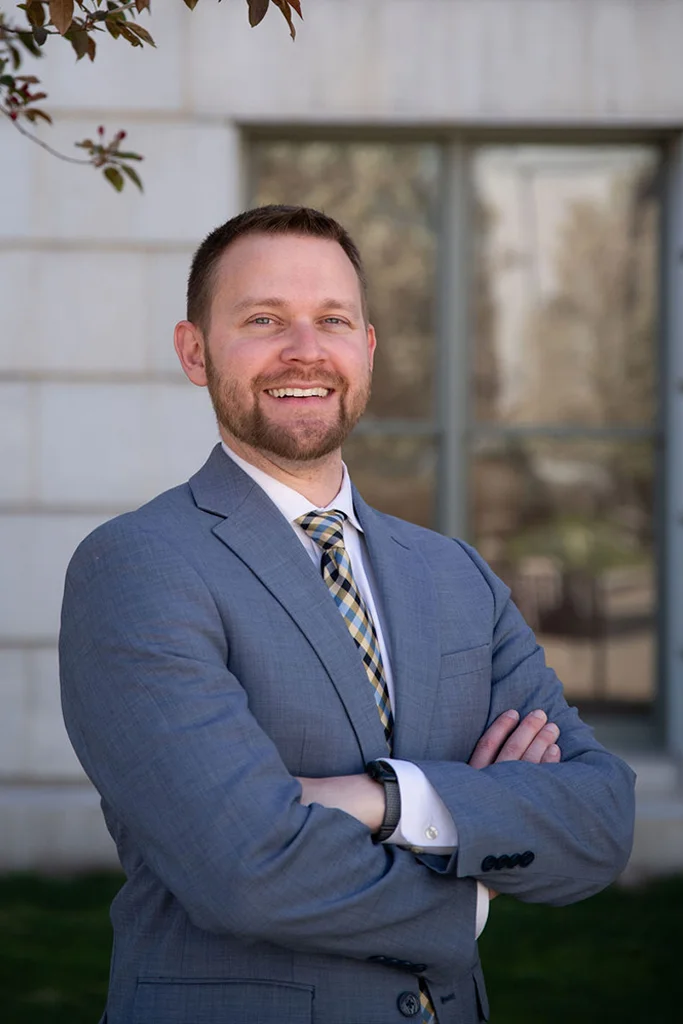
Elizabeth DUI Defense Lawyer
A DUI stop in Elizabeth, Colorado rarely happens in isolation. It happens after a long drive down Highway 86, late at night, when patrol density picks up. It happens after a gathering in Elbert County where rideshare options are scarce and the nearest town is twenty miles away. Whatever the circumstances that brought you here, the charge you are now facing carries real consequences that extend well beyond a fine or a weekend in county lockup. An Elizabeth DUI defense lawyer who understands how these cases are built, where they have weaknesses, and how Colorado’s DUI laws actually operate in a rural county setting is the difference between a conviction that follows you for years and a resolution that lets your life continue.
Colorado does not treat DUI charges lightly, and neither does Elbert County. A first-offense conviction can mean license revocation, mandatory alcohol education classes, ignition interlock requirements, fines that add up well past a thousand dollars when surcharges are included, and the possibility of jail time. Repeat offenses escalate dramatically. And separate from the criminal court process, the Colorado Division of Motor Vehicles runs its own administrative proceeding that can strip your driving privileges regardless of how the criminal case resolves. That parallel track catches a lot of people off guard, and missing the deadline to request a DMV hearing forfeits your right to fight the license revocation entirely.
DeChant Law represents clients throughout the Denver metro area and the surrounding counties, including Elbert County, where cases originating in Elizabeth and the surrounding communities are handled. Reid DeChant built his practice on the kind of courtroom experience that only comes from years of trying actual cases, not settling them, and his focused work in DUI and DWAI defense reflects a genuine understanding of where these charges succeed and where they fall apart.
What Makes This Area of Law Different From Other Criminal Charges
DUI cases in Colorado involve two distinct legal battlegrounds running simultaneously, and the decisions made in the first hours and days after an arrest affect both. On the criminal side, the prosecution must establish impairment, typically through blood or breath test results, officer observations, and field sobriety test performance. On the administrative side, the DMV acts independently of the district attorney’s office, and the timeline for responding is short. You have seven days from the date of arrest to request a hearing before the DMV revokes your license automatically. That deadline applies regardless of whether you plan to fight the criminal charge, regardless of your blood alcohol reading, and regardless of whether you think the stop was even lawful.
The rural character of the Elizabeth area adds a layer that urban DUI cases often do not have. Law enforcement agencies operating in Elbert County include the Elbert County Sheriff’s Office and the Colorado State Patrol, both of which patrol the long stretches of highway that connect Elizabeth to Franktown, Kiowa, and the communities south of Parker. Stops on those stretches tend to be pretext stops for minor traffic infractions, speeding, drifting, a broken taillight, where the officer is really looking for signs of impairment. Whether that stop was constitutionally valid is one of the first questions a DUI defense attorney serving Elizabeth should examine, because an unlawful stop can result in the suppression of everything that followed it.
DUI Charges That Come Through Elbert County and What They Actually Mean
- DUI (Driving Under the Influence): Colorado’s DUI statute applies when a driver is substantially incapable of safely operating a vehicle due to alcohol, drugs, or a combination of both. A blood alcohol concentration (BAC) at or above 0.08 creates a permissive inference of DUI, though charges can also proceed based on observed impairment at lower BAC levels.
- DWAI (Driving While Ability Impaired): This charge covers impairment to the slightest degree, with a BAC between 0.05 and 0.08. DWAI is a lesser offense than DUI but still carries penalties, including points on your license, fines, and potential jail time, particularly for repeat offenses.
- DUI Per Se: A separate charge from DUI that requires only proof of a BAC at or above 0.08, without any additional evidence of impairment. This charge is significant because it does not depend on how the officer described your driving or behavior at the stop.
- DUI-Drugs: Colorado law treats driving under the influence of marijuana, prescription medication, or any controlled substance the same way it treats alcohol-based DUI. Drug recognition evaluations and blood tests are commonly used in these cases, and the science behind them is contested in ways worth examining carefully.
- Aggravated DUI Circumstances: While Colorado does not have a standalone “aggravated DUI” statute, certain factors, including a BAC of 0.150 or higher, a minor in the vehicle, or causing injury, can significantly increase the penalties associated with a DUI conviction and affect eligibility for certain diversionary outcomes.
- Repeat DUI Offenses: A second, third, or subsequent DUI conviction in Colorado carries mandatory minimum jail sentences, longer license revocations, and mandatory treatment requirements that the court does not have discretion to waive. A prior DUI conviction from another state may also count toward Colorado’s repeat offender calculation.
- Express Consent Violations: Colorado’s Express Consent law requires licensed drivers to submit to chemical testing when a peace officer has probable cause to believe they are impaired. Refusing a chemical test triggers an automatic license revocation that is separate from, and can run alongside, any criminal consequences.
What to Do After a DUI Arrest Near Elizabeth
The most consequential decision you make after a DUI arrest is not what you say to the officer, though that matters too. It is whether you act quickly enough to preserve your options. The seven-day window to request a DMV hearing is not a suggestion. If you miss it, the DMV will revoke your license on the date printed on the express consent form you received at the time of your arrest, and you will not have the opportunity to contest that revocation through a hearing. An attorney can file that request on your behalf, and the DMV hearing itself is actually a useful tool because it gives your defense counsel the opportunity to examine the arresting officer under oath before the criminal case proceeds.
Criminal DUI cases in Elbert County are typically handled through the Elbert County Combined Courts, located in Kiowa. The courthouse handles both civil and criminal matters for the county, and understanding how this particular court operates, its scheduling practices, its local rules, and the approach of the district attorney’s office, is the kind of institutional knowledge that matters when building a defense. The Eighteenth Judicial District covers multiple counties, and the prosecutors and judges who handle Elbert County cases have patterns and tendencies that experience reveals over time.
Once a DUI case is filed, a number of procedural steps follow: an arraignment where you enter a plea, possible motions hearings where your attorney can challenge the stop, the field sobriety tests, or the chemical test results, and eventually either a plea negotiation or trial. One of the most common mistakes people make is assuming that a high BAC result makes their case unwinnable. Blood test results can be challenged on the basis of how the sample was collected, stored, and analyzed. Breath test results depend on the calibration and maintenance records of the device used. Field sobriety test performance is inherently subjective and is influenced by road conditions, lighting, footwear, pre-existing medical conditions, and the officer’s training. None of this means every case has a defense, but it does mean no case should be conceded without a careful review of the evidence.
Why Reid DeChant Is the Right Choice for Elizabeth-Area DUI Defense
Reid DeChant’s background is genuinely unusual in Colorado DUI defense. Before building a private practice, he served as a public defender, where the volume of cases he handled across Denver, Broomfield, and Adams County gave him something most attorneys simply do not have: sustained, repetitive courtroom experience across a wide range of charges, including DUI and DWAI at multiple offense levels. Public defender work is not theoretical. It is judges, cross-examination, motions argued in real time, and outcomes that matter to real people. That foundation informs every case Reid handles as a private attorney.
Beyond sheer volume, Reid’s training at the Trial Lawyers College, founded by Gerry Spence, shaped the way he approaches a case at a deeper level. The Trial Lawyers College does not train lawyers to argue facts. It trains them to understand their clients as human beings and to communicate that humanity in the courtroom in a way that moves judges and juries. In DUI cases, this matters because juries are not blank slates. They carry assumptions about impaired driving, and a defense attorney who can tell a client’s story honestly and compellingly is better positioned to counter those assumptions than one who simply reads test results aloud.
The firm’s case results include multiple DUI and DWAI matters dismissed or resulting in not guilty verdicts across Jefferson County, Douglas County, Arapahoe County, and Broomfield County, as well as numerous DMV express consent proceedings dismissed for procedural and constitutional deficiencies, including improper advisements and failures to administer chemical tests within the required timeframe. Reid is also a member of the National Association of Criminal Defense Lawyers and the Colorado Criminal Defense Bar, memberships that reflect ongoing engagement with the defense community and access to developing legal strategies in this area. An Elizabeth DUI defense attorney who brings this combination of trial experience, specialized training, and peer recognition handles these cases at a fundamentally different level than one who primarily resolves them through plea agreements without examining the record.
Questions Worth Asking Before You Decide How to Handle Your Case
Does a first-offense DUI in Colorado always result in a conviction on your record?
Not necessarily. Depending on the specific facts of your case and the jurisdiction, there may be options that result in reduced charges, dismissal of certain counts, or alternative sentencing arrangements. Colorado does not have a universal first-offender diversion program for DUI, but outcomes vary, and a careful review of the evidence can reveal grounds to challenge the charge before it ever reaches a plea negotiation.
What happens to my driver’s license if I refuse the blood or breath test?
Refusing a chemical test in Colorado triggers an automatic license revocation under the Express Consent statute. The revocation period for refusal is typically longer than the revocation period for a failed test. You still have the right to request a DMV hearing within seven days of your arrest, and that hearing is the only opportunity to contest the revocation. However, refusal evidence can also be used against you in the criminal case.
Can a DUI charge in Elizabeth affect my commercial driver’s license (CDL)?
Yes, and often more severely than it affects a standard license. Federal regulations govern CDL holders, and a DUI conviction, even in a personal vehicle, can result in disqualification from operating commercial vehicles. The BAC threshold for CDL holders operating commercial vehicles is also lower under federal rules. If you hold a CDL, the stakes of a DUI charge extend well beyond the immediate criminal and administrative consequences.
How does the DMV hearing relate to the criminal case?
The DMV hearing and the criminal court case are separate proceedings. The DMV hearing is an administrative process focused solely on your driving privileges. Winning the DMV hearing does not mean the criminal charge is dismissed, and losing it does not mean you will be convicted. However, the DMV hearing has strategic value because your attorney can subpoena the arresting officer and examine their testimony before the criminal case proceeds, which can surface inconsistencies that become useful later.
What is the legal limit for marijuana impairment in Colorado?
Colorado law establishes a permissive inference of DUI-drugs at five nanograms of active THC per milliliter of blood. However, unlike alcohol, THC can remain detectable in the bloodstream long after impairment has passed, and the relationship between THC blood concentration and actual impairment is scientifically contested. Prosecutors still bring DUI-drugs charges, but these cases frequently involve more complex evidentiary battles than alcohol-based DUI cases.
Is it possible to get an ignition interlock restricted license while my case is pending?
Colorado’s interlock requirements typically arise after a conviction or a sustained license revocation, not while a case is in the pre-conviction phase. However, the DMV process and the criminal case move on parallel tracks, and depending on how your license situation resolves at the administrative level, an interlock restricted license may be available as part of reinstatement. Your attorney can advise you on the specific timeline given your particular circumstances.
Will a DUI conviction in Colorado affect my professional license?
It may, depending on your profession. Colorado licensing boards for healthcare professionals, educators, law enforcement officers, attorneys, and other regulated professions often require disclosure of criminal convictions, including misdemeanor DUI. Some boards conduct periodic background checks. The impact varies significantly by profession and by the specific circumstances of the conviction, but this is a question that should be factored into your defense strategy from the beginning.
How long does a DUI case in Elbert County typically take to resolve?
Timelines vary considerably based on whether the case goes to trial, the complexity of the evidence, and court scheduling. A straightforward case that resolves through a plea agreement might conclude within a few months of arraignment. A case that involves suppression motions, contested evidence, or a jury trial can take considerably longer. Rural courts like Elbert County Combined Courts operate on different dockets than urban courts, and that can affect scheduling in both directions.
Can out-of-state drivers face the same consequences in Colorado?
Yes. Colorado can impose its own criminal penalties and license actions regardless of where you are licensed. Additionally, Colorado participates in the Driver License Compact, which means a DUI conviction in Colorado will typically be reported to your home state, which may impose its own separate penalties, including license actions in your state of residence.
What if I believe the traffic stop that led to my arrest was not lawful?
The legality of the initial stop is one of the first things a DUI defense attorney should examine. An officer must have reasonable articulable suspicion to initiate a traffic stop. If the stop was not supported by sufficient justification, a motion to suppress can be filed, which, if granted, may result in the exclusion of all evidence gathered after the stop, including field sobriety test results and chemical test results. Suppression of that evidence often makes the prosecution’s case impossible to proceed with.
DUI Defense Representation Across the Elizabeth Area and Beyond
DeChant Law serves clients from Elizabeth and throughout Elbert County, including those coming from Kiowa, Franktown, Simla, Calhan, and the rural communities along Highway 86 and Highway 83. Clients traveling through the county from Arapahoe County, Douglas County, and Lincoln County are also represented when their cases end up in Elbert County courts. The firm’s reach extends throughout the Denver metropolitan area and surrounding counties, representing clients in Denver, Aurora, Lakewood, Arvada, Westminster, Thornton, Northglenn, Broomfield, Littleton, Englewood, Castle Rock, Parker, Lone Tree, Centennial, Commerce City, Brighton, Longmont, Loveland, and the communities of Jefferson County, Adams County, Arapahoe County, and Douglas County. Whether your case is in an urban courthouse on a busy city docket or in a smaller rural court in eastern El Paso or Elbert County, the quality of the defense does not change.
Talk to an Elizabeth DUI Attorney Before Your Deadline Passes
The window for preserving your rights after a DUI arrest in Elizabeth is short, and every day that passes without legal counsel narrows your options. An Elizabeth DUI attorney from DeChant Law can review the record of your stop, analyze the chemical test evidence, file your DMV hearing request within the required timeframe, and build a defense strategy rooted in the actual facts of your case rather than assumptions about what the outcome has to be. Reid DeChant has taken DUI cases to trial and won, has had evidence suppressed on constitutional grounds, and has seen DMV proceedings dismissed for procedural failures that a less experienced attorney might have missed entirely. Call DeChant Law to discuss your case and find out what a genuine defense looks like for your situation.