Elizabeth Criminal Defense Lawyer
Elizabeth, Colorado sits at the heart of Elbert County, and while it carries the character of a small ranching community, the criminal justice system it feeds into is anything but forgiving. Residents facing charges in Elbert County deal with a county attorney’s office and a district court that prosecutes cases with the same determination you would find in any major metropolitan jurisdiction. Whether a charge stems from a traffic stop on Highway 86, an incident at a local gathering, or a more serious allegation, the consequences run the same gamut as anywhere else in Colorado: potential jail time, probation, fines, a criminal record that follows you, and in some cases, the loss of a professional license or your right to own a firearm. The Elizabeth criminal defense lawyer you choose to represent you will have a direct impact on how that process unfolds.
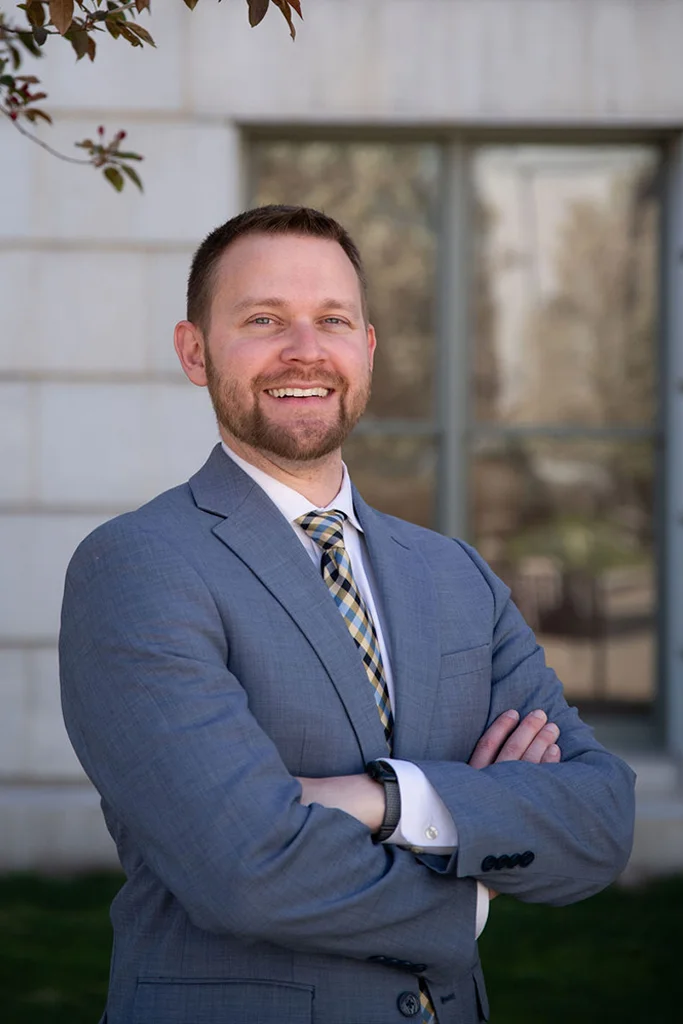
DeChant Law represents clients throughout the Elizabeth and Elbert County area, bringing the trial experience and client-centered approach that this kind of representation demands. Attorney Reid DeChant built his practice on a foundation of courtroom advocacy, having defended cases ranging from traffic offenses and DUI to felony assault and homicide during his time as a public defender. That breadth of experience means he approaches every charge, no matter how it appears on paper, with the same seriousness and strategic thinking.
The Elbert County District Court operates out of Kiowa, and cases from Elizabeth and surrounding communities move through that courthouse. Understanding how this particular court operates, which prosecutors handle what types of cases, and how judges in this jurisdiction approach sentencing and plea negotiations is the kind of local knowledge that actually shapes outcomes. Generic legal representation may not cut it here, and the stakes of getting this wrong are too real to leave to chance.
Common Charges Handled by an Elizabeth Criminal Defense Attorney
- DUI and DWAI: Driving under the influence and driving while ability impaired charges arise frequently along Highway 86, Parker Road, and other major routes through Elbert County. Colorado’s DUI laws carry penalties that escalate sharply with prior offenses and can include mandatory jail time, license revocation through a separate DMV Express Consent hearing, ignition interlock requirements, and probation conditions that affect daily life for years.
- Domestic Violence Charges: Colorado law mandates arrest when responding officers believe domestic violence has occurred, which means charges are filed even when the alleged victim does not want prosecution to proceed. Domestic violence designations attach to underlying charges, triggering additional consequences including mandatory treatment programs and federal firearm prohibitions under applicable federal law.
- Drug Possession and Distribution: Elbert County law enforcement actively investigates controlled substance offenses. Possession of methamphetamine, cocaine, fentanyl, or other Schedule I and II substances can be charged as a felony depending on quantity and circumstances, and distribution or intent-to-distribute charges carry significantly heavier penalties than simple possession.
- Assault and Menacing: Assault charges in Colorado range from third-degree misdemeanor assault up to first-degree assault, a class three felony. The distinction between these charges often turns on the alleged use of a weapon, the severity of injury claimed, or whether the incident is classified as a domestic violence offense, all of which affects both the charge level and the available defenses.
- Theft and Property Crimes: Theft charges in Colorado are graded by the value of the property allegedly taken, with felony thresholds that can pull what might seem like a minor incident into serious criminal exposure. Shoplifting, fraud, and burglary allegations require careful attention to the evidence underlying the charge.
- Traffic and License-Related Offenses: Charges like careless driving causing injury, reckless driving, driving under revocation, and hit and run carry criminal exposure beyond just fines. In rural Elbert County, where driving is essential to daily life, the collateral consequences of a license suspension or revocation can be as damaging as the criminal penalty itself.
- Weapons Offenses: Colorado’s laws around firearm possession, concealed carry, and the use of weapons in connection with other offenses create layers of exposure that require precise legal analysis, particularly when a domestic violence designation or prior felony record is involved.
What the Legal Process Actually Looks Like in Elbert County
After an arrest in Elizabeth or elsewhere in Elbert County, the process moves through the Elbert County District Court in Kiowa. For felony cases, the first court appearance is an advisement, where the judge informs you of the charges and addresses bond. A preliminary hearing or grand jury proceeding follows for felonies, where the prosecution must demonstrate probable cause. Misdemeanor cases follow a shorter path but still involve arraignment, pretrial conferences, and, if no resolution is reached, trial.
One of the most consequential decisions in any criminal case comes early, often before most people have spoken to a lawyer. Statements made to law enforcement, whether at the scene of an arrest or during a follow-up interview, become part of the prosecution’s case. The right to remain silent is not just a legal formality; it is a practical protection. Anything said to officers before consulting an attorney can be used to build the case against you, and there is rarely a benefit to speaking without counsel present.
If your charge involves a DUI in Elbert County, you are dealing with two separate proceedings simultaneously. The criminal case moves through district court, but the Colorado Department of Motor Vehicles conducts a parallel hearing to determine whether your driver’s license should be revoked under the state’s Express Consent law. This DMV hearing has its own deadline and its own procedures, and missing the window to request it, typically within seven days of your arrest, means automatic revocation. Reid DeChant has handled numerous DMV Express Consent hearings, including several that were dismissed outright, and knows how to fight on both fronts at once.
Gathering evidence early is critical. Dashcam and bodycam footage from law enforcement can be overwritten or deleted if not preserved through a proper legal hold. Witness memories fade. Physical evidence can be compromised. The sooner a defense attorney gets involved, the more tools remain available to build a meaningful defense. Do not wait until your arraignment date to start building your case.
How Charges Get Reduced or Dismissed in Colorado Courts
People sometimes assume that once charges are filed, conviction is a foregone conclusion. That assumption has cost many defendants outcomes they could have achieved with the right representation. Cases get reduced or dismissed for specific, concrete reasons, and understanding those reasons helps explain why the quality of your attorney genuinely matters.
Suppression of evidence is one of the most significant tools available to the defense. If law enforcement stopped your vehicle without reasonable suspicion, conducted a search without a valid warrant or recognized exception, or obtained a confession without properly advising you of your rights, the evidence that came from those actions may be excludable. When key evidence is suppressed, the prosecution’s case can collapse entirely. Reid DeChant has training in identifying constitutional violations in the evidence chain and has used suppression motions effectively across a range of charge types.
Challenging the sufficiency of the evidence is another avenue. Prosecutors in Elbert County, like prosecutors anywhere, sometimes file charges based on what law enforcement reports say rather than what the evidence can actually prove at trial. Cross-examining officers about inconsistencies in their reports, questioning the reliability of field sobriety tests administered on uneven rural terrain, or disputing the chain of custody on physical evidence are the kinds of arguments that require a lawyer who has actually tried cases to verdict, not one who settles everything at the courthouse door.
Plea negotiations are also a legitimate part of the process, and there is no shame in resolving a case through negotiation when the outcome protects you better than a trial would. The key is negotiating from a position of genuine strength, where the prosecution knows that going to trial means facing a lawyer who can and will try the case. That reputation, built case by case in courtrooms across Colorado, is what gives defense counsel real leverage at the negotiating table.
Why DeChant Law for Criminal Representation in the Elizabeth Area
Reid DeChant is a graduate of the Trial Lawyers College, the program founded by attorney Gerry Spence that trains lawyers in narrative-based courtroom advocacy and authentic client connection. Most lawyers present arguments. Reid tells the story of the person sitting at the defense table, because juries acquit human beings whose experiences they understand, not just defendants whose lawyers cited the right cases. This distinction shapes how every case at DeChant Law is prepared and tried.
Before entering private practice, Reid worked as a public defender, handling a high volume of cases in Denver, Broomfield, Adams County, and surrounding Colorado courts. That background produced something that private practice alone rarely generates: the trial experience that comes from actually trying cases to verdict. Felony assault, DUI, sex offenses, homicides, and virtually every charge category in between. The case results on the DeChant Law website reflect acquittals at trial, dismissals on motion, and DMV Express Consent hearings won outright, across a range of charges and jurisdictions.
Reid maintains membership in the National Association of Criminal Defense Lawyers and the Colorado Criminal Defense Bar. These connections keep his practice current with developments in criminal defense strategy, scientific evidence standards, and changes in Colorado law that affect how charges are prosecuted and defended. For someone facing charges in Elbert County, that means representation by an attorney who is engaged in the field at a national level while remaining focused on what is happening in local courtrooms.
Every client at DeChant Law is treated as a partner in the defense, not a file number. Reid communicates what is happening in your case, explains the options as they develop, and gives you the information to make real decisions rather than just following wherever the legal process takes you.
Questions About Elizabeth Criminal Defense Cases
What happens at my first court appearance in Elbert County?
Your first appearance, called an advisement, typically occurs within a short period after your arrest. The judge will inform you of the charges against you, review the conditions of your bond, and schedule your next court date. You have the right to have an attorney present at this hearing. If you cannot afford one, the court will appoint a public defender, but hiring private counsel before this hearing gives you someone who has already reviewed the facts of your case and can address bond arguments more specifically.
Can a criminal charge in Elizabeth affect my professional license?
Yes. Colorado licensing boards for professions including nursing, law, real estate, teaching, and many trades have independent authority to investigate and sanction license holders who are arrested or convicted of crimes. Depending on your profession and the nature of the charge, a criminal conviction may trigger a separate disciplinary proceeding. This is one reason to take even misdemeanor charges seriously, because what looks like a minor criminal matter on paper can end a career in a licensed field.
What is the difference between a DUI and a DWAI in Colorado?
Driving under the influence requires proof that your blood alcohol content was at or above 0.08 percent or that alcohol or drugs substantially impaired your ability to operate the vehicle. Driving while ability impaired applies at lower BAC levels, starting around 0.05 percent, and requires proof of even slight impairment. DWAI is treated as a lesser offense, but it still carries criminal penalties, points against your license, and a record. The distinction matters for both sentencing and negotiation strategy.
Will I go to jail for a first offense DUI in Elbert County?
Colorado law sets mandatory minimum jail terms for DUI convictions, including first offenses, though alternatives like in-home detention or work release may be available depending on the circumstances and the judge. The more significant question is often whether the conviction can be avoided or the charge reduced, which depends on the strength of the evidence, the circumstances of the stop, and how the defense is structured from the beginning.
What should I do if law enforcement wants to question me about an incident?
Politely decline to answer substantive questions and ask to speak with your attorney first. This applies whether you are in custody or not. Officers are permitted to use persuasion, conversational tactics, and informal settings to gather statements, and anything you say can be used as evidence. Invoking your right to counsel is not an admission of guilt; it is a protected right, and exercising it gives your attorney the opportunity to assess the situation before your words become part of the prosecution’s case.
How long will a criminal case in Elbert County take to resolve?
Timelines vary significantly by charge type and complexity. Misdemeanor cases may resolve within a few months. Felony cases, particularly those heading toward trial, can extend over a year, sometimes longer if discovery is complex or pretrial motions are litigated. Cases that settle through plea negotiation typically move faster than cases set for trial. Your attorney can give you a realistic estimate once the charges and the prosecution’s position become clearer.
Can a domestic violence charge be dropped if the alleged victim does not want to proceed?
Not automatically. In Colorado, the decision to prosecute rests with the district attorney, not the alleged victim. Prosecutors in Elbert County and across Colorado routinely pursue domestic violence cases even when the alleged victim recants or declines to cooperate. That said, when a complaining witness is unwilling to testify, the prosecution’s case becomes significantly harder to prove, and this is a factual reality that affects how negotiations unfold. A defense attorney who understands how these dynamics play out locally is important in domestic violence cases.
Is it worth contesting a DUI charge in rural Colorado even if I failed the breath test?
Chemical test results are not automatically conclusive. The accuracy of breath testing equipment depends on proper calibration, maintenance records, and the conditions under which the test was administered. Blood test results involve chain of custody and laboratory handling protocols. Officers must also follow specific procedures for requesting a chemical test, and failures in that process can affect the admissibility of the results. Cases built entirely on chemical test evidence have been dismissed when those tests could not withstand scrutiny.
What does a domestic violence designation actually add to a criminal charge?
A domestic violence designation is not a separate charge but a legal label that attaches to an underlying offense when the conduct is found to have been directed against an intimate partner or household member. That designation triggers mandatory consequences including loss of firearm rights under federal law, mandatory completion of a domestic violence treatment program, and the inability of a court to seal or expunge the conviction in many circumstances. It also affects how plea negotiations are structured, because prosecutors are often required to consult with alleged victims before offering certain plea arrangements in domestic violence cases.
What can I do if I was charged but I believe the arrest was unlawful?
The lawfulness of the arrest itself is a separate question from the lawfulness of any search or interrogation that followed. Even if an arrest was improper, that does not automatically result in dismissal of all charges, though it may affect evidence gathered as a result of the arrest. What an unlawful stop, search, or interrogation can produce is a motion to suppress the evidence that flowed from that constitutional violation. If suppression is granted and it removes the core evidence, the prosecution may be unable to proceed. These arguments require careful review of police reports, bodycam footage, and the specific facts of how the encounter began.
Representing Criminal Defense Clients Across the Elizabeth Area and Elbert County
DeChant Law serves clients throughout the Elizabeth area and the broader Elbert County region, including Kiowa, Elbert, Franktown, Simla, Agate, and the rural communities and unincorporated areas that stretch across the county. The firm also serves clients in the communities bordering Elbert County, including those in Douglas County near Castle Rock and Franktown, the Parker area of Arapahoe County, and the communities of Lincoln County to the east. Whether charges originate from an incident on County Road 17, a Highway 86 traffic stop, or an altercation anywhere in the surrounding region, Reid DeChant is available to provide defense representation through the Elbert County District Court and in any of the neighboring jurisdictions where cases may be filed.
Speak With an Elizabeth Criminal Defense Attorney at DeChant Law
When charges are filed in Elbert County, the window to act strategically is short. Evidence is preserved or lost early. DMV deadlines pass quickly. Statements made before counsel is involved can narrow the options available later. An Elizabeth criminal defense attorney from DeChant Law can step into your case from day one, preserve the evidence that supports your defense, and engage with the prosecution on terms that reflect genuine trial readiness. Reach out to DeChant Law to schedule a consultation and start building your defense.