Elbert County Criminal Defense Lawyer
Elbert County operates at a different pace than the Denver metro, but the criminal justice system there is no less serious, and in some ways less forgiving. Prosecutors in the 18th Judicial District are not overloaded with the sheer volume that weighs on Denver County, which means your case may receive more focused attention from the other side, not less. A charge that might quietly resolve in a busy urban docket can become a hard-fought prosecution in Elizabeth. When you are standing at that courthouse in Elizabeth facing charges that could cost you your freedom, your license, your job, or your future in this rural community, you need someone who knows how to fight back. Elbert County criminal defense lawyer Reid DeChant brings courtroom-tested experience and genuine investment in each client’s outcome to every case handled in this jurisdiction.
DeChant Law serves clients throughout the communities of Elbert County, from Kiowa to Parker and from Franktown down into the unincorporated stretches of the county. Reid understands that in smaller jurisdictions like this one, reputation travels fast. A criminal conviction in Elbert County does not just appear on a background check; it becomes part of how neighbors, employers, and the community see you. That context shapes how a defense should be built, and it is something a lawyer who only works urban courtrooms may not fully appreciate.
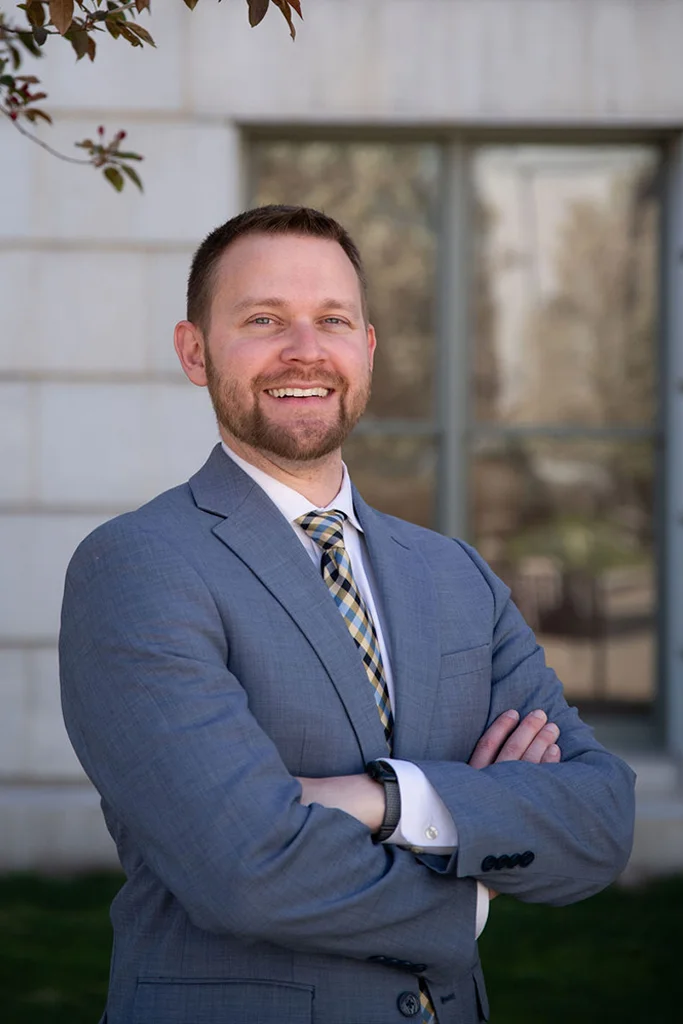
Reid DeChant began his career as a public defender, handling high volumes of cases in Denver, Broomfield, and Adams County courts. That experience gave him something rare: real trial hours. He has cross-examined police officers, argued suppression motions, and stood before juries in actual contested trials. He later trained at the Trial Lawyers College, the intensive program founded by legendary attorney Gerry Spence, where lawyers learn to connect with juries through honest narrative rather than legal maneuvering alone. That combination of volume and depth is what you want defending a criminal charge in Elbert County.
Charges Commonly Filed in Elbert County and What They Actually Mean
- DUI and DWAI: Colorado’s impaired driving statutes carry escalating penalties based on prior offenses, blood alcohol level, and whether aggravating factors were present. Traffic stops on Highway 86, State Highway 83, and County Road 17 are common enforcement corridors in Elbert County, particularly during holiday weekends and after local events.
- Domestic Violence Charges: Colorado’s mandatory arrest law means law enforcement must make an arrest when probable cause exists for domestic violence, regardless of whether the alleged victim wants charges filed. These cases carry specific sentencing enhancements, restrictions on firearm possession, and collateral consequences for custody proceedings that make early, aggressive defense critical.
- Drug Possession and Distribution: Despite Colorado’s cannabis legalization, possession of controlled substances including methamphetamine, fentanyl, heroin, and cocaine remains a serious criminal matter. Quantity and intent to distribute determine whether a charge is a misdemeanor or a felony, and Elbert County’s proximity to I-70 corridors makes it an active area for drug interdiction stops.
- Assault and Menacing: Colorado’s assault statutes are tiered, and what begins as a dispute between neighbors, coworkers, or family members can be charged at felony levels depending on allegations about weapons, serious bodily injury, or the relationship between parties. Felony menacing charges, in particular, can arise from allegations involving firearms that occur frequently in rural Colorado settings.
- Property Crimes: Theft, criminal mischief, and burglary charges arise regularly in rural counties where property disputes and opportunistic crime intersect. Felony theft thresholds in Colorado are set by statute, and the value of property alleged to have been taken determines how seriously the charge is graded.
- Traffic Offenses and License-Related Charges: Driving under restraint, vehicular assault, and careless driving charges are prosecuted in Elbert County courts and can trigger separate administrative proceedings at the Colorado DMV. A conviction on these charges does more than generate fines; it can affect commercial driver’s licenses, insurance rates, and employment in industries common to rural Colorado like agriculture, construction, and transportation.
- Failure to Register as a Sex Offender: Colorado’s sex offender registration requirements are strictly enforced, and failure to comply is itself a separate criminal offense. Reid DeChant has obtained a not-guilty verdict in a failure-to-register case, demonstrating experience with the specific evidentiary and procedural issues these cases present.
Why DeChant Law Handles Elbert County Criminal Cases Differently
Most private criminal defense attorneys in Colorado split their focus across multiple practice areas. Reid DeChant does not. His practice is concentrated on criminal defense and DUI defense, which means the knowledge, relationships, and courtroom strategy he has built over years of handling these cases applies directly to what you are facing right now. His record reflects that focus: cases dismissed, not-guilty verdicts at trial, and DMV express consent hearings won across multiple Colorado jurisdictions.
The results on DeChant Law’s case results page speak to the breadth of that record. Reid has secured not-guilty verdicts at trial on charges including DUI, DUI-drugs, assault with a deadly weapon, strangulation in a domestic violence case, third-degree assault and false imprisonment, and failure to register as a sex offender. He has obtained dismissals in felony menacing cases and domestic violence assault cases. He has won DMV express consent hearings on procedural and constitutional grounds, including cases dismissed because law enforcement failed to administer the chemical test within two hours of driving or improperly administered Miranda warnings before the express consent advisement. These are not accidents; they are the product of a lawyer who understands where charges break down and how to force those breakdowns in court.
Reid is a member of the National Association of Criminal Defense Lawyers and the Colorado Criminal Defense Bar. These are not passive affiliations. They represent access to the most current defense strategies, expert networks, and legal developments affecting Colorado criminal cases. When a new challenge to roadside impairment testing emerges or a suppression theory gains traction in Colorado appellate courts, Reid knows about it because he is actively engaged in the defense community. For someone facing charges in Elbert County, that network and that awareness can be the difference between a conviction and walking free.
What to Do After an Arrest or Charge in Elbert County
The single most consequential thing you can do after an arrest in Elbert County is stop talking to law enforcement without an attorney present. This is not a platitude. Detectives and patrol officers in smaller jurisdictions are often skilled interviewers, and anything said during a “voluntary” conversation at the scene or in follow-up contacts can be used as evidence. You have a constitutional right to remain silent, and exercising it politely but firmly is not an admission of guilt. It is the smartest legal move available to you in those first hours.
Criminal cases in Elbert County are processed through the Elbert County Combined Courts, located at 751 Ute Avenue in Kiowa. The courthouse handles both civil and criminal matters, and the 18th Judicial District covers Elbert, Arapahoe, Douglas, and Lincoln counties. This matters because your case may be assigned to a district court judge or a county court judge depending on whether you are facing a felony or a misdemeanor, and the procedural timeline differs between those tracks. Felony charges proceed through a preliminary hearing or grand jury process before moving to district court for arraignment and trial-setting. Misdemeanor cases are handled more quickly at the county court level but still carry real consequences that require serious attention.
If your arrest involved a DUI, you face two separate proceedings: the criminal case in county or district court and a civil administrative hearing at the Colorado DMV. The DMV has its own deadline for requesting an express consent hearing, and missing that window means an automatic license revocation. Acting quickly to secure counsel is not about panic; it is about preserving options that disappear on a fixed timeline. Reid DeChant’s office handles both the criminal defense and the DMV hearing side of DUI cases, so nothing falls through the gap between those two processes.
Document everything you remember about your arrest as soon as possible: what you said, what officers said to you, where you were stopped, the sequence of events, and the names of any witnesses. Memory fades quickly, and the specific details of what occurred before and during a traffic stop or arrest can be critical to identifying whether law enforcement followed proper procedures. Suppression motions, challenges to field sobriety test administration, and Fourth Amendment arguments all depend on the specific facts of the stop. The more you can recall and record now, the stronger the factual foundation for your defense.
Rural County Prosecutions and Why the Defense Has to Match the Reality
Defending a criminal case in Elbert County is not the same as defending one in Denver or Arapahoe County. The 18th Judicial District has its own prosecutorial culture, its own bench, and its own practical rhythms. In a jurisdiction where the docket is smaller and the prosecutors are more familiar with the local defense bar, relationships and credibility matter in ways they sometimes do not in high-volume urban courts. That does not mean the defense is friendlier; it means the stakes of strategy and presentation are concentrated differently.
Jury pools in Elbert County reflect the community: largely rural, often conservative on law enforcement issues, and likely to include people who know law enforcement officers personally. A Denver criminal defense attorney who has only tried cases to urban juries may misjudge how to approach voir dire, opening statement, and cross-examination in this environment. Reid’s experience across multiple Colorado jurisdictions, including smaller counties with comparable demographics to Elbert, gives him the ability to adapt his trial approach to where the case is actually being tried, not just how he would try it in the metro. The Trial Lawyers College training that Reid completed specifically addresses this kind of adaptation, teaching lawyers to connect with individual jurors as human beings rather than relying on one-size-fits-all advocacy formulas.
Rural counties also tend to produce cases with particular evidence profiles. Investigations in Elbert County may rely more heavily on a single officer’s testimony, less on surveillance footage, and more on forensic evidence collected in circumstances where chain-of-custody issues can arise. Property is spread across large parcels without neighbors nearby, which affects witness availability and identification evidence. These features are not unique to Elbert County, but a criminal defense attorney handling cases there should understand how they shape the typical evidentiary record and where challenges are most likely to succeed.
Questions People Ask About Criminal Charges in Elbert County
What court handles criminal cases in Elbert County?
Criminal cases in Elbert County are handled at the Elbert County Combined Courts in Kiowa. Misdemeanors are processed through Elbert County Court, while felony charges proceed to the Elbert County District Court, which is part of the 18th Judicial District. Both civil and criminal matters are heard at the same courthouse location.
What is the difference between a DUI and a DWAI in Colorado?
Colorado maintains two separate impaired driving offenses. Driving While Ability Impaired (DWAI) applies when a driver’s ability to operate a vehicle is even slightly affected by alcohol or drugs, and carries a lower blood alcohol threshold than DUI. Both charges carry criminal penalties and can trigger DMV license actions, though the severity of consequences differs. Both are worth challenging with competent legal representation.
Do I have to request a DMV hearing separately from hiring a defense attorney?
Yes. The DMV express consent hearing is a separate administrative process from your criminal case, and it has its own short deadline to request a hearing after an arrest. If that window is missed, the DMV will proceed with revocation without a hearing. An attorney at DeChant Law can manage both the criminal defense and the DMV hearing process simultaneously to ensure neither falls through the cracks.
Can a domestic violence charge in Elbert County be dropped if the alleged victim recants?
Not necessarily. Under Colorado law, once law enforcement makes an arrest for domestic violence, the decision to prosecute belongs to the district attorney’s office, not the alleged victim. Prosecutors can and do proceed with cases even when the complaining party does not want to cooperate or has recanted. A defense attorney needs to evaluate the evidence independently of what the alleged victim says they want to happen.
Will a criminal conviction affect my ability to own firearms in Colorado?
Yes, depending on the conviction. Felony convictions prohibit firearm ownership under both federal and Colorado law. Certain misdemeanor convictions, particularly domestic violence-related offenses, also carry federal prohibitions on firearm possession. In Elbert County’s rural setting, where many residents hunt and keep firearms for legitimate purposes, this consequence is especially significant and deserves careful attention during plea negotiations or trial preparation.
How long does a criminal case typically take in Elbert County courts?
Timelines vary based on whether you are charged with a misdemeanor or felony and how the case resolves. Misdemeanor cases may move relatively quickly from arraignment to resolution. Felony cases involving preliminary hearings, discovery disputes, and potential trial-setting can take considerably longer, sometimes more than a year from arrest to final resolution. The smaller docket in Elbert County can cut either way on scheduling.
Is it possible to get charges dismissed before trial in Elbert County?
Yes. Charges can be dismissed through successful suppression motions, failure of evidence to survive a preliminary hearing, prosecutorial discretion, or completion of a diversion program if the district attorney’s office offers one. Not every case ends at trial. Reid DeChant has secured outright dismissals in multiple cases and has won preliminary hearings where the prosecution’s evidence did not hold up under scrutiny.
What happens if I was stopped on Highway 86 or a county road and the officer did not have a valid reason to pull me over?
A traffic stop without reasonable articulable suspicion may violate the Fourth Amendment, and any evidence gathered as a result of that unlawful stop may be subject to suppression. If a suppression motion succeeds and the prosecution cannot prove its case without that evidence, charges are often dismissed. Evaluating the specific facts of a stop, including what the officer observed, what was documented in the report, and whether body camera footage matches those claims, is a critical early step in any Elbert County traffic-stop-based case.
Can I lose my commercial driver’s license for a DUI in Elbert County even if I was not driving a commercial vehicle at the time?
Yes. Federal regulations governing commercial driver’s licenses are more stringent than Colorado’s standard licensing rules. A DUI conviction, even in a personal vehicle, can result in CDL disqualification. For Elbert County residents who work in agriculture, construction, trucking, or other industries that require a CDL, this consequence is often more immediately devastating than any jail time associated with a first offense. Protecting CDL status requires a defense strategy that accounts for both the criminal and administrative dimensions of the case.
Does it matter that I have no prior record when facing a charge in Elbert County?
A clean record is a meaningful factor in plea negotiations and sentencing, and it can affect whether a district attorney’s office is willing to offer deferred judgment, a diversion program, or a reduced charge. However, having no prior record does not mean a charge should be taken lightly or resolved quickly without evaluating every defense option. Some first-offense charges carry serious mandatory minimums or long-term collateral consequences that far outweigh the short-term discomfort of contesting the case.
Elbert County Criminal Defense Representation Across the Region
DeChant Law represents clients throughout Elbert County and the surrounding communities. From Elizabeth and Kiowa to Franktown, Elbert, and Simla, the firm handles criminal cases arising across every part of this rural county. Residents of Agate, Matheson, Ramah, and Calhan who find their cases connected to 18th Judicial District proceedings also have access to representation through DeChant Law. The firm additionally serves clients in the communities that border Elbert County to the north and west, including Stonegate, Parker, Castle Rock, and the southern edges of Douglas County where criminal charges sometimes cross jurisdictional lines. Whether the case originates from a traffic stop on a rural county road, a domestic dispute in an unincorporated part of the county, or an arrest tied to a larger investigation involving multiple jurisdictions, the geographic reach of DeChant Law’s representation extends to wherever Elbert County residents need counsel.
Elbert County Criminal Defense Attorney at DeChant Law
A criminal charge in Elbert County demands representation that matches what you are actually up against: a focused prosecution, a tight-knit local court environment, and consequences that can follow you in a community where everyone knows your name. Reid DeChant, an Elbert County criminal defense attorney with real trial experience, former public defender credentials, and a track record of results across Colorado’s most challenging cases, offers the kind of representation that does not treat your case as one more file. Contact DeChant Law to schedule a consultation and start building a defense that takes your situation seriously.