Edgewater Criminal Defense Lawyer
Edgewater sits just west of Denver, close enough to the city that residents use Denver’s restaurants, venues, and roadways constantly, but governed by its own municipal structure and served by Jefferson County and Denver County courts depending on where an incident occurs. That geographic crossover matters when you are facing criminal charges. The court that handles your case, the prosecutor assigned to your file, and the procedural rules that govern your hearing can all shift based on exactly where you were when you were arrested. An Edgewater criminal defense lawyer needs to understand both systems, not just one of them.
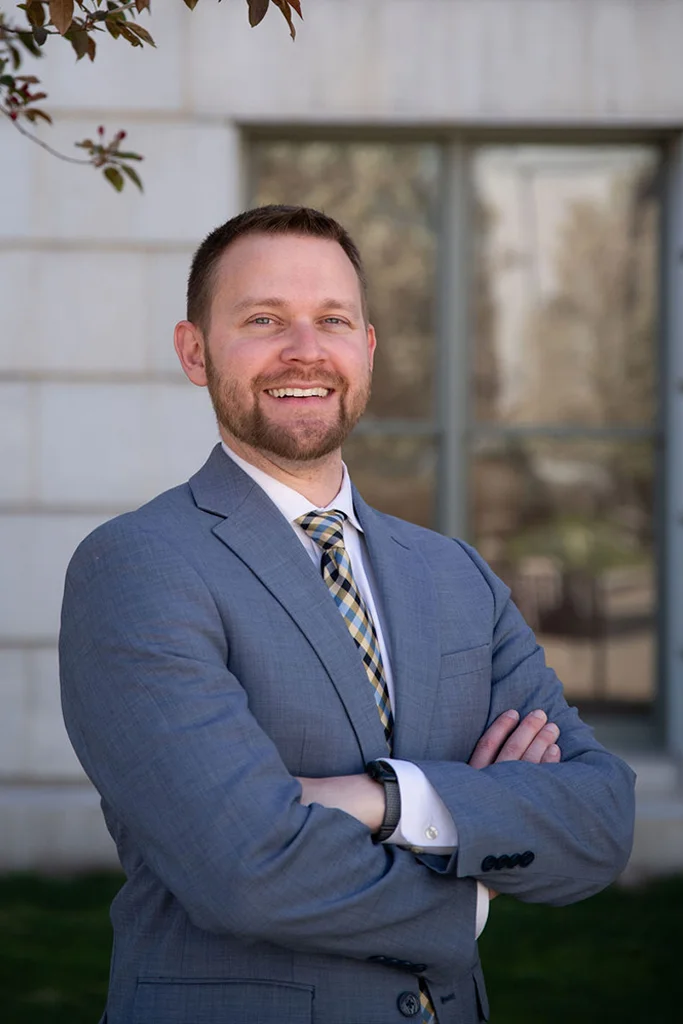
Reid DeChant at DeChant Law has spent years inside the courtrooms that handle cases originating from the Denver metro’s western communities. That includes Jefferson County courts in Golden, Denver County’s Lindsey-Flanigan Courthouse, and the municipal proceedings in between. Charges that begin with a traffic stop on Sheridan Boulevard, an arrest near Sloan’s Lake, or an altercation in one of Edgewater’s bars or restaurants can land in different jurisdictions depending on the circumstances. Knowing how to navigate those distinctions from the first appearance forward is the kind of local knowledge that matters.
The consequences attached to criminal charges in Colorado are not abstract. A conviction can cost you employment, housing, a professional license, and your freedom. Acting deliberately, beginning with whom you hire to defend you, shapes what happens next more than almost any other factor in the process.
What Criminal Charges Look Like in Edgewater and the Surrounding Area
Edgewater’s location along major corridors and its proximity to Denver’s nightlife zones means that certain categories of charges come up frequently. Understanding what charges arise and how Colorado law treats them is the starting point for any realistic defense strategy.
- DUI and DWAI: Sheridan Boulevard, 26th Avenue, and the stretch of roads connecting Edgewater to Lakewood and Denver generate a significant number of impaired driving stops. Colorado distinguishes between DUI (driving under the influence) and DWAI (driving while ability impaired), with different legal thresholds and penalties for each. Both charges carry license consequences handled separately through a DMV Express Consent hearing, which runs on its own timeline independent of the criminal case.
- Domestic Violence Charges: Domestic violence in Colorado is not a standalone crime but rather a sentence enhancer attached to underlying charges such as assault, harassment, or criminal mischief. Once a domestic violence designation is applied, the case follows a mandatory arrest protocol, and prosecutors cannot dismiss the case simply because an alleged victim chooses not to cooperate. These cases require a defense attorney who understands both the procedural mechanics and the evidentiary realities.
- Assault and Menacing: Physical altercations near Sloan’s Lake, at local bars, or following community events in Edgewater can result in charges ranging from third-degree assault, a misdemeanor, to felony assault involving serious bodily injury or a deadly weapon. Menacing charges often arise from confrontations where no physical contact occurred but a threat was perceived. The difference between misdemeanor and felony treatment can hinge on specific facts that an attorney should examine carefully.
- Drug Offenses: Despite Colorado’s legalization of recreational cannabis, possession and distribution of controlled substances including cocaine, methamphetamine, fentanyl, and prescription medications without a valid prescription remain criminal matters. The quantity involved, whether distribution is alleged, and prior history all affect how seriously the case is charged and prosecuted.
- Theft and Property Crimes: Theft charges in Colorado are graded by the value of the property involved, running from petty offenses to felonies. Shoplifting, theft by deception, and burglary allegations each carry distinct elements that must be proven, and each presents distinct defensive angles. Commercial areas near Edgewater’s border with Lakewood see these charges filed with some regularity.
- Harassment and Stalking: Harassment is one of the more commonly filed misdemeanors in Colorado and frequently carries a domestic violence designation. Stalking, by contrast, can be charged as a felony even without physical contact if a course of conduct creates reasonable fear. These charges often arise from relationship conflicts and require careful attention to the specific communications and conduct alleged.
- Failure to Appear and Warrant Issues: Some Edgewater residents first come to an attorney not because of a new arrest but because of an outstanding warrant stemming from a missed court date or an unresolved older case. Addressing warrant issues proactively, rather than waiting to be arrested on them, almost always produces better outcomes.
Why DeChant Law for Criminal Defense in the Edgewater Area
Reid DeChant built his practice on the kind of trial experience that most private defense attorneys simply do not accumulate. His years as a public defender meant handling a high volume of cases across Denver, Broomfield, and Adams County courtrooms, which included everything from traffic matters and misdemeanors to felony assault, sexual assault, and homicide. That volume of courtroom experience translates directly into benefit for clients: Reid has cross-examined police officers, challenged forensic evidence, argued motions, and tried cases to verdict in the same courts that handle cases from Edgewater and the surrounding communities.
Reid is also a graduate of the Trial Lawyers College, founded by Gerry Spence, where the focus is on genuine human connection, narrative, and the ability to tell a client’s story in a way that resonates with real jurors. That training is not incidental to the practice. Most criminal cases that go to trial turn less on arcane legal argument and more on whether a jury understands and believes the person in front of them. Reid’s approach is built around that reality.
His case results reflect what that experience and approach can produce. DeChant Law has obtained not guilty verdicts and dismissals in DUI cases, domestic violence matters, assault charges, and sex offense cases, including charges that could have meant years in prison. The firm holds active memberships in the National Association of Criminal Defense Lawyers and the Colorado Criminal Defense Bar, which keep Reid connected to developments in defense strategy and courtroom advocacy at a national level. Every Edgewater criminal defense attorney practicing in this market brings some credentials to the table. Reid’s combination of public defender trial volume, Trial Lawyers College training, and a demonstrable record of courtroom results is not easy to replicate.
What to Do When Facing Charges in Jefferson or Denver County
Edgewater straddles a jurisdictional boundary that affects where your case will be heard. Many matters originating in Edgewater flow through Jefferson County District Court in Golden, located at 100 Jefferson County Parkway. Cases that occur closer to the Denver side of the boundary, or that involve Denver-based charges alongside Edgewater conduct, may be prosecuted at Denver’s Lindsey-Flanigan Courthouse at 520 West Colfax Avenue. Municipal violations may be handled separately in Edgewater municipal court. Knowing which court has jurisdiction over your case matters from the first appearance forward, because arraignment deadlines, bond conditions, and the practices of individual prosecutors differ between jurisdictions.
If you have been arrested, the most important thing you can do in the first 24 to 72 hours is speak with an attorney before you speak with law enforcement. Statements made to police during or after an arrest are almost always used against defendants at trial. The impulse to explain your side of the story to officers is understandable, but it rarely helps and often causes serious damage to a defense that would otherwise have been viable. Invoke your right to counsel and say nothing substantive until you have spoken with a lawyer.
If your case involves a DUI arrest, there is an additional and time-sensitive parallel proceeding to address. Colorado’s Express Consent law requires you to request a DMV hearing within a short window after your license is taken. Missing that deadline means automatic revocation of your driving privileges, separate from any outcome in the criminal case. An attorney handling your DUI defense should be handling the DMV hearing simultaneously, which is standard practice at DeChant Law. The firm’s case results include multiple dismissed Express Consent actions, demonstrating the value of contesting these proceedings rather than accepting revocation by default.
Do not discuss your case on social media, with friends, or with family members in any detail. These communications are not protected and can be obtained by prosecutors. Collect whatever documentation you have, texts, emails, photos, receipts showing your whereabouts, and secure it. Memories fade and digital evidence disappears. What you preserve in the first few days after an arrest can matter months later at trial.
Colorado Criminal Procedure and What the Defense Actually Controls
Defendants and their families often feel that the legal process is something that happens to them rather than something they can influence. That perception is understandable but not accurate. A well-prepared defense has multiple points of leverage, and understanding where those points are helps clients engage meaningfully in their own cases.
Before trial, defense attorneys file motions that can shape what evidence a jury ever sees. Motions to suppress challenge evidence obtained through unconstitutional stops, searches, or interrogations. If a court grants suppression, the prosecution may lose its most important evidence and be forced to reduce or dismiss the charge. In DUI cases, the stop itself, the administration of roadside tests, and the chain of custody for breath or blood samples all present potential suppression arguments. In drug cases, the legality of the search that produced the contraband is often the central battleground.
Plea negotiations happen throughout the life of a case, and having a lawyer with real trial credibility matters more than most clients realize. Prosecutors know which defense attorneys will actually try a case and which ones pressure clients to take any deal offered. Reid’s track record of taking cases to verdict, including not guilty verdicts in DUI trials, felony assault trials, domestic violence trials, and sex offense trials, means that the other side of the table takes his cases seriously from the beginning. That credibility is part of what produces better offers before trial.
If the case goes to trial, the work done in preparation, investigating witness credibility, developing a consistent narrative, preparing the client, and selecting a jury that can hear the story fairly, determines the outcome as much as anything that happens in the courtroom itself. This is where Reid’s Trial Lawyers College training becomes most visible. Jurors respond to authenticity, to a lawyer who seems to genuinely believe in his client and who can communicate that belief in plain, human terms.
Questions Edgewater Residents Ask About Criminal Charges
Will my case be in Edgewater municipal court or Jefferson County District Court?
It depends on the nature of the charge and where the incident occurred. Edgewater has its own municipal court for certain local ordinance violations, but state criminal charges, including DUI, assault, and drug offenses, are typically prosecuted in Jefferson County District Court in Golden. Cases near the Denver boundary may land in Denver County. An attorney familiar with both jurisdictions can tell you exactly where your case stands after reviewing your arrest documentation.
Can a first-time DUI in Colorado be dismissed or reduced?
Yes, though it is not guaranteed and depends on the facts. Challenges to the traffic stop, the administration of roadside sobriety tests, and the accuracy of breath or blood testing equipment can all create grounds for dismissal or reduction. DeChant Law has obtained dismissals in DUI cases across multiple counties, including cases where procedural errors in the Express Consent process led to both the criminal charge and the license action being resolved favorably.
What happens if the alleged victim in a domestic violence case does not want to press charges?
In Colorado, once a domestic violence designation is applied, the decision to proceed with charges belongs to the prosecutor, not the alleged victim. Victims can recant or decline to cooperate, but prosecutors frequently proceed using other evidence, including police reports, photos, 911 recordings, and witness statements. A defense attorney needs to address what evidence exists independent of the alleged victim’s cooperation, not simply assume the case will disappear if the victim changes her or his mind.
What is a deferred judgment and when might it apply?
A deferred judgment is an agreement where the defendant pleads guilty but the court withholds entering a conviction while the defendant completes a probationary period. If the conditions are satisfied, the plea is withdrawn and the case is dismissed. Not all charges qualify, and prosecutors do not offer deferred judgments in every case. For someone facing a first offense with no prior record, it can be a meaningful outcome that avoids a permanent conviction.
How does a Colorado criminal conviction affect a professional license?
Colorado licensing boards for professions including healthcare, law, real estate, teaching, and financial services can take action against license holders convicted of certain crimes. The specific consequence depends on the board and the nature of the offense. For clients who hold or are pursuing professional licenses, understanding the collateral licensing consequence is as important as understanding the criminal penalty itself, and it should be part of the conversation with your attorney from the beginning.
If I was arrested but not formally charged yet, do I still need an attorney?
The period between arrest and formal charging is one of the most important windows in a criminal case. Evidence is being gathered, witnesses are being interviewed, and the prosecutor is deciding what charges to file and at what level. Having an attorney engaged during this window means someone can communicate with investigators before charges are set in stone, gather evidence that supports your position, and in some cases influence the charging decision before it becomes an adversarial process.
Can drug charges in Colorado result in treatment rather than jail?
Colorado has diversion and treatment-based resolution options for certain drug offenses, particularly for possession charges involving personal use quantities. Drug court programs in Jefferson County are designed to address underlying substance use issues through supervision, testing, and treatment rather than incarceration. Eligibility depends on the charge, the defendant’s history, and the facts of the case. An attorney can assess whether a diversion pathway is available and whether it makes sense given the alternatives.
What makes a felony menacing charge different from simple harassment in Colorado?
Menacing involves conduct that places or attempts to place another person in fear of imminent serious bodily injury. When that conduct involves a real or simulated deadly weapon, it elevates to a felony. Harassment covers a broader range of conduct, including repeated contact, following, or communications intended to alarm. The distinction matters significantly for sentencing exposure and long-term record consequences. Cases involving altercations, arguments, or contentious breakups in Edgewater sometimes result in menacing charges that could have been filed as misdemeanors, and that overcharging is something a defense attorney should address directly.
How long do Colorado criminal cases typically take to resolve?
Misdemeanor cases in Jefferson County often resolve within a few months, though contested cases or those going to trial can take longer. Felony cases move through preliminary hearings, advisements, and pretrial motions before trial, and the timeline commonly extends six months to a year or more depending on complexity, court scheduling, and whether the defense or prosecution needs additional time to prepare. Cases that resolve through plea agreements typically conclude faster than cases that go to trial.
Does it help to hire a lawyer who tried cases as a public defender?
Public defenders handle an exceptionally high volume of cases at every level of severity, which means they accumulate genuine trial experience far more quickly than most private attorneys. The learning comes from actually trying cases, not from observing them. Reid DeChant’s years as a public defender in Denver, Adams County, and Broomfield courts produced the kind of hands-on courtroom experience that translates directly into better preparation, stronger cross-examination, and more effective jury communication in private practice.
Criminal Defense Representation Across Edgewater and the Greater Denver West Corridor
DeChant Law represents clients from Edgewater and every surrounding community in the western Denver metro. From the Sloan’s Lake neighborhood through West Colfax and into Lakewood, the firm handles charges arising across Jefferson County and Denver County jurisdictions. Clients from Wheat Ridge, Arvada, and the Olde Town corridor regularly work with the firm, as do residents of Berkeley, Tennyson Street, and the neighborhoods stretching north toward Westminster. The firm also serves clients from Englewood, Sheridan, and Littleton to the south, along with communities further west including Golden, Morrison, and Evergreen for matters in Jefferson County District Court. South of Denver, the firm has represented clients from Centennial, Greenwood Village, and Parker in Arapahoe and Douglas County matters. Wherever you are in the greater Denver metro area, proximity to the courthouse that handles your case is what matters, and DeChant Law has experience across the range of jurisdictions that serve this region.
Talk to an Edgewater Criminal Defense Attorney Before the Next Court Date
The window between an arrest and the first court appearance is short, and what happens inside that window shapes everything that follows. An Edgewater criminal defense attorney who knows Jefferson and Denver County courts, understands how the prosecutors in those jurisdictions approach different charges, and has actually tried cases in front of their judges is not a luxury. It is the practical difference between a defense that responds to what is actually happening in your case and one that goes through the motions. Reid DeChant brings public defender trial volume, Trial Lawyers College courtroom training, and a real record of dismissed charges and not guilty verdicts to every case he accepts. Reach out to DeChant Law to schedule a consultation and start building a defense that takes your situation seriously from the first conversation.