Douglas County DWAI Lawyer
A DWAI charge in Douglas County does not announce itself with flashing lights and certainty. It can begin with a roadside stop on Highway 85, a sobriety checkpoint near Castle Rock, or a call from a parking lot outside a restaurant in Highlands Ranch. What follows moves quickly: a breath or blood test, an arrest, and a set of decisions that will define the outcome of your case. A Douglas County DWAI lawyer who has actually tried these cases, cross-examined the officers who made the stop, and challenged the machines used to measure your blood alcohol level is not a luxury. It is the variable that separates a conviction from a dismissal.
Colorado treats Driving While Ability Impaired differently from a standard DUI, but that distinction is not a free pass. A DWAI finding requires proof that alcohol, drugs, or a combination of both affected you to the slightest degree. That lower threshold means arrests happen at blood alcohol concentrations well below 0.08. It also means that defenses exist which are unique to DWAI cases and rarely overlap with what applies in a higher-BAC DUI prosecution. Knowing which arguments actually hold up in the Douglas County Combined Courts is the work of a defense attorney who spends time in that building, not one who sends plea bargains by fax and calls it representation.
Douglas County is one of the most active enforcement counties along the I-25 corridor. The Parker Police Department, Castle Rock Police, the Douglas County Sheriff’s Office, and Colorado State Patrol all operate with overlapping jurisdiction across the county’s roadways and municipalities. Each agency has its own documentation habits, field sobriety testing tendencies, and officer training records. Those details matter enormously when building a DWAI defense.
What Actually Happens in a Douglas County DWAI Case
After an arrest for DWAI in Douglas County, you are facing two separate proceedings simultaneously. The first is the criminal case in the Douglas County Combined Courts at 4000 Justice Way in Castle Rock. The second is a DMV administrative hearing regarding your driver’s license. These are independent of each other. You can win one and lose the other. Missing the DMV deadline, which requires action quickly after an arrest, can result in automatic license revocation that has nothing to do with how your criminal case resolves.
In the criminal case, the prosecution will rely primarily on the officer’s observations, field sobriety test results, and any chemical test readings. For DWAI, the BAC threshold that creates a legal inference of impairment sits below the DUI threshold, meaning the government’s case can actually be built on less evidence. That sounds counterintuitive, but it shifts the burden of the defense work. The field sobriety tests become more central. The officer’s description of your driving behavior, speech, and coordination carries more weight. Challenging those observations, the conditions under which tests were performed, and the reliability of roadside equipment becomes the core of the defense.
First-time DWAI convictions in Colorado carry penalties including fines, points on your license, possible jail time, mandatory public service hours, and required alcohol education classes. A second DWAI or a DWAI after a prior DUI results in significantly harsher consequences. The level of offense, your prior record, and the facts of the stop all factor into what the Douglas County DA’s office will offer, if anything, and what leverage a DWAI attorney in the area can create during negotiations or at trial.
Charges and Situations a Douglas County DWAI Defense Covers
- Standard alcohol DWAI: Charges arising from a BAC reading between 0.05 and 0.079, where Colorado law creates an inference of impairment to the slightest degree; these cases often hinge on the reliability of the breath or blood test and the officer’s documented observations at the scene.
- DWAI by drugs: Colorado law extends DWAI liability to impairment from prescription medications, over-the-counter drugs, or controlled substances; marijuana DWAI cases are increasingly common along the I-25 and C-470 corridors in Douglas County, and blood THC levels are frequently contested.
- Combination DWAI (alcohol and drugs): When officers allege impairment from a combination of substances, the analysis becomes layered and expert testimony about how those substances interact becomes a significant part of any serious defense.
- DWAI with prior convictions: A DWAI following prior DUI or DWAI convictions triggers enhanced penalties and potentially habitual traffic offender status; the lookback period and prior record context must be reviewed carefully from the outset.
- DWAI from prescription medications: Charges arising from driving while taking a lawfully prescribed medication; these cases raise distinct issues about voluntary intoxication, physician instructions, and whether the officer had sufficient training to identify drug-related impairment.
- DMV express consent hearings: When a driver refuses or submits to a chemical test after arrest, Douglas County drivers face an administrative proceeding that is entirely separate from the criminal case; DeChant Law has a documented record of winning these hearings on procedural and substantive grounds.
- DWAI involving accidents or property damage: Cases where a collision preceded the arrest introduce additional charges, complicating both the criminal exposure and the license consequence analysis; the sequence of events and the timing of any chemical testing become critical facts.
Why Reid DeChant Defends DWAI Cases Differently
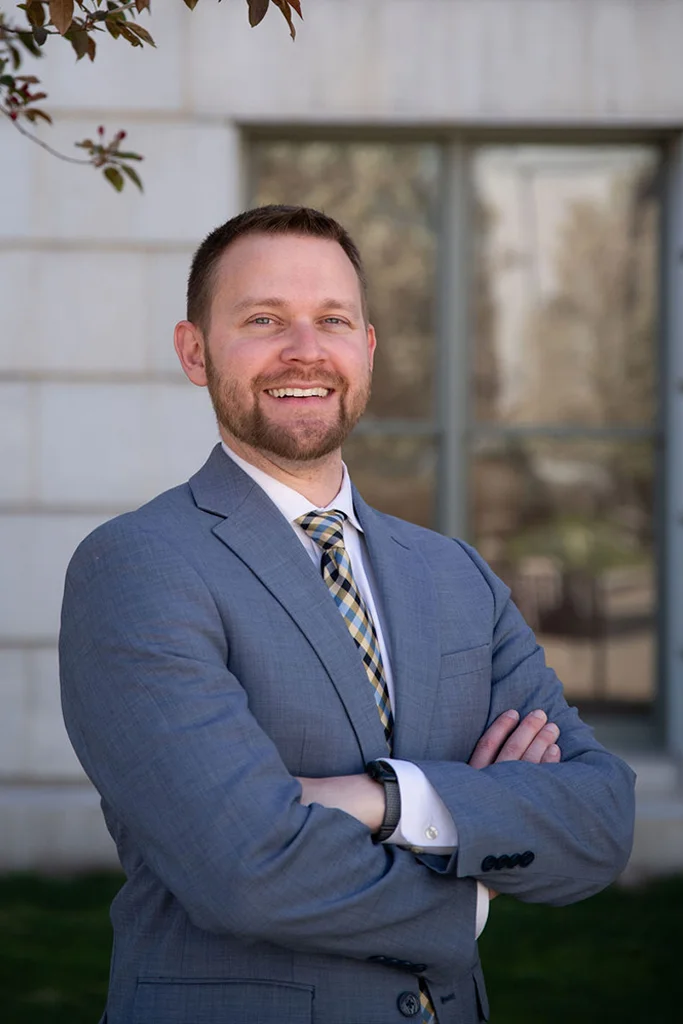
Reid DeChant built his practice on trial experience. Before handling cases through DeChant Law, Reid served as a public defender in Denver, Broomfield, and Adams County courtrooms, defending clients across the full range of criminal charges including DUI and DWAI. That experience is not theoretical. It means Reid has cross-examined law enforcement officers on field sobriety testing technique, challenged chemical testing procedures under pressure, and tried impaired driving cases to verdict in front of Colorado juries.
Most defendants who accept a plea in a DWAI case never learn whether the stop was properly conducted, whether the breath test machine was in calibration, or whether the officer administered the standardized field sobriety tests according to accepted protocol. Reid has trained at the Trial Lawyers College, the program founded by legendary trial attorney Gerry Spence, where he studied courtroom storytelling, psychodrama, and the kind of authentic advocacy that actually reaches juries. That preparation shapes how every case is approached, from the first client conversation to a final verdict.
The case results on DeChant Law’s website speak to what happens when this approach is applied specifically to impaired driving cases. DMV express consent hearings have been dismissed for improper advisements, for failure to administer chemical tests within the required time period, and for procedural defects in the arrest process. DUI and DWAI cases have been resolved with not guilty verdicts at trial and outright dismissals at the case level. These results, across Douglas County, Jefferson County, Arapahoe County, and other jurisdictions along the Front Range, reflect a defense practice built around actually fighting cases rather than processing them.
Reid holds membership in the National Association of Criminal Defense Lawyers and the Colorado Criminal Defense Bar. These memberships reflect ongoing engagement with the top defense attorneys in the country and access to the latest research on chemical testing reliability, field sobriety testing standards, and impaired driving law. For someone facing a DWAI charge in Douglas County, that means the attorney handling the case is working with current knowledge about how to challenge the government’s evidence, not assumptions that were accurate five years ago.
What to Do After a DWAI Arrest in Douglas County
The most important thing you can do in the hours and days after a DWAI arrest is not say anything further about the night of the arrest to anyone other than your attorney. Statements made to friends, on social media, or in follow-up conversations with law enforcement can be introduced as evidence. The instinct to explain yourself is understandable and almost universally harmful to the case.
Retain a DWAI defense attorney in Douglas County as quickly as possible. The DMV administrative hearing deadline runs independently of the criminal case timeline, and missing it forfeits your right to contest the license revocation. Your attorney needs to contact the Colorado DMV to request that hearing promptly. DeChant Law handles both the criminal and DMV sides of impaired driving cases, which matters because what happens in the DMV proceeding can intersect with the criminal defense strategy.
Gather everything you can from the night of the arrest: receipts showing what you ate or drank and when, names of people who were with you, the location of the stop and direction of travel, any medical conditions that may have affected your performance on field sobriety tests, and any medications you were taking. Conditions like inner ear problems, fatigue, certain neurological conditions, or even footwear can affect how you perform on roadside tests, and those facts are documented and used in the defense.
Your criminal case will be handled in the Douglas County Combined Courts at 4000 Justice Way in Castle Rock. Understanding how that courthouse operates, which prosecutors handle impaired driving cases, and how judges in that building tend to handle pretrial motions and plea negotiations is part of what a Douglas County DWAI attorney brings to your case. This is not a courtroom where you want to appear with someone who has to look up the local procedures.
Do not enroll in alcohol classes, pay any fines, or take any formal steps in the case without speaking to an attorney first. Actions that look like cooperation can sometimes be used against you or can prematurely foreclose defense options. Get counsel before you take any procedural steps in the case.
Questions About DWAI Charges in Douglas County
What is the difference between a DWAI and a DUI in Colorado?
Colorado distinguishes between Driving Under the Influence (DUI) and Driving While Ability Impaired (DWAI) based on the level of impairment alleged. A DUI charge requires that a driver be substantially incapable of safely operating a vehicle. A DWAI requires only that alcohol or drugs affected the driver to the slightest degree. The BAC inference thresholds for the two charges differ, with DWAI applying at lower concentrations. DWAI is a lesser offense in terms of potential penalties, but it still carries real consequences including fines, license points, possible jail time, and mandatory educational requirements.
Can a DWAI conviction be expunged from my record in Colorado?
Colorado’s expungement laws are limited when it comes to adult criminal convictions. A DWAI conviction is not automatically eligible for expungement. Sealing records for criminal convictions in Colorado is a specific legal process with eligibility requirements, and not all DWAI convictions qualify. An attorney can review the specifics of your situation to determine what record relief, if any, may be available after disposition of the case.
Does a DWAI conviction affect my driver’s license?
A DWAI conviction adds points to your Colorado driving record. Multiple DWAI or DUI convictions can lead to license revocation through the points system and may result in habitual traffic offender designation. The DMV administrative action tied to the arrest is a separate proceeding from the criminal case, and the outcome of one does not automatically determine the outcome of the other. Handling both proceedings properly from the start is essential.
What happens if I refused the chemical test at the time of my Douglas County arrest?
Colorado’s express consent law requires drivers to submit to chemical testing after a lawful arrest for DUI or DWAI. Refusal carries its own automatic license consequences through the DMV administrative process, independent of whether you are convicted of DWAI in the criminal case. The DMV hearing process exists specifically to contest those consequences, and procedural defects in how the express consent advisement was delivered or how the test was administered can result in dismissal of the DMV action.
How long does a DWAI case in Douglas County typically take to resolve?
The timeline varies significantly depending on whether the case is contested and how complex the evidence is. Simple cases that resolve through plea negotiations may conclude in a few months. Cases involving contested chemical test results, suppression motions challenging the validity of the stop, or cases that proceed to trial will take longer. Douglas County’s court calendar and the specifics of your case both factor into the timeline. Your attorney can give you a realistic picture of the schedule once the facts are reviewed.
If my BAC was below 0.08, can the DWAI charge still hold up at trial?
Yes. Colorado law creates a statutory inference of DWAI at lower BAC levels, but even without a BAC reading, the prosecution can attempt to prove impairment through officer testimony, field sobriety test results, and driving behavior. The BAC reading, or the absence of one at a high level, is not automatically a complete defense. The strength of the case depends on the quality and credibility of all the evidence, which is why challenging each element independently is the correct approach.
Can a DWAI charge affect my professional license or employment in Colorado?
It can. Certain professional licenses, including those held by healthcare workers, commercial drivers, teachers, and others in regulated fields, require reporting of criminal charges or convictions. A DWAI conviction may trigger reporting obligations and can affect license renewal, depending on your profession and the licensing board’s standards. If you hold a professional license, that consideration should be part of the conversation with your attorney from the beginning of the case.
What makes Douglas County DWAI prosecutions different from other Front Range counties?
Each county has its own culture in the courthouse, patterns in how the DA’s office approaches impaired driving cases, and tendencies in how judges handle pretrial matters. Douglas County has active law enforcement coverage along major corridors like I-25, Highway 85, and C-470, and sees consistent impaired driving case volume. The prosecutors in the Douglas County DA’s office handle a significant number of these cases. An attorney who regularly practices in Castle Rock understands the practical dynamics of how cases move through that system.
Does the type of chemical test, breath versus blood, matter for my defense?
It matters considerably. Breath testing and blood testing each have their own reliability challenges, calibration requirements, and chain of custody demands. Blood tests are subject to storage, analysis, and laboratory procedure scrutiny. Breath tests involve instrument calibration records and testing protocols. Identifying which type of test was used in your case and then examining the documentation surrounding it is one of the first substantive steps in building a DWAI defense.
Is it worth contesting a DWAI charge or should I just accept the plea offer?
That decision should never be made without a full review of the evidence. Plea offers in DWAI cases are made by prosecutors who are trying to close cases efficiently, not because the offer represents the best outcome available to you. There are DWAI cases on the DeChant Law results page that went to trial and ended with not guilty verdicts, and others where cases were dismissed entirely. Whether to contest a charge depends on the strength of the government’s evidence, the procedural history of the stop and arrest, and your individual circumstances. A quick plea is sometimes the right answer, but it should be the result of an informed decision, not a default response to pressure.
Douglas County DWAI Representation Across the Region
DeChant Law represents clients facing DWAI and DUI charges throughout Douglas County and the surrounding Front Range communities. Castle Rock, Parker, Highlands Ranch, Lone Tree, Castle Pines, Franktown, Larkspur, Sedalia, and Roxborough Park are all within the service area. Clients from the northern reaches of the county near Centennial and Greenwood Village, as well as communities along the eastern plains closer to Elbert County, are also served.
Beyond Douglas County, Reid handles impaired driving cases in Jefferson County, Arapahoe County, Adams County, Broomfield County, Denver County, and the surrounding jurisdictions that line the I-25 corridor. Whether the stop occurred on a state highway in Parker, a county road near Franktown, or an interstate ramp in Lone Tree, the defense approach remains the same: thorough review of the evidence, aggressive challenge of any procedural or substantive defects, and real advocacy at every stage of the case.
Talk to a Douglas County DWAI Attorney Before You Make Any Decisions
The decisions made in the first days after a DWAI arrest tend to shape everything that follows. A Douglas County DWAI attorney who has tried these cases, won DMV hearings on procedural grounds, and built a practice around genuine courtroom advocacy is the person to have that first conversation with. Reid DeChant at DeChant Law represents clients facing impaired driving charges throughout Douglas County and the Front Range, bringing the same combination of public defender trial volume and private practice attention to every case.
Reach out to DeChant Law to schedule a consultation about your case. There is no commitment in that conversation, and there is real cost in waiting.