Denver SR-22 Insurance Lawyer
An SR-22 requirement doesn’t arrive quietly. It follows a DUI conviction, a license revocation hearing, or a serious traffic offense, and it lands with a set of financial and administrative obligations that most drivers have never dealt with before. A Denver SR-22 insurance lawyer helps you understand what you are actually required to do, challenges the underlying conviction or DMV action when possible, and guides you through the process of restoring your driving privileges without making costly mistakes along the way.
Colorado’s SR-22 requirement is tied directly to specific legal events, and the path forward depends heavily on which of those events triggered yours. Whether you are dealing with the aftermath of a DUI arrest, a second offense, a DMV Express Consent hearing, or a license suspension from an accumulation of points, the steps you take now will determine how long you carry this burden and what your insurance rates look like for years to come.
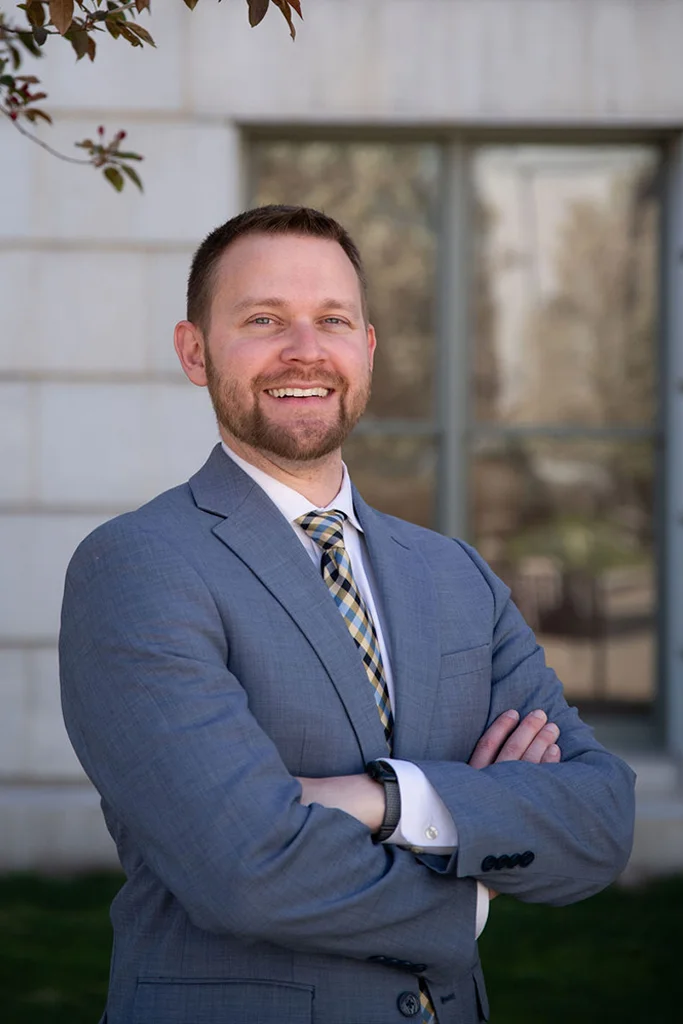
At DeChant Law, attorney Reid DeChant handles both the criminal charges and the DMV proceedings that give rise to SR-22 requirements. When you address both sides of the problem with the same attorney, nothing falls through the gaps.
What Triggers an SR-22 Requirement in Colorado
Colorado does not issue SR-22 certificates itself. The state requires certain drivers to obtain one from their own insurance company as proof that they carry at least the minimum required auto liability coverage. That certificate is then filed electronically with the Colorado Division of Motor Vehicles. The requirement is not optional, and driving without it while your license is suspended will extend your suspension and expose you to additional criminal charges.
The requirement gets triggered by a defined list of driving-related legal events. DUI and DWAI convictions are the most common source. A first DUI in Colorado typically triggers a two-year SR-22 requirement following the reinstatement of your license. Subsequent offenses carry longer periods. Driving under restraint, excessive speeding, driving without insurance, and certain other serious traffic violations can also generate the requirement independently of a DUI.
The DMV proceedings and the criminal case in Colorado court are two separate tracks. Many drivers discover this the hard way when they resolve their criminal case but still face a license revocation through the DMV’s Express Consent process. Both tracks must be handled strategically. Reid DeChant has won DMV Express Consent hearings resulting in dismissed actions, which can eliminate or reduce the SR-22 obligation before it ever begins.
What DeChant Law Brings to SR-22 Cases in Denver
Reid DeChant’s case results in the DMV Express Consent arena are specific and documented. Multiple DMV Express Consent actions to revoke driver’s licenses have been dismissed through his representation, including dismissals for improper advisement, failure to administer the chemical test within the required timeframe, and Miranda-related grounds. These are not procedural technicalities in the abstract; they are the exact arguments that, when successful, can prevent a license revocation from ever taking effect and eliminate the SR-22 requirement that flows from it.
That kind of result requires both courtroom skill and deep familiarity with the DMV hearing process. Reid trained at the Trial Lawyers College, where the curriculum centers on how to build cases that resonate with judges and hearing officers through credible, structured advocacy. He is a member of the National Association of Criminal Defense Lawyers and the Colorado Criminal Defense Bar, and he brings his public defender background to every case, which means extensive real-time courtroom experience handling DUI, traffic, and license-related matters across Denver, Broomfield, Adams County, and surrounding jurisdictions.
If the underlying charge that created your SR-22 obligation can be challenged, Reid challenges it. If the DMV hearing has not yet occurred, he fights it. If the obligation is already in place, he helps you understand exactly how to satisfy it in the shortest lawful time and avoid the mistakes that reset the clock.
The Most Common SR-22 Situations DeChant Law Handles
- First-offense DUI or DWAI convictions: Colorado’s Express Consent law requires drivers to submit to chemical testing, and a DUI or DWAI conviction almost always triggers both a criminal sentence and a DMV revocation, each of which can generate SR-22 obligations that last for years after reinstatement.
- Multiple DUI or DWAI offenses: Repeat offenses significantly extend both the revocation period and the SR-22 filing requirement, and they can require the installation of an ignition interlock device as a condition of reinstatement, adding a separate layer of compliance obligations.
- DMV Express Consent revocations: Even if the criminal DUI charge is reduced or dismissed, the Colorado DMV can still revoke your license through its own administrative process if the arresting officer followed the proper Express Consent procedure, making it essential to contest these hearings separately and promptly.
- Driving under restraint: Operating a vehicle while your license is already suspended or revoked is a separate criminal offense in Colorado that carries its own penalties and typically adds to the conditions required for future reinstatement, including extended SR-22 filing periods.
- Driving without insurance: Colorado requires minimum liability coverage, and a conviction for driving uninsured can independently generate an SR-22 requirement regardless of whether any DUI or other alcohol-related offense was involved.
- Serious traffic offenses and point accumulations: A pattern of traffic violations that causes the DMV to suspend your license through its points system can also trigger SR-22 requirements, particularly for younger drivers whose point thresholds are lower under Colorado law.
- Out-of-state incidents with Colorado license consequences: A DUI or serious traffic offense in another state can trigger Colorado DMV action against a Colorado license, and the SR-22 requirement then attaches to the reinstatement process back in Colorado.
After the Conviction: What the SR-22 Process Actually Looks Like
Once the court or DMV has established the requirement, you need to contact an auto insurance company licensed to operate in Colorado and request an SR-22 filing. Not every insurer offers this, and many that do will substantially increase your premiums once they learn about the underlying offense. Shopping carefully is important, but so is not letting coverage lapse, because a lapse in your SR-22 coverage triggers an automatic notification to the Colorado DMV and can restart your revocation.
Colorado requires the SR-22 to remain on file continuously for the period set by the DMV, typically two years for a first offense but potentially longer depending on the nature of the underlying violation. If your insurance policy is cancelled, lapses for non-payment, or is otherwise terminated before that period ends, your insurer is required to notify the DMV, and your license will be re-suspended. The clock does not pause; it resets.
Reinstatement itself requires meeting all of the DMV’s conditions simultaneously. That typically means completing any required alcohol education or treatment program, paying reinstatement fees to the Colorado DMV, obtaining the SR-22 certificate, and in some cases completing the ignition interlock requirement. The Lindsey-Flanigan Courthouse handles Denver County criminal matters, while the Colorado DMV’s driver services branch administers the administrative side. Both tracks have independent deadlines, and missing one can delay the entire reinstatement even if everything else is in order.
A common mistake is assuming that paying the fine and completing the criminal case resolves everything. The DMV side is entirely separate. Reid DeChant handles both, which is how clients avoid the gap between “my case is done” and “why is my license still suspended.”
Challenging the Underlying Offense to Limit or Eliminate the SR-22 Obligation
The SR-22 requirement is a consequence, not a starting point. If the underlying offense that triggered it can be successfully challenged, the obligation may be eliminated or reduced before it fully attaches. This is the most direct path to minimizing the long-term impact on your license and your insurance rates.
In DUI cases, that challenge may take the form of a motion to suppress evidence obtained through an unlawful traffic stop, a challenge to the administration of field sobriety tests, or an attack on the chemical test results based on calibration records, operator certification, or the timing of the test relative to the driving. Reid’s track record includes not guilty verdicts at trial on DUI charges, DUI-drugs charges, and third-offense DUI cases across Jefferson, Douglas, Arapahoe, and Broomfield counties.
On the DMV side, the Express Consent hearing is a separate administrative proceeding with its own evidentiary rules and procedural requirements. Prior results in Reid’s practice have included dismissals for failure to properly advise drivers of their rights, failure to administer the chemical test within two hours of driving, and improper Express Consent advisements. Each of those dismissals prevented a license revocation from taking effect, which meant no SR-22 requirement arose from that DMV action at all.
Even in cases where the criminal charge cannot be fully dismissed, a reduction in the charge can matter. Reducing a DUI to a DWAI, or resolving a case in a way that avoids certain triggering convictions, can affect the length or conditions of the SR-22 obligation. This is why addressing the criminal charge and the DMV action together, from the beginning, produces better outcomes than dealing with them separately after the fact.
Questions About SR-22 Requirements in Colorado
What exactly is an SR-22 and is it a type of insurance?
An SR-22 is not an insurance policy. It is a certificate that your insurance company files with the Colorado DMV to certify that you currently carry at least the minimum required liability coverage. You must already have an active auto insurance policy; the SR-22 is the document that proves it to the state. Some drivers who do not own a vehicle need a non-owner SR-22 policy, which provides liability coverage when driving vehicles you do not own.
How long will I need to maintain the SR-22 in Colorado?
The required period depends on the offense that triggered the requirement. For a first DUI or DWAI conviction, it is typically two years from the date your license is reinstated. Repeat offenses or more serious violations carry longer periods. The period runs from reinstatement, not from the date of the conviction or arrest, so delays in satisfying the other reinstatement conditions push the SR-22 period further into the future.
What happens if my SR-22 insurance lapses during the required period?
If your coverage lapses for any reason, your insurer is legally required to notify the Colorado DMV. The DMV will then re-suspend your license, and you will need to satisfy the reinstatement conditions again. In many cases, the SR-22 period begins from scratch. Avoiding any lapse in coverage is essential, even if you temporarily stop driving.
Can I fight the DMV revocation separately from my criminal DUI case?
Yes, and in Colorado you must. The DMV’s Express Consent revocation process is an administrative proceeding entirely separate from your criminal case. You have a limited window after an arrest to request a hearing with the DMV to contest the revocation. If you miss that window, the revocation typically goes into effect automatically. An attorney can request the hearing on your behalf and fight the revocation on procedural and substantive grounds.
Will a dismissed DMV hearing still require an SR-22?
If the DMV Express Consent action is dismissed, no revocation takes effect from that action. If the SR-22 requirement was attached solely to that revocation, dismissal can eliminate it from that source. However, if you are also convicted on the criminal DUI charge, that conviction may independently trigger an SR-22 requirement through a separate process. This is why addressing both tracks simultaneously matters.
Does an SR-22 requirement affect my car insurance rates, and for how long?
Yes, significantly. The underlying offense, not just the SR-22 filing itself, drives the rate increase. Insurers can see the DUI or serious traffic conviction on your driving record, and that record typically remains visible for several years. Even after the SR-22 period ends, the underlying offense may continue to affect your premium until it ages off your driving history under Colorado’s point and record retention rules.
I got a DUI in another state. Will Colorado require an SR-22?
It depends on whether the other state’s conviction is reported to Colorado and whether it triggers DMV action here. Most states participate in interstate driver license compacts and share conviction data. Colorado may treat an out-of-state DUI conviction as equivalent to a Colorado conviction for purposes of license revocation and SR-22 requirements. Each case turns on the specific offense and the reporting relationship between the two states.
Can I get an SR-22 if I don’t own a car?
Yes. A non-owner SR-22 policy covers your liability when you drive vehicles you don’t own. If your license is suspended and you need to maintain the SR-22 requirement through the reinstatement period but do not currently own a vehicle, a non-owner policy satisfies the filing requirement at lower cost than a standard auto policy.
What is an ignition interlock device and does it affect my SR-22 requirement?
Colorado requires an ignition interlock device as a condition of reinstatement for many DUI-related revocations, particularly for BAC levels above certain thresholds or for repeat offenses. The interlock and the SR-22 are separate requirements, but both must be satisfied simultaneously to achieve reinstatement. A violation of the interlock requirement can further extend your revocation and push your SR-22 start date back.
Is it worth hiring an attorney just to deal with the SR-22 paperwork and process?
The SR-22 paperwork itself is straightforward. The value of an attorney lies in what happens before that paperwork ever becomes necessary. Challenging the DMV revocation, fighting the criminal charge, or securing a charge reduction can shorten the SR-22 period, lower its conditions, or eliminate it entirely. If those opportunities are missed because no attorney was involved early, you are left managing a fixed obligation rather than reducing it.
SR-22 and License Reinstatement Representation Across the Denver Metro Area
DeChant Law represents clients facing SR-22 requirements and DUI-related license issues throughout the Denver metropolitan area and the surrounding region. That includes clients in Denver proper, from Capitol Hill and Five Points through the Highlands, Baker, Washington Park, and Stapleton neighborhoods. The firm also represents clients in suburban communities including Lakewood, Wheat Ridge, Arvada, Westminster, Thornton, Northglenn, and Commerce City. In the southern metro, clients from Englewood, Greenwood Village, Centennial, Littleton, Parker, and Castle Rock regularly work with Reid on both the criminal and DMV sides of their DUI cases.
Cases handled by the firm extend into Adams County, where Westminster, Broomfield, and Brighton residents face proceedings before the Adams County District Court. Jefferson County matters, including those originating from Golden, Lakewood, Edgewater, and Evergreen, are also regularly handled. Arapahoe County cases from Aurora, Glendale, Cherry Hills Village, and Sheridan are within the firm’s regular practice area, as are Douglas County matters from Highlands Ranch, Castle Rock, Lone Tree, and Parker. Whether the underlying matter is before the Lindsey-Flanigan Courthouse in Denver or one of the surrounding county courts, the process for addressing both the criminal and DMV components is the same.
Denver SR-22 Insurance Attorney Ready to Help
A Denver SR-22 insurance attorney does more than explain paperwork. When there are grounds to challenge the underlying offense or the DMV action that created the requirement, those grounds need to be pursued promptly, before hearings pass and deadlines expire. Reid DeChant has handled the full spectrum of DUI cases and DMV proceedings that generate SR-22 obligations, from first-offense stops on I-25 to multiple-offense matters in courtrooms across the Denver metro. The consultation is the place to start understanding which options are actually available in your specific situation. Call DeChant Law and speak directly with Reid about where your case stands and what can still be done.