Denver Prescription Drug DUI Lawyer
Prescription medications and driving create one of the most legally complicated situations in Colorado criminal law. Unlike alcohol, where a blood alcohol content reading provides a clear number, prescription drug impairment cases rely on officer observations, chemical tests, and expert testimony about how a particular substance affects the human body. Drivers who take their medication exactly as prescribed by their doctor have found themselves handcuffed on the side of a Denver highway, facing charges that carry the same penalties as a traditional alcohol DUI. The law does not carve out an exception because your medication is legal. What matters, legally, is whether that medication impaired your ability to drive safely.
A Denver prescription drug DUI lawyer handles a subset of DUI cases that demand a specific kind of preparation. These cases involve toxicology reports, Drug Recognition Evaluator protocols, pharmacology evidence, and arguments about therapeutic dosing versus impairment. They require a defense attorney who understands how law enforcement is trained to detect drug impairment and where that training produces unreliable conclusions. Colorado’s DUI-Drugs statute covers any substance, including lawfully prescribed medications such as opioids, benzodiazepines, muscle relaxants, sleep aids, antihistamines, and stimulants. The prescription label in your glove compartment will not protect you at trial.
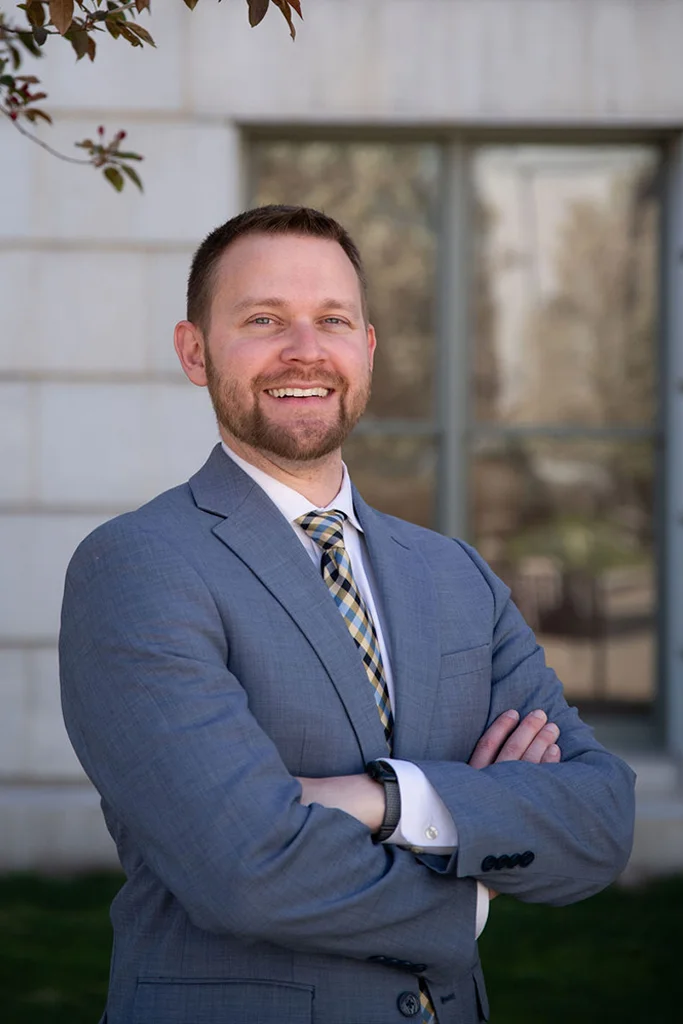
Reid DeChant at DeChant Law has defended clients facing drug-related DUI charges across Denver, Jefferson County, Arapahoe County, Adams County, and the surrounding metro jurisdictions. With a background as a former public defender handling everything from traffic offenses to felony cases, and advanced trial training at the Trial Lawyers College, Reid understands how to attack these cases from the inside out, including the science behind the charges, the credibility of the officers who made the stop, and the weaknesses in the state’s evidence.
Why DeChant Law Is the Right Choice for a Prescription Drug DUI Defense
Reid DeChant built his practice on a foundation that few Denver DUI defense attorneys can match. As a public defender in Denver, Broomfield, and Adams County courts, he handled an exceptionally high volume of cases and spent more time in front of judges, conducting cross-examinations, and trying cases to verdict than most private attorneys accumulate across their entire careers. That courtroom depth matters enormously in prescription drug DUI cases, because the evidence is rarely clean and the state’s theory often hinges on contested observations made by a single officer. Reid has taken DUI cases to trial and won not-guilty verdicts, and he has had DUI charges dismissed at both the prosecution and DMV hearing stages. Those outcomes appear on the firm’s case results because they actually happened, not because they were cherry-picked from a list of easy wins.
What also distinguishes Reid is his training at the Trial Lawyers College, the program founded by legendary trial attorney Gerry Spence. That training reshaped how Reid approaches every case. Instead of arguing legal technicalities at the jury in a detached, procedural way, Reid tells a client’s actual story, including who they are, why they were taking medication, and what the government’s case gets wrong. In prescription drug DUI cases, that storytelling approach is especially important. Jurors often arrive at trial with strong intuitions about impaired driving, and shifting those intuitions requires more than pointing to flaws in a toxicology report. It requires connecting the facts to real human experience. Reid also maintains active membership in the National Association of Criminal Defense Lawyers and the Colorado Criminal Defense Bar, keeping his defense strategies current and connected to the best legal thinking available anywhere in the country.
What Colorado Law Actually Says About Prescription Drugs and Driving
Colorado’s impaired driving statute covers driving under the influence of drugs, including prescription medications. Under this framework, a driver can be charged with DUI-Drugs if the state can prove that the drug rendered the driver substantially incapable of safely operating a vehicle. There is also a DWAI-Drugs charge, which carries a lower threshold: the drug affected the driver to the slightest degree so that the driver was less able than they otherwise would have been to operate the vehicle safely. Both charges apply equally to controlled substances that a doctor prescribed and controlled substances obtained illegally. The fact that you had a valid prescription does not resolve either charge as a legal matter.
This creates a real legal problem for patients who take medication daily and who may not feel impaired in any way they recognize. Chronic users of certain medications develop tolerance, and what produces side effects in a first-time user may have no noticeable effect on someone who has been taking the same dose for years. Law enforcement officers, however, are not pharmacologists. A Drug Recognition Evaluator is trained to follow a standardized protocol, and that protocol can flag physiological responses that have nothing to do with impairment. Pupil size, divided attention test performance, and vital signs are all factors in the DRE evaluation, but each of them can be influenced by medical conditions, anxiety, fatigue, and the stress of a traffic stop itself. A prescription drug DUI attorney who understands how these evaluations are conducted, and how to challenge the conclusions drawn from them, is not a luxury. It is a strategic necessity.
The Most Common Prescription Drug DUI Situations in Denver
- Opioid pain medications: Drugs like hydrocodone, oxycodone, and codeine are among the most commonly prescribed medications in Colorado, and they are also among the most frequently cited in DUI-Drugs charges. Officers often cite lane weaving, slow reaction times, and droopy eyelids as indicators of opioid impairment, even when a driver is within their prescribed therapeutic range.
- Benzodiazepines and anti-anxiety medications: Drugs in this category, including medications prescribed for anxiety and panic disorders, are central nervous system depressants. Their effects can overlap with alcohol impairment in ways that officers and prosecutors find easy to argue, even when the driver is medicated appropriately.
- Sleep aids and sedative-hypnotics: Drivers who take sleep medications are sometimes stopped the following morning, when residual sedation may still be measurable in blood tests even though the medication was taken the night before and the driver believes they are fully awake and functional.
- Muscle relaxants: Prescribed commonly for back injuries and musculoskeletal conditions, these medications can affect coordination and divided attention tests, two categories that appear prominently in DRE evaluations conducted on I-25 and I-70 traffic stops throughout the Denver metro.
- Stimulant medications: ADHD medications in the stimulant category present a different profile. Officers may observe elevated heart rate, elevated blood pressure, or agitated behavior during the stop and connect those observations to impairment, even when the driver is taking medication as prescribed for a diagnosed condition.
- Antihistamines and over-the-counter sleep aids: Diphenhydramine and similar compounds appear in blood tests and can contribute to impairment findings even though they are sold without a prescription. Many drivers are unaware that a Benadryl taken the night before can still be detectable and still support a DWAI charge the next morning.
- Polypharmacy and drug combinations: Some of the most complex cases involve multiple prescribed medications taken together, where the combined effect of two individually therapeutic drugs creates an interaction that produces observable impairment. These cases require expert pharmacology testimony to defend effectively.
What You Should Do After a Prescription Drug DUI Arrest in Denver
The period immediately after an arrest for DUI-Drugs is when the most consequential decisions happen, and most people who find themselves in that situation have no idea what they are walking into. Colorado law creates a dual-track problem: there is the criminal case, which will be filed in the county where you were arrested, and there is the DMV administrative proceeding, which runs on a separate timeline and can result in the revocation of your driver’s license independent of anything that happens in court. The DMV timeline is short. Missing the deadline to request a hearing means an automatic revocation. If you were arrested for a drug-related DUI in Denver, your criminal case will be processed through Denver County District Court at the Lindsey-Flanigan Courthouse on 520 West Colfax Avenue. Contacting a Denver DUI defense attorney before your first court date is essential, because early decisions about how to respond to the charges can affect the outcome across both tracks.
Do not provide additional statements to law enforcement after your release. Do not post about the arrest on social media. Preserve anything that could be relevant to your defense: your prescription bottle with the prescribing physician’s information, pharmacy records, any documentation of your medical condition, and a written account of exactly what happened during the stop while your memory is fresh. If you submitted to a blood test, your attorney can request that the split sample be independently tested, which is a right Colorado law provides and which can produce evidence that contradicts the state’s lab results. Note the names and badge numbers of any officers involved if you were able to observe them, and write down as much as you remember about the traffic stop, including the reason the officer gave for pulling you over, what field sobriety tests were requested, and how you responded.
One common mistake in prescription drug DUI cases is assuming that providing the prescription documentation will cause the case to go away. Officers and prosecutors are aware that the law does not require illegal drug use to sustain a DUI-Drugs charge. Presenting your prescription does not resolve the state’s impairment argument. Another mistake is waiving the DMV hearing because it feels like a second fight you cannot afford. The DMV hearing is a separate opportunity to challenge the revocation, and the transcript and rulings from that hearing can provide useful information for the criminal defense as well. Treating both proceedings as connected and important from day one is the approach that produces better outcomes.
Questions People Ask About Prescription Drug DUI Charges in Colorado
Can I be charged with DUI if I was taking medication exactly as my doctor prescribed?
Yes. Colorado’s DUI-Drugs statute does not create a safe harbor for prescribed medications. The state’s theory is about impairment, not legality. If the prosecution can establish that your medication, taken at your prescribed dose, rendered you substantially incapable of safely operating a vehicle, you can be convicted even with a valid prescription. The prescription is relevant context, but it is not a defense by itself.
What is a Drug Recognition Evaluator and how does their testimony affect my case?
A Drug Recognition Evaluator, or DRE, is a law enforcement officer who has completed specialized training in detecting drug impairment through a standardized 12-step evaluation. Their findings often appear in DUI-Drugs prosecutions as expert or semi-expert testimony about what category of drug they believe caused the impairment observed. DRE evaluations can be challenged effectively. The protocol is rigid, the science underlying some of its components is contested, and the officer’s interpretation of physiological signs is subjective. Cross-examining a DRE witness is a key part of prescription drug DUI defense.
What happens to my driver’s license after a prescription drug DUI arrest?
Colorado’s Express Consent law applies to drug DUI cases. If you submitted to a blood test, the results of that test can trigger a DMV administrative action to revoke your license. You have a short window after arrest to request a hearing before the Colorado Division of Motor Vehicles to contest that revocation. If you do not request a hearing in time, the revocation proceeds automatically. DeChant Law has handled numerous DMV Express Consent hearings and has had actions dismissed in cases involving DUI charges, including cases where procedural and advisement errors were identified.
Will a prescription drug DUI appear on a background check the same way an alcohol DUI does?
Yes. A DUI-Drugs conviction under Colorado law appears on your criminal record in the same way as any other DUI conviction. Background check results typically reflect the conviction without distinguishing between alcohol and drug impairment cases. The notation on your record may specify the charge, but the consequences for employment, professional licensing, and housing applications are comparable.
Can a prescription drug DUI affect my professional license in Colorado?
Potentially, yes. Colorado licensing boards for healthcare professionals, commercial drivers, educators, and attorneys, among others, have authority to investigate and sanction license holders based on criminal convictions or even pending charges. The specific impact depends on your profession, the licensing board’s policies, and whether the charge relates to the practice of your profession. Healthcare professionals in particular face mandatory reporting obligations and licensing review processes that can begin before the criminal case is resolved.
If my blood test showed medication below the prescribed dose, does that help my defense?
It can be relevant and useful, but it does not automatically defeat the charges. Colorado does not have a per se legal limit for most prescription drugs the way it does for alcohol. A sub-therapeutic blood level may support the argument that impairment was not caused by the medication, but the prosecution can still argue that other factors, or the interaction of multiple substances, produced the observed impairment. Blood level evidence is one piece of a broader defense strategy, not a standalone resolution.
What if I was not driving erratically and was stopped for a different reason?
The reason for the initial traffic stop is a critical piece of the defense in any DUI case. If an officer stopped you for a minor equipment violation or a rolling stop and then escalated to a DUI investigation based on observations during the stop, there may be grounds to challenge the scope of that investigation. A lack of driving behavior associated with impairment, no lane drift, no speeding, no near-misses, is meaningful context for a jury and can undercut the narrative that the officer’s impairment observations were reliable.
How does a prescription drug DUI case typically progress through Denver courts?
After arrest, your case will be set for an advisement hearing at Lindsey-Flanigan, where you enter a plea and the court sets conditions of release. Subsequent hearings cover motions, discovery disputes, and plea negotiations. If the case does not resolve through negotiation, it proceeds to a jury trial or bench trial. The timeline varies, but prescription drug cases frequently involve a longer pretrial phase because obtaining and reviewing blood test documentation, toxicology expert reports, and DRE evaluation records takes time. Cases in Denver County can move faster or slower depending on court scheduling and the complexity of the evidence.
Can the state use my medical records to prove that I knew the medication would cause impairment?
Medical records are generally protected under privacy laws, and the prosecution cannot simply subpoena your records without clearing legal hurdles. However, if you voluntarily provide documentation of your prescription, or if medical records become relevant to a defense argument you raise, those records may come into play. An attorney can help you understand what information the state can and cannot access in your specific case and what risks come with disclosing medical information in the course of your defense.
Is a prescription drug DUI worth fighting, or should I just take a plea deal?
That question deserves an honest conversation based on the actual evidence in your case, not a general answer. Some prescription drug DUI cases have significant weaknesses in the state’s evidence, including flawed DRE evaluations, contaminated blood samples, improper advisements, or stops that lack legal justification. Other cases involve stronger evidence. What is consistently true is that pleading guilty without reviewing the evidence carefully means accepting consequences, including criminal records, license revocations, and potential professional license implications, that might have been avoided. Getting a full evaluation of your case from a defense attorney before making any decision about a plea is always worth the time.
Denver-Area Prescription Drug DUI Representation Across the Metro
DeChant Law represents clients facing prescription drug DUI charges throughout the Denver metropolitan area and the surrounding Front Range communities. In Denver proper, this includes clients from Capitol Hill, Five Points, Curtis Park, Baker, Sunnyside, Globeville, Stapleton, Montbello, Westwood, and the downtown core. The firm also regularly handles cases originating from stops along Colfax Avenue, Federal Boulevard, Colorado Boulevard, and the major interstate corridors through Denver. For clients in the surrounding counties, DeChant Law serves communities in Jefferson County including Lakewood, Wheat Ridge, Arvada, Golden, and Edgewater. In Arapahoe County, the firm represents clients from Aurora, Englewood, Littleton, Centennial, and Sheridan. Adams County clients from Commerce City, Thornton, Westminster, Northglenn, and Brighton regularly work with the firm. Douglas County clients from Castle Rock, Parker, Lone Tree, and Highlands Ranch have also brought prescription drug DUI cases to DeChant Law. Cases in Broomfield and the communities along the U.S. 36 corridor are also within the firm’s regular practice geography.
Denver Prescription Drug DUI Attorney: Start Your Defense Now
Prescription drug DUI charges move quickly, and the decisions made in the early days after an arrest have a lasting effect on how the case unfolds. A Denver prescription drug DUI attorney at DeChant Law will review the facts of your stop, the chemical testing process, the DRE evaluation if one was conducted, and the evidence the prosecution plans to use. Reid DeChant brings trial-level experience, advanced courtroom training, and a genuine commitment to every client who walks through the door. If you are facing charges related to prescription medication and driving in Denver or anywhere in the surrounding metro area, call DeChant Law to discuss your case and understand what your options actually are.