Denver DWI Lawyer
Colorado does not draw a clean legal line between DUI and DWI the way some other states do. Under Colorado law, driving while impaired (DWAI) is a distinct charge from driving under the influence (DUI), and both carry real consequences that reach well beyond the courthouse. A Denver DWI lawyer needs to understand not just the statutes, but the way Denver-area law enforcement actually conducts traffic stops, administers chemical tests, and builds impaired driving cases, because the details of how an arrest unfolds are often where the strongest defenses live.
DWAI in Colorado applies when a driver’s ability to operate a vehicle is even slightly impaired by alcohol, drugs, or a combination of both. A blood alcohol content as low as 0.05 can support a DWAI charge, while 0.08 triggers a DUI. That lower threshold catches a lot of people by surprise, particularly people who had two or three drinks over dinner near the 16th Street Mall or at a Colfax bar and genuinely believed they were fine to drive. The government’s math and your experience in the moment do not always agree, and that gap matters enormously when you are deciding how to respond to these charges.
What makes Denver impaired driving cases particularly high-stakes is that you are not just defending a criminal case. You are simultaneously fighting to keep your driver’s license through the DMV’s Express Consent process, and those are two separate proceedings with separate deadlines and separate consequences. Missing one can cost you your license even if you win the criminal case. The decisions made in the first few days after an arrest shape both tracks, which is why how quickly and carefully you respond matters so much.
What DeChant Law Brings to Denver Impaired Driving Defense
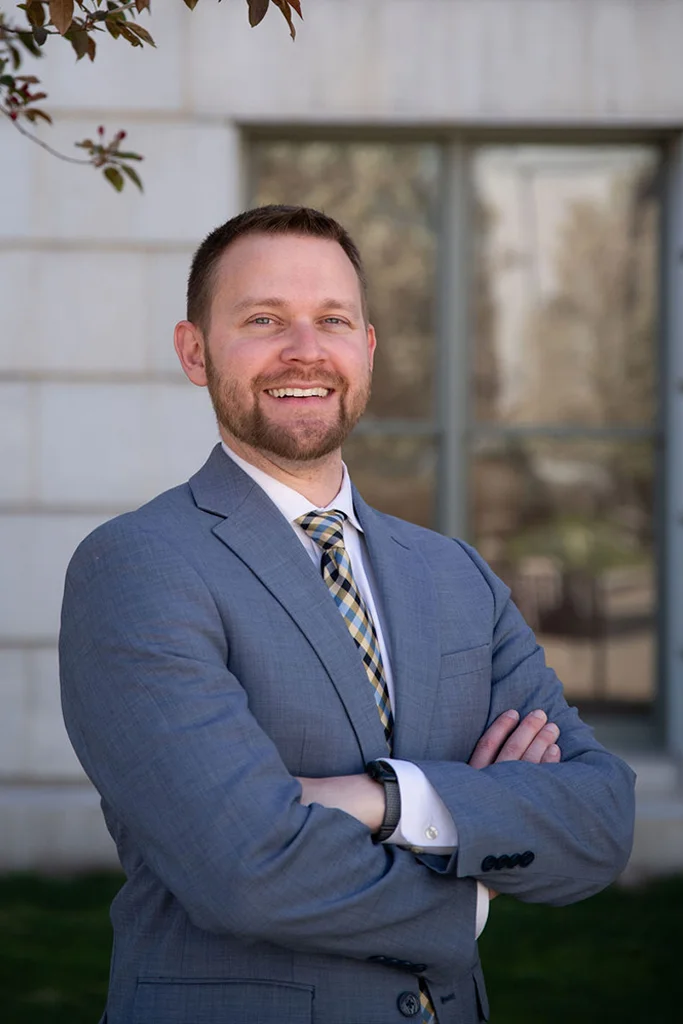
Reid DeChant built this practice on a foundation that is genuinely rare among Denver DWI attorneys. His time as a public defender gave him an unusually high volume of real courtroom work across Denver, Broomfield, and Adams County, defending clients on charges ranging from traffic offenses and DUI through felony assault and homicide. That experience inside actual courtrooms, cross-examining police officers, challenging breathalyzer results, and arguing suppression motions in front of local judges, translates directly to the kind of DWI defense that actually works.
The case results on DeChant Law’s record speak directly to this area. Reid has secured dismissals in DMV Express Consent proceedings for reasons including improper Express Consent advisements, administration of the chemical test outside the required two-hour window, and Miranda issues that tainted the process. He has also secured not-guilty verdicts at trial in DUI cases in Arapahoe County, Douglas County, and Jefferson County, as well as outright dismissals in DUI-drugs cases out of Broomfield and Jefferson Counties. These results reflect a defense approach rooted in genuine knowledge of how these cases are built and where they can fall apart.
Reid is also a graduate of the Trial Lawyers College, founded by legendary attorney Gerry Spence, where he trained in narrative advocacy and authentic courtroom storytelling. That training shapes how he presents impaired driving cases to juries. Facts and numbers alone rarely win trials. Juries respond to real people and honest stories, and Reid’s approach is built around making sure the person sitting at the defense table is seen clearly. He maintains membership in the National Association of Criminal Defense Lawyers and the Colorado Criminal Defense Bar, staying current on the defense strategies and legal developments that matter most in this practice area.
The Impaired Driving Charges Denver Prosecutors Actually File
- DWAI (Driving While Ability Impaired): Colorado’s lower-threshold impaired driving charge applies when alcohol or drugs impair driving ability to even the slightest degree, with a BAC as low as 0.05 supporting the charge. This catches many people who consumed modest amounts of alcohol and did not feel meaningfully impaired.
- DUI Per Se: A BAC at or above 0.08 triggers this charge regardless of whether the driver showed visible impairment. Officers often use this alongside a standard DUI allegation, giving prosecutors multiple angles to pursue at trial.
- DUI-Drugs (DUID): Colorado law prohibits driving while impaired by any drug, including marijuana despite its legal status, prescription medications, or illicit substances. DUID cases often rely on Drug Recognition Expert evaluations rather than breathalyzer results, and those evaluations have real methodological vulnerabilities that an attorney familiar with Colorado drug impairment cases can challenge.
- Aggravated DUI: A BAC above 0.15 or driving at high speeds can result in mandatory sentencing enhancements, significantly limiting a judge’s discretion at sentencing and raising the floor on what a conviction actually costs you.
- Felony DUI: A fourth or subsequent DUI conviction in Colorado is charged as a class 4 felony. Denver prosecutors pursue these aggressively, and the potential prison exposure makes early, thorough defense preparation essential.
- Underage DUI: Colorado’s zero-tolerance framework applies to drivers under 21. A BAC between 0.02 and 0.05 supports a UDD (Underage Drinking and Driving) charge, and anything above 0.05 can support DWAI. Young drivers also face separate consequences through the Colorado DMV affecting their ability to drive and, in some cases, their educational or professional futures.
- DMV Express Consent License Revocation: This is not a criminal charge but a separate civil proceeding that runs parallel to the criminal case. When a driver is arrested for DUI or DWAI and submits to or refuses a chemical test, the DMV can revoke driving privileges independently of what happens in court. The hearing must be requested within seven days of the arrest, and failing to request it means automatic revocation without any opportunity to challenge the action.
The First Seven Days After a Denver DWI Arrest
The seven-day deadline for requesting a DMV Express Consent hearing is the single most critical procedural fact in any Denver impaired driving arrest. That clock starts running the moment you are arrested and advised of the Express Consent law. If you do not request a hearing within that window, the DMV proceeds with revocation and you lose the opportunity to contest it, regardless of how the criminal case turns out. This deadline operates independently of courts, prosecutors, and public defenders. Missing it is entirely avoidable with the right legal guidance in place early.
The DMV hearing itself is handled through the Colorado Department of Revenue’s Motor Vehicle Division. While the criminal case will proceed through Denver County District Court at the Lindsey-Flanigan Courthouse, located at 520 West Colfax Avenue, the DMV hearing is an administrative proceeding conducted separately. Both must be defended simultaneously, and the strategies sometimes interact, so having the same attorney handling both tracks matters.
On the criminal side, your first court appearance after a DUI arrest in Denver will typically be an arraignment where charges are formally read and you enter an initial plea. The decisions made at that stage, particularly around bond conditions and whether to request a continuance, can affect the trajectory of the entire case. Coming to that first appearance represented, rather than scrambling to find an attorney afterward, is almost always the better position to be in.
In terms of documentation, preserve anything related to the stop and arrest. This includes any receipts or records showing where you were and what you consumed that evening, any photos or videos from the scene if they exist, and contact information for anyone who was with you. Do not post anything about the arrest on social media. Do not discuss the stop with anyone other than your attorney, including what field sobriety tests were administered and how you performed. Those conversations can only hurt you.
One mistake worth flagging specifically: some people assume that because Colorado has legal recreational marijuana, drug-related impairment charges are somehow softer or easier to dismiss than alcohol-based ones. They are not. DUID prosecutions in Denver have their own evidentiary framework, and the fact that a substance is legal does not mean driving while impaired by it is permitted or that the defense is simpler.
How Denver DWI Cases Actually Get Resolved
The path a DWI case takes from arrest to resolution depends heavily on the evidence, the specific circumstances of the stop, and the quality of the defense being mounted. Some cases genuinely warrant a fight all the way through trial, particularly when there are questions about whether the initial stop was lawful, whether the field sobriety tests were properly administered, or whether the chemical testing equipment was calibrated correctly and used in compliance with required protocols.
A Denver DWI attorney who has actually tried these cases knows that breathalyzer results are not infallible. The Colorado Department of Public Health and Environment maintains approved breath testing devices, and those devices require regular calibration and maintenance. Chain of custody issues with blood tests, timing problems with the two-hour chemical test window, and officer training deficiencies in field sobriety test administration are all real avenues that experienced defense attorneys pursue regularly, not theoretical arguments that rarely work.
Other cases resolve through negotiation, where the goal is reducing a DUI to a DWAI, securing a deferred judgment, or otherwise minimizing the consequences that follow a person forward. The right resolution depends entirely on the specifics of the case, the defendant’s history, and what the evidence actually shows. What should not happen is a client accepting a plea offer without fully understanding what alternatives existed and what the long-term consequences of that plea will be on their record, their license, their insurance rates, and if applicable, their professional licensure.
Certain professions in Colorado, including healthcare, law, education, and commercial driving, face additional licensing consequences when a DWI conviction appears on a record. A Denver DWI defense attorney who understands these collateral consequences can factor them into the defense strategy from the beginning rather than discovering them after a plea has already been entered.
Questions People Ask About DWI Charges in Denver
What is the difference between DUI and DWAI in Colorado?
DUI (driving under the influence) in Colorado applies when a person is substantially incapable of safely operating a vehicle due to alcohol, drugs, or both. DWAI (driving while ability impaired) applies when the driver’s ability is impaired to even the slightest degree. A BAC of 0.08 or higher creates a presumption of DUI. A BAC between 0.05 and 0.08 creates a presumption of DWAI. Both are criminal charges in Colorado, though DWAI carries somewhat lower penalties on a first offense.
What happens to my driver’s license after a DUI arrest in Denver?
After a DUI or DWAI arrest in Denver, the Colorado DMV can move to revoke your driver’s license through the Express Consent process, separate from any criminal penalties. You have seven days from the date of arrest to request a DMV hearing to contest the revocation. If you do not request that hearing within seven days, the revocation proceeds automatically. The criminal case and the DMV proceeding run on parallel tracks and must both be actively defended.
Can I refuse the breathalyzer or blood test in Colorado?
Colorado’s Express Consent law means that by driving on Colorado roads, you have already consented to chemical testing if lawfully arrested for DUI. You can refuse, but refusal carries its own consequences including license revocation and the fact that the jury in a criminal trial can be told about the refusal. In some situations, refusing is still the strategically better decision, but that depends on the circumstances and requires a judgment call that an attorney familiar with Colorado impaired driving law is best positioned to help you make.
How long does a DUI case typically take in Denver County courts?
A Denver County DUI case can resolve in as few as a couple of months if it settles through a plea, but cases that go to motions hearings or trial often take six months to well over a year, depending on court scheduling, discovery volume, and whether expert witnesses are involved. Cases handled at the Lindsey-Flanigan Courthouse are subject to Denver County’s specific docket schedule, which can affect timing independent of the parties’ preferences.
Will a DWAI conviction show up on my criminal record in Colorado?
Yes. Both DUI and DWAI convictions in Colorado result in criminal records that are visible in background checks. Colorado does not have a general expungement process for adult criminal convictions, including DWAI. This means the conviction follows you into employment applications, housing applications, and professional licensing reviews. The permanence of a conviction on a Colorado record is one of the most important reasons to pursue an aggressive defense rather than simply accepting whatever the prosecution offers.
What happens if I am charged with DUI-Drugs involving marijuana in Denver?
Legal recreational marijuana does not create a legal right to drive while impaired by it. Colorado law establishes a permissible inference of impairment at a THC blood concentration of 5 nanograms per milliliter, though the science around THC impairment and driving is genuinely more complicated than the alcohol equivalent. Officers trained as Drug Recognition Experts may be involved in these arrests, and their evaluations involve a multi-step protocol that has procedural requirements which can be challenged when they are not followed correctly.
Can a DUI conviction affect my commercial driver’s license in Colorado?
Yes, and the consequences for CDL holders are substantially harsher than for standard license holders. Federal regulations impose significant disqualification periods for CDL holders convicted of impaired driving, even if the arrest occurred in a personal vehicle. A first offense can trigger a one-year CDL disqualification, with longer or lifetime disqualifications for subsequent offenses. For professional drivers, the stakes of any impaired driving charge extend far beyond the criminal penalty itself.
What if the police did not read me my Miranda rights during my DUI arrest?
Miranda warnings are required before custodial interrogation. If an officer questioned you after you were in custody without first advising you of your rights, statements you made during that questioning may be suppressible. However, Miranda does not affect the admissibility of the chemical test results themselves, and it does not automatically result in a case dismissal. The actual impact of a Miranda violation depends on what statements were made and how central those statements are to the prosecution’s case.
What does a deferred judgment mean in a Denver DUI case?
A deferred judgment in Colorado allows a defendant to plead guilty with sentencing deferred while they complete a period of supervision and comply with specific conditions. If all conditions are met, the guilty plea is withdrawn and the case is dismissed. However, the underlying arrest record remains, and deferred judgments do not result in expungement of the arrest. Not every DUI defendant qualifies for a deferred judgment, and the terms attached to one can be demanding. Whether it is the right resolution depends on the facts of the specific case.
Does a DUI in Denver affect professional licenses in Colorado?
For many licensed professionals in Colorado, including nurses, physicians, pharmacists, teachers, attorneys, and others, a DUI or DWAI conviction can trigger a mandatory reporting obligation to the relevant licensing board and may result in an investigation, conditions on the license, or other disciplinary action. The specific consequences vary by profession and by the details of the offense. This collateral consequence should be part of the defense strategy conversation from the beginning, not an afterthought after a plea has been entered.
Denver DWI Representation Across the Metro Area and Surrounding Counties
DeChant Law represents clients facing DUI and DWAI charges throughout the Denver metropolitan area and the surrounding Front Range counties. In the city itself, that means clients from Capitol Hill, Five Points, Baker, Washington Park, Stapleton, the Highlands, Globeville, Sunnyside, Park Hill, Montbello, Green Valley Ranch, and every other Denver neighborhood where traffic stops and arrests occur. Interstate 25 through downtown, I-70 east and west of the city, Colfax Avenue, Colorado Boulevard, and Federal Boulevard are all high-enforcement corridors where Denver-area DWI arrests happen regularly.
Outside the city limits, the firm handles cases in Aurora, Lakewood, Englewood, Littleton, Centennial, and the broader Arapahoe County area. Jefferson County cases, including those arising from stops along U.S. 285 and the C-470 corridor, are handled in the Jefferson County court system in Golden. Adams County cases, including those out of Commerce City, Thornton, Westminster, and Northglenn, proceed through Brighton. Douglas County cases from Castle Rock, Parker, Lone Tree, and Highlands Ranch are handled in Castle Rock. Broomfield County and Westminster-area cases are also within the firm’s regular practice area. Reid’s experience as a former public defender in multiple Front Range jurisdictions means he is not walking into unfamiliar courtrooms when cases arise outside Denver proper.
Talk to a Denver DWI Attorney Before You Make Any Decisions
The choices you make in the first days after an impaired driving arrest in Denver carry real weight, and the window to make them correctly is short. A Denver DWI attorney at DeChant Law can walk you through what the charges actually mean, what the DMV hearing deadline requires, and what the realistic defense options look like given the specific facts of your case. This is not the kind of situation where waiting to see how things develop is a safe strategy. The government is already building its case. Your defense should be moving too.
Reid DeChant is a Denver DWI defense attorney whose entire practice is built around cases like this one. Call DeChant Law to schedule a consultation and get a clear picture of where you stand and what comes next.