Denver DUI Traffic Stop Lawyer
The moment red and blue lights appear in your rearview mirror, a sequence of events begins that can either help or seriously damage your case. How that traffic stop unfolds, what you say, what the officer documents, how the field sobriety tests are conducted, and whether the stop itself was even lawful in the first place, all of this becomes evidence that a Denver DUI traffic stop lawyer will examine in detail. Most people assume a DUI charge is airtight because they were pulled over and arrested. That assumption costs people their licenses, their records, and sometimes their freedom.
Colorado’s DUI laws are specific about what police must do during a traffic stop, how they must conduct sobriety testing, and how quickly chemical tests must be administered. Officers who skip steps, use flawed equipment, or lack a legitimate legal basis for the stop in the first place can hand a defense attorney the exact tools needed to fight the charge. The stop is not the end of the story. It is the beginning of it.
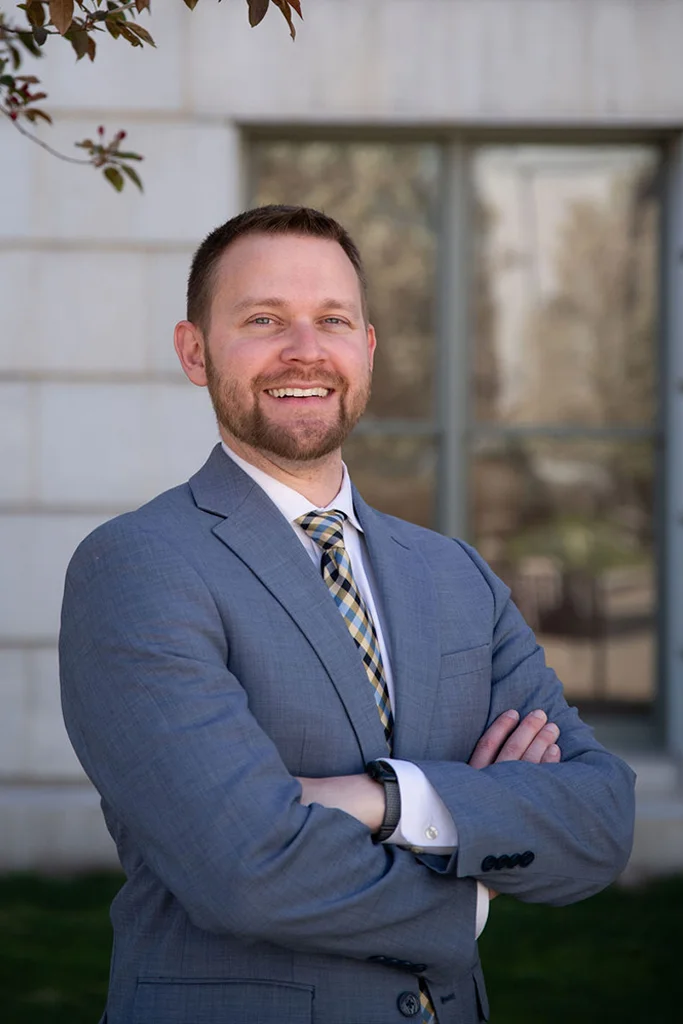
Reid DeChant has built a DUI defense practice around understanding exactly what happens at the roadside and what happens next. From the initial stop on I-25 or Colfax to the DMV Express Consent hearing that follows, his approach is to examine every piece of evidence from every angle and challenge anything that does not hold up.
What Can Actually Go Wrong During a Denver DUI Stop
A DUI arrest in Denver looks routine from the outside. An officer observes something, pulls someone over, asks a few questions, runs through field sobriety tests, and makes an arrest. But each one of those steps carries legal requirements that must be satisfied. A Denver DUI traffic stop attorney who knows what to look for will pull apart the entire sequence.
The first question is always whether the stop was legally justified. Colorado law requires officers to have reasonable articulable suspicion before pulling a vehicle over. That means they must be able to point to specific, observable facts that suggested a traffic violation or criminal activity. Vague hunches or generalized observations are not enough. If the stop was pretextual or based on a hunch, the arrest that follows may be suppressible. Evidence that should never have been gathered does not get to be used against you.
Field sobriety tests are another common source of problems. The standardized tests used by Denver law enforcement, including the horizontal gaze nystagmus test, the walk-and-turn, and the one-leg stand, have strict administration protocols. Officers who deviate from those protocols produce unreliable results. Medical conditions, footwear, uneven pavement, lighting, and anxiety can all affect how someone performs on these tests, and those factors rarely make it into the officer’s report without a defense attorney pushing for them.
Breathalyzer and chemical testing procedures carry their own requirements. Colorado’s Express Consent law requires that a chemical test be administered within two hours of driving. Reid DeChant’s case results include multiple DMV Express Consent actions dismissed specifically because officers failed to administer the test within that window. These are not loopholes. They are legal protections that exist for good reasons, and they apply to your case.
Why DeChant Law for Your Denver DUI Traffic Stop Case
Reid DeChant’s background is unusual in Denver’s private defense bar. He came up through public defender work in Denver, Broomfield, and Adams County courtrooms, handling DUI charges alongside felony assault, theft, sexual assault, and homicide cases. That volume of actual courtroom experience means Reid has cross-examined Denver Police officers, Colorado State Patrol troopers, and DMV hearing officers far more often than most private attorneys ever will.
His case results speak directly to DUI traffic stop defense. Reid has obtained dismissals in multiple DMV Express Consent actions, including cases dismissed for improper Express Consent advisement, for failure to administer the chemical test within two hours of driving, and for advisement of Miranda rights before the Express Consent warning, which creates its own legal problem for the prosecution. He has also won Not Guilty verdicts at trial in DUI cases out of Jefferson County and Douglas County, and obtained outright case dismissals in DUI matters across Arapahoe County, Broomfield, Jefferson County, Douglas County, and elsewhere in the metro area.
Reid is a graduate of the Trial Lawyers College, the program founded by Gerry Spence that trains lawyers in authentic storytelling and human connection in the courtroom. He is a member of the National Association of Criminal Defense Lawyers and the Colorado Criminal Defense Bar. These affiliations reflect genuine engagement with the best thinking in criminal defense, not resume decoration. When you face a DUI charge rooted in a questionable stop, you want a DUI attorney in Denver who has actually won these cases in front of judges and juries, not one who negotiates everything before the fight begins.
Common Legal Issues in Denver DUI Traffic Stop Cases
- Lack of Reasonable Suspicion for the Stop: Colorado law requires officers to point to specific, observable facts before pulling a vehicle over. Stops initiated on vague observations, hunches, or pretextual reasons may be challenged, and any evidence gathered after an unlawful stop can potentially be suppressed under state and federal constitutional protections.
- Improper Field Sobriety Test Administration: The National Highway Traffic Safety Administration sets strict protocols for how standardized field sobriety tests must be conducted. Deviations from those protocols, which are common, undermine the reliability of results and give defense attorneys strong grounds to challenge the officer’s conclusions about impairment.
- Express Consent Advisement Errors: Colorado’s Express Consent law requires officers to advise drivers of their rights and obligations regarding chemical testing in a specific way. An improper advisement or a Miranda warning given before the Express Consent advisement can result in dismissal of the DMV action against your license.
- Chemical Test Timing Violations: The test must be administered within two hours of the time of driving. Officers who take too long transporting a driver, processing paperwork, or waiting for equipment violate this requirement, and Reid has obtained dismissals on exactly this basis.
- Breathalyzer Calibration and Maintenance Records: Breath testing devices used by Denver Police and other metro area agencies must be properly maintained and regularly calibrated. Testing records are subject to discovery, and a device that was not functioning correctly at the time of your test may produce unreliable results.
- Blood Test Chain of Custody Problems: In cases where blood is drawn rather than breath tested, the sample must be collected, stored, and analyzed according to strict protocols. Any break in the chain of custody or deviation from proper handling procedures creates grounds to challenge the test results.
- Dashcam and Bodycam Evidence: Denver Police and most other metro area agencies record traffic stops. That footage often tells a different story than the officer’s written report. Obtaining and reviewing this footage early is critical, as it sometimes contradicts the stated basis for the stop or the description of a driver’s conduct and appearance.
- Parallel DMV Proceedings: A DUI arrest in Colorado triggers both a criminal case in court and a separate DMV action to revoke your driver’s license. These are two distinct proceedings with different deadlines and different standards. Missing the window to request a DMV hearing results in automatic revocation regardless of what happens in the criminal case.
What to Do After a DUI Traffic Stop in Denver
The hours and days after a DUI arrest matter more than most people realize. The DMV Express Consent hearing is where your license will be determined independent of the criminal court case, and Colorado law gives you a very narrow window to request that hearing after your arrest. Missing that deadline means your license is automatically revoked. Contacting a Denver DUI traffic stop attorney before that deadline closes is not optional if you want a real chance to keep your driving privileges.
While memories are fresh, write down everything you remember about the stop: where it happened, what time it was, what the officer said, how the field sobriety tests were explained and administered, whether you were given the Express Consent advisement before or after any Miranda warning, and how long you waited before the breath or blood test. These details will matter, and they fade quickly.
Do not talk to the prosecutor, the arresting officer, or any investigators without a lawyer present. This applies whether you feel you have nothing to hide or not. Statements made after an arrest have a way of surfacing at the worst possible time.
The criminal case in Denver County will be handled at the Lindsey-Flanigan Courthouse at 520 West Colfax Avenue. Cases in surrounding jurisdictions such as Jefferson County will be in Golden, Arapahoe County cases in Centennial, Adams County in Brighton, and Douglas County in Castle Rock. Each courthouse has its own culture, its own prosecutors, and its own judges. Reid’s experience spans all of these courts, which matters when it comes to understanding how cases are actually handled in each jurisdiction.
One common mistake is waiting to hire a lawyer. People believe the charge is not serious enough to warrant immediate legal help, or they assume they can handle the DMV process themselves. DUI defense is time-sensitive. Evidence needs to be preserved, hearing deadlines need to be met, and the investigation needs to start while the details of the stop are still available.
Questions People Ask About Denver DUI Traffic Stops
Can a DUI charge be dismissed if the officer didn’t have a valid reason to pull me over?
Yes. If the traffic stop lacked reasonable articulable suspicion, a defense attorney can file a motion to suppress the evidence gathered during the stop. If the court agrees that the stop was unlawful, the evidence collected afterward, including field sobriety test results and chemical test results, may be suppressed. Without that evidence, the prosecution frequently cannot proceed with the charge.
What is the Express Consent law and how does it affect my DUI case?
Colorado’s Express Consent law means that by driving on Colorado roads, you have implicitly consented to a chemical test if law enforcement develops probable cause to believe you are impaired. When an officer arrests you for DUI, they must advise you of this law and the consequences of refusing. The way this advisement is delivered, and when it is delivered relative to any Miranda warning, can significantly affect the outcome of both the DMV action and the criminal case.
What happens if I refused the breath or blood test?
Refusing a chemical test after a DUI arrest in Colorado triggers consequences that are handled through the DMV, separate from the criminal case. Refusal can result in a longer license revocation period than if you had taken the test. However, refusal also means the prosecution has no chemical test result to use against you in the criminal case, which changes the evidentiary landscape. The implications are specific to your situation and need to be analyzed by a DUI attorney in Denver who handles these cases regularly.
How long do I have to request a DMV hearing after a DUI arrest in Colorado?
The window to request a DMV Express Consent hearing is very short following a DUI arrest. Missing this deadline results in automatic revocation of your license with no hearing opportunity. Contact a lawyer as soon as possible after an arrest to preserve this right.
Does it matter where in Denver I was pulled over?
It can. Different Denver Police district stations handle different patrol areas, and officers from specific districts have patterns in how they conduct stops and write their reports. Areas near LoDo, RiNo, South Broadway, and along major corridors like Colfax Avenue, I-25, and I-70 see concentrated DUI enforcement, especially during late-night hours and after events at Ball Arena, Empower Field, and Coors Field. Understanding the enforcement patterns in a given area helps in evaluating whether a stop was genuinely based on observed behavior or on proximity to a nightlife venue.
Can a DUI traffic stop affect my professional license in Colorado?
Yes. Certain licensed professions in Colorado, including healthcare workers, teachers, attorneys, real estate agents, and commercial drivers, have reporting obligations or face potential consequences when charged with or convicted of DUI. The impact varies by profession and licensing board. If you hold a professional license, this dimension of a DUI charge deserves attention alongside the criminal and DMV aspects.
What if the dashcam footage from the stop contradicts the officer’s report?
This happens more often than people expect. Officers write reports from memory, and dashcam footage sometimes shows that a driver’s walking, talking, or behavior during the stop did not match what the report describes. When video evidence contradicts the officer’s written account, it is powerful material for cross-examination at trial and can affect how the prosecutor evaluates the case during negotiations. Obtaining this footage early is a priority.
Can I be charged with DUI in Colorado even if my blood alcohol level was below 0.08?
Yes. Colorado has a separate charge called Driving While Ability Impaired (DWAI) for drivers whose blood alcohol content falls between 0.05 and 0.08, or who are impaired by any amount of alcohol or drugs to the slightest degree. DWAI carries its own penalties and its own record consequences. DUI-Drugs charges also do not require any specific blood content threshold and can be based on officer observations alone, which makes the quality of the stop analysis even more important.
What is the difference between what happens in criminal court and the DMV hearing?
They are two completely separate proceedings. The criminal case, handled at Lindsey-Flanigan Courthouse for Denver County charges, determines whether you are convicted of DUI or DWAI and what sentence you receive. The DMV Express Consent hearing is an administrative proceeding that determines whether your driver’s license is revoked. You can win the DMV hearing and still face the criminal case, or beat the criminal charge and still lose your license through the DMV process. Handling both simultaneously, with the same attention to the evidence from the traffic stop, is essential.
Is a first-time DUI charge in Denver worth fighting, or should I just plead guilty?
Every DUI charge is worth a thorough defense review before any decision is made. A first-time DUI conviction in Colorado carries real consequences: fines, potential jail or community service, mandatory alcohol education classes, probation, license consequences, and a permanent criminal record. Beyond that, a first DUI on your record means future offenses carry dramatically harsher penalties. Whether the charge can be challenged, reduced, or dismissed depends entirely on the specific facts of the stop, and those facts cannot be evaluated without a lawyer who knows what to look for.
DeChant Law Represents DUI Traffic Stop Clients Across the Denver Metro Area
Reid DeChant represents clients from across Denver and the surrounding communities who are facing DUI charges rooted in traffic stop encounters. This includes clients stopped in central Denver neighborhoods such as Capitol Hill, Baker, Five Points, the Highlands, Congress Park, Sloan Lake, and Wash Park, as well as in commercial and entertainment districts including LoDo, RiNo, and Cherry Creek. Clients from Aurora, Lakewood, Arvada, Westminster, Thornton, Northglenn, Englewood, Littleton, Lone Tree, Parker, Castle Rock, Brighton, Commerce City, Federal Heights, and Wheat Ridge regularly turn to DeChant Law for DUI traffic stop defense.
Reid’s work extends into Jefferson County courts in Golden, Adams County courts in Brighton, Arapahoe County courts in Centennial, Douglas County courts in Castle Rock, and Broomfield County, reflecting years of prior public defender work across these same jurisdictions. Whether a client was stopped on a residential street in Lakewood or on the interstate passing through Englewood, the analysis of the traffic stop begins in the same place: with the facts, the evidence, and the legal standards that govern every step law enforcement must follow.
Talk to a Denver DUI Traffic Stop Attorney Before the Window Closes
The evidence from your traffic stop exists right now. Dashcam footage, officer notes, breathalyzer calibration records, and chemical test documentation are all available, and they need to be requested and preserved while they still can be. A Denver DUI traffic stop attorney can assess whether the stop was lawful, whether the testing was properly conducted, and whether the DMV hearing deadline has been protected. These are not questions that get easier with time. Reid DeChant is ready to review what happened during your stop and tell you honestly what the options are. Contact DeChant Law to schedule a consultation.