Denver DUI Motion to Suppress Lawyer
A DUI conviction in Colorado carries consequences that extend far beyond a fine and a few nights in jail. License revocation, mandatory alcohol education programs, ignition interlock requirements, increased insurance premiums, and a permanent criminal record can follow someone for years. But many DUI prosecutions in Denver rest on evidence that was gathered improperly, and that evidence can be challenged before the case ever reaches a jury. A Denver DUI motion to suppress lawyer focuses on exactly that: examining how law enforcement obtained its evidence and determining whether the Fourth Amendment or Colorado law required that evidence to be excluded.
A motion to suppress is not a long shot. It is a precise legal mechanism grounded in constitutional doctrine, and when it succeeds, it does not merely weaken the prosecution’s case; it can collapse it entirely. If the blood draw that showed your BAC was conducted without proper authority, or if the traffic stop that initiated everything was based on an officer’s hunch rather than a legal justification, that evidence may not be permitted at trial. Colorado courts, including the judges at Lindsey-Flanigan Courthouse in Denver, take suppression motions seriously when they are argued with specificity and backed by solid legal authority.
The window to file a motion to suppress is not indefinite. Pretrial motions in Colorado DUI cases must typically be filed within deadlines set by court order, and failing to raise suppression arguments at the appropriate stage can result in waiving them permanently. Anyone charged with DUI in the Denver metro area needs an attorney who understands suppression doctrine at a granular level and moves quickly to preserve these arguments before the opportunity closes.
The Suppression Grounds That Actually Win DUI Cases in Denver
Not every suppression motion succeeds, and filing one without a strong factual and legal foundation serves no one. What matters is identifying the specific constitutional or statutory violation that occurred in a particular case and building a targeted argument around it. The following are the categories of suppression issues that arise most frequently in Denver DUI prosecutions, along with the legal context that makes them viable challenges.
- Unlawful traffic stops: Under the Fourth Amendment and Colorado’s constitution, law enforcement needs reasonable articulable suspicion of a traffic violation or criminal activity before initiating a stop. Stops initiated based on vague observations such as “slow driving” or “weaving within a lane,” without more, may not meet that threshold. Denver patrol officers working Colfax Avenue, South Broadway, and the I-25 and I-70 corridors frequently conduct late-night enforcement, and the justification recorded in the police report is often worth scrutinizing closely.
- Unlawful DUI checkpoints or sobriety stops: Colorado law imposes specific procedural requirements on DUI sobriety checkpoints. If law enforcement fails to follow the required protocols for neutrally selecting vehicles, providing advance public notice, or supervising the checkpoint with command-level officers, evidence gathered at that location may be suppressible under both state and federal standards.
- Improper field sobriety test administration: The National Highway Traffic Safety Administration has established standardized procedures for administering the Horizontal Gaze Nystagmus, Walk-and-Turn, and One-Leg-Stand tests. Officers who deviate from these procedures in ways that affect reliability undermine the evidentiary value of those results, and in some contexts, their observations can be the subject of suppression arguments when they form the basis for establishing probable cause to arrest.
- Lack of probable cause to arrest: A warrantless arrest requires probable cause. If the totality of what the officer observed before placing a driver under arrest does not support a reasonable conclusion that the person was impaired, evidence obtained after that arrest, including breath tests and blood draws, may be subject to suppression.
- Express Consent advisement failures: Colorado’s Express Consent law requires officers to advise drivers of their rights and the consequences of refusal before requesting a chemical test. Errors in this advisement, or failure to give it at all, can affect both the criminal case and the parallel DMV license revocation proceeding. DeChant Law’s case results include multiple DMV Express Consent actions dismissed for improper advisements and for failing to administer the chemical test within the required time window after driving.
- Warrantless blood draws and Missouri v. McNeely: The U.S. Supreme Court has held that the natural dissipation of alcohol in the bloodstream does not by itself constitute an exigency justifying a warrantless blood draw. Officers in Colorado must generally obtain a warrant before compelling a blood test, and cases where blood was drawn without a warrant or valid consent deserve careful examination of whether an exception actually applied.
- Chain of custody and lab procedure violations: Even when a blood draw was lawfully obtained, the sample must be properly preserved, labeled, stored, and tested according to established protocols. Breaks in the chain of custody or deviations from Colorado Department of Public Health and Environment testing regulations can render blood alcohol results unreliable or inadmissible.
Why DeChant Law for a Denver DUI Suppression Motion
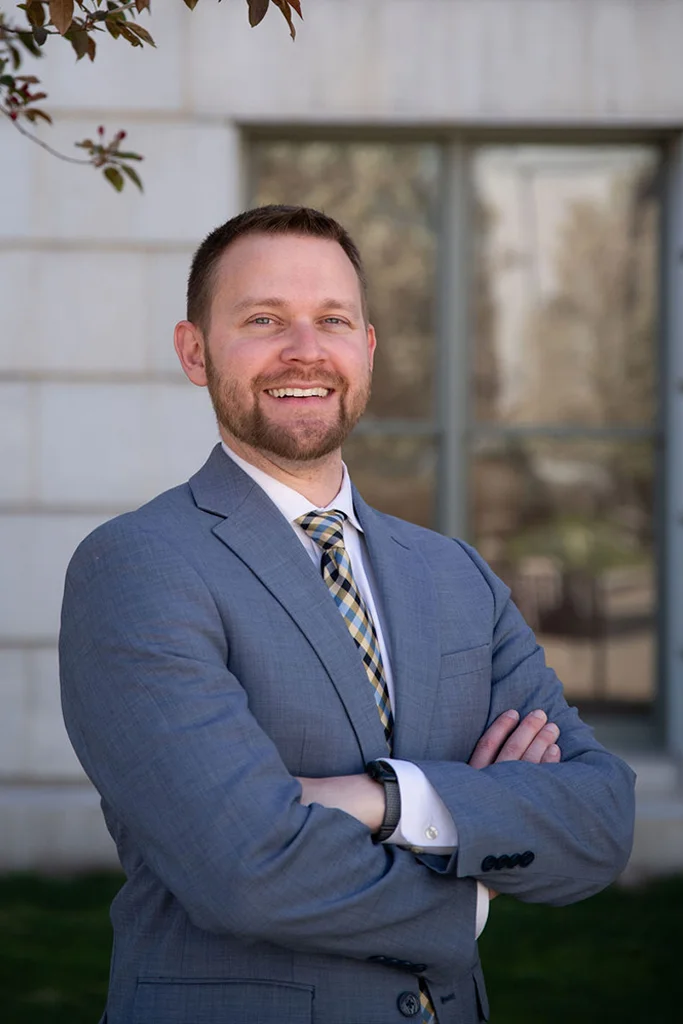
Suppression motions are won in the details, and the details require a lawyer who has spent real time inside Denver-area courtrooms doing this specific work. Reid DeChant built his foundation as a public defender handling high volumes of DUI and criminal cases in Denver, Broomfield, and Adams County courts. That background produced something that cannot be replicated in an office: an instinct for where the legal weaknesses in a government case actually live, developed through years of cross-examining police officers, reviewing patrol car footage, and challenging the procedural assumptions that prosecutors rely on.
Reid’s training at the Trial Lawyers College, the program founded by Gerry Spence, sharpened his ability to present suppression arguments in ways that resonate with judges rather than merely reciting case law. A suppression hearing is not an academic exercise. A judge needs to understand why the violation matters and why the remedy of exclusion is appropriate, and that requires advocacy that connects legal doctrine to the human reality of what actually happened during the stop, the arrest, and the chemical testing. Reid also maintains active membership in the National Association of Criminal Defense Lawyers and the Colorado Criminal Defense Bar, keeping his suppression strategy current with evolving Fourth Amendment doctrine and Colorado-specific developments that affect how these motions are argued and decided. DeChant Law’s track record in DUI cases, including outright not-guilty verdicts at trial, case dismissals in multiple Colorado counties, and DMV hearing victories, reflects what this kind of preparation and experience produces in practice.
What to Do Immediately After a Denver DUI Arrest
The period following a DUI arrest is when the suppression record is either made or lost. Everything an officer observed, everything that was said, every decision that was made from the moment of the traffic stop through the chemical test is documented, but that documentation reflects the officer’s perspective. Contesting it requires acting quickly and methodically.
Start by writing down everything you remember about the stop and arrest, including where you were driving, what the officer said when approaching your window, whether you were told why you were stopped, how the field sobriety tests were administered, and exactly what happened during the chemical testing process. Specific details matter. The location of the stop may connect to known enforcement patterns. The officer’s exact language regarding the Express Consent advisement can be compared against the statutory requirements. Whether you were read Miranda rights before or after the Express Consent advisement has legal consequences, as reflected in at least one of DeChant Law’s prior DMV dismissals.
Preserve any video. If the stop occurred near a business, a traffic camera, or an area with surveillance infrastructure common to Denver’s downtown and RiNo districts, that footage may exist for only a short time before it is overwritten. An attorney who moves quickly can issue a preservation request or subpoena before that evidence disappears.
On the DMV side, a DUI arrest in Colorado triggers an independent license revocation proceeding separate from the criminal case. A request for a hearing must be submitted within a strict deadline after the arrest. Missing that deadline results in automatic revocation. This DMV proceeding is its own arena where suppression-adjacent arguments, particularly around Express Consent advisements and testing procedures, can be raised and won. DeChant Law has secured multiple DMV hearing dismissals by pressing exactly these issues.
The criminal case will be handled at Lindsey-Flanigan Courthouse for Denver County charges. If the DUI occurred in Jefferson County, Arapahoe County, Adams County, or Douglas County, the case will be filed in the respective district court for that jurisdiction. Knowing the tendencies of local judges and the preferences of each district attorney’s office matters when calibrating suppression strategy, because the same legal argument may be presented differently depending on the courtroom where it will be heard.
What Happens When a Suppression Motion Succeeds
When a court grants a motion to suppress evidence in a DUI case, the prosecution is left to decide whether it can proceed without the excluded material. In a typical DUI prosecution, the BAC result from a blood or breath test is central to the state’s case. If that result is suppressed because the blood draw violated McNeely, the Express Consent advisement was defective, or the chemical testing procedures were not followed, the prosecution often cannot establish the BAC element of a per se DUI charge. A case that looked strong on paper can dissolve.
Suppression of the traffic stop itself is even more powerful. If the stop is found constitutionally infirm, the exclusionary rule requires suppressing everything that followed from it, a concept courts refer to as the fruit of the poisonous tree. The officer’s observations of impairment, the field sobriety test results, the chemical test, the arrest itself, all of it becomes unavailable to the prosecution. At that point, the government typically has no path forward, and the case is dismissed.
Not every suppression argument succeeds, and the strength of a motion depends entirely on the specific facts of the arrest and how well those facts map onto existing legal doctrine. That assessment requires a careful review of the police report, the body camera footage, the advisement forms, the chemical test documentation, and any available independent evidence. An attorney who has handled DUI suppression hearings in Denver courts can make that assessment accurately, advise on which arguments have genuine traction, and present the strongest version of the motion in front of the judge assigned to the case.
Questions About DUI Suppression Motions in Denver, Answered
What is a motion to suppress in a Denver DUI case?
A motion to suppress is a pretrial filing asking the court to exclude specific evidence from trial because that evidence was obtained in violation of the defendant’s constitutional rights or applicable state law. In DUI cases, the most common targets are the traffic stop itself, the results of field sobriety tests, breath test results, and blood draw results. If the motion is granted, the excluded evidence cannot be used by the prosecution at trial.
How does the Fourth Amendment apply to DUI traffic stops in Colorado?
The Fourth Amendment prohibits unreasonable searches and seizures, which includes stopping a vehicle without legal justification. Colorado courts require that an officer have reasonable articulable suspicion of a traffic violation or criminal activity before initiating a stop. If the officer lacked that basis, the stop was unlawful, and anything discovered as a result of it may be excluded under the exclusionary rule.
Can a blood test be suppressed in a Colorado DUI case?
Yes. Blood draws implicate Fourth Amendment protections because drawing blood is a search. Following the U.S. Supreme Court’s ruling in Missouri v. McNeely, officers generally must obtain a warrant before compelling a blood draw. Exceptions exist, but they require specific factual circumstances. Blood test results can also be challenged on chain of custody grounds or for deviations from Colorado’s regulated testing procedures, which can affect admissibility independent of the warrant question.
What is the Express Consent law in Colorado, and how can it affect my case?
Colorado’s Express Consent statute requires officers to advise drivers of the consequences of refusing a chemical test and of the available options before requesting one. Errors in that advisement, whether the officer failed to give it, gave it incorrectly, or gave it at the wrong point in the process, can result in suppression of the chemical test results and dismissal of the parallel DMV license revocation action. DeChant Law has obtained multiple DMV dismissals specifically on Express Consent grounds.
What happens at a suppression hearing in Denver District Court?
A suppression hearing is a contested evidentiary proceeding before a judge, typically without a jury. The defense presents its legal and factual arguments for excluding the challenged evidence, often calling the arresting officer as a witness to cross-examine them on the specific circumstances of the stop, the advisements given, and the testing procedures followed. The prosecution responds and may also call witnesses. The judge then issues a ruling, which can be appealed if adverse to either side.
How long do I have to file a motion to suppress in a Colorado DUI case?
Colorado criminal procedure requires that pretrial motions, including suppression motions, be filed by deadlines set at the case management conference or by court order. In some jurisdictions, that window closes within a few weeks of arraignment. Failing to raise a suppression argument by the applicable deadline generally results in waiver of that argument, which is why contacting a DUI suppression attorney promptly after an arrest is critical.
Does a successful suppression motion automatically dismiss my DUI case?
Not automatically, but it frequently leads to dismissal. Whether the prosecution can proceed after evidence is suppressed depends on what remains. If the BAC result and the officer’s impairment observations are both excluded, there may be nothing left to support the charge. Prosecutors who assess the remaining evidence honestly will often move to dismiss rather than take a case to trial without their central proof. Each situation is different, and the practical outcome of a granted motion depends on what evidence survives.
Can the Denver DMV revocation proceeding be affected by a suppression motion in the criminal case?
The DMV Express Consent hearing is a civil administrative proceeding conducted separately from the criminal case. Suppression arguments raised and won in criminal court do not automatically apply in the DMV hearing, and vice versa. However, many of the same factual issues, such as whether the Express Consent advisement was properly given and whether the chemical test was administered within the required timeframe, are relevant in both forums. An attorney handling both proceedings simultaneously can coordinate the strategy and use what is learned in one proceeding to strengthen the position in the other.
What if I refused the chemical test? Can I still argue suppression?
Yes. Refusal cases raise their own suppression issues, particularly around whether the officer’s probable cause to demand the test was legally sufficient and whether the Express Consent advisement was properly given before the request was made. In addition, whether law enforcement was entitled to obtain a warrant and compel a blood draw following refusal presents constitutional questions that depend on the specific facts. Refusal also carries independent license revocation consequences at the DMV, and those can be challenged through the administrative hearing process.
If I was stopped at a DUI checkpoint, are there additional grounds for suppression?
Sobriety checkpoints are constitutionally permitted under both federal and Colorado law, but only if law enforcement follows specific procedural requirements. These include advance public notice, a neutral formula for selecting which vehicles to stop, minimization of the intrusion on drivers, and supervisory oversight. Deviation from those requirements can render the checkpoint itself constitutionally infirm, and evidence gathered at an improperly conducted checkpoint may be suppressible. Whether a particular checkpoint met Colorado’s standards requires a fact-specific analysis.
Can body camera footage help a suppression motion?
Body camera footage is often the most important piece of evidence in a suppression motion because it provides an objective record of what actually occurred during the stop, the advisements, and the field sobriety testing. When footage contradicts what an officer wrote in the police report, that discrepancy can be powerful at a suppression hearing. Conversely, footage can also reveal facts that strengthen the prosecution’s position. Either way, obtaining and reviewing all available footage before filing a suppression motion is essential.
Denver DUI Defense Representation Across the Metro Area
DeChant Law represents clients facing DUI and suppression issues throughout the Denver metro area and surrounding counties. This includes clients from throughout Denver itself, including neighborhoods such as Capitol Hill, LoDo, the Highlands, Baker, Five Points, Congress Park, Wash Park, Cheesman Park, Sloan’s Lake, and the RiNo and Cole districts. We handle cases originating from stops along Colfax Avenue, Federal Boulevard, Colorado Boulevard, and the major highway corridors including I-25, I-70, and I-225.
Beyond Denver County, we represent clients whose cases are filed in Jefferson County District Court in Golden, covering communities including Lakewood, Arvada, Wheat Ridge, Golden, and Littleton. We handle DUI suppression matters in Arapahoe County courts serving Aurora, Centennial, Englewood, and Greenwood Village, as well as cases in Adams County courts covering Commerce City, Thornton, Westminster, Northglenn, and Brighton. Clients from Douglas County, including Highlands Ranch, Castle Rock, Parker, and Lone Tree, are regularly represented in Douglas County District Court. We also handle DUI matters in Broomfield County and extend our representation to clients in surrounding communities throughout the greater Front Range corridor.
Denver DUI Defense Attorney Ready to Review Your Case
If your DUI case involves a questionable stop, a defective advisement, a blood draw without proper authority, or any other circumstance where the government’s evidence collection may have crossed a constitutional line, the time to act is now. As a Denver DUI defense attorney, Reid DeChant brings the courtroom experience, the suppression motion expertise, and the client-centered approach that this work demands. Suppression arguments are not afterthoughts; they are the foundation of a defense strategy that treats your case with the seriousness it deserves. Call DeChant Law to schedule a consultation and get a clear assessment of where the weaknesses in the government’s case against you actually lie.