Denver DUI Appeals Lawyer
A DUI conviction in Colorado does not have to be the final word. When a trial court makes legal errors, when evidence was admitted that should have been suppressed, or when jury instructions misstated the law, the appellate process exists to correct those failures. Working with a Denver DUI appeals lawyer means scrutinizing every phase of your original case, from the traffic stop itself through the verdict or plea, to identify arguments that can change the outcome on appeal. This is painstaking legal work that requires both trial knowledge and the ability to translate courtroom events into persuasive written arguments before a reviewing court.
DUI appellate work in Colorado plays out primarily before the Colorado Court of Appeals, and in some circumstances before the Colorado Supreme Court. Unlike a trial, where the focus is on witnesses and physical evidence, an appeal lives in the record, the transcripts, the motions, and the rulings the trial judge made along the way. A lawyer who handles DUI appeals in Denver needs to know how to read that record critically, not just for obvious errors, but for the kind of constitutional violations and procedural missteps that review courts actually reverse on. That precision is what distinguishes a properly pursued appeal from a filing that goes nowhere.
DUI convictions in Colorado carry consequences that follow people for years. License revocations, mandatory ignition interlock requirements, employment consequences, professional licensing complications, and the cascading penalties for subsequent offenses all flow from that first conviction. When the legal process that produced that conviction was flawed, an appeal may be the most important legal step you take after the verdict.
Why DeChant Law Handles DUI Appeals Differently Than Most Defense Firms
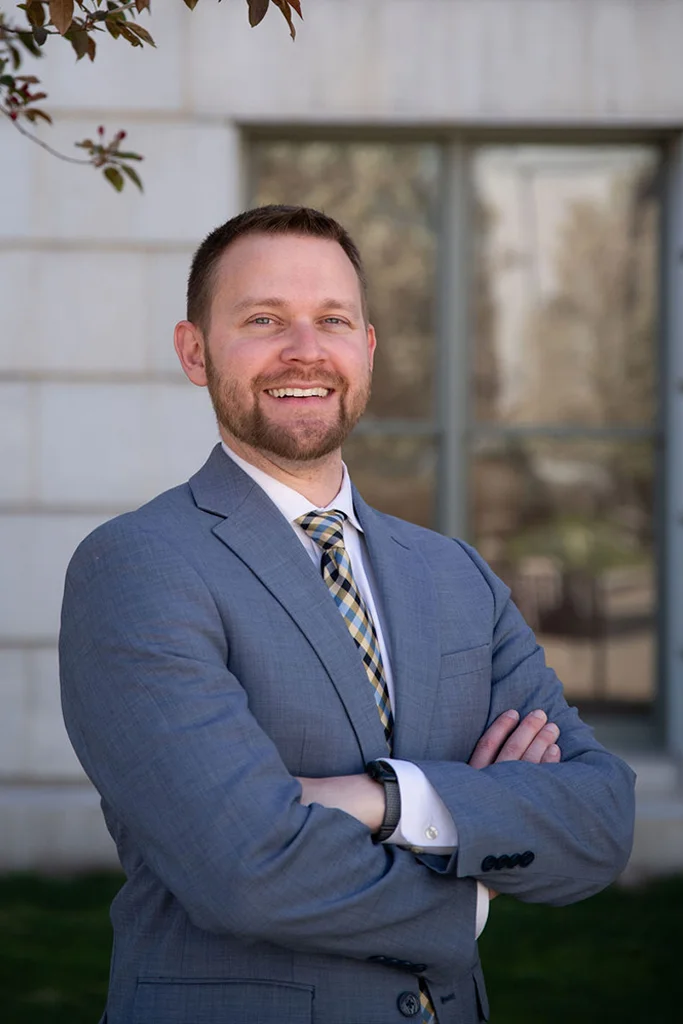
Most criminal defense lawyers try cases. Far fewer have the deep trial experience and the analytical framework to look backward at a completed trial and identify where the system broke down. Reid DeChant built his practice on exactly this combination. As a former public defender who handled an enormous volume of cases in Denver, Broomfield, and Adams County courtrooms, Reid has seen trial errors from both the inside and the outside. That experience means he understands not just what arguments appeal courts accept, but why the errors that matter most tend to happen when trial judges rule on suppression motions, evidentiary objections, and jury instructions under time pressure.
Reid’s training at the Trial Lawyers College, founded by Gerry Spence and recognized as one of the most rigorous trial advocacy programs in the country, sharpened his ability to see a case the way a thoughtful reviewer would. That analytical discipline translates directly to appellate work, where the written brief must reconstruct what happened at trial and explain clearly why the law required a different result. Reid has earned recognition from national legal organizations and maintains active membership in both the National Association of Criminal Defense Lawyers and the Colorado Criminal Defense Bar, keeping him connected to the evolving state of DUI defense law and appellate strategy across the country.
The firm’s case results reflect genuine courtroom success, including DUI charges dismissed in Arapahoe, Douglas, Jefferson, and Broomfield counties, not-guilty verdicts in multiple DUI trials, and a consistent record of success in DMV Express Consent hearings that parallel the criminal case. That track record comes from understanding where the law sets limits on law enforcement conduct and how to hold police and prosecutors accountable to those limits, whether at trial or on appeal.
Grounds That Support a DUI Appeal in Colorado
- Unlawful traffic stop: Colorado law requires that law enforcement have reasonable articulable suspicion before stopping a vehicle. If the stop lacked legal justification and the trial court denied a suppression motion it should have granted, the evidence gathered during that stop may be challengeable on appeal under the Fourth Amendment and Colorado constitutional protections.
- Improper admission of chemical test results: Breathalyzer and blood test results are frequently the centerpiece of DUI prosecutions. If the testing equipment was not properly maintained, if chain of custody was compromised, or if the test was not administered within the legally required timeframe, admission of those results may constitute reversible error when objections were overruled below.
- Miranda and Express Consent advisement failures: Colorado’s Express Consent law requires specific advisements when a driver is asked to submit to chemical testing. DeChant Law has successfully challenged DMV license revocation actions where advisements were given improperly or where Miranda rights were violated before Express Consent was invoked. These same failures can form the basis of an appeal in the criminal case.
- Flawed jury instructions: When the trial court gives the jury incorrect legal instructions about what the prosecution must establish, or fails to give instructions the defense requested, the resulting verdict may rest on a misunderstanding of the law. Jury instruction errors are among the more frequently recognized grounds for reversal in Colorado criminal appeals.
- Ineffective assistance of trial counsel: When the lawyer who handled the original case made serious errors that no reasonably competent attorney would have made, and those errors affected the outcome, the conviction can be challenged through a postconviction motion. These claims are evaluated under the standard established in Strickland v. Washington and require careful documentation of the specific failures and their impact.
- Prosecutorial misconduct: Statements during closing argument that misrepresent the evidence or inflame the jury, improper vouching for witnesses, or withholding of favorable evidence can each provide appellate grounds when those issues were preserved at trial or when the misconduct was sufficiently serious to justify plain error review.
- Sentencing errors: Even when a conviction is legally sound, the sentence imposed may not be. Errors in calculating prior offense points, misapplication of mandatory minimums, or failure to consider appropriate mitigating factors can all support an appeal focused solely on the sentence rather than the underlying conviction.
The Timeline and Process of a Colorado DUI Appeal
The window to file a notice of appeal in Colorado is narrow, and missing it closes the door entirely for a standard direct appeal. After a conviction, the notice of appeal must be filed within a specific deadline from the date of sentencing. That deadline is not forgiving, and the moment you begin questioning a verdict, consulting with a DUI appeals attorney in Denver should happen without delay. The record needs to be ordered, transcripts need to be obtained, and an initial review of the case needs to occur before the substantive briefing begins.
Once the record is assembled, the appellate process involves written briefing to the Colorado Court of Appeals. The defense files an opening brief laying out every error the trial court committed and explaining why those errors require reversal or remand. The prosecution then files a response brief, and the defense has the opportunity to file a reply. Oral argument before a three-judge panel is sometimes granted, though not guaranteed in every case. The Court of Appeals will issue a written opinion, and in significant cases, either party may seek review before the Colorado Supreme Court.
This process typically takes well over a year from notice of appeal to final decision. During that time, the conviction remains in place unless a stay is granted, which requires a separate showing. For clients facing license consequences through both the criminal case and a parallel DMV proceeding at the Colorado Department of Revenue, those two tracks must be managed simultaneously. The Lindsey-Flanigan Courthouse in Denver handles the criminal side of Denver County DUI cases, while the DMV Express Consent hearings involve the Division of Motor Vehicles administrative process, which has its own deadlines and its own body of law. Understanding how those two tracks interact is essential to protecting the client’s interests on both fronts.
Clients who were convicted after a plea of guilty rather than a trial are not necessarily without options. Colorado’s postconviction rule allows challenges based on constitutional violations, newly discovered evidence, and in some circumstances, claims that the plea was not knowingly and voluntarily entered. A Denver DUI defense attorney who understands both the trial record and the postconviction process can assess whether this avenue is available and what it would realistically require.
Questions About DUI Appeals in Colorado
Can I appeal a DUI conviction if I accepted a plea deal?
In most cases, a guilty plea waives the right to a direct appeal on trial errors because there was no trial. However, Colorado’s postconviction remedies allow challenges based on constitutional grounds, ineffective assistance of counsel in connection with the plea itself, or situations where the plea was not entered knowingly. Whether these avenues are available depends heavily on what happened during the plea process and what the plea agreement said about waiving rights.
What is the difference between a direct appeal and a postconviction motion?
A direct appeal is filed after sentencing and challenges legal errors that occurred during the trial or pretrial proceedings. A postconviction motion, filed under Colorado’s Rules of Criminal Procedure, challenges the conviction based on constitutional violations, ineffective assistance of counsel, or other grounds that may not have been apparent from the record at the time of appeal. Some clients pursue both, in sequence, if different issues are presented by each avenue.
Does filing an appeal automatically delay my DUI sentence?
No. Filing a notice of appeal does not automatically stay the sentence. A separate motion for a stay of execution of sentence must be filed and granted by the trial court or the Court of Appeals. Whether a stay is granted depends on factors including the apparent strength of the appellate issues and the nature of the sentence. Clients subject to jail time or probation conditions should address the stay question immediately after deciding to appeal.
What happens to my driver’s license while a DUI appeal is pending?
The criminal appeal and the DMV license revocation are separate proceedings governed by separate rules. A successful criminal appeal does not automatically restore driving privileges lost through the Express Consent administrative process, and vice versa. If you lost your license through a DMV hearing, the timeline for reinstatement runs on its own track regardless of what the Colorado Court of Appeals does with the criminal conviction.
How long does a DUI appeal take in Colorado?
Most direct appeals to the Colorado Court of Appeals take between one and two years from the filing of the notice of appeal through the issuance of the opinion. Cases involving complex records, multiple issues, or requests for oral argument may take longer. Cases that proceed to the Colorado Supreme Court on petition for certiorari extend the timeline further.
Can new evidence be introduced on appeal?
Generally, no. Appellate courts review the record that was created below. They do not receive new testimony or new exhibits. If genuinely new evidence has come to light after the conviction, a postconviction motion in the trial court is typically the appropriate vehicle, not a direct appeal. The distinction matters because the legal standards and procedures differ significantly between these two avenues.
What if the police never read me my Miranda rights before the DUI arrest?
Whether a Miranda violation provides grounds for appeal depends on what statements were obtained, whether those statements were used against you at trial, and whether the issue was raised and preserved below. Miranda applies to custodial interrogation, not to field sobriety tests or observations officers make during a stop. If incriminating statements were admitted at trial over a Miranda objection that the trial court improperly denied, that ruling is reviewable on appeal.
My blood test showed I was over the legal limit. Can I still appeal?
Absolutely. The question on appeal is not whether the evidence showed impairment but whether the evidence was obtained, handled, and admitted lawfully. If the blood draw was conducted outside proper procedures, if the sample was not properly preserved, if the testing laboratory failed to follow required protocols, or if the chain of custody was broken, there may be grounds to challenge the admission of those results regardless of what the number said.
Does a DUI appeal affect a professional license in Colorado?
The conviction itself, not the appeal, typically triggers professional licensing consequences. Filing an appeal may be relevant to how a licensing board exercises its discretion during its review process, particularly if the appeal raises substantial legal questions about the conviction’s validity. Professionals in fields such as nursing, medicine, law, teaching, and commercial driving should consult with both a DUI appeals attorney and a professional licensing attorney to understand how these proceedings interact.
What does it cost to pursue a DUI appeal in Colorado?
Appellate representation is typically handled on a flat fee or phased fee arrangement rather than hourly billing, though the structure varies by case. The cost reflects the significant time required to review a complete trial record, research applicable case law, and draft appellate briefs, which often run many pages and require citation to specific portions of the transcript. Discussing the fee structure and the realistic assessment of the appeal’s prospects at the outset of representation is an important part of making an informed decision.
Denver DUI Appeal Representation Across the Front Range
DeChant Law represents clients pursuing DUI appeals from cases originating throughout the Denver metropolitan area and across the Front Range. This includes Denver County cases tried at the Lindsey-Flanigan Courthouse in Denver, as well as appeals arising from convictions in Jefferson County, Arapahoe County, Douglas County, Adams County, and Broomfield County. Clients from the neighborhoods of Capitol Hill, Cherry Creek, Highlands, Baker, Wash Park, LoDo, RiNo, and Congress Park have sought this representation, as have clients from the surrounding communities of Aurora, Lakewood, Arvada, Westminster, Thornton, Northglenn, Centennial, Englewood, Littleton, Parker, Castle Rock, Lone Tree, Brighton, Commerce City, and Wheat Ridge. The firm also handles appeals for clients from Golden, Pueblo, and communities along the Interstate 25 and Interstate 70 corridors where DUI enforcement is especially active. Wherever in the Denver region the original case was tried, the appellate process requires the same disciplined review of the record and the same thorough preparation.
Talk to a Denver DUI Appeal Attorney Before the Deadline Passes
The window to pursue a direct appeal is fixed by rule, and it does not pause while you decide. A Denver DUI appeal attorney at DeChant Law can review your case, evaluate the record for reversible error, and give you an honest assessment of whether an appeal is likely to produce a different result. That assessment requires real legal analysis, not a quick answer, and the sooner that review begins, the more options remain available. Call DeChant Law to schedule a consultation about your case.