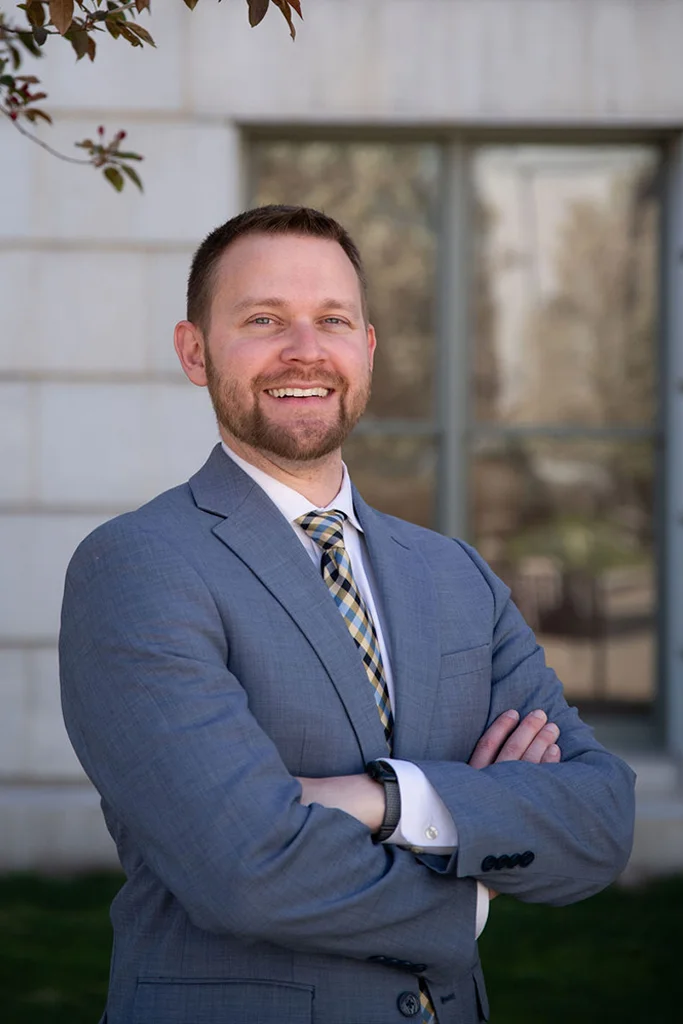
Denver DUI Accident Lawyer
When a DUI arrest follows a collision, the legal situation becomes significantly more complicated than a standard impaired driving charge. Law enforcement, prosecutors, and insurance companies all treat these cases differently, and the consequences that follow, from criminal penalties to civil liability to driver’s license revocation, can compound quickly. A Denver DUI accident lawyer handles the intersection of criminal defense and civil exposure that arises when alcohol or drug impairment is alleged in connection with a crash, and that intersection requires a very specific kind of legal attention.
Denver sees a high volume of traffic on I-25, I-70, Colfax Avenue, and through entertainment districts like LoDo, RiNo, and South Broadway, particularly on weekend nights, during Broncos and Rockies games, and after major concerts at Ball Arena. Law enforcement in Denver and surrounding counties actively patrol these corridors during peak hours, and any collision that occurs in these areas after alcohol has allegedly been consumed will trigger an immediate DUI investigation on top of the accident investigation. That dual track creates dual exposure: you can face criminal prosecution through the Denver County District Attorney’s Office and a parallel DMV action threatening your driver’s license, all while the other party in the accident or their insurance company builds a civil claim against you.
Understanding how those tracks interact, and how the decisions made in the first hours after the crash ripple through all of them, is where experienced legal representation becomes essential. The evidence gathered at the accident scene, the chemical test results, the statements made to responding officers, and the way the crash itself is reconstructed all feed into both the criminal case and the civil exposure. Getting the right attorney involved early changes what happens across every one of those fronts.
What Makes DeChant Law the Right Choice After a DUI-Related Collision
Reid DeChant built his practice specifically around impaired driving defense, and that focus shows in a case results record that includes multiple DUI acquittals at trial, case dismissals in counties across the Denver metro area including Arapahoe, Jefferson, Douglas, Adams, and Broomfield, and a long list of dismissed DMV Express Consent hearings that preserved clients’ ability to drive. These are not soft outcomes. Not guilty verdicts at trial and outright dismissals require a lawyer who understands the science behind chemical testing, the constitutional rules governing traffic stops, and the procedural requirements law enforcement must follow, and who is prepared to challenge any breakdown in that chain.
What distinguishes Reid’s approach in collision cases specifically is the combination of trial readiness and narrative skill. Reid is a graduate of the Trial Lawyers College, the training program founded by Gerry Spence that focuses on psychodrama, storytelling, and authentic jury communication. In a DUI accident case, the facts on paper often look terrible for the defendant. A lawyer who can only argue legal technicalities will lose ground quickly with a judge or jury. A lawyer trained to present a complete, honest, human story, to show who the client actually is and what really happened, changes how decision-makers receive the evidence. Reid’s prior experience as a public defender gave him the courtroom volume and real-world exposure to know how prosecutors build these cases. His private practice work and Trial Lawyers College training gave him the tools to dismantle them. Reid also holds active membership in the National Association of Criminal Defense Lawyers and the Colorado Criminal Defense Bar, keeping his knowledge current as laws, chemical testing technology, and prosecutorial strategies evolve.
Charges and Consequences That Arise in Denver DUI Collision Cases
- Standard DUI following an accident: A blood alcohol content at or above the legal limit at the time of the crash supports a DUI charge, but prosecutors must still prove impairment was actual and that the testing occurred within the required timeframe after driving. Many of the DMV dismissals in DeChant Law’s case results turned on exactly this kind of procedural failure.
- DWAI in collision contexts: Colorado’s driving while ability impaired statute applies at lower impairment levels than DUI and is sometimes charged when full DUI cannot be proven. In accident cases, DWAI charges can still trigger serious license consequences and insurance fallout, even though they carry somewhat lesser criminal penalties.
- DUI-D (drugs) after a crash: With Colorado’s legalized cannabis environment, drug-related impaired driving charges are increasingly common, especially when a crash involves cannabis, prescription medications, or controlled substances. Unlike alcohol, there is no per se impairment threshold for THC in Colorado, making these cases heavily dependent on officer observations and drug recognition expert testimony, both of which can be challenged.
- Vehicular assault: When a collision causes serious bodily injury to another person and impairment is alleged, Colorado prosecutors have the authority to charge vehicular assault, which is a felony. This transforms the case from a misdemeanor DUI into one with potential prison exposure, mandatory parole, and lasting collateral consequences.
- Vehicular homicide: The most serious outcome of a DUI collision is a death. Vehicular homicide while under the influence is a class 3 or class 4 felony in Colorado depending on the circumstances, and prosecution is aggressive. These cases require defense counsel with serious felony trial experience.
- DMV Express Consent actions: Independent of the criminal charge, the Colorado DMV can move to revoke a driver’s license when a chemical test reveals alleged impairment or when a driver refuses testing. DeChant Law has secured dismissals at Express Consent hearings on grounds including improper advisements, Miranda violations, and failure to administer testing within the required two-hour window.
- Hit and run following a DUI crash: Leaving the scene of an accident is a separate criminal offense. When combined with a DUI, it dramatically increases prosecutorial leverage and can affect bail, charging decisions, and ultimately the severity of any plea or sentence. Drivers who panic after a crash involving alcohol need legal counsel who understands both offenses and how they interact.
The Critical Window After a DUI Collision in Denver
The hours and days immediately following a DUI-related crash are where most of the legally significant decisions get made, often before a defendant has spoken to any attorney. Law enforcement will be gathering evidence at the scene: accident reconstruction measurements, witness statements, dashcam and bodycam footage, blood draw documentation, and field sobriety test records. Every piece of that evidence has a shelf life in terms of how it can be preserved, challenged, or suppressed. Waiting too long to contact a defense attorney means losing the opportunity to independently investigate the scene, interview witnesses, and obtain surveillance footage from nearby businesses before it is overwritten.
DUI cases in Denver County are processed at the Lindsey-Flanigan Courthouse at 520 West Colfax Avenue. If the collision occurred in a surrounding county, the case may land in Arapahoe County District Court in Centennial, Jefferson County District Court in Golden, Adams County District Court in Brighton, or Douglas County District Court in Castle Rock, depending on where the crash happened. Knowing which courthouse and which prosecutor’s office is handling the case matters from day one, because local court culture, typical charging decisions, and the tendencies of individual judges all shape how a defense strategy gets built.
On the DMV side, Colorado law requires a driver to request a hearing to contest a license revocation within a very short window after the arrest. Missing that deadline results in an automatic revocation without any opportunity to contest it. This is one of the most common and most damaging mistakes people make after a DUI arrest, and it is entirely avoidable with prompt legal involvement. The hearing itself is an administrative proceeding separate from the criminal court process, and it provides an early opportunity to cross-examine the arresting officer, preview the evidence, and potentially get the revocation dismissed on procedural or substantive grounds, as DeChant Law has done repeatedly.
If another driver or passenger was injured in the crash, their medical providers will begin documenting injuries almost immediately. Insurance companies will begin their investigation just as quickly. Anything said to an insurance adjuster without legal counsel present can be used to increase civil liability. Declining to give a recorded statement to anyone other than law enforcement, and only after consulting with an attorney, is one of the most important practical steps a person can take in the aftermath of a collision where DUI is alleged.
How DUI Accident Cases Actually Get Defended in Colorado Courts
The public perception of a DUI accident case is that the evidence is overwhelming and the outcome is predetermined. That perception is wrong, and the case results logged by DeChant Law across multiple counties and courtrooms reflect how often the actual evidence tells a more complicated story than the initial arrest report suggests.
Chemical test results in DUI cases are not self-proving. Blood draws must be conducted according to strict protocols, stored properly, analyzed by certified labs, and documented in ways that allow defense experts to evaluate the reliability of the result. Breath test equipment must be properly calibrated and maintained. When these requirements are not met, the test result can be challenged or suppressed entirely. Reid DeChant has secured dismissals specifically because chemical testing was administered outside the required two-hour window and because Express Consent advisements were given improperly. These are not obscure technicalities; they are fundamental procedural protections that exist because the consequences of a DUI conviction are serious and the science underlying these tests is imperfect.
Field sobriety tests administered at accident scenes are especially susceptible to challenge. When a person has just been involved in a collision, they may be physically shaken, injured, in shock, or simply disoriented. The standardized field sobriety tests used by Colorado law enforcement, including the Horizontal Gaze Nystagmus, Walk-and-Turn, and One-Leg-Stand tests, were not validated for use on individuals who have just been in crashes. Performance on these tests under those conditions tells the observer very little about actual impairment and a great deal about physical stress and trauma. Cross-examining the officer on these points, and presenting the context of the crash itself as an alternative explanation for test performance, is a central part of how these cases are contested at trial.
In cases involving serious injury or death, accident reconstruction becomes a critical battleground. The state will often retain expert witnesses to opine on speed, braking distance, point of impact, and causation. An experienced Denver DUI accident attorney will review those findings critically, retain independent reconstruction experts when warranted, and challenge any analysis that overstates what the physical evidence actually supports. Questions of causation, specifically whether the driver’s alleged impairment caused the crash or whether other factors were responsible, can make an enormous difference in how charges are resolved.
Questions About Denver DUI Accident Cases
What is the difference between a DUI arrest and a vehicular assault or vehicular homicide charge after a crash?
A standard DUI charge after a collision is generally a misdemeanor unless the defendant has prior convictions. Vehicular assault and vehicular homicide are separate felony charges that prosecutors bring when the crash caused serious bodily injury or death. These charges require proof that the driver was under the influence and that the impairment contributed to causing the crash and the resulting harm. The distinction matters enormously because felony charges carry potential prison sentences, mandatory parole, and lasting impacts on employment, housing, and civil rights.
Can I lose my driver’s license even if the criminal DUI charges are dropped?
Yes. The DMV Express Consent proceeding is completely separate from the criminal case. A dismissal of the criminal charge does not automatically protect your license. The DMV applies its own evidentiary standard and timeline, and if you did not timely request a hearing, the revocation may already be in effect regardless of what happens in court. This is why contesting both proceedings simultaneously, as early as possible, is so important.
What happens if the other driver was also partially at fault for the crash?
Colorado follows a modified comparative fault system in civil cases, meaning that fault can be apportioned among multiple parties. If the other driver contributed to the collision through their own negligence, that shared responsibility can affect the outcome of any civil claim against you. On the criminal side, the other driver’s conduct is also relevant to whether your alleged impairment actually caused the crash, which is a required element for the more serious charges like vehicular assault.
The officer did not read me my Miranda rights after the accident. Does that affect my case?
Miranda rights are required before custodial interrogation. Whether and when custody began in the context of your accident is a factual question that depends on the circumstances. DeChant Law has secured DMV dismissals in cases where Miranda was given improperly in connection with Express Consent advisements. The issue of when custody attached and whether any statements made after that point were properly obtained is something an attorney needs to evaluate using the specific facts of your case.
Will my insurance cover the damages if I am convicted of DUI in connection with an accident?
Auto insurance policies generally provide liability coverage even when the insured driver is at fault for an accident, including accidents involving alcohol. However, a DUI conviction will almost certainly result in substantially higher premiums going forward, and your insurer may classify you as a high-risk driver requiring SR-22 coverage. If your policy limits are insufficient to cover the other party’s damages, you may face personal liability for the remainder. These are parallel concerns to the criminal case that an attorney can help you understand and prepare for.
How long does a DUI accident case typically take to resolve in Denver County courts?
A misdemeanor DUI case in Denver County can take anywhere from a few months to over a year depending on the complexity of the evidence, the court’s docket, and whether the case goes to trial. Cases involving felony charges such as vehicular assault or vehicular homicide typically take longer, sometimes significantly so, because they involve more extensive discovery, potential expert witnesses, and more formal pretrial litigation. The DMV proceeding runs on a faster timeline and needs to be addressed almost immediately after the arrest.
Can a DUI accident conviction affect my professional license in Colorado?
Depending on your profession, yes. Many Colorado professional licensing boards, including those governing healthcare providers, attorneys, educators, and commercial drivers, require licensees to report criminal convictions and have the authority to discipline or revoke licenses based on those convictions. A felony conviction for vehicular assault or vehicular homicide would trigger mandatory reporting in virtually every regulated profession. Even a misdemeanor DUI conviction can create licensing complications in certain fields. These collateral consequences are part of the full picture that should be evaluated at the outset of any case.
What if I refused the chemical test at the accident scene?
Colorado’s Express Consent law requires drivers to submit to chemical testing when requested by law enforcement following a DUI investigation. Refusal triggers its own license revocation proceeding at the DMV and can be used as evidence of consciousness of guilt in the criminal case. However, refusal also means there is no chemical test result for prosecutors to rely on, which can be strategically significant. DeChant Law has handled refusal cases and Express Consent hearings involving refusals, and the appropriate defense strategy depends on the specific facts of the stop and investigation.
What if I was not given the Express Consent advisement properly before the blood draw?
The Express Consent advisement is a required warning that law enforcement must give before requesting a chemical test. If the advisement was not given at all, was given in a legally deficient form, or was delivered after Miranda warnings in circumstances that make the timing problematic, the results of the chemical test and the DMV revocation proceeding may be challengeable. DeChant Law’s case results include multiple Express Consent dismissals based on improper advisements, which reflects how seriously these procedural requirements are taken when they are challenged properly.
Is it realistic to go to trial in a DUI accident case, or are most cases resolved through a plea?
Many DUI cases do resolve short of trial, but that outcome depends heavily on what the evidence actually shows and what the prosecution is willing to offer. A defense attorney who is genuinely trial-ready, and known to be so by prosecutors, occupies a fundamentally different negotiating position than one who settles cases reflexively. Reid DeChant has taken DUI cases through trial multiple times and secured not guilty verdicts, which is why prosecutors handling cases against DeChant Law clients know that every option on the table is real. Whether trial makes sense in your specific case depends on the evidence, the charges, your prior record, and a careful analysis of the risks and benefits across all possible outcomes.
Denver DUI Accident Defense Throughout the Metro Area and Surrounding Counties
DeChant Law represents clients facing DUI-related collision charges throughout the Denver metropolitan area and surrounding jurisdictions. Within the city itself, crashes and arrests handled by this office span neighborhoods including Capitol Hill, Congress Park, Baker, Washington Park, Five Points, Globeville, Elyria-Swansea, Westwood, Montbello, Stapleton, Park Hill, and the downtown core along Colfax and along the I-25 and I-70 corridors. DUI accident cases from the Platte River waterway corridor, the Santa Fe Drive entertainment areas, and the Evans Avenue strip are all within regular service territory.
Beyond Denver proper, DeChant Law handles cases throughout Arapahoe County, including Englewood, Greenwood Village, Centennial, Aurora, Cherry Hills Village, and Littleton. Jefferson County cases from Lakewood, Arvada, Wheat Ridge, Golden, Evergreen, and Morrison are regularly within the firm’s representation area. Adams County work includes Thornton, Westminster, Northglenn, Commerce City, Brighton, and Federal Heights. Douglas County clients from Highlands Ranch, Castle Rock, Parker, Lone Tree, and Castle Pines are also served. Broomfield County, Gilpin County, and Clear Creek County cases arise with regularity given the mountain corridor and I-70 travel patterns that generate DUI stops and accidents on weekend mountain traffic. If your DUI accident occurred anywhere within this regional footprint, the courthouse handling your case is one Reid DeChant has experience in.
Contact a Denver DUI Accident Attorney at DeChant Law
The decisions made in the days immediately following a DUI-related collision shape every aspect of what comes next, from whether your license survives the DMV process to how the criminal case develops to what civil liability looks like on the other side. A Denver DUI accident attorney who understands all three of those tracks simultaneously is what this situation requires, not a generalist who handles these cases occasionally.
Reid DeChant has built a defense practice specifically around impaired driving cases, with a trial record that includes not guilty verdicts and dismissals across the Denver metro area. His training at the Trial Lawyers College, his background as a former public defender, and his membership in the National Association of Criminal Defense Lawyers and the Colorado Criminal Defense Bar reflect a commitment to the craft of criminal defense that goes well beyond checking boxes. If you or someone you know is facing DUI accident charges in Denver or the surrounding area, call DeChant Law and speak directly with Reid about your case.