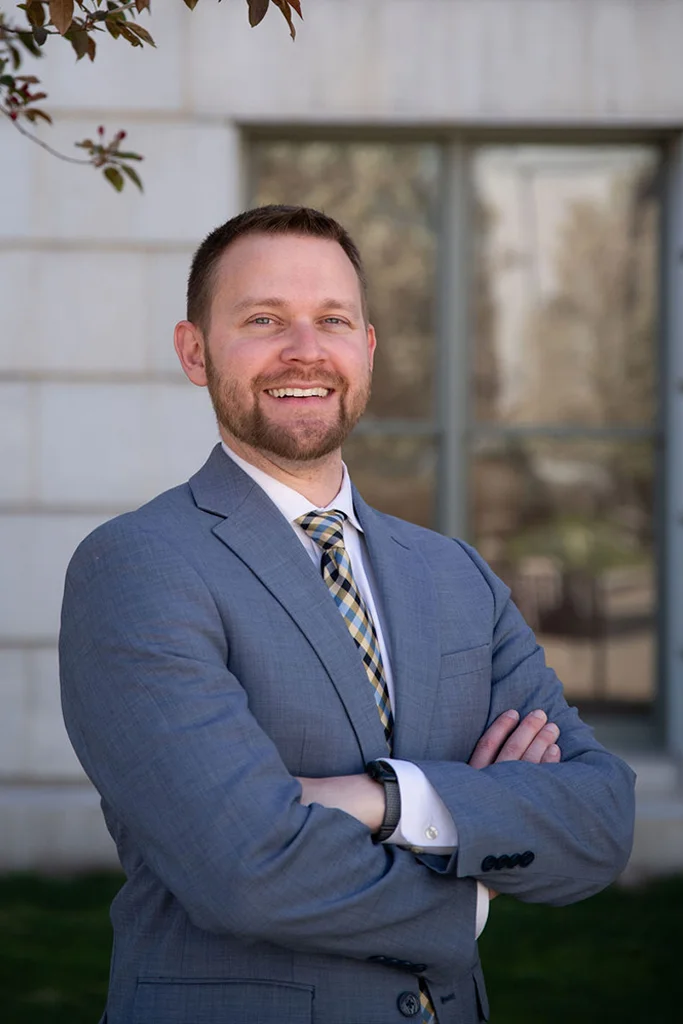
Conifer DUI Defense Lawyer
The stretch of US-285 that winds through the foothills communities of Jefferson County carries a different kind of enforcement pressure than Denver’s urban corridors. Colorado State Patrol and Jefferson County Sheriff’s deputies are a consistent presence on this mountain highway, particularly on weekend nights, holiday weekends, and during ski season when traffic volume spikes. For residents of Conifer, Evergreen, and the surrounding mountain communities, a traffic stop on 285 can turn into a DUI arrest faster than most people anticipate, especially when field sobriety testing is conducted on uneven roadway shoulders at elevation, in wind, and in temperatures that affect physical performance regardless of alcohol consumption. If you are searching for a Conifer DUI defense lawyer, you are likely trying to figure out what comes next, and the answer to that question depends enormously on who is working your case.
Jefferson County handles DUI prosecutions out of the Jefferson County Combined Courts in Golden. The prosecutors there handle a high volume of DUI filings, and they are experienced at building cases around chemical test results, officer observations, and field sobriety test performance. What they count on is that most defendants either plead guilty without exploring the weaknesses in the evidence or hire an attorney who has not spent meaningful time inside a Jefferson County courtroom. Reid DeChant at DeChant Law takes a different approach. Reid’s background as a former public defender, combined with his training at the Trial Lawyers College, means he understands how DUI cases are built by law enforcement and how those same cases can be taken apart through rigorous investigation, motion practice, and, when necessary, trial.
A DUI conviction in Colorado carries consequences that extend well beyond the courtroom. License revocation proceedings at the Colorado DMV run on a separate track from the criminal case, and you have a narrow window after arrest to request a hearing. Beyond the license, a conviction can mean jail time, probation, ignition interlock requirements, community service, mandatory alcohol education classes, and a permanent mark on your criminal record. For Conifer residents who commute down the mountain to work in Denver, losing a license is not a minor inconvenience. It is a logistical crisis. Understanding that reality is part of what shapes how DeChant Law defends these cases.
What Happens After a DUI Arrest on US-285 or in the Jefferson County Foothills
The moments after a DUI arrest in the Conifer area involve two parallel processes that begin immediately and require prompt attention. The criminal case and the DMV Express Consent proceeding are separate proceedings with separate deadlines, and failing to act on either one early puts you at a disadvantage before the legal process has even properly begun.
On the DMV side, Colorado’s Express Consent law requires drivers to submit to chemical testing when lawfully requested by law enforcement. When an officer submits a revocation request, the clock begins on your right to challenge that revocation. You have a limited number of days from the date of the arrest to request a DMV hearing, or the revocation becomes automatic. This is not a theoretical deadline. It is a hard cutoff, and missing it means losing your opportunity to argue against the license action, regardless of what happens in the criminal case. DeChant Law has a documented track record in Express Consent DMV proceedings, with multiple dismissed license revocation actions on behalf of clients, based on grounds including improper advisement, procedural defects, and failure to administer chemical testing within the required timeframe.
On the criminal side, your first court appearance in Jefferson County will be an arraignment at the Jefferson County Combined Courts, located at 100 Jefferson County Parkway in Golden. This is where charges are formally read and an initial plea is entered. In most DUI cases, the defense enters a not-guilty plea at arraignment to preserve time for investigation and negotiation. Hiring an attorney before this appearance, or as early as possible after arrest, allows your lawyer to begin requesting discovery from the arresting agency, reviewing dashcam and bodycam footage, analyzing the chain of custody for blood or breath test evidence, and identifying any procedural issues with the stop, arrest, or testing process.
One mistake people commonly make after a DUI arrest is assuming the chemical test result is the end of the analysis. It is the beginning. Breathalyzer instruments require calibration and proper operation. Blood draws must follow specific protocols to avoid contamination or fermentation that can artificially inflate results. Field sobriety tests administered on roadway shoulders in the mountains, in cold weather, on graded pavement, carry inherent reliability problems that a trained defense attorney can bring to a judge or jury’s attention. The evidence that looks overwhelming at first glance often looks very different after a thorough defense investigation.
Why DeChant Law Handles Conifer-Area DUI Cases Differently
Reid DeChant’s time as a public defender in Denver, Broomfield, and Adams County courts built a foundation that most private defense attorneys simply do not have. Handling a high volume of cases across multiple jurisdictions means Reid has spent more time in front of judges, cross-examining officers, and arguing motions than many private practitioners accumulate over the course of an entire career. That courtroom fluency matters when a Jefferson County judge is ruling on whether to suppress a breath test or when a jury is weighing the credibility of a law enforcement officer who claims your client showed every clue on the horizontal gaze nystagmus test.
Reid is a graduate of the Trial Lawyers College, an invitation-only program founded by legendary attorney Gerry Spence. The curriculum is built around authentic advocacy, honest storytelling, and the kind of human connection with judges and juries that actually moves cases. This training directly shapes how Reid presents DUI defenses, whether in a suppression hearing, a DMV proceeding, or a full jury trial. He has taken DUI cases to trial and obtained not-guilty verdicts at trial, including a DUI and Careless Driving not-guilty verdict and multiple not-guilty verdicts in Jefferson County on DUI charges.
Reid is a member of the National Association of Criminal Defense Lawyers and the Colorado Criminal Defense Bar. These professional affiliations connect him to the current thinking in DUI defense across the country, including developments in forensic toxicology, breathalyzer reliability challenges, and constitutional suppression arguments. For someone facing DUI charges in the Conifer area or anywhere in Jefferson County, that combination of trial experience, specialized training, and professional engagement is what sets DeChant Law apart from attorneys who handle DUI cases as a secondary practice area.
DUI Charges and Related Offenses This Firm Defends in the Conifer Area
- Standard DUI (BAC 0.08 or above): Colorado’s DUI statute applies when a driver’s blood alcohol content meets or exceeds the legal limit, and these cases are prosecuted aggressively in Jefferson County regardless of whether the stop happened on US-285, Turkey Creek Road, or any other mountain corridor.
- DWAI (Driving While Ability Impaired): Colorado prosecutes DWAI at a BAC between 0.05 and 0.08, a threshold lower than many states. This charge requires proof that the driver’s ability was impaired to even the slightest degree, which creates its own set of evidentiary issues worth challenging.
- DUI-Drugs: With Colorado’s cannabis laws, law enforcement increasingly pursues DUI charges based on alleged marijuana impairment. Unlike alcohol, there is no reliable per se impairment threshold for THC in Colorado, making these cases highly dependent on officer observations and subject to serious challenge on scientific grounds.
- Felony DUI: A fourth or subsequent DUI conviction in Colorado is charged as a class 4 felony, carrying substantially more serious consequences including state prison time. Prior convictions from other states can count toward this threshold, making early and thorough case evaluation critical.
- DUI with Accident or Injury: When a DUI arrest follows a collision, the stakes escalate considerably. Additional charges, civil liability, and heightened prosecutorial attention all come into play, and the factual reconstruction of the accident becomes a central part of the defense.
- Underage DUI: Colorado’s zero-tolerance law for drivers under 21 creates separate liability even at extremely low BAC levels. The consequences for a young driver can affect professional licensing, educational opportunities, and military service options.
- Express Consent Violations and License Revocation: Refusing a chemical test or failing to properly receive the advisement triggers its own DMV proceeding separate from the criminal case, with distinct legal arguments and a separate hearing process.
Questions Conifer Residents Ask About DUI Charges in Jefferson County
How long do I have to request a DMV hearing after a DUI arrest in Colorado?
You have seven days from the date of the arrest to request a hearing with the Colorado DMV to contest the Express Consent revocation. Missing this window means the revocation proceeds automatically. Contacting a DUI defense attorney as quickly as possible after your arrest, ideally within the first 24 to 48 hours, is the only way to make sure this deadline does not slip by.
Does my case get heard in Jefferson County even if my arrest happened in Conifer?
Yes. The Jefferson County Combined Courts in Golden handle criminal matters for the unincorporated communities of Jefferson County, including Conifer, Evergreen, Kittredge, Bailey, and the surrounding foothills areas. Your arraignment, any hearings, and any trial will be set in Golden unless the case involves a municipal court with separate jurisdiction.
Can I fight a DUI charge if I failed the breathalyzer test?
A breathalyzer result above the legal limit is not automatically the final word. Breath testing instruments must be properly maintained, calibrated, and operated according to specific protocols. The officer administering the test must be certified and follow required procedures. Defects in any part of this chain can provide grounds for suppression or challenge. Blood results are subject to similar scrutiny around collection, storage, and laboratory handling procedures.
What happens to my driver’s license if this is my first DUI?
A first DUI conviction in Colorado typically results in a license revocation period, after which reinstatement requires completion of a reinstatement process that may include installation of an ignition interlock device, payment of fees, and proof of SR-22 insurance. The DMV proceeding runs independently of the criminal case, meaning you can face license consequences even if the criminal charge is reduced or modified.
Will a DUI conviction affect my ability to work in a field that requires a professional license?
Yes, depending on the profession. Licensed contractors, healthcare workers, attorneys, teachers, commercial drivers holding CDLs, and employees subject to federal transportation regulations can all face licensing consequences from a DUI conviction separate from the criminal penalties. The CDL implications are particularly significant: federal law imposes strict consequences on commercial drivers even for a DUI arrest in a personal vehicle.
Are DUI field sobriety tests required by law in Colorado?
Field sobriety tests, including the walk-and-turn, one-leg stand, and horizontal gaze nystagmus, are voluntary in Colorado. You are not legally required to perform them, and declining does not trigger the same consequences as refusing a chemical test after arrest. The practical challenge is that most people do not know this at the roadside, and officers rarely volunteer the information. If you performed field sobriety tests and struggled, that is not the end of your defense, especially if testing conditions on the shoulder of US-285 at night were unfavorable.
Can elevation or altitude affect field sobriety test performance in the mountains?
This is a legitimate and underappreciated issue in mountain community DUI cases. Elevation affects oxygen saturation, balance, and physical performance in ways that can mimic signs of impairment even in completely sober individuals. Someone who lives at sea level and visits the Conifer area, or even a resident whose body is managing elevated altitude conditions, may perform differently on divided-attention tests than the norms used by law enforcement to evaluate sobriety. A defense attorney who understands mountain-specific physiological considerations can bring this argument into a suppression hearing or trial.
What is the difference between a DUI and a DWAI in terms of how the case is prosecuted?
Both DUI and DWAI are treated seriously by Jefferson County prosecutors, but they carry different statutory penalties and involve different evidentiary thresholds. DUI requires proof of impairment that substantially impaired the driver’s ability to operate the vehicle, or a BAC at or above 0.08. DWAI requires only that the driver was impaired to the slightest degree, with a BAC between 0.05 and 0.08. Because the evidentiary burden is different, the defense strategy differs as well, particularly when challenging the sufficiency of officer observations versus chemical test results.
How does a DUI conviction affect insurance rates for someone who commutes from Conifer to Denver?
A DUI conviction in Colorado typically results in dramatic increases to auto insurance premiums, often for multiple years following the conviction. Colorado also requires SR-22 certification for reinstatement following certain DUI-related license actions, which itself signals high-risk status to insurers. For Conifer residents who depend on a vehicle to commute on US-285 to Denver for work, the financial impact of a conviction on insurance costs compounds the other consequences significantly.
Is it worth contesting a DUI charge if the evidence seems strong?
The answer is almost always yes, because the question is not only whether the evidence is strong but whether the evidence was gathered properly, whether the stop was constitutionally valid, whether testing protocols were followed, and whether the prosecution can actually prove every element of the charge beyond a reasonable doubt. Cases that appear straightforward at the outset routinely reveal significant vulnerabilities after a thorough defense investigation. The decision to plead guilty without exploring those issues first is one that cannot be undone.
DUI Defense Representation Across Jefferson County and the Mountain Corridor
DeChant Law represents clients facing DUI and DWAI charges throughout the communities served by the Jefferson County Combined Courts. From Conifer itself through the neighboring communities of Evergreen, Kittredge, Bergen Park, and Genesee, the firm handles cases arising along the US-285 and Interstate 70 mountain corridors where law enforcement presence is concentrated. The firm also serves clients from Pine, Bailey, Morrison, Lakewood, Wheat Ridge, Arvada, Littleton, Ken Caryl, Columbine Valley, Bow Mar, and the broader Jefferson County communities stretching from the foothills down into the Denver metro’s western suburbs. Clients from Golden, Westminster, Edgewater, and Applewood who have matters before the Jefferson County courts are also represented, as are clients from Douglas County communities like Roxborough Park and Chatfield who may find themselves pulled into Jefferson County proceedings based on where a traffic stop occurred. Whether your arrest happened on a mountain highway, a rural county road, or an interstate interchange, the firm’s approach to DUI defense does not change based on geography.
Conifer DUI Attorney Ready to Review Your Case
The outcome of a DUI case in Jefferson County is shaped by decisions made very early in the process, including the decision about who handles your defense. Reid DeChant at DeChant Law has taken DUI cases to trial, won not-guilty verdicts, successfully challenged license revocations at DMV hearings, and secured dismissals for clients who believed their situation was unwinnable. As a Conifer DUI attorney serving clients throughout Jefferson County and the mountain communities along the 285 corridor, Reid brings genuine courtroom experience, specialized advocacy training, and a commitment to keeping clients informed and involved throughout every stage of their case. Reach out to DeChant Law to schedule a consultation and get a clear-eyed assessment of where your case stands and what options are actually available to you.