Colorado Springs Felony Lawyer
A felony charge in Colorado Springs changes everything. It changes how you move through the legal system, what rights you risk losing, and what the next several years of your life could look like. The El Paso County District Attorney’s Office prosecutes felony cases aggressively, and the resources at their disposal, including experienced prosecutors, law enforcement partnerships, and forensic investigators, are formidable. A Colorado Springs felony lawyer who has actually tried these cases, who knows the difference between a case that can be defended at trial and one that requires skilled negotiation, is not a luxury. It is the most consequential decision you will make.
Colorado’s felony classification system runs from Class 6 at the lower end through Class 1 felonies, which carry the most severe consequences the state can impose. Drug felonies carry their own classification scheme. Extraordinary risk felonies carry enhanced penalties. The sentencing ranges across these categories vary enormously, and the mandatory minimums that apply to certain charge types mean a conviction at trial can result in a sentence that has no flexibility whatsoever. Understanding where your charge falls in that structure, and what the realistic range of outcomes actually looks like given the specific facts, requires someone who has navigated Colorado’s criminal courts repeatedly and knows what these cases look like from every angle.
What often gets lost in the early hours after an arrest is that the case is already being built against you. Investigators are writing reports, prosecutors are reviewing evidence, and decisions about what charges to file and how aggressively to pursue them are being made before you have spoken to anyone on your side. The earlier you engage a Colorado Springs felony attorney, the more opportunity there is to influence those early decisions, identify weaknesses in the evidence, and position the defense before the government’s narrative becomes the only one anyone hears.
Why DeChant Law Brings Unusual Depth to Felony Defense in Colorado
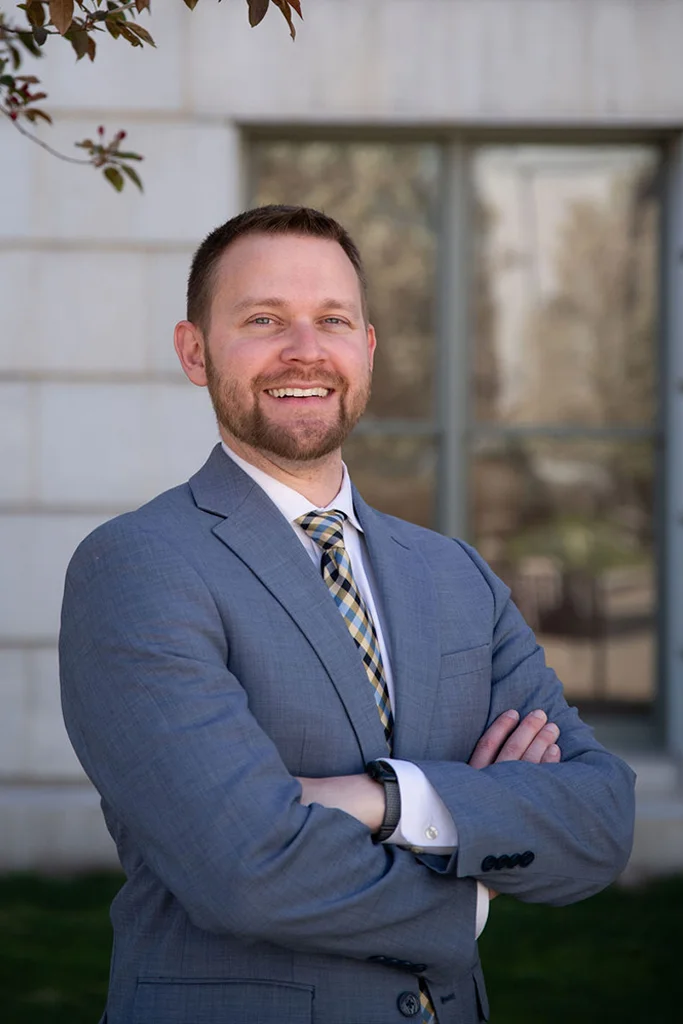
Reid DeChant built his criminal defense practice on a foundation that most private defense attorneys simply cannot replicate. Before entering private practice, Reid worked as a public defender, handling an enormous volume of cases in Denver, Broomfield, and Adams County courtrooms across the full spectrum of criminal charges, from traffic offenses and DUI through assault, sexual assault, theft, and homicide. That volume of courtroom exposure matters in felony defense specifically. Trial skills do not develop from reading case law. They develop from standing in front of a jury, cross-examining a detective whose testimony you are about to dismantle, and making split-second decisions about when to push and when to let the evidence speak for itself. Reid has done all of that, repeatedly, under real pressure.
Reid is a graduate of the Trial Lawyers College, the program founded by Gerry Spence that focuses on authentic storytelling, genuine human connection in the courtroom, and the kind of advocacy that reaches a jury not just intellectually but as a complete narrative. In felony cases, where the stakes are highest and where the difference between Not Guilty and a decade in prison can hinge on how a jury receives a witness’s credibility, that training carries real weight. Reid also maintains active membership in the National Association of Criminal Defense Lawyers and the Colorado Criminal Defense Bar, organizations that keep defense attorneys connected to the most current strategies and legal developments in criminal defense practice across the country.
DeChant Law’s case results include Not Guilty verdicts at trial for DUI third offense charges, two counts of Assault with a Deadly Weapon, felony menacing in a domestic violence context dismissed by the court on a motion, strangulation in a domestic violence case dismissed by the DA at trial, and a Not Guilty verdict in a Failure to Register as a Sex Offender prosecution. These are not minor charges. They are the kinds of cases where the conventional wisdom says to take a plea. Reid’s approach, rooted in genuine preparation and willingness to take a case to trial when that is the right answer, produces outcomes that reflect serious defense work.
Felony Charges Commonly Filed in El Paso County Courts
- Drug Felonies: Possession, distribution, or manufacture of controlled substances including methamphetamine, fentanyl, cocaine, and heroin can result in drug felony charges ranging from DF4 through DF1 under Colorado’s classification system, with sentencing outcomes heavily influenced by quantity, prior record, and whether a weapon was involved in the offense.
- Felony Assault: Second and first degree assault charges arise from incidents involving serious bodily injury, use of a deadly weapon, or assault against protected classes such as police officers, firefighters, or emergency personnel, and are treated as extraordinary risk crimes under Colorado law, meaning enhanced sentencing ranges apply.
- Domestic Violence Felonies: Domestic violence is a sentence enhancer in Colorado rather than a standalone charge, but when combined with felony assault, strangulation, or felony menacing, it triggers mandatory arrest policies, no-contact orders, and prosecution approaches that make these cases significantly more complex than standard assault charges.
- Weapons Charges: Felony menacing, illegal possession of a weapon by a previous offender, and charges arising from the use of a firearm during another offense each carry distinct charging and sentencing considerations under Colorado law, and many arise from traffic stops, domestic calls, or other encounters that a defense attorney can challenge at their foundation.
- Theft and Property Felonies: Theft becomes a felony in Colorado once the value of the property at issue crosses a statutory threshold, and charges can aggregate across multiple incidents. Burglary, robbery, and motor vehicle theft each carry their own charging frameworks and, in the case of aggravated robbery, potential habitual offender sentence exposure.
- Sex Offense Felonies: Sexual assault charges, charges involving minors, and registration violations are among the most aggressively prosecuted felonies in El Paso County. These cases often involve complex forensic evidence, contested credibility determinations, and collateral consequences including sex offender registration requirements that extend well beyond any prison sentence.
- Felony DUI: In Colorado, a fourth DUI conviction can be charged as a class 4 felony. DUI cases involving serious bodily injury or death to another person also generate felony charges, and these cases involve both criminal prosecution and DMV administrative proceedings that must be defended separately and on parallel tracks.
What the Felony Process Actually Looks Like in El Paso County
Felony cases in Colorado Springs move through the Fourth Judicial District, with proceedings taking place at the El Paso County Combined Courts located at 270 South Tejon Street in downtown Colorado Springs. Understanding what happens at each stage, and what your attorney should be doing at each stage, helps you make informed decisions rather than reactive ones.
After arrest, the first court appearance is an advisement hearing where formal charges are read, bond is set, and conditions of release are imposed. Bond hearings in felony cases in El Paso County can be contentious, particularly in violent crime cases, and the argument made at that first hearing can mean the difference between remaining in custody for months while your case is pending or returning home and participating actively in your own defense. An attorney who appears at your advisement and argues effectively for reasonable bond conditions is providing value that extends throughout the case.
The preliminary hearing, if requested and held, is often the first meaningful look at the prosecution’s evidence. In felony cases, witnesses are subpoenaed, detectives testify, and the defense has a real opportunity to cross-examine the government’s case in a way that reveals weaknesses, locks witnesses into testimony, and creates a factual record that shapes everything that follows. Many attorneys waive preliminary hearings without much thought. A defense attorney who treats the preliminary hearing as an early opportunity to go on offense is approaching the case differently from the outset.
Before engaging with any plea discussions or making decisions about trial, document preservation is critical. This means requesting body camera footage from Colorado Springs Police Department officers before retention policies result in that footage being overwritten. It means obtaining 911 recordings, dispatch logs, witness statements from the police reports, and any forensic or laboratory reports the prosecution intends to use. It also means reviewing the circumstances of the stop, search, or arrest for potential Fourth and Fifth Amendment issues that could result in suppression of evidence the government needs to prove its case. If you have been charged and have not yet spoken to a felony defense attorney in Colorado Springs, contact one before any more time passes. The evidence that can help you is perishable.
How Felony Convictions Reach Beyond Prison Sentences
Sentences in felony cases are often the headline, but the collateral consequences of a felony conviction can outlast any period of incarceration by decades. Colorado law strips felony offenders of certain civil rights, including the right to possess firearms, and federal law creates additional restrictions that apply regardless of state-level restoration. Professional licenses in nursing, teaching, law, real estate, and a range of other regulated fields face automatic review or mandatory revocation following a felony conviction, and licensing boards frequently treat convictions more harshly than the underlying criminal court did.
Employment consequences are pervasive. Background checks are standard across industries, and a felony conviction on record creates barriers that most people do not fully anticipate when they are deciding whether to accept a plea offer. Housing applications, student loan eligibility for certain programs, immigration status for non-citizens, and custody determinations in family court all sit in the shadow of a felony conviction. For non-citizens specifically, certain felony convictions trigger mandatory deportation proceedings under federal immigration law, and that consequence is often more severe than anything the criminal court imposes. Any Colorado Springs felony defense attorney worth consulting will address these downstream consequences directly as part of evaluating the full picture of what a charge means and what resolving it means.
The possibility of avoiding a conviction entirely, whether through a successful trial, a dismissal, a deferred judgment agreement, or a charge reduction that avoids a felony designation, is worth pursuing with full commitment. Reid DeChant has secured dismissals and Not Guilty verdicts in cases that carried exactly these kinds of long-term consequences, including felony domestic violence charges, assault with a deadly weapon, and sex offense registration violations. The work that produces those outcomes begins early and requires an attorney who is willing to put in the preparation that serious felony defense demands.
Questions About Facing a Felony in Colorado Springs
What is the difference between a Class 4, Class 3, and Class 2 felony in Colorado?
Colorado classifies felonies on a six-level scale, with Class 1 carrying the most severe penalties and Class 6 the least. Class 4 felonies typically carry a presumptive sentencing range of two to six years in the Colorado Department of Corrections. Class 3 felonies carry four to twelve years. Class 2 felonies carry eight to twenty-four years. Extraordinary risk designations, prior felony convictions, and mandatory minimum provisions can all push sentences above the presumptive range, which is why understanding exactly what you are charged with and how it is classified matters from day one.
What happens at a felony arraignment in El Paso County?
At arraignment, the court formally presents the charges and asks for a plea. Most attorneys advise entering a not guilty plea at this stage because it preserves all options and gives the defense time to review the full discovery file before making any decisions. Entering a guilty plea at arraignment waives rights that may be difficult or impossible to recover. The arraignment is also an opportunity to address bond conditions if they were set at advisement and need to be modified.
Can a felony charge be reduced to a misdemeanor in Colorado?
Yes. Charge reductions occur through negotiation with the prosecution, and they happen with real frequency in cases where defense counsel can identify weaknesses in the evidence, mitigating facts about the defendant’s background, or circumstances that support an argument that the original charging decision was excessive. Deferred judgment agreements in some felony cases can also result in a dismissal upon successful completion, which avoids a conviction entirely. The availability of these outcomes depends entirely on the specific facts of the case and the approach taken by defense counsel.
If my charges involve domestic violence, how does that change my felony case?
Domestic violence in Colorado is a sentencing enhancer that applies when an offense is committed against a person who is or was an intimate partner. The enhancement triggers mandatory arrest upon probable cause, mandatory no-contact orders, and mandatory evaluation and treatment requirements upon any conviction. It also eliminates plea agreements that do not include a domestic violence designation unless the court makes specific findings. Prosecution in these cases tends to be aggressive, and the DA’s office typically proceeds even when the alleged victim does not want to participate. Defense strategy must account for these dynamics explicitly.
My arrest happened in Fountain or Manitou Springs, not Colorado Springs proper. Does DeChant Law handle cases in those areas?
Felony cases arising in Fountain, Manitou Springs, Monument, Woodland Park, Pueblo West, and other communities throughout El Paso and surrounding counties are generally handled in the Fourth Judicial District courts in Colorado Springs, and a Colorado Springs felony attorney practicing in that jurisdiction handles cases arising across the region, not just within city limits. Geographic location of the offense rarely dictates where you need to look for representation.
What is a habitual criminal charge and how does it affect sentencing?
Colorado’s habitual offender statutes can dramatically increase sentencing exposure for defendants with prior felony convictions. Depending on the number and nature of prior convictions, a defendant who would otherwise face a standard presumptive sentencing range can face mandatory sentences of three times the maximum or, in serious cases, four times the maximum of the applicable presumptive range. Habitual criminal charges require a separate proceeding, and prior convictions must be proven beyond a reasonable doubt. Defense strategy in these cases includes scrutinizing the validity of prior convictions, the constitutional compliance of prior guilty pleas, and any procedural defects in those historical proceedings.
Does DeChant Law handle felony cases that go to jury trial?
Yes. Reid DeChant’s background as a former public defender gave him substantial jury trial experience across a range of felony charge types, including violent crimes, assault, domestic violence felonies, and sex offenses. His training at the Trial Lawyers College focuses specifically on jury persuasion, cross-examination, and case storytelling. Trial results in the firm’s case history include Not Guilty verdicts in assault with a deadly weapon, DUI third offense, domestic violence strangulation at trial, and felony sex offense registration cases.
What should I do immediately after being released from custody on a felony charge?
Before you talk to anyone other than an attorney, document everything you remember about the circumstances of your arrest, including what was said, the sequence of events, and any witnesses who were present. Do not contact the alleged victim or any co-defendants, particularly if no-contact conditions were imposed as part of your release. Do not post anything on social media about the incident. Contact a felony defense attorney before your next scheduled court date, which you should confirm through the El Paso County Combined Courts. The time between arrest and the next court appearance is when foundational defense decisions are made, and doing nothing during that window is not a neutral choice.
How long does a felony case typically take to resolve in El Paso County?
Felony cases in El Paso County vary widely in how long they take to conclude. Cases that resolve through early plea negotiations can sometimes close within a few months. Cases that proceed through full discovery, suppression motions, and ultimately to jury trial can take a year or more. More complex felony cases involving extensive forensic evidence, multiple defendants, or serious charge levels routinely extend beyond that. The length of your case is influenced by how early defense counsel is engaged, how vigorously the case is contested, and the current docket load at the Fourth Judicial District. An attorney who moves quickly on evidence preservation and pre-trial motions keeps the defense on the right timeline regardless of how long the process takes.
Can a felony conviction affect child custody proceedings in Colorado?
Colorado family courts consider a wide range of factors when making parenting time and decision-making allocation determinations, and a parent’s criminal history is expressly among them. Convictions for domestic violence, child abuse, or crimes involving violence are treated with particular seriousness. A felony conviction on record does not automatically terminate a parent’s rights, but it creates a significant factual issue that opposing counsel in a custody proceeding will raise and that the court must weigh. Avoiding a conviction, or minimizing the nature of the conviction, has implications that extend well beyond the criminal case itself.
DeChant Law’s Felony Defense Representation Across Southern Colorado
DeChant Law represents clients facing felony charges throughout Colorado Springs and the broader region served by the Fourth Judicial District. That reach covers the full landscape of El Paso County, including clients from the Broadmoor area, Black Forest, Briargate, Cimarron Hills, Falcon, Security-Widefield, and the neighborhoods and communities surrounding the U.S. Air Force Academy corridor. Clients from Fountain, Manitou Springs, Monument, Palmer Lake, and Woodland Park also regularly face proceedings in Colorado Springs courts and turn to a felony attorney in Colorado Springs for representation in those proceedings.
Beyond El Paso County, Reid DeChant has built his practice on the kind of courtroom experience that travels across jurisdictions throughout the Denver metropolitan area, including Adams County, Jefferson County, Arapahoe County, Douglas County, and Broomfield. Clients facing serious felony charges in any of these jurisdictions, whether the case originates in Aurora, Lakewood, Centennial, Castle Rock, Englewood, Westminster, or Commerce City, are able to work with an attorney whose experience in Colorado courts reflects genuine depth across the state’s major prosecution offices and courtrooms.
Talk to a Colorado Springs Felony Attorney About Your Case
A felony charge is not a situation that improves with time and inaction. The evidence is being preserved by the prosecution, the case is being built, and the decisions being made in these early stages will define what options are available later. Working with a Colorado Springs felony attorney who has the trial experience and preparation approach to actually defend your case, not just process it, gives you the best realistic chance at an outcome that protects your future.
Reid DeChant at DeChant Law brings the background of a high-volume trial attorney, the training of a Trial Lawyers College graduate, and the commitment of a lawyer who treats every client as a full partner in their own defense. If you are facing felony charges in Colorado Springs or the surrounding area, call DeChant Law to schedule a consultation and start building your defense.