Colorado Springs DWAI Lawyer
A DWAI charge in Colorado Springs carries consequences that most people don’t fully anticipate until they’re already dealing with them. Unlike a DUI, which requires proof that a driver’s ability was substantially impaired, a Colorado Springs DWAI lawyer regularly handles cases where the legal threshold is far lower, just slightly impaired, meaning blood alcohol content as low as 0.05 can trigger a charge. That lower bar means people who felt perfectly capable of driving find themselves facing license penalties, fines, mandatory public service hours, and a criminal record that follows them into job applications, professional licensing reviews, and background checks.
Colorado Springs sits in El Paso County, and the El Paso County District Attorney’s Office treats impaired driving charges seriously regardless of where on the spectrum they fall. DWAI is a lesser offense than DUI under Colorado law, but lesser does not mean minor. A first-offense DWAI carries up to 180 days in jail, fines, mandatory alcohol education programming, and eight points against your driving record. By the second or third offense, penalties accelerate sharply. And because DWAI convictions carry points under Colorado’s Department of Motor Vehicles system, a single conviction can put your license at risk through DMV action entirely separate from the criminal court proceeding.
The overlap between criminal court exposure and DMV action is one of the features of DWAI cases that catches people off guard. You can be handling your criminal case and simultaneously lose your driving privileges through an administrative hearing process that runs on its own timeline and its own rules of evidence. Addressing both tracks from the beginning, not as an afterthought, is where competent representation makes a real difference.
What DWAI Cases in Colorado Springs Actually Look Like
Most DWAI stops in Colorado Springs happen along corridors where law enforcement concentrates DUI and DWAI enforcement: Academy Boulevard, Nevada Avenue, Powers Boulevard, and the downtown core around Tejon Street see elevated patrol activity on Friday and Saturday nights and around major events at venues like Broadmoor World Arena and America the Beautiful Park. Checkpoint operations are periodically conducted in El Paso County as well, and a DWAI charge can originate from any traffic stop where an officer observes behavior they characterize as evidence of impairment.
What makes DWAI cases particularly worth examining carefully is how fact-specific they are. A BAC reading between 0.05 and 0.08 does not automatically prove impairment to a degree that satisfies the legal standard for a DWAI conviction. The chemical test result is evidence, not a verdict. Officers must still demonstrate that the driver’s ability to operate the vehicle was affected, even slightly, and that observation comes from field sobriety tests that carry their own reliability problems. Horizontal gaze nystagmus, the walk-and-turn, the one-leg stand: each of these has a specific administration protocol, and deviation from that protocol creates grounds to challenge the results. Physical conditions including inner ear disorders, prior leg or knee injuries, fatigue, and road conditions affect field sobriety performance independently of alcohol.
Common DWAI and Impaired Driving Charges Defended at DeChant Law
- First-Offense DWAI: A first-offense DWAI in Colorado is a traffic misdemeanor carrying up to 180 days in jail, fines between $200 and $500, 24 to 48 hours of useful public service, and eight DMV points, making this charge far more consequential than many clients expect when they initially walk in.
- DWAI by Drugs: Colorado law allows DWAI charges based on drug impairment, including cannabis despite its legality, and there is no per se legal limit for drug-related DWAI, meaning the prosecution relies heavily on officer observations and drug recognition expert testimony that can be challenged effectively.
- DWAI with Prior DUI or DWAI Convictions: A second or subsequent DWAI or DUI on a driver’s record triggers escalating mandatory minimums for jail time, fines, and license revocation, and prior out-of-state convictions may also count, making early intervention on these cases critical.
- DWAI Arising from Prescription Medication: Colorado law does not exempt lawfully prescribed medications from DWAI prosecution, and drivers who take sleep aids, opioids, benzodiazepines, or certain antihistamines can face charges even with a valid prescription if officers believe their driving was affected.
- DMV Express Consent Hearings: Any driver who provides a chemical test or refuses one after a DWAI or DUI arrest faces a separate DMV administrative revocation proceeding with its own strict request deadlines, and missing that window forfeits your right to contest the license action entirely.
- DWAI Combined with Other Traffic Charges: Colorado Springs cases frequently involve DWAI alongside careless driving, reckless driving, or traffic citations arising from the same stop, and resolving these charges together through negotiation or trial requires understanding how each interacts with the overall case posture.
- Commercial Driver’s License DWAI: CDL holders face a significantly lower BAC threshold for disqualification under federal regulations, and even a first-offense DWAI can result in CDL disqualification that effectively ends a professional driving career.
Why DeChant Law Handles Colorado Springs DWAI Defense Differently
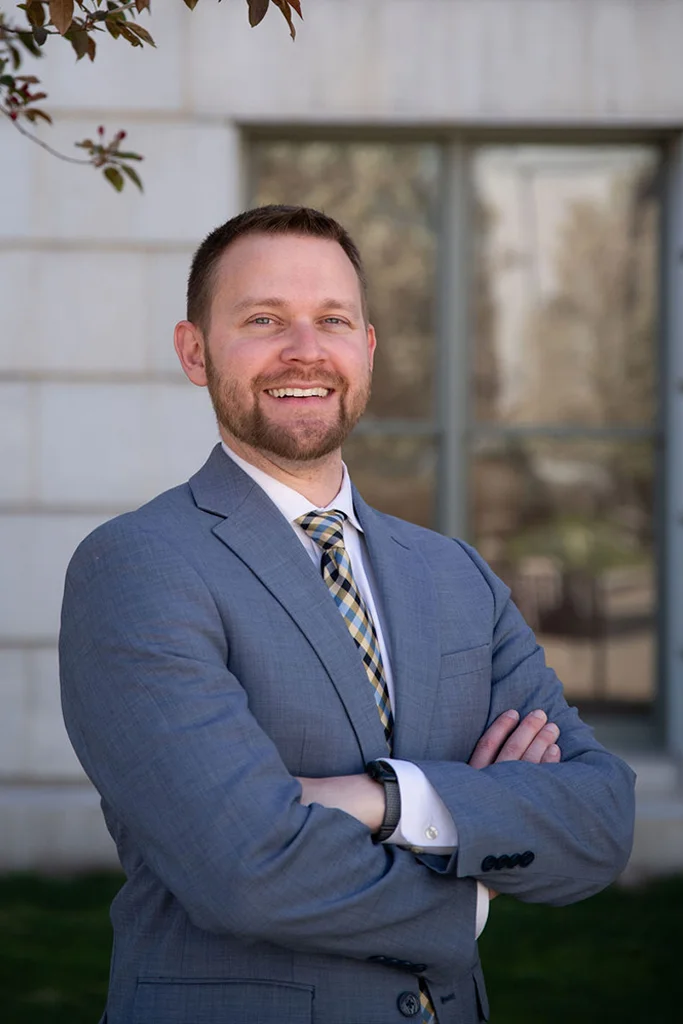
Reid DeChant’s background is specific in ways that matter for impaired driving defense. Before building DeChant Law as a private practice, Reid worked as a public defender, handling a high volume of DUI and DWAI cases in Denver, Adams County, and Broomfield County courtrooms. That volume of real courtroom experience, cross-examining police officers on field sobriety testing protocols, challenging chemical test procedures, and arguing DMV hearings on express consent issues, shapes how he approaches every impaired driving case he takes now.
Reid is also a graduate of the Trial Lawyers College, the training program founded by Gerry Spence that concentrates on courtroom storytelling and human connection as the foundation of effective advocacy. This approach matters in DWAI cases because juries and judges are not deciding an abstract question about a number on a breath test. They are deciding whether a real person, with a real set of circumstances leading up to that traffic stop, actually had their driving ability affected. Presenting that story in a way that resonates, that accounts for the person’s context rather than just responding to the government’s evidence, is a different kind of advocacy than simply pointing to procedural defects.
DeChant Law’s results in impaired driving cases reflect this approach. The firm has successfully defended DUI and DWAI cases at trial, including multiple Not Guilty verdicts and case dismissals, and has obtained dismissals in DMV express consent proceedings on multiple grounds, including improper advisement, timing violations in chemical test administration, and procedural irregularities. These are the kinds of outcomes that come from attacking the government’s case at every stage, not just showing up for a plea.
What to Do After a DWAI Arrest in Colorado Springs
The first thing to understand is that two clocks start running immediately after a DWAI arrest in Colorado. The criminal case will proceed through El Paso County District Court, located at 270 South Tejon Street in Colorado Springs. That process has its own timeline, beginning with arraignment and working through motions hearings and potentially trial. The second clock is the DMV express consent proceeding, and this one has a shorter deadline. If you want to contest the administrative revocation of your license, you must request a hearing within a specific window after your arrest. Missing this deadline means the revocation proceeds without a hearing. Speaking with a DWAI attorney in Colorado Springs before that window closes is the single most time-sensitive action you can take.
Once you have a lawyer engaged, resist the impulse to discuss the details of your stop with anyone other than your attorney. Statements made to friends, posted on social media, or said to law enforcement after the initial stop can become evidence. What you say matters, and consistency between what you recall and what the police report says is something a defense attorney needs to work from a clean starting point.
Gather what you can recall while it is fresh: the location and direction you were traveling when stopped, the officer’s stated reason for the stop, whether you were asked to perform field sobriety tests and where that happened (roadside, parking lot, type of surface), what type of chemical test was administered and how long after the stop it occurred, and anything unusual about the environment or conditions at the time. Defense attorneys can subpoena dashcam and bodycam footage, but that footage may not tell the complete story, and your own detailed recollection fills in gaps the cameras missed.
Do not assume that a DWAI is necessarily a conviction. The legal standard for DWAI requires proof beyond a reasonable doubt that the driver’s ability was affected to the slightest degree. A BAC reading below 0.08 creates room for defense strategies that simply don’t exist in stronger cases. Chemical tests can be challenged for calibration records, operator certification, and the timing of administration. Field sobriety evaluations can be challenged for improper instruction or administration. The traffic stop itself can be challenged if the officer lacked reasonable articulable suspicion to initiate it.
Questions About Colorado Springs DWAI Cases
What is the difference between DWAI and DUI in Colorado?
Colorado distinguishes between DUI, which requires that the driver’s ability to operate a vehicle was substantially impaired, and DWAI, which requires only that the driver’s ability was affected to the slightest degree. A BAC of 0.05 to under 0.08 creates a permissible inference of DWAI, while a BAC of 0.08 or above creates a permissible inference of DUI. DWAI is the lesser charge but still carries real criminal and DMV consequences.
Can I lose my license for a DWAI in Colorado?
Yes. A DWAI conviction adds eight points to your driving record under the Colorado DMV system. Colorado uses a points-based license revocation system, and depending on your age and prior record, accumulating enough points within a set period can result in suspension. Additionally, the express consent process tied to the chemical test or refusal can trigger a separate administrative revocation independent of the criminal case outcome.
What is an express consent hearing and how does it work?
Colorado’s express consent law requires drivers to submit to a chemical test after a lawful DUI or DWAI arrest. If you took the test, the DMV can seek to revoke your license based on the result. If you refused, the DMV can seek revocation on that basis. Either way, you have a limited window after the arrest to request an administrative hearing. That hearing is conducted by a DMV hearing officer, not a judge, and is separate from your criminal case. It can be dismissed or won on procedural grounds, and DeChant Law has obtained multiple express consent dismissals on various grounds including improper advisement and test timing violations.
If my BAC was only 0.06, do I still need a lawyer?
A BAC of 0.06 falls within the range where a DWAI charge is possible, and the prosecution will rely on officer testimony about driving behavior and field sobriety performance to support the charge. The fact that the number is relatively low does not mean the case resolves itself. A DWAI conviction at any BAC level carries DMV points, a criminal record, and potential jail exposure. The lower the BAC, the more the case turns on the quality of the field sobriety testing and the officer’s observations, both of which are contestable.
Can a DWAI conviction affect my professional license in Colorado?
It depends on the profession and the licensing board. Teachers, healthcare workers, attorneys, real estate licensees, and others subject to professional licensing in Colorado may face separate board inquiries or disciplinary proceedings following a criminal conviction, including a DWAI. Some licensing bodies require self-reporting of criminal convictions, and failure to disclose can itself become a disciplinary issue. If you hold a professional license, this dimension of a DWAI charge is worth discussing with your attorney at the outset.
How does a DWAI affect a CDL driver?
Commercial drivers operate under federal regulations that impose stricter BAC thresholds and harsher disqualification consequences than apply to standard license holders. A CDL holder with a BAC as low as 0.04 while operating a commercial vehicle can face disqualification. A DWAI conviction, even in a personal vehicle, can trigger CDL disqualification proceedings. For professional drivers, the stakes of a DWAI case extend well beyond the immediate criminal penalties and into livelihood and career continuity.
What happens if the officer did not properly administer the field sobriety tests?
Field sobriety tests must be administered in accordance with National Highway Traffic Safety Administration guidelines to be considered reliable. Deviations in instruction, demonstration, or scoring can undermine the evidentiary value of the results. If the test was conducted on an uneven surface, in improper lighting, or without accounting for a known medical condition, those facts become part of a defense challenge. When successfully raised, this type of challenge can result in the field sobriety results being excluded or substantially discredited at trial or during plea discussions.
Will a DWAI show on a background check in Colorado?
A DWAI conviction is a misdemeanor criminal conviction and will appear on a Colorado criminal background check. It is not automatically expunged. Colorado law does provide limited sealing options for some misdemeanor convictions, but not all DWAI convictions are eligible, and eligibility depends on a number of factors including time elapsed and whether additional charges were part of the same case. Avoiding a conviction in the first place, whether through dismissal, acquittal, or reduction to a traffic infraction, is preferable to navigating post-conviction relief.
How long does a DWAI case typically take in El Paso County courts?
The timeline for a DWAI case through El Paso County District Court varies based on complexity, court docket load, and whether the case proceeds to motions hearings, plea negotiation, or trial. Simple cases with straightforward facts sometimes resolve within a few months. Cases involving contested motions, expert testimony, or trial can extend considerably longer. The DMV hearing, if requested promptly, is typically scheduled within a few weeks and resolved separately from the criminal case.
Can a DWAI charge be reduced to a traffic offense?
In some circumstances, DWAI charges are reduced through negotiation to a traffic offense such as careless driving or a similar infraction, which carries no jail exposure and fewer long-term collateral consequences than a misdemeanor criminal conviction. Whether a reduction is available depends on the specific facts of the case, the strength of the evidence, the prosecutor assigned, and prior driving history. This outcome is not guaranteed, but it is a legitimate strategic objective in cases where the evidence has weaknesses that give the prosecution reason to negotiate.
DeChant Law’s DWAI Defense Across Colorado Springs and El Paso County
DeChant Law represents clients facing DWAI and impaired driving charges throughout Colorado Springs and the broader El Paso County area. This includes clients from the Briargate and Northgate communities in northern Colorado Springs, through the Old Colorado City and Manitou Springs areas to the west, and into the Fountain and Security-Widefield communities to the south. The firm handles cases arising from stops along Academy Boulevard, North Powers Boulevard, Woodmen Road, and the downtown Colorado Springs area including the stretch of Tejon Street running through the city’s entertainment district.
Representation also extends to clients from Falcon, Peyton, Black Forest, Monument, and Palmer Lake to the north, as well as clients from Pueblo who find themselves facing charges arising from incidents in El Paso County. Whether the underlying stop occurred near Fort Carson, on the I-25 corridor between Colorado Springs and Pueblo, or anywhere else in the southern Front Range region, the firm is positioned to provide representation in El Paso County proceedings. For clients whose DWAI charges arise from stops in neighboring counties, Reid’s background in multiple Front Range courtrooms gives him familiarity with the variations in how these cases are handled across jurisdictions.
Colorado Springs DWAI Attorney Ready to Evaluate Your Case
A DWAI charge has real consequences, and the process for defending one requires attention to both the criminal case and the DMV hearing on parallel tracks. If you are looking for a Colorado Springs DWAI attorney who approaches impaired driving cases with courtroom experience, trial training, and a track record of obtaining dismissals and not-guilty verdicts, DeChant Law is worth contacting. Reid DeChant will evaluate your case, explain what the evidence actually shows, and map out a defense strategy grounded in the specific facts of your stop. Reach out to schedule a consultation and get an honest assessment of where your case stands.