Central City Criminal Defense Lawyer
Central City sits in Gilpin County at an elevation most Front Range residents associate with weekend trips and casino visits, but the criminal cases that originate there are real, carry lasting consequences, and move through a courthouse that operates on its own schedule. A traffic stop on Highway 119, a dispute that escalated inside one of the casinos on Main Street, or a drug offense on one of the mountain corridors feeding into town can result in charges that follow a person back down the mountain and into every part of their life. A Central City criminal defense lawyer who understands how Gilpin County prosecutes these cases and who has the courtroom experience to actually contest them is not a luxury. It is the difference between a resolved case and a conviction that reshapes your future.
Gilpin County is small, and its courts reflect that. The Gilpin County Combined Court handles both county and district court matters, meaning the judge, prosecutors, and law enforcement officers in any given case likely know each other well. That familiarity can cut both ways. Local law enforcement is thorough, and the district attorney’s office prosecutes charges aggressively even in a county without a large population. For someone unfamiliar with how this system operates, appearing without seasoned legal representation can be a costly mistake.
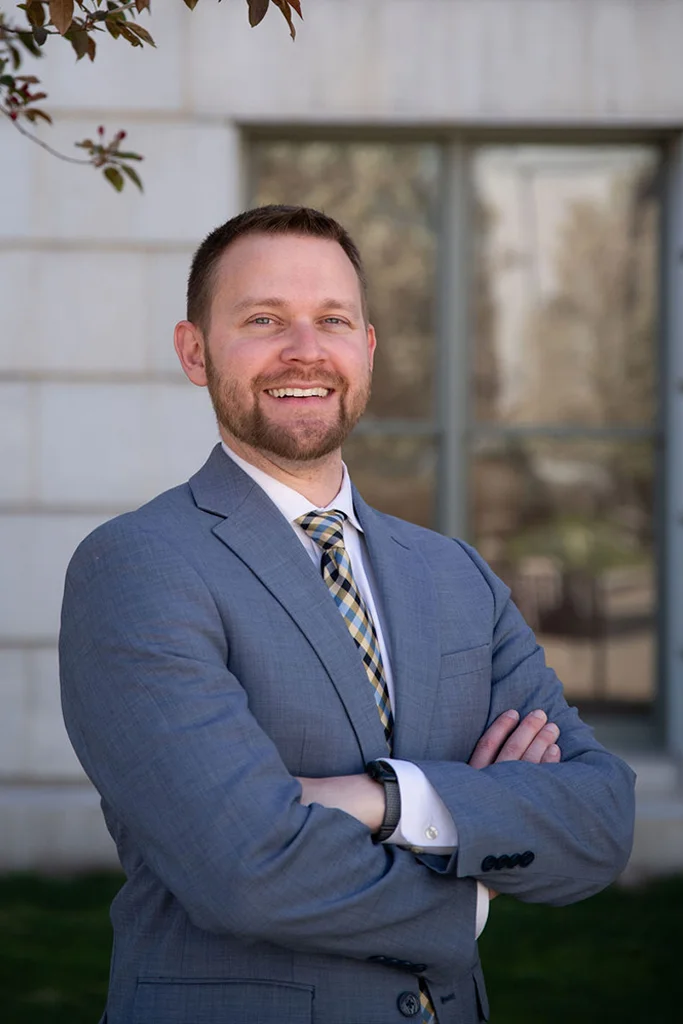
Reid DeChant has built a defense practice grounded in genuine trial experience, first as a public defender handling high volumes of criminal cases across multiple Colorado counties, and then as a private defense attorney who has taken cases to verdict in courtrooms throughout the Denver metro area and beyond. His training at the Trial Lawyers College, the program founded by Gerry Spence, shaped a defense approach built on authentic storytelling rather than legal posturing. When the facts of your case need to reach a judge or jury in a way that creates doubt, Reid has the preparation and the instincts to make that happen.
Charges That Come Through Gilpin County Courts and Why They Matter
- Casino-Related Offenses: Gilpin County’s gaming district generates a steady stream of disorderly conduct, trespass, assault, and theft charges. Casino surveillance is extensive and law enforcement response is immediate, which means evidence is often preserved quickly and the prosecution’s case may appear strong at first review.
- DUI and DWAI on Mountain Roads: Highway 119 between Black Hawk and Boulder and the routes connecting Central City to I-70 are active patrol corridors. Colorado law distinguishes DUI from DWAI based on blood or breath alcohol levels, and a conviction of either can trigger license revocation, mandatory education programs, and insurance consequences that outlast any jail sentence.
- Drug Possession and Distribution: Mountain corridor arrests for controlled substances, including methamphetamine, fentanyl, and cocaine, are prosecuted under Colorado’s felony and misdemeanor drug statutes. Quantity and intent to distribute significantly affect the charge level and sentencing exposure.
- Assault and Domestic Violence: A domestic violence designation in Colorado attaches mandatory conditions to any criminal case and cannot be waived by the alleged victim. Even misdemeanor assault with a domestic violence tag carries collateral consequences including firearm prohibitions and immigration consequences for non-citizens.
- Theft and Property Crimes: Theft charges in Colorado are tiered by the value of property allegedly taken. What begins as a misdemeanor can cross into felony territory quickly, and a prior record further escalates sentencing exposure under Colorado’s habitual offender framework.
- Failure to Appear and Warrant Issues: Gilpin County residents and visitors who miss court dates in a small county system often find bench warrants unresolved for longer than they expect. Addressing an outstanding warrant proactively, before an arrest, can change how a case proceeds and how a judge views the defendant from the outset.
- Felony Cases Bound Over to District Court: Gilpin County’s Combined Court structure means that felony preliminary hearings and subsequent proceedings happen within the same limited courthouse resources. Understanding that flow and how to position a case effectively at each stage requires familiarity with Colorado’s felony case process.
Why DeChant Law Makes a Difference for Central City Defense Cases
Reid DeChant’s experience as a former public defender meant handling serious criminal cases, including felony assault, DUI, sexual assault, and homicide, at a volume that most private attorneys never approach. That background produced a lawyer who is not rattled by complex fact patterns, difficult evidence, or prosecutors who believe their case is airtight. The case results from DeChant Law reflect this: not-guilty verdicts at trial in DUI cases out of Jefferson, Douglas, and Arapahoe Counties; case dismissals in assault and domestic violence matters; and DMV hearing victories that preserved clients’ driving privileges when the prosecution believed the license revocation was certain.
For someone in Central City or Gilpin County facing criminal charges, those results carry direct relevance. A central city criminal defense attorney who has cross-examined law enforcement officers and challenged evidence in jury trials across Colorado’s Front Range understands how to apply that same rigor to mountain county cases. Reid is a member of the National Association of Criminal Defense Lawyers and the Colorado Criminal Defense Bar, affiliations that reflect ongoing engagement with the best current defense strategies available. His training through the Trial Lawyers College adds a dimension most defense attorneys do not have: the ability to frame a client’s story in a way that a jury connects with on a human level, not just a legal one.
What clients consistently find is that Reid treats them as participants in their own defense. You are kept informed at every stage. You understand the realistic options, not just the optimistic version. And when your case goes to hearing or trial, you have a lawyer who has prepared thoroughly and who knows how to hold ground when a prosecutor applies pressure.
What Happens After an Arrest in Gilpin County and the Decisions That Shape Your Case
After an arrest in Central City or the surrounding Gilpin County area, the process moves through the Gilpin County Combined Court, located at 427 Lawrence Street in Central City. First appearances typically happen within hours or days of arrest, and the bail determination made at that hearing sets the conditions under which a person waits for trial. Coming to that first hearing represented, or having counsel engaged shortly before it, can directly affect the bond amount set and the conditions attached to release.
The early weeks of a criminal case are when the most important decisions about strategy get made. Experienced defense lawyers review police reports, body camera footage, and any surveillance video before that evidence is watered down by time or selective recollection. In casino-related cases, the window for obtaining footage can be narrow because casinos routinely purge recordings on short cycles. In DUI cases, breath test calibration records and the timeline of the traffic stop need to be examined while the details are fresh and documentation is still accessible.
One of the most consequential early decisions in any Colorado criminal case is whether to contest a DMV license revocation. Under Colorado’s Express Consent law, a driver who tests above the legal limit or who refuses chemical testing faces an automatic administrative action against their license that runs parallel to and completely separate from the criminal case. The request for a DMV hearing must be made within seven days of the notice of revocation. Missing that window eliminates the right to contest the revocation at a hearing. This is a deadline that does not bend, and it arrives fast. A criminal defense attorney in Central City who handles both the criminal case and the DMV hearing is the right person to contact immediately after any DUI-related arrest in Gilpin County.
People also frequently underestimate how their conduct in the days after an arrest affects how the case resolves. Posting about an incident on social media, discussing the case with witnesses, or attempting to contact the other party in a domestic violence matter can each create problems that did not exist before. The better path is to say nothing publicly, contact no one involved in the incident, and let legal representation handle all communication from that point forward.
Questions Central City Residents Ask About Criminal Charges in Colorado
What is the difference between a misdemeanor and a felony in Colorado?
Colorado classifies misdemeanors into two classes and felonies into six levels. Misdemeanor convictions can result in county jail time, fines, and probation. Felony convictions carry potential state prison sentences, substantially higher fines, and long-term consequences including loss of voting rights while incarcerated, firearm restrictions, and difficulty obtaining employment or housing. The line between the two is not always obvious from the surface facts of an arrest, which is why early legal review of the charges matters.
Can a domestic violence case be dismissed if the alleged victim does not want to press charges?
Colorado prosecutors have the authority to proceed with a domestic violence case regardless of whether the alleged victim wants the case to continue. This is a policy decision that exists specifically because domestic violence situations often involve pressure on the victim not to cooperate. The case belongs to the state, not to the individual. That said, a victim’s lack of cooperation can affect the strength of the prosecution’s evidence and can be a factor in how the defense is built.
What happens if I missed my court date in Gilpin County?
A missed court date typically results in a bench warrant being issued. In a small county court system, warrants do not disappear quietly. The right move is to contact a criminal defense attorney before that warrant leads to another arrest, because appearing voluntarily through counsel, with an explanation, positions the case differently than being picked up on the warrant. Judges generally respond more favorably when a defendant addresses a missed appearance proactively.
Is marijuana possession still a crime in Colorado?
Recreational marijuana is legal in Colorado for adults 21 and older up to certain possession limits. However, possession or use in certain locations, including casinos and gaming establishments, remains prohibited and can result in charges. Possession by a minor, driving while impaired by marijuana, and possession in excess of legal limits all carry criminal exposure. The fact that marijuana is generally legal does not mean there are no criminal issues that can arise around it.
How do I find out if there is a warrant for my arrest in Gilpin County?
Warrants in Colorado are often accessible through public court records, and a defense attorney can conduct a warrant check and, if a warrant exists, take steps to address it formally. Attempting to confirm a warrant informally by calling the police department or court is not advisable because that inquiry can itself alert authorities to your whereabouts.
Can a DUI conviction from Gilpin County affect my professional license?
Certain professional licenses in Colorado, including those held by nurses, teachers, commercial drivers, and others in regulated fields, carry mandatory reporting obligations after a criminal conviction. A DUI conviction can trigger a licensing board inquiry and, depending on the profession and the circumstances, disciplinary action independent of whatever criminal sentence was imposed. This is a consequence that the criminal case outcome alone does not resolve, and it is something to discuss with your defense attorney early.
What is the process for a felony case in the Gilpin County Combined Court?
Felony charges in Gilpin County typically begin with an advisement and bond hearing, followed by a preliminary hearing at which the prosecution must establish probable cause. If probable cause is found, the case proceeds to arraignment and then to pretrial motions, a plea agreement process, or trial. Because Gilpin County operates as a Combined Court handling both county and district court functions, the logistics of scheduling and courthouse operations differ from larger urban courts. Understanding that process from the inside is part of what effective local representation provides.
How long does a criminal case in Central City typically take to resolve?
Timelines vary significantly based on whether the case is a misdemeanor or felony, whether it goes to trial, and how the court’s docket is managed. Misdemeanors sometimes resolve in a few months. Felonies, particularly those requiring expert witnesses, forensic review, or jury trials, can extend considerably longer. Gilpin County’s smaller court system can mean more scheduling flexibility in some situations, but also fewer resources for rapid resolution in complex cases.
Can evidence from casino surveillance cameras be challenged in court?
Yes. Chain of custody, the authenticity of the footage, the completeness of what was preserved, and the angle or resolution of the recording can all be subject to challenge. In some situations, what was not captured on video matters as much as what was. An effective defense reviews all available footage, asks whether additional cameras covered the relevant area, and examines how the footage was obtained and stored before the prosecution presents it as conclusive proof.
What is a deferred judgment and is it available for charges in Gilpin County?
A deferred judgment is an agreement in which a defendant pleads guilty but the entry of the conviction is deferred while the defendant completes probation conditions. If those conditions are satisfied, the plea is withdrawn and the charge dismissed. Not every charge qualifies for a deferred judgment, and the availability depends on the specific offense, the defendant’s prior record, and the prosecution’s position. It is one of several potential outcomes that an experienced Central City criminal defense attorney evaluates during case strategy discussions.
Serving Clients Across Gilpin County and the Surrounding Region
DeChant Law represents clients from Central City and across Gilpin County, including Black Hawk, Rollinsville, Apex, and the communities along the Highway 119 and Highway 46 corridors. Reid also serves clients who face charges in Jefferson County, Adams County, Arapahoe County, Broomfield County, and Douglas County, as well as those with cases originating along the I-70 mountain corridor communities of Idaho Springs, Georgetown, and Clear Creek County. The firm’s reach extends throughout the Denver metro area, from Aurora and Lakewood through Arvada, Westminster, Thornton, Englewood, Littleton, and Commerce City. Clients in Wheat Ridge, Golden, Edgewater, and the unincorporated areas surrounding Denver also turn to DeChant Law when serious charges require genuine courtroom preparation.
No matter where in this region a charge originates, the representation is the same: full engagement, direct attorney contact, and preparation that takes every realistic defense option seriously before any case resolves.
Talk to a Central City Criminal Defense Attorney Before Your Next Court Date
A criminal charge in Gilpin County is not something to approach casually, and it is not something to approach without legal representation that has actual trial experience behind it. If you or someone you know is facing charges in Central City or anywhere in the Gilpin County court system, reach out to DeChant Law and speak directly with a Central City criminal defense attorney who will review the facts of your situation honestly and give you a clear picture of your options. The sooner that conversation happens, the more choices remain available.