Boulder Probation Violation Lawyer
Probation feels like a second chance, and in many ways it is. But the conditions attached to it can be relentless, and Boulder courts take violations seriously. A single missed appointment, a positive drug test, a new arrest, or even a misunderstanding with your probation officer can trigger a violation proceeding that puts your freedom at immediate risk. If you are facing a probation violation hearing in Boulder County, the situation calls for a clear-headed attorney who understands what these hearings actually look like and what needs to happen before you walk into that courtroom. A Boulder probation violation lawyer at DeChant Law can examine exactly what has been alleged, how the evidence holds up, and what arguments carry real weight before a Boulder County judge.
Probation violation proceedings are different from the original criminal trial in ways that matter enormously. There is no jury. The burden of proof is lower than in a criminal case. Hearsay evidence that would never come in at trial can be admitted. And the consequences of losing can include immediate incarceration, sometimes for the full sentence that was originally suspended. That combination, lower procedural protections and higher immediate stakes, is exactly why who you have advocating for you in that courtroom makes a measurable difference.
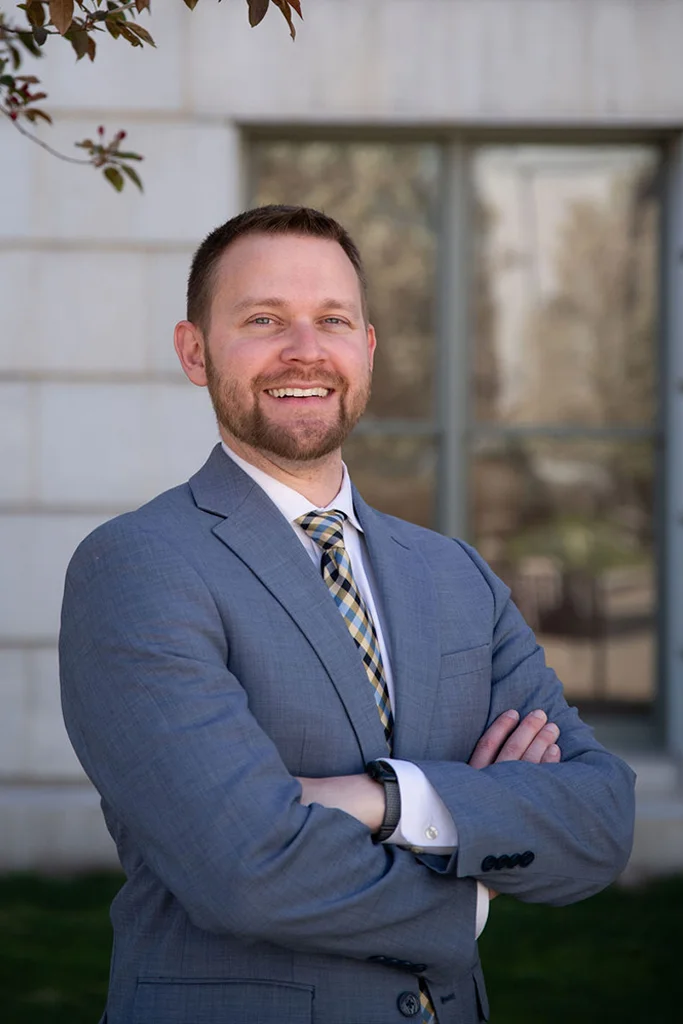
Reid DeChant has spent years inside Boulder, Jefferson, Adams, Broomfield, and Denver county courtrooms defending clients at every stage of criminal proceedings, including probation violation hearings where the outcome is anything but predetermined. The approach he brings to these cases is rooted in understanding the specific facts, knowing the people involved, and telling a story that gives a judge a reason to exercise discretion in your favor rather than simply checking a box.
What Probation Violation Proceedings Actually Look Like in Boulder County
When a probation violation is alleged in Boulder County, the process typically moves quickly. Your probation officer files a report with the court, and a judge may issue an arrest warrant or summons requiring your appearance. In many cases, especially when the alleged violation involves a new criminal charge, the court will hold you without bond or set bond at a level designed to keep you in custody pending the hearing. The speed of this process is one of the most disorienting parts of it for people who thought they were in full compliance or who dispute what has been alleged.
The violation hearing itself takes place at the Boulder County Justice Center on Canyon Boulevard. A judge, not a jury, decides whether the violation occurred and what the consequence should be. The prosecution only needs to prove the violation by a preponderance of the evidence, meaning more likely than not. That is a far easier standard to meet than the beyond-a-reasonable-doubt threshold from your original trial. This is where preparation and advocacy matter most. An attorney who walks into that hearing having simply reviewed the file is in a very different position from one who has spoken with witnesses, analyzed the conditions of your probation agreement carefully, researched whether the probation officer followed proper procedures, and identified every available argument for why the alleged violation should not result in revocation.
Boulder judges retain meaningful discretion in probation violation proceedings. Revocation to incarceration is not the only possible outcome. Judges can reinstate probation with the same conditions, add new or stricter conditions, modify the supervision level, impose a short jail sanction without full revocation, or order additional treatment. A probation violation attorney in Boulder who knows how to present mitigating circumstances, demonstrate genuine accountability where appropriate, and advocate for a structured alternative to incarceration gives a client a real path through the hearing rather than simply hoping for the best.
The Most Common Probation Violations Alleged in Boulder Cases
- Failed or missed drug and alcohol testing: Conditions requiring abstinence and regular testing are common in DUI, DWAI, drug offense, and domestic violence probation agreements. A positive test, a missed test, or an attempt to adulterate a sample can each trigger a violation report, and Boulder probation officers have discretion in how they document and report these incidents.
- Failure to report to a probation officer: Missing a scheduled check-in, even due to a work conflict, illness, or simple miscommunication, is treated as a technical violation. Courts look carefully at whether notice was given and whether the failure was intentional or circumstantial.
- New criminal charges: An arrest or charge while on probation, even for a misdemeanor, is almost always a triggering event. Critically, a conviction is not required; the new charge alone can be the basis for a violation proceeding while the underlying case is still pending.
- Failure to complete required programs: Boulder courts frequently require completion of substance abuse treatment, domestic violence classes, anger management, or community service as conditions of probation. Delays, incomplete attendance, or program termination can result in violations that are entirely avoidable with proper planning.
- Leaving the jurisdiction without permission: Many probation agreements restrict travel outside Colorado or outside Boulder County without advance approval. Traveling for work or family without notifying your probation officer can constitute a violation even if the trip itself was entirely lawful.
- Contact violations in domestic violence cases: Probation conditions in domestic violence cases typically include no-contact orders. Even contact initiated by the protected party can be treated as a violation by the person on probation, which creates situations where individuals face revocation through no fault of their own.
- Failure to pay fines, fees, or restitution: Courts must consider ability to pay before revoking probation based solely on nonpayment, but this area is heavily fact-specific. Documenting financial hardship proactively and communicating with the court before a violation is filed can sometimes prevent the proceeding entirely.
Before the Hearing: What You Can Do Right Now That Actually Matters
The period between when a violation is alleged and when the hearing takes place is not dead time. It is the window where the most important preparation happens, and using it well can change the outcome. The first thing to do is contact a Boulder probation violation attorney before you speak with your probation officer, before you give any statement, and before you assume that your side of the story will simply sort things out. Probation officers are not neutral parties in this process. What you say to them can and will appear in the violation report that goes before the judge.
Gather documentation that is relevant to the alleged violation. If the violation involves a missed appointment, records showing why you missed it and what you did afterward matter. If it involves a failed drug test and you have a valid prescription or a medical condition that could explain the result, obtain that documentation immediately. If it involves a new criminal charge that you intend to contest, understanding how the two proceedings interact is critical, and your attorney needs to know your account of the underlying incident before either case moves forward.
The Boulder County Justice Center, located at 1777 Sixth Street in Boulder, is where most felony and serious misdemeanor probation matters are heard. For cases originating in Boulder Municipal Court, the violation process may proceed differently depending on the nature of the original charge and the conditions imposed. Knowing which court has jurisdiction over your case is not always obvious, especially if your case was transferred or consolidated at some point, and your attorney should clarify this immediately.
One of the most common mistakes people make in probation violation situations is assuming that if they did not technically violate a condition, everything will work itself out. Probation violation hearings are adversarial proceedings, and the court will hear the prosecution’s version of events. Without an attorney presenting your version with supporting evidence and legal argument, you are leaving an enormous amount to chance in a proceeding where the consequences are immediate and serious.
Why DeChant Law Handles Boulder Probation Violation Cases
Reid DeChant built his practice on the kind of trial experience that most private criminal defense attorneys do not accumulate. His time as a public defender placed him in front of judges across multiple Colorado counties, handling cases at every stage of the criminal process including post-conviction hearings, sentence modifications, and probation matters. That background means he is not approaching a probation violation hearing as an unfamiliar procedural setting. He has been in these hearings repeatedly, he understands the dynamics at play, and he knows what judges in this region respond to.
Reid is a graduate of the Trial Lawyers College, the intensive program founded by Gerry Spence that trains attorneys in the art of authentic advocacy and narrative. In a probation violation hearing, where the judge has enormous discretion and where your credibility and circumstances matter as much as the technical legal arguments, the ability to present a compelling and honest human account of what happened and where things stand now is genuinely valuable. Reid also maintains membership in the National Association of Criminal Defense Lawyers and the Colorado Criminal Defense Bar, which reflects his ongoing engagement with the best thinking in criminal defense strategy nationally and within Colorado.
If you are looking for a Boulder probation violation attorney who will sit down with you, understand your full situation, and walk into that courtroom with a real strategy rather than a generic approach, Reid DeChant is that attorney. His track record includes dismissed cases, not-guilty verdicts, and favorable outcomes across a range of criminal charges and proceedings, including multiple DUI dismissals, domestic violence acquittals, and felony cases resolved in favor of the client. Past results do not guarantee future outcomes, but they reflect the kind of preparation and advocacy that this firm brings to every case it handles.
Questions About Boulder Probation Violation Cases
What is the difference between a technical violation and a substantive violation?
A technical violation refers to a failure to comply with the administrative conditions of probation, things like missing a check-in, failing to pay a fee, or not completing a required program. A substantive violation involves committing a new criminal offense while on probation. Courts often treat substantive violations more seriously because they represent a direct challenge to the premise that the original sentence was appropriate, but technical violations can still result in revocation depending on the judge, the case history, and how the hearing goes.
Can I be held in jail before my probation violation hearing?
Yes. When a violation is alleged, the court may issue a warrant for your arrest and may set bond at a level that keeps you in custody pending the hearing. In cases involving alleged new criminal conduct, courts in Boulder County sometimes hold individuals without bond. This is one of the reasons that contacting an attorney immediately matters. Your attorney may be able to request an expedited bond hearing or present arguments for release with conditions while the violation proceeding is pending.
Does my probation officer have to prove I violated a condition, or just allege it?
The probation officer files a report documenting the alleged violation, but the prosecution bears the burden at the hearing of proving the violation occurred by a preponderance of the evidence. The probation officer’s report is not automatically accepted as conclusive proof. Your attorney can challenge the accuracy of the report, the procedures used to document the alleged violation, and the reliability of any underlying evidence, such as the testing protocols used for a drug screen or the circumstances surrounding a missed appointment.
What happens if my probation is revoked?
When a judge revokes probation, the court may impose all or part of any sentence that was previously suspended. This means that if you received a two-year prison sentence suspended in favor of probation, revocation could result in being required to serve that sentence. Courts can also revoke probation and impose a different sentence, including a shorter jail term or a modified period of supervision. The specific outcome depends heavily on the facts of the case, your history on probation, and the advocacy presented at the hearing.
Can the court reinstate my probation after a violation finding?
Yes. A finding that a violation occurred does not automatically mean revocation. Judges in Boulder County have broad discretion to reinstate probation, often with modified or additional conditions, rather than sending someone to prison. Presenting a strong case for reinstatement, including evidence of compliance in other areas, participation in treatment, stable employment, family ties, and genuine accountability, can make a significant difference in this discretionary decision.
What if I violated probation because of circumstances I could not control, like a medical crisis or job loss?
Circumstances matter in probation violation hearings, and judges do consider the reasons behind a violation when deciding what sanction is appropriate. A medical emergency that caused a missed appointment, a job loss that made restitution payments temporarily impossible, or a family crisis that interfered with program completion can all be presented as mitigating factors. The key is documenting these circumstances thoroughly and presenting them through an attorney who knows how to frame them effectively for the court.
I was contacted by my probation officer about a potential violation but no hearing has been scheduled yet. Should I wait?
No. The window before a formal violation is filed is actually one of the most important moments to have an attorney involved. In some cases, early intervention, proactive communication with the court or probation department, and voluntary remedial action can reduce the severity of what gets filed or influence how the case is handled. Waiting for the hearing to be scheduled and then scrambling to prepare is the approach that leads to bad outcomes. The sooner you have counsel, the more options you have.
How do Boulder probation violation hearings work when the alleged violation is a new criminal charge that I am also contesting?
This is one of the more complex situations in Colorado criminal practice. The violation proceeding can move forward even while the new charge is pending, and a conviction is not required for the court to find a violation. Your attorney needs to think carefully about strategy across both cases simultaneously, because statements or evidence developed in one proceeding can potentially affect the other. Coordination between the two matters, rather than treating them as completely separate, is critical.
Can my probation be violated for something my probation officer got wrong or documented incorrectly?
Yes, and this happens. Probation officers are human, and their reports can contain errors, mischaracterizations, or conclusions drawn from incomplete information. Your attorney has the right to subpoena your probation officer to testify at the hearing, to cross-examine them about how the alleged violation was documented and reported, and to challenge the accuracy of any testing, records, or observations cited in the report. These challenges require preparation, but they can be decisive.
How long does a Boulder County probation violation hearing typically take from the time the violation is alleged?
The timeline varies depending on whether a warrant was issued and whether you are in custody. Courts generally move faster when a defendant is detained because there are constitutional concerns about prolonged pretrial incarceration. If you are not in custody, the hearing may be scheduled weeks out, which gives more time to prepare but also means a longer period of uncertainty. Your attorney can advocate for an expedited schedule when waiting is not in your interest, or can use additional time strategically when preparation would benefit from it.
DeChant Law Represents Probation Violation Clients Across Boulder and Surrounding Communities
DeChant Law handles probation violation matters originating in Boulder County courts as well as in neighboring jurisdictions throughout the Denver metro region and Front Range. Clients come to Reid DeChant from throughout the Boulder area, including the neighborhoods of Whittier, Mapleton Hill, Goss-Grove, University Hill, Table Mesa, Newlands, Martin Acres, and Chautauqua, as well as from the communities of Longmont, Louisville, Lafayette, Superior, Erie, Niwot, Gunbarrel, and Lyons. The firm also handles matters arising from courts in Broomfield County, Jefferson County, Adams County, and Denver County, where Reid has extensive familiarity with local courtrooms and judicial practices from his years of public defender work. Whether your case originated in Boulder Municipal Court or in the Boulder County District Court system, the representation is the same: thorough, prepared, and focused on the outcome that gives you the best realistic path forward.
Speak With a Boulder Probation Violation Attorney Before Your Hearing
Probation violation hearings move fast, and the decisions made in the days before that courtroom appearance matter as much as what happens during it. Reid DeChant is a Boulder probation violation attorney who takes these cases seriously, prepares thoroughly, and understands that the stakes for you are real and immediate. Reach out to DeChant Law today to schedule a consultation and start building the defense your hearing requires.