Boulder Drug Crimes Lawyer
Boulder sits at a complicated crossroads when it comes to drug enforcement. Colorado legalized recreational cannabis years ago, but that legalization coexists with serious felony statutes governing fentanyl, methamphetamine, cocaine, heroin, and a wide range of controlled substances. The result is a jurisdiction where residents sometimes misread the limits of what is legal, and where prosecutors at the Boulder County District Attorney’s Office bring aggressive charges across a spectrum that runs from simple possession to large-scale distribution. A Boulder drug crimes lawyer who understands both the science behind drug investigations and the practical realities of how these cases move through Boulder County courts can make a material difference in how yours resolves.
Drug prosecutions in Colorado are not simply about what police found on your person. They turn on chain-of-custody questions, the validity of the traffic stop or search that produced the evidence, laboratory analysis protocols, and whether law enforcement properly followed constitutional requirements throughout the investigation. Cases that look overwhelming at first contact often reveal significant procedural vulnerabilities once the documents are actually reviewed. That review, done thoroughly and early, is where the defense begins.
What you do immediately after an arrest, during questioning, and in the days following matters enormously. Most people do not know that certain drug charges carry mandatory consequences even on a first offense, or that a felony drug conviction in Colorado can affect professional licenses, housing eligibility, and immigration status in ways that extend far beyond any jail sentence. Understanding the full scope of what you are facing before accepting any offer from the prosecution is the only way to make a genuinely informed decision about your case.
Drug Charges Filed in Boulder County: From Possession to Trafficking
- Simple Possession of a Controlled Substance: Colorado has reclassified some lower-level possession offenses in recent years, but possession of substances like methamphetamine, cocaine, heroin, and fentanyl still carries serious felony exposure depending on quantity, prior history, and circumstances of the arrest.
- Possession with Intent to Distribute: When the quantity found exceeds what prosecutors consider personal-use amounts, or when they find scales, packaging materials, or large amounts of cash, a possession charge can be elevated to distribution. Intent charges carry significantly heavier sentences and change the strategic landscape of the case entirely.
- Drug Trafficking and Distribution: Actual sales or transportation of controlled substances, whether established through confidential informants, surveillance, or controlled purchases, represent some of the most aggressively prosecuted cases in Boulder County. These charges often involve lengthy investigations and can implicate federal authorities depending on quantities and geography.
- Prescription Drug Offenses: Possessing prescription medications like opioids or benzodiazepines without a valid prescription, obtaining prescriptions through fraud, or distributing prescription drugs are prosecuted under Colorado’s controlled substance statutes and are treated with the same seriousness as street drugs in many circumstances.
- Drug Paraphernalia Charges: Pipes, syringes, and related items can result in standalone charges or add-on charges to possession cases. While often treated as less serious, paraphernalia charges appear on criminal records and can complicate plea negotiations.
- Marijuana-Related Offenses That Remain Criminal: Despite legalization, Colorado law still criminalizes possession above certain limits, public consumption in prohibited areas, sales outside the licensed dispensary system, and distribution to minors. Boulder police and university campus authorities actively enforce these limits, particularly around the CU Boulder area.
- Drug Offenses Involving School Zones or Other Enhanced Locations: Colorado statutes include sentence enhancements when drug offenses occur in or near schools, playgrounds, and other protected areas. Given Boulder’s density of educational institutions, these enhancements appear frequently and must be identified early in any defense analysis.
Why DeChant Law Handles Boulder Drug Crime Defense Differently
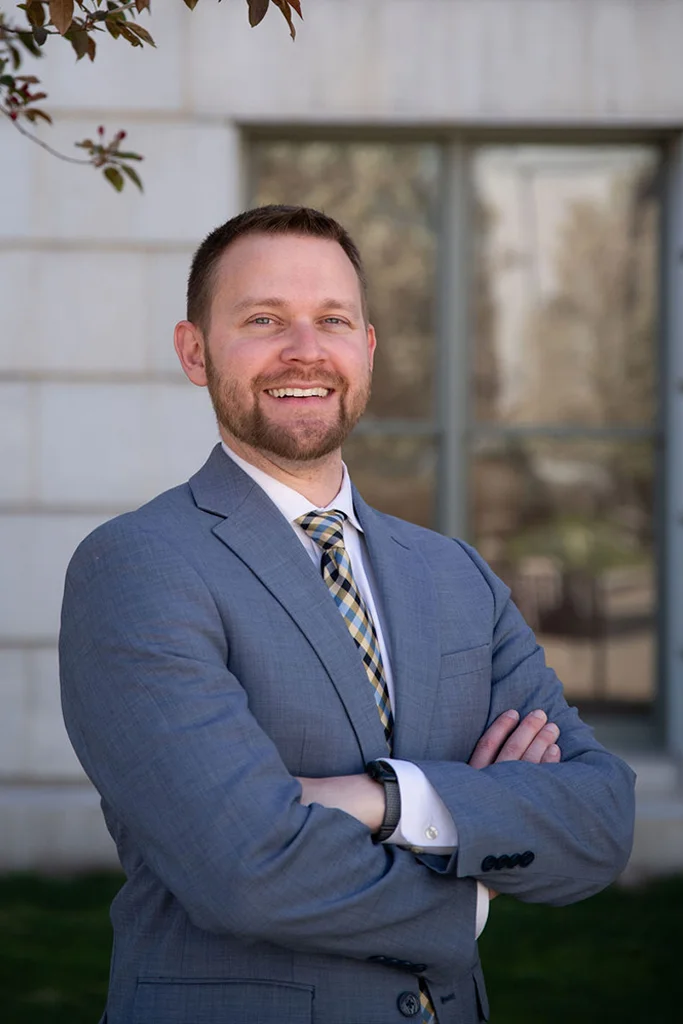
Reid DeChant built his criminal defense practice on a foundation of actual courtroom experience, not the kind of resume that looks impressive on paper but rarely gets tested. His background as a former public defender means he handled enormous caseloads in Colorado courtrooms, defending clients accused of drug offenses, DUI, assault, theft, and felonies of every kind. That volume of trial work produced something that cannot be replicated through seminars: a genuine understanding of how prosecutors think, how law enforcement officers behave on cross-examination, and how judges respond to different defense approaches.
Reid is a graduate of the Trial Lawyers College, founded by legendary trial lawyer Gerry Spence. That training centers on authentic storytelling, deep client connection, and the kind of courtroom presence that actually reaches juries. Drug cases are not purely technical exercises, though the technical arguments matter enormously. They also involve real people, real circumstances, and real context that a skilled defense attorney must communicate to a factfinder. Reid’s training in narrative advocacy gives clients something that purely doctrinal defense work rarely delivers.
DeChant Law also holds membership in the National Association of Criminal Defense Lawyers and the Colorado Criminal Defense Bar, organizations that reflect a commitment to staying current on the most effective defense strategies across Colorado’s evolving legal landscape. For someone facing drug charges in Boulder, that currency matters. Sentencing reforms, suppression doctrine developments, and changes in how prosecutors approach plea negotiations all affect case outcomes in ways that a lawyer disconnected from the broader defense community might miss entirely.
What Happens After a Drug Arrest in Boulder and How to Respond
Drug cases in Boulder County proceed through the Boulder County District Court, located at 1777 6th Street in Boulder. Misdemeanor drug matters may also be handled in Boulder Municipal Court depending on the specific charge and jurisdiction. After an arrest, you will typically be taken to the Boulder County Jail for booking. Depending on the severity of the charges and your prior record, you may be released on bond or held pending a bond hearing. That first appearance happens quickly, often within days, which is why contacting a drug crimes attorney in Boulder as soon as possible is essential rather than optional.
The single most consequential thing you can do after an arrest is stop talking. Invoking your right to remain silent and your right to counsel should happen immediately, before any substantive conversation with police or investigators. Law enforcement interviews in drug cases are not neutral information-gathering exercises. Officers are trained to elicit statements that can be used to establish intent, knowledge, and participation in distribution networks. Anything said before a lawyer is present can and will be used to build the prosecution’s case.
Once you have retained a defense attorney, the case review process begins. This means obtaining all police reports, body camera footage, search warrant affidavits, laboratory reports, and any recorded communications. Suppression motions, filed when evidence was obtained through an unconstitutional search or seizure, are frequently the most powerful tool in a drug defense. Colorado courts take Fourth Amendment violations seriously, and evidence suppressed through a successful motion often forces prosecutors to dismiss or significantly reduce charges.
A common mistake people make in the period immediately following a drug arrest is attempting to resolve the situation by cooperating with investigators in hopes of leniency. While cooperation with prosecutors can sometimes be a strategic option, it should only happen after thorough consultation with defense counsel, with a complete understanding of the risks and formal legal protections in place. Cooperating without counsel, or without a formal agreement, frequently produces worse outcomes than going through the full litigation process.
Document everything you remember about the circumstances of your arrest while the details are still fresh. Where were you, what time was it, what did officers say to you, did you consent to any searches, and were Miranda rights given? These details, which may seem minor, can be critical when your attorney is preparing suppression arguments or challenging the factual basis of the charges.
The Long Reach of a Drug Conviction in Colorado
The consequences of a drug conviction extend well past the criminal sentence itself, and anyone evaluating whether to fight charges or accept a plea must understand this full picture. A felony drug conviction in Colorado can result in the loss of professional licenses across a range of fields, including healthcare, education, law, and finance. Licensing boards in Colorado treat drug felonies seriously and conduct independent reviews that can result in suspension or revocation regardless of what happens with any probationary sentence.
Federal financial aid for higher education can be affected by drug convictions, which is a particularly significant consequence in Boulder given CU Boulder’s presence and the number of students who come through the local court system. Students who are convicted of drug offenses while receiving federal student aid may face temporary or permanent ineligibility depending on the offense and their aid status at the time.
Housing is another area of concrete impact. Many landlords in Boulder, one of the most competitive rental markets in Colorado, screen for criminal history, and drug felonies can disqualify applicants from rental units, subsidized housing programs, and university housing. The economic consequences of losing housing stability compound the other effects of a conviction in ways that courts rarely address explicitly during sentencing.
For non-citizens, drug convictions carry immigration consequences that can include deportation, inadmissibility, and bars to naturalization. Colorado’s drug laws interact with federal immigration statutes in ways that require careful analysis by a Boulder drug crimes attorney who understands both frameworks. A plea that looks favorable from a purely criminal sentencing perspective can be catastrophic from an immigration standpoint.
Boulder Drug Crimes Questions Worth Knowing the Answers To
What is the difference between a drug petty offense, misdemeanor, and felony in Colorado?
Colorado categorizes drug offenses into drug petty offenses, drug misdemeanors, and drug felonies based on the substance involved, the quantity, and the conduct alleged. Simple possession of small amounts of many controlled substances was reclassified in recent years from felony to misdemeanor under Colorado law, though felony charges still apply for larger quantities, repeat offenses, and distribution-related conduct. Understanding exactly which tier your charge falls under determines the range of potential sentences and the strategic options available.
Can police search my car for drugs at a traffic stop in Boulder?
Generally, police need either a warrant, your consent, or a legally recognized exception to the warrant requirement to search your vehicle. Common exceptions include plain view, probable cause based on observed evidence, and exigent circumstances. In practice, the smell of marijuana has historically been used as probable cause, though this issue has evolved in Colorado given legalization. Whether a particular search was lawful is a fact-specific question that your attorney will analyze by reviewing the body camera footage, police reports, and any recorded communications from the stop.
What happens if drugs found in a car belonged to someone else?
Constructive possession, meaning possession without physical custody, is a theory prosecutors frequently use when drugs are found in shared spaces like vehicles. Proving constructive possession requires evidence that you knew the substance was there and had dominion and control over it. When multiple people are present and the drugs are not on your person, this element is genuinely contested and represents a real avenue of defense. Your attorney will examine the physical layout of where the drugs were found, who had access, and what statements were made at the scene.
Will I go to prison for a first-time drug offense in Colorado?
First-time drug offenders in Colorado frequently have access to diversion programs, deferred prosecution agreements, drug courts, and probation-based sentences that avoid incarceration entirely. Whether any of these options are available depends on the charge level, the substance involved, your background, and what the prosecutor in your specific case is willing to offer. Drug court in Boulder County is a structured alternative that emphasizes treatment and accountability over punishment, and it has produced good outcomes for qualifying participants. None of these alternatives, however, should be accepted without understanding their conditions and consequences.
How does Colorado’s drug court program work in Boulder County?
Boulder County’s drug court program is a supervised program that typically involves regular check-ins with a judge, drug testing, counseling or treatment participation, and compliance with specific conditions over a set period. Successful completion can result in reduced charges or dismissal of the underlying case. Participation is not automatic and requires approval based on the nature of the offense and the individual’s history. A defense attorney familiar with how Boulder County’s drug court operates can help evaluate whether it is a realistic option and how to position a client to qualify.
Can a drug charge be expunged or sealed in Colorado?
Colorado allows sealing of criminal records in certain circumstances, including for drug offenses that resulted in a dismissal, an acquittal, or in some cases after the completion of a sentence and a waiting period. The specific eligibility rules vary based on the offense level and outcome. Sealing does not erase a record but restricts who can access it. Discussing record sealing at the start of your case, not as an afterthought, allows your attorney to structure a resolution that maximizes your eligibility if your case ends in a way that permits it.
How does a drug conviction affect a professional license in Colorado?
Colorado’s licensing boards for healthcare professionals, teachers, contractors, attorneys, and other regulated occupations conduct independent reviews of criminal convictions. These boards are not bound by the outcomes in criminal court and can impose sanctions including probation, suspension, or revocation of a license even when the criminal court imposed a minimal sentence. If you hold a professional license or are pursuing a licensed career, this consideration should be part of every plea discussion, and your criminal defense attorney should be aware of and factor in this parallel risk.
What if I was only present and did not know there were drugs involved?
Knowledge is an element of drug possession charges in Colorado. If you genuinely did not know that controlled substances were present, that lack of knowledge is a defense. The practical challenge is establishing it convincingly, because prosecutors will look for circumstantial evidence of awareness, including how long you were in the location, what others around you were doing, and what statements were made. The strength of a knowledge-based defense depends heavily on the specific facts and requires careful development through the investigation and discovery process.
Can federal drug charges arise from a Boulder arrest?
Federal jurisdiction can attach to drug cases that involve quantities triggering federal trafficking thresholds, activity crossing state lines, use of federal property, or cases where federal law enforcement agencies were involved in the investigation from the outset. Drug cases investigated with DEA or FBI involvement are frequently prosecuted federally. Federal drug penalties under sentencing guidelines are generally more severe than Colorado state penalties, and the procedural rules differ significantly. If your case has any federal dimensions, you need a defense attorney who understands both systems.
Should I talk to police if they want to interview me as a witness rather than a suspect?
The distinction between “witness” and “suspect” during an investigation is one that prosecutors and law enforcement control and can shift at any moment. People who begin interviews as witnesses frequently become suspects during the course of that conversation. Consulting a defense attorney before participating in any law enforcement interview, regardless of how you are characterized at the outset, protects you in a way that no amount of cooperation can replace. This is true whether you are innocent, marginally involved, or centrally involved in whatever the investigation concerns.
DeChant Law Represents Drug Crimes Clients Throughout Boulder and Surrounding Communities
DeChant Law represents clients facing drug charges throughout Boulder and the surrounding region. From the University Hill neighborhood and the Pearl Street corridor through North Boulder, Mapleton Hill, and Gunbarrel, and extending into communities like Longmont, Lafayette, Louisville, Superior, and Erie, the firm handles cases across Boulder County’s courts. Clients also come from the mountain communities west of Boulder, including Nederland and Jamestown, as well as from Broomfield, Westminster, Thornton, and other communities along the Front Range corridor where Boulder County cases sometimes intersect with adjacent jurisdictions. The firm has experience in Adams County and Jefferson County courtrooms as well, providing continuity for clients whose situations involve multiple jurisdictions.
Talk to a Boulder Drug Crimes Attorney Before Making Any Decisions
Drug charges in Boulder can move quickly from arrest to critical junctures where uninformed decisions cause lasting damage. A Boulder drug crimes attorney from DeChant Law will review the facts of your case, analyze the evidence against you, and give you a clear-eyed assessment of what options are actually available, before any plea is discussed or any statement is made. Reid DeChant brings the trial experience, the training, and the commitment to honest communication that this kind of representation requires. Reach out to DeChant Law today to schedule a consultation and start building a defense that actually fits your case.