Boulder County DWAI Lawyer
A DWAI charge in Boulder County catches people off guard in ways that a DUI charge rarely does. The threshold for Driving While Ability Impaired sits at a blood alcohol content as low as 0.05, which means two glasses of wine at a Pearl Street restaurant or a couple of beers at a Longmont brewery can put a driver in legal jeopardy without any subjective sense of impairment. For many people stopped at a checkpoint on US-36, pulled over on Highway 93, or questioned after an accident near Baseline Road, the first instinct is to assume the charge is minor. That instinct is wrong, and acting on it can cause lasting damage to a person’s record, license, and livelihood.
A Boulder County DWAI lawyer handles a charge that looks modest on paper but carries consequences that compound quickly: points against a Colorado driver’s license, a criminal conviction that appears on background checks, mandatory alcohol education requirements, and escalating penalties for anyone with prior impaired driving history. Boulder County courts, including the Boulder County District Court at the Justice Center on Canyon Boulevard, prosecute these cases seriously, and the County’s law enforcement agencies from the Boulder Police Department to the Boulder County Sheriff’s Office conduct some of the most active DUI and DWAI enforcement in the state.
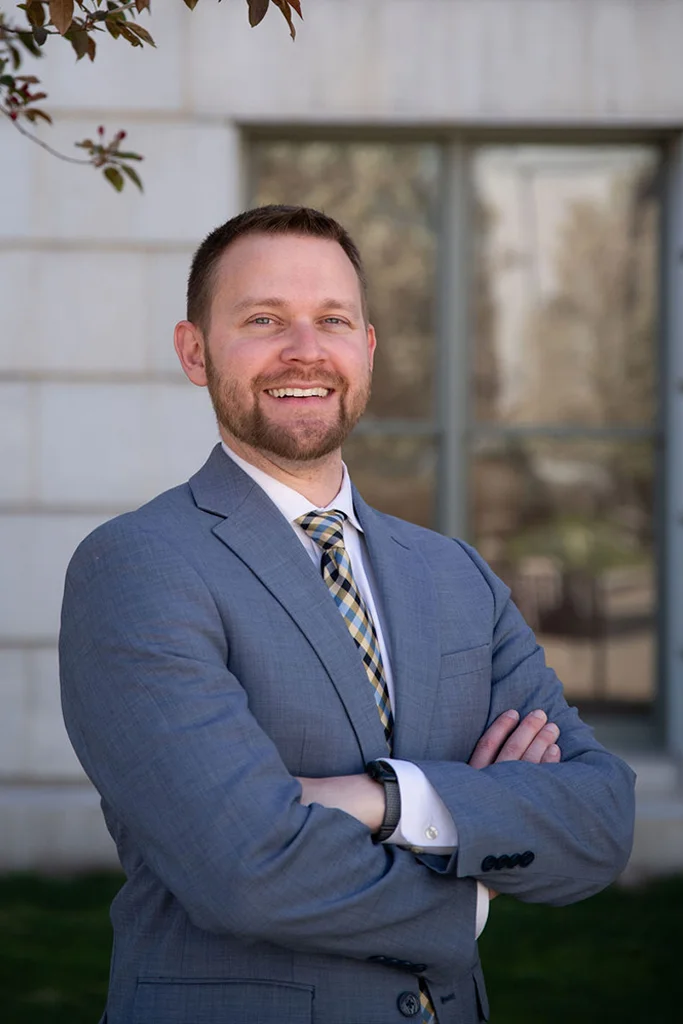
Reid DeChant at DeChant Law has built a defense practice centered on exactly these cases. His background as a former public defender means he has handled hundreds of impaired driving cases across Colorado’s Front Range courts, and his specialized DUI defense training gives him a granular understanding of the evidentiary and procedural issues that create opportunities for dismissal, reduction, or acquittal in DWAI cases.
What a DWAI Conviction Actually Costs You in Colorado
Colorado law treats DWAI and DUI as separate offenses with different elements, but the collateral consequences of a DWAI conviction often surprise people who treat it as a lower-tier problem. A first DWAI conviction is a class 2 traffic misdemeanor, but that classification does not soften the real-world impact. Colorado will assess points against your license, and accumulating enough points can trigger a suspension separate from any criminal sentence. The DMV process runs parallel to the criminal case, meaning you can face license action through an administrative hearing even before the criminal case concludes.
Fines, mandatory public service hours, and required completion of a Level I alcohol education and therapy program are standard conditions. A second DWAI, or a DWAI following a prior DUI conviction, triggers significantly enhanced penalties, including longer supervision periods and the possibility of jail time. And because a DWAI conviction lives on a criminal record, it can surface in employment background checks, professional license renewals, security clearances, and housing applications in ways that a simple traffic citation never would.
The point at which many people make their most costly mistake is accepting a DWAI plea without understanding what they are agreeing to or whether the evidence against them actually justifies conviction. Evidence problems in DWAI cases are common. Roadside sobriety tests are notoriously unreliable under real-world conditions, breath test machines require proper calibration and operator training, and blood draws must follow strict collection and storage protocols. A DWAI attorney serving Boulder County who understands these evidentiary issues can identify whether the case against you holds up to real scrutiny.
Common DWAI Situations and Charges in Boulder County
- Low BAC DWAI charges: Colorado’s DWAI threshold begins at 0.05 BAC, capturing drivers who test below the DUI level but who police believe showed signs of impairment, often based on field sobriety test observations that are highly subjective and influenced by lighting, road surface, nervousness, and medical conditions.
- DWAI-Drugs charges: Boulder County sees a significant number of DWAI cases involving cannabis, prescription medications, or other substances rather than alcohol. Drug-impairment testing lacks the objective numeric threshold that BAC provides, making these cases heavily reliant on officer observations that can be effectively challenged.
- Combination alcohol and drug DWAI: Colorado law allows prosecutors to charge DWAI based on a combination of alcohol and drugs together, even when neither substance alone would push the driver to a legally significant level, creating complex evidentiary questions about causation and impairment.
- DWAI after a traffic accident: When a stop follows an accident on roads like the Diagonal Highway, US-36, or Highway 119, law enforcement may presume impairment and build a case using the circumstances of the crash itself as evidence, even when blood draws were delayed or field testing conditions were compromised.
- Express Consent and chemical test refusal: Under Colorado’s Express Consent law, drivers who refuse a chemical test face automatic DMV action to revoke their license. This administrative case runs independently and requires prompt action, often within days of the arrest, to preserve hearing rights.
- Prior conviction enhancements: A DWAI charge following any prior alcohol or drug driving conviction, including past DWAI, DUI, or DUI-D convictions, triggers penalty enhancements under Colorado law that can transform a manageable case into one with mandatory jail exposure and longer license revocation periods.
- Commercial driver DWAI: Boulder County’s commercial drivers face a lower BAC threshold under federal regulations and risk their CDL following any impaired driving conviction, making the stakes considerably higher and the need for aggressive defense considerably greater.
What to Do After a DWAI Arrest in Boulder County
The window following a DWAI arrest is genuinely time-sensitive, and the two processes you need to manage run on different clocks. On the criminal side, you will receive a summons to appear in Boulder County Court, and you have time to retain counsel before that first appearance. On the DMV side, however, you have a narrow window after a license revocation or express consent refusal to request an administrative hearing. Missing that deadline forfeits your opportunity to contest the license action, and the revocation takes effect automatically. Contact a DWAI attorney in Boulder County as soon as possible after an arrest so that both tracks can be managed without losing critical procedural rights.
In the days immediately following your arrest, preserve every piece of information you can recall. Write down what you ate and drank that evening, where you were, the sequence of events during the stop, what the officer said and did, what instructions you were given for field sobriety tests, and whether you observed proper advisements before any chemical testing. These details matter because DWAI defense often turns on the specifics of how a stop was conducted, how testing was performed, and whether officers followed required protocols. Your memory will be clearest in the days right after the arrest.
Boulder County criminal cases arising from DWAI charges are handled through the Boulder County Justice Center at 1777 Sixth Street in Boulder. DMV administrative hearings are conducted separately, through the Colorado Division of Motor Vehicles. Your attorney can appear at and manage both proceedings. If your license was taken at the scene and you were issued a temporary driving permit, note the date it expires, because that date typically corresponds to the window for requesting a hearing.
Do not make the mistake of contacting the prosecuting agency directly or attempting to explain your situation to officers, prosecutors, or DMV representatives without legal representation. Statements made in those contexts can complicate your defense, even when made with the best intentions. Let an attorney do that communicating for you.
How DWAI Cases Actually Get Defended
Effective DWAI defense does not follow a single script. The strongest approach depends entirely on what the evidence actually looks like, which requires a lawyer who knows what to look for. Reid DeChant’s approach to impaired driving defense begins with a thorough review of the traffic stop itself: was there legal justification for the stop, was the stop pretextual, and was every required procedure followed from that moment forward? An unlawful stop can result in suppression of the evidence that follows, effectively ending the prosecution’s case regardless of what the chemical test showed.
Field sobriety testing is another area where DWAI cases frequently fall apart under scrutiny. The standardized tests used by Colorado law enforcement, including the Horizontal Gaze Nystagmus, Walk-and-Turn, and One-Leg-Stand, are validated only under specific conditions and with specific administration procedures. Officers who deviate from those procedures undermine the reliability of the results. Physical conditions, footwear, road surface, lighting, and even cold temperatures can skew performance in ways that have nothing to do with impairment. A Boulder County DWAI attorney who understands the science behind these tests can challenge their validity effectively.
Breath and blood testing present their own vulnerabilities. Breath testing devices must be properly calibrated and maintained according to state requirements, and officers administering them must hold valid certifications. Blood draws must be collected by qualified personnel, stored correctly, and analyzed with properly maintained equipment. Chain-of-custody errors, contamination, improper preservation, or fermentation of a blood sample can all affect results in ways that a defense attorney can raise with the court and with the jury if the case goes to trial.
Reid has tried DUI and DWAI cases to not-guilty verdicts in Colorado courts, including Jefferson County and Douglas County, and has secured dismissals in cases across multiple jurisdictions. His training at the Trial Lawyers College, founded by legendary attorney Gerry Spence, emphasizes authentic storytelling and genuine human connection as the foundation of effective advocacy, not just procedural arguments. That philosophy matters in DWAI cases because juries in Boulder County are evaluating a real person’s story, not just chemical data, and the ability to tell that story compellingly is what separates a good outcome from a devastating one.
Questions About Boulder County DWAI Charges
What is the difference between DWAI and DUI in Colorado?
Colorado separates impaired driving into two distinct charges. DUI applies when a driver’s blood alcohol content is 0.08 or higher, or when the driver is substantially incapable of safely operating a vehicle due to impairment. DWAI applies at a lower threshold, beginning at 0.05 BAC, where the driver’s ability is impaired to the slightest degree. The distinction matters for both penalties and for defense strategy, since DWAI cases often involve closer calls on the evidence.
Can a DWAI conviction be expunged from my record in Colorado?
Colorado’s expungement laws are limited, and adult criminal convictions are generally not eligible for expungement. A DWAI conviction on an adult record typically remains. However, a record seal may be available for certain cases that were dismissed or resolved without a conviction. This is another reason why fighting a DWAI charge before it becomes a conviction is so important.
Will I lose my license after a DWAI charge in Boulder County?
A DWAI charge triggers two separate license-related processes. On the criminal side, a conviction results in points assessed against your license, which can accumulate to a suspension threshold. On the administrative side, if you were subject to an Express Consent advisement and either tested over the limit or refused, the DMV will seek to revoke your license through an administrative process. You have the right to request a hearing to contest that action, but the deadline to do so is short and runs from the date of your arrest.
Does a DWAI charge affect auto insurance rates?
Yes, significantly. Colorado insurance carriers treat any impaired driving conviction, including DWAI, as a major risk factor. Expect substantial premium increases, and in some cases, carriers may drop a driver following a conviction. The financial impact of elevated insurance costs over multiple years often exceeds the direct fines and fees associated with the charge itself.
What happens at a DMV Express Consent hearing in Colorado?
The Express Consent hearing is an administrative proceeding conducted by the Colorado DMV, separate from the criminal case. A hearing officer reviews whether the officer had reasonable grounds to believe you were driving under the influence, whether a proper Express Consent advisement was given, and whether the test result or refusal meets the standard for revocation. DeChant Law has secured dismissals of DMV Express Consent actions by identifying failures in the advisement process and other procedural defects.
I only had a couple of drinks and felt fine. How can I be charged with DWAI?
Colorado’s DWAI law does not require that a driver feel impaired. It requires that the substance affected the driver’s ability to operate a vehicle to the slightest degree, and that determination is made by officers using subjective field observations and by testing against a numeric threshold. Drivers with low body weight, those who ate little that day, or those who metabolize alcohol more slowly may reach the 0.05 threshold without subjective awareness. This mismatch between perceived condition and legal threshold is one of the most frustrating aspects of DWAI charges and one of the most important reasons to contest the evidence carefully.
Can a DWAI affect my professional license in Colorado?
Depending on your profession, yes. Colorado licensing boards for healthcare workers, teachers, attorneys, financial professionals, and others may require disclosure of criminal convictions including DWAI, and some boards treat impaired driving convictions as grounds for discipline, additional conditions on a license, or in repeat situations, suspension or revocation. The consequences vary significantly by profession and licensing body, but anyone holding a professional license should treat a DWAI charge as a career-level issue, not just a traffic matter.
How long does a DWAI case typically take to resolve in Boulder County?
Boulder County courts handle a substantial volume of impaired driving cases, and timelines vary based on complexity, whether the case involves a jury trial, and court scheduling. Cases that resolve through a plea agreement may conclude within a few months of the initial appearance. Cases that proceed to trial, where the evidence warrants it, typically take longer. Your attorney can give you a more specific estimate after reviewing the facts of your case and the current court calendar.
Is it worth fighting a DWAI charge if the chemical test result was just above 0.05?
Cases at or just above the DWAI threshold are often the most defensible. At that level, small variations in testing accuracy, calibration, sample handling, or the timing of the test relative to when you were actually driving can all affect whether the result genuinely establishes the legal standard for DWAI. The Colorado Supreme Court has recognized that breath and blood testing is not infallible, and borderline results deserve rigorous scrutiny. A case that looks straightforward on paper may have significant evidentiary problems that only become visible when the evidence is closely examined by someone who knows what to look for.
What if the officer did not read me my Miranda rights?
Miranda applies to custodial interrogation, and its application in DWAI cases is often misunderstood. Statements made during a traffic stop before formal arrest may not be protected, while statements made during a custodial interrogation without Miranda warnings may be suppressible. The analysis is fact-specific and depends heavily on when custody began and what questions were asked. DeChant Law has obtained DMV hearing dismissals in cases where Express Consent advisements were given after Miranda was triggered, creating procedural grounds to challenge the license revocation.
Boulder County DWAI Defense Across the Region
DeChant Law represents clients facing DWAI and DUI charges throughout Boulder County and the surrounding Front Range communities. This includes clients from the city of Boulder itself, including those arrested near the Hill neighborhood, on Broadway, along Baseline Road, or in the Gunbarrel and Gunpark areas to the east. Longmont residents facing DWAI charges in Boulder County District Court or Longmont Municipal Court are also well within the firm’s regular service area. The firm regularly represents clients from Lafayette, Louisville, Superior, and Erie, communities that have grown significantly along the US-36 corridor where traffic enforcement is active and DWAI arrests are not uncommon.
Clients from Nederland and the mountain communities along Highway 119 and Highway 72, including Ward and Jamestown, find that the rural nature of those stops does not make them easier to defend and often introduces different evidentiary issues worth examining carefully. The firm also serves clients from Lyons, from the Niwot and Hygiene communities, from Allenspark, and from the Eldora area west of Boulder. Beyond Boulder County, DeChant Law extends its impaired driving defense representation to clients in Broomfield County, Jefferson County, Adams County, and the broader Denver metropolitan area, reflecting Reid DeChant’s experience practicing across these jurisdictions as a former public defender.
Talk to a Boulder County DWAI Attorney Before You Decide Anything
A DWAI charge in Boulder County is not something to sit on while you figure out whether it is serious enough to warrant real legal help. The DMV clock is already running, the prosecutor is building a file, and the decisions made in the earliest stage of a case, what to say, whether to request a hearing, how to approach the first court appearance, are the ones that tend to matter most. Reid DeChant is a Boulder County DWAI attorney who has spent his career defending exactly these cases, with the trial experience, specialized DUI training, and personal investment in every client’s outcome to back that up. Call DeChant Law to speak directly with Reid about what happened, what the evidence looks like, and what realistic options exist for your case.