Aurora Probation Violation Lawyer
Probation feels like a second chance until the moment someone accuses you of violating it. At that point, the rules change completely. Unlike the original criminal case, a probation violation hearing does not carry the same constitutional protections most people expect. There is no jury. The standard of proof is lower. And a judge can send you to jail or prison based on evidence that would never secure a conviction at trial. If you are facing a violation of probation allegation in Aurora or Arapahoe County, the response you make in the next few days matters enormously. An Aurora probation violation lawyer who understands how these hearings actually unfold, and how probation officers and prosecutors approach them in this jurisdiction, can be the difference between maintaining your freedom and serving the sentence you thought you had avoided.
Probation in Colorado is supervised by the Colorado Division of Probation Services, and the officers assigned to Aurora and Arapahoe County cases are not passive observers. They file violation reports when they believe conditions have been breached, and those reports carry significant weight with judges. The violation could stem from something as serious as a new arrest, or something as technical as a missed appointment, a positive drug test, or a failure to complete a required class. Whatever the allegation, a probation violation hearing in Arapahoe County District Court or Aurora Municipal Court moves on its own timeline, and waiting to find representation puts you at a disadvantage from the start.
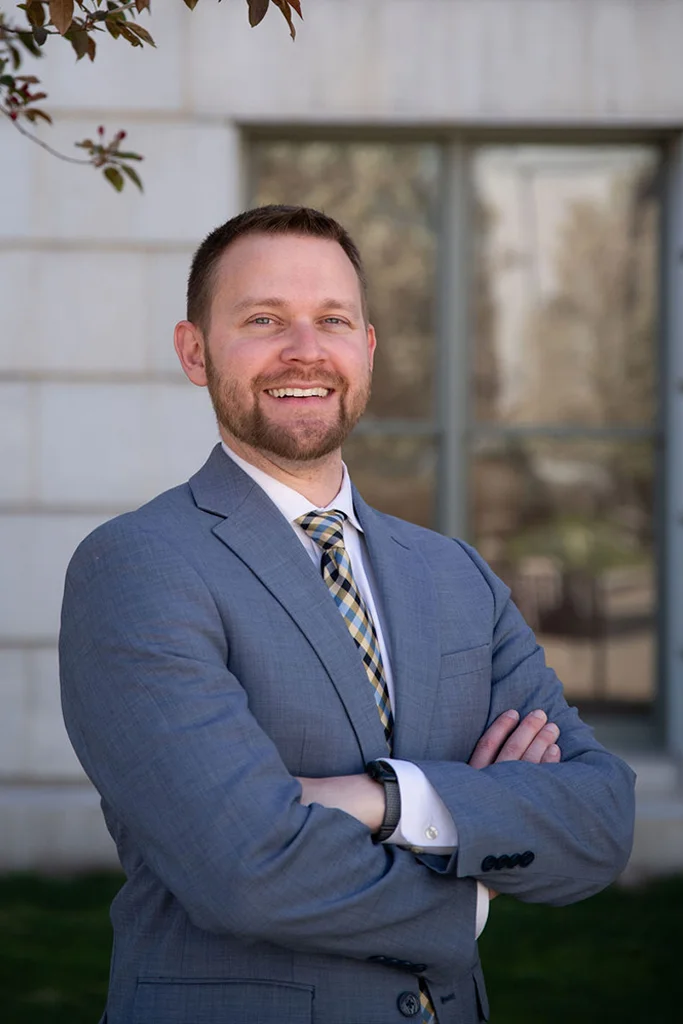
Reid DeChant has handled cases throughout Arapahoe County and the Denver metro area, including cases involving violations filed against clients who had every intention of complying with their terms. Sometimes the probation system creates situations where technical violations are unavoidable. Sometimes the facts underlying an alleged violation are genuinely disputed. And sometimes the right outcome is negotiating a modification rather than fighting the allegation outright. The approach depends on what actually happened, who filed the violation, and what the judge in your case responds to. That kind of situational judgment only comes from real courtroom experience.
How Probation Violation Cases Actually Play Out in Arapahoe County
Most people placed on probation in Colorado receive a list of conditions that can feel straightforward at the outset. Report to your probation officer. Pay your fines and fees. Complete community service hours. Attend treatment or counseling. Do not pick up any new charges. Comply with drug testing. What many people do not realize until it is too late is how little margin for error exists, and how quickly the system moves when a probation officer decides to file a report.
Once a violation report is filed, a judge can issue a warrant for your arrest or summon you to appear. If a warrant issues, you can be held without bond until the violation hearing, which is one of the most alarming aspects of this process. The person who just spent months demonstrating they could comply with supervision can find themselves sitting in the Arapahoe County Detention Facility while their hearing date gets scheduled. During this period, the quality and speed of your legal representation matters more than at almost any other point in the case.
At the violation hearing itself, the prosecution does not need to prove the violation beyond a reasonable doubt. Colorado courts apply a preponderance of the evidence standard, meaning the judge only needs to believe it is more likely than not that the violation occurred. Hearsay evidence is generally admissible. The probation officer’s written report carries real evidentiary weight. These procedural realities make it critical to have a probation violation attorney in Aurora who knows how to challenge the underlying evidence, cross-examine witnesses effectively, and present mitigation that gives the judge a reason to keep you on supervision rather than send you to prison.
What DeChant Law Brings to Your Probation Violation Defense
Reid DeChant built his practice on real courtroom experience, and that distinction matters acutely in probation violation cases. As a former public defender, Reid handled cases in Denver, Broomfield, and Adams County courtrooms across an enormous range of charges and post-sentencing issues. He has stood beside clients at some of their most difficult moments, and he understands that a probation violation is not just a legal technicality. For many people, it represents the potential collapse of everything they worked to rebuild after an original conviction.
Reid is a graduate of the Trial Lawyers College, the program founded by legendary attorney Gerry Spence that trains lawyers in storytelling, authentic human connection, and courtroom advocacy rooted in genuine client relationships. That training is directly relevant to probation violation work, because judges presiding over these hearings are deciding what kind of person you are, whether you are someone who deserves continued supervision or someone who has demonstrated they cannot comply. Reid knows how to present your story in a way that is honest, credible, and compelling, not as a defense attorney performing a role, but as someone who actually knows you and believes in your case.
DeChant Law has earned recognition from national attorney rating organizations, holds active membership in the National Association of Criminal Defense Lawyers and the Colorado Criminal Defense Bar, and maintains a case results record that includes trial wins, case dismissals, and favorable outcomes across Arapahoe County and the surrounding jurisdictions. The firm has secured not-guilty verdicts and dismissals in cases handled out of Arapahoe County, Jefferson County, Douglas County, Adams County, and elsewhere across the metro area. That breadth of experience across Colorado’s Front Range courts means Reid understands how different judges and prosecutors approach post-conviction supervision issues in ways that a generalist attorney simply cannot.
Common Allegations That Trigger Probation Revocation in Aurora
- New criminal charges: A new arrest, even without a conviction, can prompt a probation officer to file a violation report, and Aurora police activity along Colfax Avenue, Havana Street, and the commercial corridors near Aurora Town Center frequently generates new-charge violations for people already under supervision in Arapahoe County.
- Failed or missed drug and alcohol tests: Colorado probation conditions frequently require regular UA testing, and a positive result or a missed test can each be treated as a separate violation, even when the underlying offense had nothing to do with substance use.
- Failure to report to a probation officer: Missing a scheduled check-in, whether due to transportation issues, employment conflicts, or a simple miscommunication, is one of the most common technical violations filed in Arapahoe County.
- Non-payment of fines, fees, or restitution: Courts cannot revoke probation solely for inability to pay, but when an officer believes non-payment reflects willful non-compliance, violations are still filed and judges still have discretion in how they respond.
- Failure to complete required programs: Domestic violence treatment, alcohol education classes, community service hours, and sex offender treatment are all conditions that carry strict completion deadlines, and falling behind can prompt revocation regardless of how compliant someone has been otherwise.
- Unauthorized travel or contact violations: Some probationers are restricted from leaving Arapahoe County or contacting specific individuals, and any deviation from these geographic or contact restrictions, even brief ones, can form the basis of a violation report.
- Possession of prohibited items: People on probation for certain offenses are prohibited from possessing weapons, alcohol, or controlled substances, and law enforcement contact that reveals any of these items can trigger both a new charge and a violation.
What to Do If You Have Been Accused of Violating Probation in Aurora
Do not contact your probation officer to explain yourself before you have spoken with an attorney. Whatever you say to your probation officer can be included in the violation report and used at your hearing. The instinct to call and clear things up is understandable, but it frequently makes the situation worse. The same is true of speaking with law enforcement, giving written statements, or attempting to address the underlying situation on your own.
If a warrant has been issued for your arrest, you need to address it proactively with an attorney who can appear with you or help arrange a surrender in a way that maximizes the chance of you being released before the hearing. Sitting on an active warrant in Arapahoe County increases your risk of being picked up during any routine traffic stop and then being held in the Arapahoe County Detention Facility, located at 7375 South Potomac Street in Centennial, until your hearing date. That is a situation worth avoiding if there is any way to do so.
Gather any documentation that speaks to your compliance efforts: pay stubs showing employment, receipts for payments made, completion certificates from any programs, medical records that might explain a missed appointment, or communication records that show you attempted to reach your probation officer. Even if a technical violation occurred, documentation of good-faith effort matters at the hearing stage. Judges handling probation violations in Arapahoe County District Court have broad discretion, and presenting a complete picture of your circumstances gives the court a reason to consider alternatives to revocation, such as modifying your conditions, ordering a brief jail sanction with reinstatement, or continuing supervision under stricter terms.
Probation violation hearings in Arapahoe County are handled at the Arapahoe County Justice Center, located at 7325 South Potomac Street in Centennial. Aurora Municipal Court handles violations stemming from municipal probation cases at the Aurora Municipal Center. Knowing which court your case is in matters because the procedures and the judicial culture in each venue differ, and an attorney who practices regularly in both can calibrate the defense strategy accordingly.
Questions Aurora Residents Ask About Probation Violation Cases
Can the judge send me to prison for a probation violation even if the original charge was minor?
Yes. If you were sentenced to probation as an alternative to jail or prison time, a revocation can result in the judge imposing the suspended sentence, which may be significantly longer than you expected. This is one of the most important things to understand: probation is not a guarantee that you will not serve time. It is a conditional arrangement, and the conditions carry real consequences if revoked.
What happens at the initial appearance after a probation violation warrant is served?
At the initial appearance, the judge will address whether to set bond or hold you without bond pending the revocation hearing. The prosecution often argues for no bond on the grounds that the violation itself demonstrates a risk of non-compliance. Having an attorney present at this hearing to argue for reasonable conditions of release is critical and often overlooked.
Does the lower standard of proof mean I should not bother defending myself?
Not at all. The lower standard of proof makes vigorous defense more important, not less, because the playing field is already tilted toward the prosecution. A defense attorney can still challenge the credibility of evidence, establish that the alleged violation did not actually occur, or present facts that undermine the probation officer’s conclusions. Even when some violation did occur, effective advocacy around mitigation and context frequently results in an outcome short of full revocation.
Can I request a continuance to give myself more time to come into compliance before the hearing?
In some cases, yes. A continuance can be strategically valuable if it allows you to complete a treatment program, make overdue payments, or otherwise demonstrate compliance before the judge evaluates your conduct. An attorney who understands the local court’s scheduling practices can help determine whether requesting a continuance is likely to help or hurt in your specific situation.
What if my probation violation is based on a new arrest that I believe is wrongful?
This is a genuinely complicated situation because two separate proceedings run simultaneously. The new criminal case and the probation violation case are technically independent, but what happens in one can influence the other. If the new charges are dismissed or resolved favorably, that outcome matters at the violation hearing, but it does not automatically resolve the violation. Having coordinated representation that addresses both cases together is important when this situation arises.
Will my probation officer’s written report automatically be accepted as true by the judge?
Probation officers have credibility with courts, and their written reports are taken seriously. However, those reports can be challenged. Factual inaccuracies, procedural failures in how the violation was documented, and context that the report does not include can all be raised through an attorney’s advocacy. A probation officer’s account is not the final word.
Can my probation conditions be modified instead of revoked?
Yes, and in many cases modification is a realistic and appropriate outcome. Judges in Colorado have the authority to modify probation conditions rather than revoke supervision entirely. This might mean adding more frequent check-ins, requiring additional treatment, or adjusting conditions that have become unworkable. Presenting a modification as a viable alternative often requires demonstrating that you have complied in good faith with most conditions and that the violation was the result of a specific, addressable circumstance.
How long can the probation violation process take in Arapahoe County?
The timeline varies depending on whether you are in custody, the complexity of the allegations, and the court’s calendar. If you are held without bond, the process tends to move faster because of speedy hearing rights. If you are released pending the hearing, the case may take several months to reach a resolution. In cases involving new criminal charges as the basis for the violation, the timeline can extend significantly while the underlying case works its way through the system.
Does a probation violation stay on my record?
The probation violation itself, as a court proceeding, will appear in court records. If revocation results in a new sentence being imposed, the record reflects that sentencing outcome. The original conviction, the probation order, and any revocation proceedings are all generally accessible to subsequent employers, landlords, and licensing agencies doing background checks. This makes the outcome of a violation hearing matter far beyond the immediate question of jail time.
What should I do if my probation officer has told me they are filing a report but no warrant has issued yet?
Contact a probation violation attorney in Aurora immediately. The period between when a report is filed and when a warrant issues, or when a summons is sent, is often the best window to take proactive steps. In some cases, an attorney can communicate with the probation department or the court in ways that influence how the violation is handled before it becomes a formal revocation proceeding. That window is narrow and you should not wait to use it.
Representing Probation Violation Clients Across Aurora and Arapahoe County
DeChant Law represents clients facing probation violation proceedings across Aurora’s neighborhoods and surrounding communities. From the areas near Fitzsimons and the Anschutz Medical Campus through the central Aurora neighborhoods around Alameda and Havana, and out to the residential communities near Smoky Hill Road and E-470, Reid DeChant handles probation cases throughout Arapahoe County. The firm also represents clients from the communities of Centennial, Englewood, Littleton, Greenwood Village, Cherry Hills Village, and Sheridan, as well as individuals from Glendale, Bennett, and Strasburg whose cases are handled in Arapahoe County courts. Cases originating from municipal courts in Aurora’s downtown area, near the Aurora City Center and Civic Center Complex, and cases docketed in Arapahoe County District Court are both within the firm’s regular practice area. The broader metro corridor from Parker and Castle Rock to the south through Aurora and into Denver to the north represents the geographic range where Reid regularly appears on behalf of clients.
Talk to an Aurora Probation Violation Attorney Before Your Hearing
Probation violations move fast, and the decisions made early in the process shape what options are still available when you walk into the courtroom. An Aurora probation violation attorney who has genuine trial experience, who understands how Arapahoe County judges approach revocation hearings, and who treats clients as partners in their own defense can make a meaningful difference in how this situation resolves. Reid DeChant has built his practice on exactly this kind of representation, and he is available to discuss your case directly. Do not wait for a warrant to arrive or a hearing date to be scheduled. Call DeChant Law today and start building your defense while you still have time to shape what happens next.