Aurora Gun Crimes Lawyer
Gun charges in Aurora carry consequences that extend far beyond the immediate case. A conviction can permanently strip you of your right to possess firearms, trigger mandatory minimum sentences under Colorado law, and follow you in ways that affect employment, housing, and professional licensing for the rest of your life. An Aurora gun crimes lawyer who understands how Arapahoe County and Adams County prosecutors approach weapons cases can make a real difference in how your case resolves, not just whether you walk into court with representation.
Aurora sits at the crossroads of several jurisdictions, and gun charges filed here can end up in Arapahoe County District Court, Adams County District Court, or even federal court depending on where the alleged offense occurred and who brought the charges. The Aurora Police Department works closely with federal agencies including the ATF on cases involving illegal trafficking, straw purchases, and firearms connected to other criminal activity. What starts as a local arrest can escalate quickly, and the charging decisions made in the early days of a case often determine where the ceiling sits for potential punishment.
Colorado’s weapons statutes are layered and often counterintuitive. The state has its own concealed carry permitting system, its own background check database, and restrictions on magazine capacity and certain weapon types that exist alongside federal law. A person can believe they are acting entirely within their rights and still face a serious felony charge. That gap between what people assume the law allows and what it actually prohibits is exactly where gun cases get made or lost.
How Colorado Classifies the Gun Charges Most Common in Aurora
- Illegal discharge of a firearm: Discharging a weapon in a populated area like Aurora is a felony under Colorado law, with charges escalating based on whether the discharge was into an occupied structure or vehicle. Aurora neighborhoods along Colfax, near Fitzsimons, and in the residential corridors off Hampden Avenue have seen enforcement of these statutes, particularly following incidents tied to disputes or celebration gunfire.
- Prohibited person in possession: Colorado prohibits anyone with a prior felony conviction, a domestic violence conviction, or certain other disqualifying factors from possessing a firearm. This charge applies even to temporary possession and is often added on top of other charges when police discover a weapon during an unrelated stop or search.
- Unlawful concealed carry: Carrying a concealed handgun without a valid Colorado concealed carry permit or a qualifying out-of-state permit is a misdemeanor, but subsequent offenses and aggravating circumstances can push the charge higher. Aurora and surrounding Arapahoe County law enforcement encounter this charge regularly during traffic stops on I-225, I-70, and E-470.
- Possession with intent to distribute combined with a firearm: When a weapon is found alongside drugs or drug paraphernalia, prosecutors routinely stack weapons charges on top of drug charges. The combination dramatically increases sentencing exposure and triggers different plea negotiation dynamics than either charge alone.
- Straw purchases and trafficking: Buying a firearm on behalf of someone who cannot legally purchase one is a federal felony. Aurora cases involving suspected trafficking often draw ATF involvement, shifting prosecution from state court to the federal District of Colorado in Denver, where sentencing guidelines are significantly harsher.
- Menacing with a deadly weapon: Using or threatening to use a firearm to place someone in fear of imminent bodily injury is charged as a felony when a deadly weapon is involved. This charge appears frequently in Aurora domestic violence cases and in disputes that escalate in commercial or residential settings.
- Possession of a defaced or illegal weapon: Possessing a firearm with an obliterated serial number, an unregistered short-barreled rifle or shotgun, or certain other regulated weapon types is a separate criminal offense that can layer onto other charges and significantly affect plea outcomes.
What to Do When You Are Facing a Gun Charge in Aurora
The period immediately after an arrest for a gun offense is when the most important decisions get made, often by prosecutors who have not yet heard your side of the situation. In Arapahoe County, gun cases are prosecuted through the 18th Judicial District, which covers Aurora along with Centennial, Englewood, Littleton, and other communities. The courthouse handling felony matters is the Arapahoe County Justice Center in Centennial. If your arrest occurred in the portion of Aurora that falls within Adams County, cases are handled through the 17th Judicial District at the Adams County Justice Center in Brighton.
Your first appearance will happen quickly, often within 24 to 48 hours of arrest. Bond is set at this hearing, and in gun cases involving violent allegations or prior criminal history, prosecutors frequently argue for high bond or no bond. Having an attorney present at the bond hearing is not a formality. Judges weigh arguments about flight risk and public safety, and an attorney who can present facts about your ties to the community, your employment, and the specific circumstances of your case can change the bond outcome meaningfully.
After the bond hearing, the next critical deadline is the preliminary hearing or advisement stage, where the court reviews whether probable cause supports the charges. This is an opportunity to begin examining the evidence and identifying weaknesses before the case moves into full discovery. One of the most common mistakes people make with gun charges is waiting too long to retain an attorney, hoping the charges will resolve themselves or that a public defender will have time to dig into the details before the first hearing. The earlier your attorney is involved, the more options exist.
Document everything you remember about your arrest immediately: what officers said, where you were, whether you consented to any search, whether Miranda warnings were given, and exactly how the weapon was discovered. This information matters for evaluating whether a motion to suppress evidence might be viable. Gun cases often hinge on the constitutionality of the stop and search that preceded the discovery of the firearm. If the stop lacked reasonable suspicion or the search exceeded its lawful scope, evidence obtained from it can sometimes be excluded, which changes the entire trajectory of the case.
What Aurora Gun Cases Actually Look Like at Trial
Gun charges that go to trial in Arapahoe County or Adams County are built largely around physical evidence and officer testimony. The firearm itself is usually the centerpiece, but how it was found, where it was, who had access to it, and what officers claim they observed before making contact all become contested factual questions. Defense work in these cases often involves scrutinizing the chain of custody for the weapon, examining dashboard and body camera footage, and challenging the officer’s account of events leading to the search.
Constructive possession is a concept that generates real complexity in gun cases. You do not have to be holding a firearm to be charged with possessing it. If a weapon is found in a car, a home, or a space where multiple people had access, the prosecution must prove beyond a reasonable doubt that you knew the weapon was there and had the ability and intent to exercise control over it. In cases involving shared residences or vehicles, this becomes a genuinely disputed issue that experienced defense attorneys can effectively challenge.
Character evidence and context also matter more in gun cases than most defendants expect. Juries in Arapahoe County are drawn from a suburban population with a range of views on firearms, and how the defendant is presented as a person, what their actual history looks like, and what the real context of the incident was can shift jury perception in significant ways. This is where the kind of trial advocacy Reid DeChant developed through his training at the Trial Lawyers College becomes tangible. A defense built around the human being charged, not just the technical legal defenses, often reaches juries more effectively than a defense focused purely on legal arguments.
Why DeChant Law Handles Aurora Firearms Cases Differently
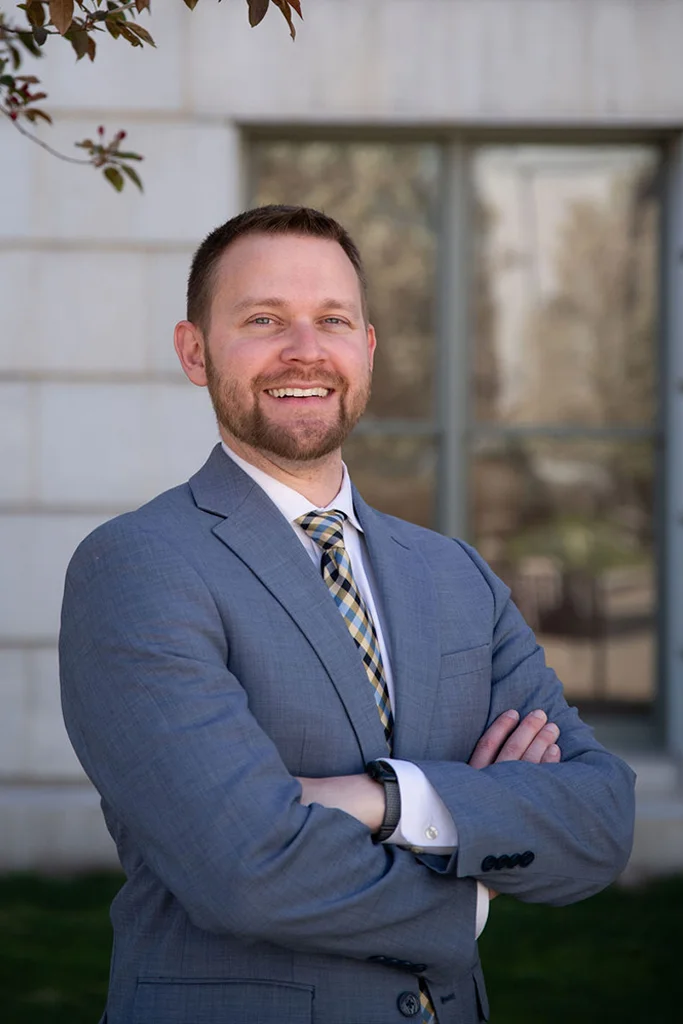
Reid DeChant built his practice through years as a public defender handling high-volume felony caseloads in Denver, Broomfield, and Adams County courtrooms. That background means Reid has handled weapons cases at every level of complexity, from first-time possession charges to serious violent felonies involving firearms. He has litigated suppression motions, cross-examined Aurora Police Department officers, and represented clients at jury trial on charges ranging from assault with a deadly weapon to prohibited person in possession. The case results on DeChant Law’s website reflect a consistent track record of trials that resulted in not guilty verdicts or dismissed charges, including two separate not guilty verdicts on assault with a deadly weapon counts.
Reid’s membership in the National Association of Criminal Defense Lawyers and the Colorado Criminal Defense Bar keeps him current on evolving Fourth Amendment search and seizure law, which is the backbone of most firearms suppression arguments. These organizations also connect him to the broader defense community, which matters when complex firearms or federal overlay issues require collaborative thinking about strategy.
Clients working with an Aurora gun crime attorney at DeChant Law are not passed off to junior staff or handled through quick phone calls. Reid communicates directly and keeps clients informed at every stage, because people facing serious charges deserve to understand what is happening with their own case. That transparent approach to client relationships is not just a preference, it is how Reid believes good defense work actually functions.
Questions About Aurora Firearms Charges, Answered
What is the difference between a misdemeanor and felony gun charge in Colorado?
Colorado classifies weapons offenses across several levels depending on the specific conduct, the weapon type, and the circumstances. Unlawful concealed carry without a permit is typically a misdemeanor for a first offense, while charges involving prohibited persons possessing firearms, illegal discharge, or weapons used in connection with other felonies are generally charged as felonies. Felony convictions carry significantly longer potential prison terms and have more lasting collateral consequences.
Can I be charged with a gun crime even if I did not fire the weapon?
Yes. Many of the most common firearms charges in Aurora have nothing to do with firing a weapon. Possession charges require only that you knowingly had the firearm in your control. Menacing charges require only that you used or threatened to use it in a way that caused someone fear. You can also be charged for carrying or transporting a weapon in ways that violate Colorado’s specific laws, regardless of whether it was ever used.
Will a gun charge in Aurora affect my concealed carry permit?
A conviction for certain weapons offenses or any felony will result in the revocation of a Colorado concealed carry permit and may permanently disqualify you from obtaining one in the future. Even a deferred judgment or plea to a qualifying offense can trigger permit consequences depending on how the case is resolved. This is one reason that how a case resolves, not just whether you avoid prison, matters significantly.
Can federal charges be filed for a gun case that started as a local Aurora arrest?
Yes. Federal agencies, particularly the ATF, maintain a presence in the Denver metro area and actively monitor state-level gun arrests for cases that have federal dimensions. Straw purchases, trafficking, possession of an unregistered regulated firearm, and firearms found in connection with drug offenses can all trigger federal prosecution. Federal cases are handled at the U.S. District Court for the District of Colorado in Denver, and federal sentencing guidelines generally result in longer sentences than comparable state charges.
What defenses are available when a gun is found during a traffic stop?
Traffic stops are the most common gateway to gun charges in Aurora. If the stop itself lacked reasonable suspicion, everything discovered afterward, including a firearm, may be subject to suppression. Similarly, if officers expanded the scope of the stop without justification, or if a search exceeded the lawful scope of a consent or probable cause search, evidence can potentially be excluded. Body camera and dashcam footage from Aurora PD and Arapahoe County Sheriff vehicles often becomes critical in evaluating whether the stop and search were lawful.
Does Colorado have mandatory minimum sentences for gun crimes?
Colorado has sentence enhancement provisions that apply when firearms are involved in certain offenses, and specific charges carry minimum sentencing requirements that restrict a judge’s ability to impose a lighter sentence. The availability and terms of deferred sentencing, probation, and other alternatives to prison time depend heavily on the specific charge, the defendant’s prior record, and how the case is negotiated or litigated. An attorney familiar with how the 18th Judicial District handles these cases can give you a realistic picture of what sentencing exposure actually looks like for your specific situation.
Can I own a gun if I had a felony conviction expunged or sealed in Colorado?
Record sealing in Colorado does not restore federal firearms rights. The federal prohibition on felons possessing firearms is governed by federal law, and a state court’s decision to seal or expunge a record does not override that prohibition. The only pathway to restoring federal firearms rights after a felony conviction is a gubernatorial pardon or a federal court order, both of which are rarely granted. This distinction catches many people off guard who assume that a sealed record clears all collateral consequences.
What happens if I had a valid concealed carry permit from another state when I was stopped in Aurora?
Colorado recognizes concealed carry permits from a specific list of states under reciprocity agreements. If your home state has a current reciprocity agreement with Colorado and your permit was valid at the time of the stop, you may have a complete defense to an unlawful carry charge. However, reciprocity agreements can change, and the terms of what conduct each state’s permit authorizes can differ. Whether your out-of-state permit was actually valid and applicable in your specific situation is a factual and legal question worth examining carefully.
How does a domestic violence designation affect a gun charge in Aurora?
When a firearms offense arises in the context of a domestic violence incident, the case involves both state criminal charges and federal firearms consequences. Under federal law, a conviction for any misdemeanor crime of domestic violence permanently disqualifies a person from possessing firearms. Aurora prosecutors and the Arapahoe County DA’s office take domestic violence cases seriously, and the combination of a DV designation with a weapons charge substantially increases both the difficulty of the prosecution and the potential consequences of a conviction.
How long does a felony gun case typically take to resolve in Arapahoe County?
Felony firearms cases at the 18th Judicial District level typically move through an advisory hearing, a preliminary hearing, case management conferences, and then either a plea resolution or trial setting. The total timeline from arrest to resolution varies considerably based on complexity, court scheduling, and whether the case goes to trial, but a contested felony matter often takes six months to over a year. Cases involving federal charges or multi-agency investigations can take longer. Early and thorough engagement with the defense process typically produces better options for resolution, regardless of timeline.
Aurora Gun Crime Defense Representation Across the Metro Area
DeChant Law represents clients facing firearms charges throughout Aurora and the surrounding communities. Aurora itself spans both Arapahoe County and Adams County, and cases arise across neighborhoods including Stapleton, Montbello, Havana Street corridors, the Fitzsimons area, Aurora Hills, Seven Hills, Tallyn’s Reach, and the developments along E-470. Beyond Aurora’s boundaries, Reid handles gun cases in Centennial, Greenwood Village, Englewood, Littleton, and other Arapahoe County communities whose cases are filed at the Centennial courthouse. Adams County cases from Commerce City, Northglenn, Thornton, Westminster, and Brighton also fall within the firm’s regular practice area. For matters that escalate to federal court, the firm handles those proceedings at the U.S. District Court for the District of Colorado in Denver, which serves the entire metro region. Whether your case is a single misdemeanor weapons charge in a municipal setting or a complex multi-count felony with federal dimensions, the approach is the same: thorough preparation, honest communication, and defense work built around your specific circumstances.
Talk to an Aurora Gun Crimes Attorney About Your Case
Firearms charges in Colorado are not the kind of cases where a wait-and-see approach works in your favor. Prosecution timelines move quickly, and the early decisions about evidence, charging, and plea options are made without your input unless you have legal representation actively engaged. If you are facing a weapons charge anywhere in Aurora or the surrounding Arapahoe County and Adams County communities, an Aurora gun crimes attorney at DeChant Law will sit down with you, go through the details of your arrest, and give you an honest assessment of where your case stands and what your real options are. Reach out to DeChant Law to schedule a consultation.