Aurora DWAI Lawyer
A DWAI charge in Aurora carries consequences that extend far beyond the initial traffic stop. Colorado’s driving while ability impaired statute applies when a driver’s blood alcohol content registers between 0.05 and 0.08, or when drugs, alcohol, or a combination of both affects driving ability to the slightest degree. That “slightest degree” language is deliberately broad, and prosecutors use it aggressively. An Aurora DWAI lawyer who understands how Arapahoe County prosecutes these cases, how local law enforcement conducts stops along East Colfax Avenue, Havana Street, and the E-470 corridor, and how the DMV license revocation process runs parallel to criminal court proceedings is not a luxury. It is the difference between a clean outcome and a conviction that follows you for years.
What most people charged with DWAI in Aurora do not realize is that DWAI carries its own independent set of penalties under Colorado law, separate from DUI. A first offense brings mandatory public service hours, fines, possible jail time, and license points that can push a driver toward suspension. A second or subsequent DWAI escalates significantly, and when DWAI charges get combined with DUI charges in the same case, or when drugs rather than alcohol are the basis, the legal terrain becomes considerably more complicated. The Aurora Municipal Court handles some DWAI matters, while the Arapahoe County District Court in Centennial handles others depending on where within Aurora the stop occurred and how the charge is filed.
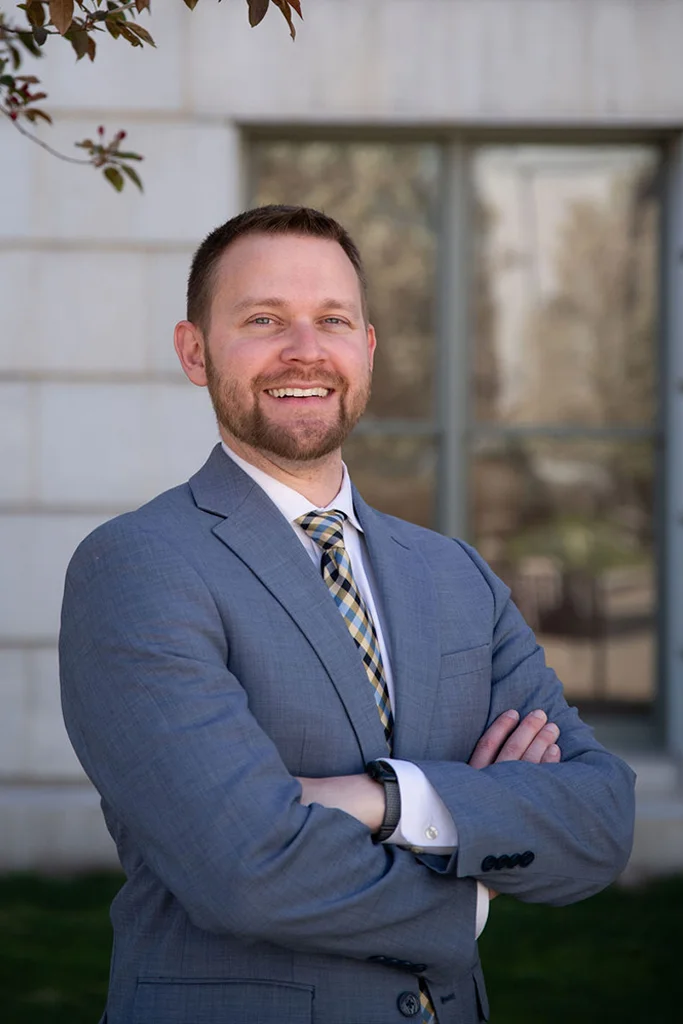
DeChant Law defends DWAI cases across Aurora and the surrounding jurisdictions. Attorney Reid DeChant brings a background shaped by years of public defender work in Denver, Broomfield, and Adams County courtrooms, alongside training at the Trial Lawyers College, to every impaired driving defense he handles. If you are looking at a DWAI charge in Aurora, understanding how these cases are built, where they break down, and what an effective defense actually looks like is where you need to start.
What Aurora DWAI Cases Actually Look Like From the Inside
DWAI prosecutions in Aurora typically begin at a traffic stop. The officer observes some driving behavior, initiates contact, notes field observations like odor, speech, or eye appearance, and administers Standardized Field Sobriety Tests. Those tests include the Horizontal Gaze Nystagmus evaluation, the Walk-and-Turn, and the One-Leg-Stand. Each of these tests has a specific administration protocol. Deviations from that protocol create grounds to challenge the reliability of the results, and Colorado courts have repeatedly addressed what it means for an officer to properly administer and score these evaluations.
If a chemical test produces a result between 0.05 and 0.08, Colorado law permits a jury to infer that the driver was impaired to the slightest degree. But that inference is rebuttable. Defense attorneys challenge breathalyzer calibration records, the timing between the traffic stop and the test administration, and whether the officer followed required observation periods before testing. For DWAI-drugs cases, the government must present evidence that a specific substance actually impaired driving ability, which often involves Drug Recognition Expert testimony. DRE evaluations have their own reliability challenges, and Reid DeChant has the background to interrogate that evidence effectively.
Aurora sees a heavy volume of impaired driving stops along its major commercial corridors. The stretch of Havana Street between Alameda Avenue and Mississippi Avenue, the Buckley Road area near mixed commercial development, and the Colfax corridor that runs through both Aurora and Denver all generate significant patrol activity, particularly during late weekend hours and after events at the nearby venues in the area. Understanding where stops happen and how local agencies approach impaired driving enforcement matters when building a defense.
The Charges and Consequences Worth Understanding Before You Decide How to Respond
- Standard DWAI (first offense): Colorado classifies a first DWAI as a class A traffic offense rather than a criminal misdemeanor, but the penalties include up to 180 days in jail, fines between $200 and $500, 24 to 48 hours of mandatory public service, and 8 points assessed against the driver’s license.
- Second DWAI offense: A prior DWAI or DUI conviction within the lookback period dramatically increases mandatory minimums, including a 45-day minimum jail sentence with up to one year possible, and the court must impose at least 48 to 120 hours of public service along with increased fines and treatment requirements.
- DWAI combined with DUI charges: When prosecutors file both DWAI and DUI charges arising from the same stop, the defense must address both theories simultaneously, and plea negotiations require careful attention to which charge, if any, serves the client’s interests.
- DWAI-Drugs (DUID): Colorado’s impaired driving statutes cover drug-related impairment separately from alcohol, and Aurora sees these cases frequently given cannabis legalization and the prevalence of prescription medication use. The government’s burden to prove impairment to the slightest degree through drug influence is different from a BAC test, and the defense challenges are correspondingly different.
- DMV Express Consent proceedings: A DWAI charge in Aurora triggers a parallel DMV action to revoke driving privileges, and a hearing must be requested within a strict deadline after the arrest. Missing that window means automatic revocation. DeChant Law has a documented record of dismissed DMV Express Consent actions, including dismissals for failure to properly administer chemical tests within required timeframes and for improper advisement.
- License points and insurance consequences: Even a DWAI conviction that results in no jail time will add 8 points to a Colorado driving record. For drivers who already carry points, that can trigger a suspension. Insurance carriers routinely increase premiums substantially following any impaired driving conviction, and those increases persist for years.
- Professional license implications: For nurses, teachers, commercial drivers, and others holding professional licenses in Colorado, a DWAI conviction triggers reporting obligations and potential disciplinary proceedings before licensing boards, consequences that may far exceed the criminal penalties themselves.
What to Do in the Days Following a DWAI Arrest in Aurora
The first practical priority after a DWAI arrest in Aurora is the DMV hearing request. Colorado’s Express Consent law requires that you request a hearing within seven days of your arrest to preserve your driving privileges while the criminal case proceeds. This deadline is firm. If you miss it, your license will be revoked on the effective date without any opportunity to contest the action. An Aurora DWAI attorney can handle this request on your behalf and appear at the DMV hearing to challenge the revocation, separate from whatever happens in the criminal court proceeding.
The criminal charge itself will be filed either in Aurora Municipal Court or in Arapahoe County District Court located in Centennial, depending on where in Aurora the stop occurred. Aurora sits in two counties, with portions falling in Arapahoe County and portions in Adams County, so understanding which court will handle your case requires knowing the specific location of the stop. The Arapahoe County Combined Courts building at 7325 South Potomac Street in Centennial handles felony and misdemeanor cases arising from Arapahoe County. Cases arising from the Adams County portion of Aurora may be processed through the Adams County Justice Center in Brighton.
In the days following your arrest, write down everything you remember about the stop: where you were driving, what lane you were in, whether you made any traffic violations, what the officer said, what instructions you received for field sobriety tests, whether the officer told you the surface was level and unobstructed, and what happened at the testing site. These details fade quickly and are often relevant to whether the tests were fairly administered. If there were passengers, get their contact information. If the stop occurred near a business with exterior cameras, that footage disappears quickly.
One common mistake Aurora DWAI defendants make is accepting the first offer from the prosecutor without understanding what they are giving up or whether the evidence is actually strong enough to support conviction. Another is handling the DMV proceeding without legal assistance because it seems separate from the criminal case, when in fact the two proceedings are closely related and evidence developed in one can affect the other. Appearing at a DMV hearing without preparation is rarely wise when the stakes include your ability to drive to work.
Why DeChant Law Defends Aurora DWAI Clients the Way It Does
Reid DeChant’s background as a public defender gave him a volume of courtroom experience that is genuinely uncommon among private defense attorneys. He has defended clients against the full range of impaired driving charges, including DUI and DWAI matters across Denver, Broomfield, Adams County, and the surrounding jurisdictions. That experience includes DMV Express Consent hearings, jury trials, and the kind of pretrial litigation that results in evidence being suppressed before the case ever reaches a courtroom.
Reid’s training at the Trial Lawyers College, founded by attorney Gerry Spence, is not a credential that exists to look good on a website. That program trains lawyers in the kind of courtroom advocacy that actually moves judges and juries by connecting the facts of a case to the human reality of the person being charged. An Aurora DWAI defense attorney who can communicate clearly to a jury why field sobriety test results are unreliable, why the officer’s observations were subjective, and why reasonable doubt exists is more effective than one who simply reads statutory language aloud.
DeChant Law’s case results in impaired driving matters speak directly to this. Multiple DMV Express Consent actions have been dismissed, including cases dismissed for failure to administer the chemical test within two hours of driving, for improper Express Consent advisement, and for other procedural failures. A DUI and Careless Driving case resulted in a not guilty verdict at trial. DUI cases across multiple Front Range counties, including Arapahoe County, have ended in dismissal. Reid is a member of the National Association of Criminal Defense Lawyers and the Colorado Criminal Defense Bar, and he maintains active involvement in the defense community in ways that inform how he approaches cases year over year.
Questions Aurora Residents Ask About DWAI Charges
Is DWAI less serious than DUI in Colorado?
DWAI is a separate charge from DUI and applies at lower blood alcohol levels, but “less serious” depends entirely on your circumstances. A first DWAI is classified as a traffic offense rather than a criminal misdemeanor, which matters for your record. But the penalties still include potential jail time, fines, mandatory public service, license points, and DMV action. A second or subsequent DWAI carries mandatory jail minimums. For people with professional licenses or CDLs, the consequences of any impaired driving conviction are significant regardless of how the charge is classified.
Can a DWAI charge be reduced or dismissed in Arapahoe County?
Yes, depending on the evidence. DWAI charges get reduced or dismissed when the traffic stop itself was unlawful, when field sobriety tests were improperly administered or scored, when the chemical test was conducted outside the required timeframe or the equipment has calibration issues, or when the government cannot meet its burden of proof at trial. Prosecutors in Arapahoe County evaluate cases individually, and a well-prepared defense challenges the government’s evidence from the beginning rather than simply waiting for a plea offer.
What happens at the DMV Express Consent hearing?
The DMV hearing is an administrative proceeding separate from your criminal case. It determines whether your driver’s license will be revoked based on the same arrest. An administrative law judge presides, and the government must establish that the stop was lawful, that Express Consent advisement was properly given, and that the chemical test was properly administered. Each of those elements can be challenged. DeChant Law has obtained dismissals of Express Consent actions on procedural grounds including improper advisement and failure to test within required timeframes.
If my BAC was 0.06, does the government automatically prove DWAI?
No. A BAC between 0.05 and 0.08 creates a permissible inference of impairment to the slightest degree, but an inference is not proof beyond a reasonable doubt. The defense can rebut that inference with evidence about the driver’s actual driving behavior, the conditions of the field sobriety tests, physical characteristics that explain observed symptoms, and whether the chemical test result is itself reliable. The government still bears the burden of proof, and that burden can be contested.
Does a DWAI conviction appear on a background check?
If the DWAI is charged as a criminal offense rather than a traffic offense (which depends on prior history and how it is filed), it will appear in criminal background searches. Even traffic offense DWAI convictions appear on driving records and are visible to employers who check driving history. The distinction matters significantly for certain professions, for rental applications, and for federal employment or licensing purposes. Resolving the case favorably before conviction avoids these record consequences entirely.
Can a DWAI from Aurora affect my commercial driver’s license?
Yes, and the consequences are severe. Federal regulations governing commercial drivers impose stricter standards than state law, and a DWAI conviction can result in disqualification from operating commercial vehicles. The threshold for what constitutes impairment under federal CDL regulations is lower than Colorado’s general standard. If you hold a CDL and you are facing a DWAI charge in Aurora, the stakes of how the case resolves extend well beyond the criminal penalties listed in state statutes.
What if I refused the chemical test at the Aurora stop?
Refusing a blood or breath test triggers its own license revocation under Colorado’s Express Consent law, often with a longer revocation period than a test failure. Refusal also cannot be used as direct proof of guilt in the criminal case under Colorado law, but prosecutors may argue that it suggests consciousness of guilt. The DMV hearing following a refusal has different issues than one following a failed test, and the defense strategy differs accordingly. A refusal case requires careful attention to whether the officer gave a complete and accurate Express Consent advisement before you refused.
How long will a DWAI case in Aurora typically take to resolve?
Cases in Arapahoe County District Court or Aurora Municipal Court typically move through initial appearances, arraignment, and pretrial proceedings over a period of several months. Cases that go to trial take longer. Cases resolved through negotiated disposition tend to resolve faster if the evidence is clear, but a defense attorney’s goal is not speed at the expense of outcome. The DMV proceeding runs on a separate, faster timeline and requires immediate action after arrest regardless of the criminal case timeline.
Can a DWAI affect my immigration status?
Impaired driving convictions intersect with immigration law in ways that are not always obvious. While a single first-offense DWAI may not automatically trigger removal proceedings, the analysis depends on the specific statutory classification of the conviction, any accompanying charges, and the individual’s immigration status. Non-citizens facing DWAI charges in Aurora should ensure their defense attorney understands that immigration consequences must be part of the case strategy from the beginning, not an afterthought after a plea is entered.
What should I look for in an Aurora DWAI lawyer?
The most important factor is actual trial experience with impaired driving cases. An attorney who regularly tries DUI and DWAI cases to juries understands what evidence prosecutors rely on and where that evidence is vulnerable. Experience with DMV Express Consent proceedings matters separately from criminal court experience. Ask specifically about results: not promises, but actual outcomes in cases involving similar charges. Reid DeChant’s background as a public defender and Trial Lawyers College graduate reflects both the volume of courtroom experience and the kind of advocacy training that translates to results in contested DWAI cases.
Aurora and Surrounding Communities Where DeChant Law Handles DWAI Cases
DeChant Law represents clients facing DWAI charges throughout Aurora and the broader region surrounding it. Within Aurora itself, we handle cases arising from stops in the Fitzsimons corridor near the medical campus, the Havana Street commercial district, the Buckley Road and Buckley Air Force Base adjacent areas, the Aurora Town Center vicinity, and the neighborhoods of Tallyn’s Peak, Saddle Rock, and Wheatlands in the southeastern portions of the city. The Iliff Avenue corridor, the area around Mississippi and Peoria, and the portions of Aurora that extend into Adams County near 6th Avenue and Alameda Parkway are all within our regular coverage.
Beyond Aurora’s borders, DeChant Law handles DWAI matters for clients in Centennial, Englewood, Greenwood Village, Cherry Hills Village, Littleton, and throughout Arapahoe County. We also represent clients from Commerce City, Thornton, and the Westminster and Brighton areas of Adams County. Cases originating in Parker, Castle Rock, and the Douglas County communities along the E-470 corridor fall within our practice area. Clients in Lakewood, Wheat Ridge, and the Arvada area of Jefferson County are also regularly served. The firm’s impaired driving defense work extends across the Denver metro area and the surrounding Front Range communities where cases are filed in local and county courts.
Speak With an Aurora DWAI Attorney at DeChant Law
The window for protecting your driving privileges closes within days of a DWAI arrest in Aurora. The criminal case that follows moves through the court system on its own timeline, but the DMV proceeding will not wait while you consider your options. If you are looking for an Aurora DWAI attorney who has actually tried impaired driving cases to verdict, challenged DMV Express Consent actions successfully, and built a defense practice around genuinely knowing the law and the courtroom rather than pushing every case toward a plea, Reid DeChant is the attorney to call. Contact DeChant Law today to discuss your case and understand what an actual defense of your DWAI charge looks like.