Arapahoe County Court DUI Lawyer
Arapahoe County prosecutes DUI cases aggressively, and the Arapahoe County Combined Courts in Centennial handle a significant volume of impaired driving cases every year. If you were stopped on I-25, E-470, or any of the major corridors running through Aurora, Englewood, or Littleton, the charge you are facing is not routine. Colorado law imposes steep penalties for even a first-offense DUI, and the consequences extend well beyond what happens in the courtroom. An Arapahoe County Court DUI lawyer who genuinely understands how these cases are built, how local prosecutors approach them, and where they can be challenged is not a luxury. It is the difference between a conviction that follows you for years and an outcome that gives you a real path forward.
Colorado draws a distinction between DUI and DWAI, driving while ability impaired, and both charges carry real consequences. A blood alcohol content at or above 0.08 triggers a DUI charge, while a BAC between 0.05 and 0.08 can result in a DWAI. But the chemical test result is not the end of the analysis. How the stop was conducted, how field sobriety tests were administered, how the blood draw was handled, whether the breathalyzer was properly calibrated, and whether law enforcement followed the required advisements all factor into whether that evidence holds up. That is where experienced DUI defense actually begins.
On top of the criminal case, Colorado’s Express Consent law triggers a separate administrative proceeding through the DMV. You have a limited window after an arrest to request a hearing before your license is automatically revoked. The criminal and administrative cases run on parallel tracks, and failing to act on the DMV side of things can cost you your driving privileges even if the criminal charge is later reduced or dismissed. The two fronts require coordinated attention from the very start.
What Arapahoe County DUI Cases Actually Look Like
The corridor running through Aurora along Colfax Avenue, Hampden Avenue, and the stretch of I-225 near the Aurora City Center sees regular DUI enforcement. So does the E-470 toll corridor near the commercial zones in Aurora and Centennial. Late-night stops near Quincy Avenue in Englewood and along South Broadway approaching the Arapahoe County line are common as well. DUI checkpoint operations and saturation patrols tend to increase around major events, holidays, and weekends, which means many of the people charged in Arapahoe County were simply driving home, not making any reckless choices.
Understanding the enforcement patterns in this county matters because it shapes how cases come in. A stop initiated by an officer who observed a single lane drift or a wide turn rather than any actual erratic behavior raises very different legal questions than a stop that followed a serious accident. Whether the officer had genuine reasonable suspicion to pull the driver over in the first place is the first gate. Every piece of evidence gathered after an unlawful stop can be challenged through a motion to suppress, and if that motion succeeds, the prosecution may not have enough left to proceed.
Arapahoe County DUI cases also involve breath and blood testing questions that require technical knowledge. Colorado law requires chemical testing within two hours of driving for the results to be used in certain ways. The state crime lab handles blood samples, and chain-of-custody issues, improper storage, and fermentation errors in the sample itself are real problems that have led to case dismissals. Reid DeChant has handled DUI cases in Arapahoe County, and his results page includes a DUI out of Arapahoe County that was dismissed, precisely the kind of outcome that requires knowing how to read the evidence and identify what is actually contestable.
Why DeChant Law Handles Arapahoe County DUI Defense Differently
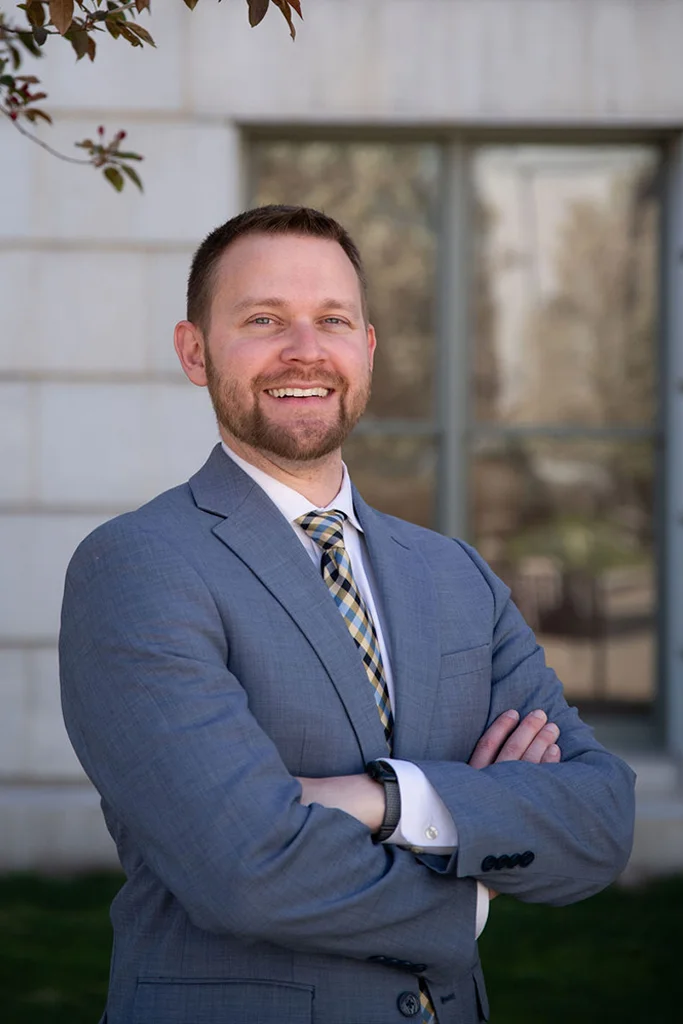
Reid DeChant began his legal career as a public defender, which means he spent years in county courthouses handling high volumes of cases across every level of charge, including DUI, DWAI, felony DUI, and DUI involving injury. That experience is not easily replicated in private practice. It means Reid has cross-examined law enforcement officers on field sobriety test administration, challenged breathalyzer results, argued motions to suppress unlawful stops, and tried DUI cases before juries to not-guilty verdicts. His results include multiple DUI cases dismissed across jurisdictions and DUI trials resulting in not-guilty findings at the jury level.
Reid is also a graduate of the Trial Lawyers College, the program founded by Gerry Spence that focuses on authentic courtroom storytelling, psychodrama, and genuine human connection with jurors. That training reflects something important about how DUI defense actually works when a case goes to trial. Jurors are not computers. They respond to the person in front of them, and a lawyer who can present a client’s full human story in a way that resonates, rather than leading with technicalities alone, has a meaningful advantage. Reid is also a member of the National Association of Criminal Defense Lawyers and the Colorado Criminal Defense Bar, organizations that keep him current on evolving DUI defense science and strategy.
Clients who work with DeChant Law are not handed off to a paralegal after the initial meeting. Reid is involved at every stage and keeps clients informed throughout the process, something the firm’s transparency-first approach reflects. When you have a question about what happened at your last court date or what the prosecutor offered and what it actually means for your life, you will get a direct answer.
DUI Charges and Related Offenses Handled in Arapahoe County
- First-Offense DUI: A first DUI in Colorado carries potential jail time, fines, community service, alcohol education requirements, and license revocation through both the criminal court and the DMV administrative process, with the specific exposure depending on BAC and the circumstances of the stop.
- DWAI Charges: Driving while ability impaired is charged at lower BAC levels than DUI but still carries criminal penalties, points on your license, and can complicate employment and professional licensing in Arapahoe County and throughout Colorado.
- Felony DUI: Colorado elevates a DUI to felony status when a driver has three or more prior DUI or DWAI convictions, bringing the case into district court territory with dramatically higher stakes, including potential prison sentences.
- DUI-Drugs: Impaired driving charges are not limited to alcohol. Drug DUI cases, including cases involving marijuana, prescription medications, and controlled substances, present unique evidentiary challenges because there is no equivalent to a per se BAC standard for most substances.
- Underage DUI: Colorado applies a zero-tolerance standard for drivers under 21, with a BAC threshold much lower than the standard DUI threshold. Underage DUI charges carry collateral consequences for education, financial aid, and future opportunities that require early and careful attention.
- Express Consent DMV Hearings: Separate from the criminal case, Colorado’s Express Consent law triggers an administrative license revocation that runs through the DMV. Requesting a timely hearing to contest this revocation is time-sensitive, and multiple Express Consent dismissals appear in DeChant Law’s case results.
- DUI with Accident or Injury: When a DUI arrest involves a collision, property damage, or injury to another person, the charges escalate and the civil exposure can compound the criminal consequences significantly.
What to Do After a DUI Arrest in Arapahoe County
The period immediately following a DUI arrest in Arapahoe County is when the decisions you make carry the most weight. The DMV clock starts running from the date of your arrest. Colorado law gives you a short window to request a hearing to contest the administrative license revocation triggered by your arrest. Missing that deadline means you lose the right to contest the revocation, and your license will be suspended automatically. Contacting a DUI attorney in Arapahoe County as quickly as possible after your arrest is not about panic. It is about preserving options before they expire.
Criminal cases in Arapahoe County are handled at the Arapahoe County Combined Courts, located at 7325 South Potomac Street in Centennial. This is where your arraignment, motions hearings, and any trial proceedings will take place. The Arapahoe County District Attorney’s Office handles prosecution. Knowing this courthouse and the way cases move through it matters when you are evaluating your defense options.
After your arrest, you should avoid discussing the details of the stop, the breath or blood test results, or anything else with anyone other than your attorney. Statements made to friends, family, or on social media can surface in ways that complicate your defense. Preserve anything that might be relevant to your case, including receipts, credit card records from that evening, any communications with law enforcement, and the paperwork you received at the time of the arrest. That documentation forms the starting point for building a defense.
Common mistakes people make in the weeks after a DUI arrest include assuming the chemical test result ends the inquiry, failing to act on the DMV hearing deadline, and accepting the first plea offer without understanding what the charge actually means for their driving record, employment, professional licenses, or insurance. These are not small things. A DUI conviction in Colorado can affect commercial drivers, healthcare workers, teachers, and anyone who holds a professional license subject to reporting requirements. Understanding the full scope of what you are dealing with before making any decision is essential.
Questions People Ask About Arapahoe County DUI Cases
What happens at my first court date in Arapahoe County?
Your first appearance is an arraignment, where you will be formally advised of the charges and enter a plea. In most DUI cases, entering a not-guilty plea at arraignment and allowing time for discovery and case evaluation is the standard approach. This is not an admission of anything. It simply preserves your options while your attorney reviews the police reports, video footage, chemical test records, and other evidence in your case.
Can I lose my license even if I am not convicted?
Yes. The DMV administrative process is entirely separate from the criminal case. Your license can be suspended through the Express Consent process regardless of what happens in court. Winning the criminal case does not automatically resolve the DMV action. Both proceedings require separate attention, which is why addressing both simultaneously from the start matters.
How does Colorado’s Express Consent law work?
Colorado’s Express Consent law means that by driving on Colorado roads, you have already consented to chemical testing if an officer has probable cause to believe you are impaired. Refusing a chemical test does not prevent a DUI charge; it triggers a separate DMV revocation action, often with a longer revocation period than a first-offense DUI. The results of Express Consent hearings, however, can be contested, and DeChant Law’s case results include multiple Express Consent dismissals across different grounds.
What is the difference between a DUI and a DWAI in Colorado, and which is worse?
A DUI carries higher criminal penalties than a DWAI, but a DWAI is still a criminal conviction with real consequences. A DWAI conviction goes on your driving record, carries fines and potential jail time, and can affect professional licenses and employment. It is also often charged as a lesser included offense in DUI cases. Whether a reduction to DWAI makes sense in a specific case depends entirely on the evidence and the individual circumstances, which is why an analysis by an Arapahoe County DUI attorney matters before accepting any resolution.
Will a DUI affect my job or professional license?
It can. Colorado requires certain licensed professionals, including those in healthcare, education, law, and other regulated fields, to report criminal convictions to their licensing boards. A DUI conviction can trigger a licensing board inquiry or disciplinary proceeding separate from the criminal case. Commercial driver’s license holders face particularly severe consequences, as federal regulations impose disqualification periods that Colorado courts cannot waive. Understanding the professional consequences of a DUI conviction in your specific field before entering any plea is critical.
What if I refused the breath or blood test?
Refusing a chemical test in Colorado triggers an automatic license revocation through the DMV that is typically longer in duration than what would apply to someone who tested over the limit. The refusal can also be introduced as evidence in the criminal case. That said, a refusal does not guarantee a conviction. The prosecution still has to prove impairment through other means, including officer observations, field sobriety test performance, and any other evidence gathered at the scene. Cases involving refusals present their own set of evidentiary arguments that an experienced defense attorney can work with.
How long does a DUI case take to resolve in Arapahoe County?
The timeline varies considerably depending on the complexity of the case, the court’s docket, and whether the case resolves through a plea or goes to trial. Cases involving straightforward facts and a clear-cut plea resolution can move relatively quickly after discovery is complete. Cases that involve contested stops, suppression motions, or jury trials take significantly longer. The Arapahoe County Combined Courts in Centennial maintain a busy criminal docket, and the realistic timeline in your specific case is something to discuss with your attorney after reviewing what the evidence actually shows.
Can I get a DUI dismissed in Arapahoe County?
Dismissals do happen, and DeChant Law’s case results include a DUI out of Arapahoe County that was dismissed. Dismissals most commonly result from successful motions to suppress evidence from an unlawful stop, constitutional violations in the advisement process, chemical testing that does not comply with required procedures, or Express Consent issues. Not every case has a path to dismissal, but a thorough review of the stop, the testing procedures, and the documentation in your case is what reveals whether one exists.
What is a felony DUI in Colorado, and am I facing one?
Colorado elevated certain repeat DUI offenses to felony status. If you have three or more prior DUI or DWAI convictions on your record and are now facing a new charge, the current case will likely be filed as a felony in district court rather than a misdemeanor in county court. Felony DUI carries far more severe penalties, including potential prison time. If this is your first or second DUI, felony charges would generally not apply unless the stop involved a serious accident with injury to another person, which can trigger aggravated charges.
Do I need a lawyer if the evidence against me seems strong?
The strength of the prosecution’s evidence is not something to assess without legal review. Chemical test results that seem definitive have been successfully challenged based on testing procedures, calibration records, chain of custody failures, and timing requirements. Officers who appear credible have had their field sobriety test administration questioned under cross-examination. A case that looks closed on the surface often looks different once an attorney has reviewed the actual discovery. Even when the evidence is genuinely strong, an attorney negotiates from a position of knowledge about what the evidence supports and what it does not, which affects the options available at the resolution stage.
Serving DUI Clients Across Arapahoe County and Surrounding Communities
DeChant Law represents clients facing DUI and DWAI charges throughout Arapahoe County and the broader Denver metro area. Much of the firm’s Arapahoe County DUI work involves clients from Aurora, Englewood, Centennial, Littleton, Sheridan, and Cherry Hills Village, as well as communities along the E-470 corridor including Foxfield and Dove Valley. The firm also serves clients from Glendale, Greenwood Village, and the unincorporated portions of Arapahoe County stretching toward Parker and the southern suburbs.
Beyond Arapahoe County, the firm handles DUI defense for clients appearing in Jefferson County courts in Golden, Adams County courts in Brighton, Broomfield County, Douglas County courts in Castle Rock, and throughout Denver County at the Lindsey-Flanigan Courthouse. Whether the stop happened on I-25 near the Arapahoe Road interchange, on Havana Street in Aurora, on South Broadway near Englewood, or on a residential street in Centennial, the courthouse where the case is filed and the specific facts of the stop both shape the defense. Reid DeChant has practiced in all of these courtrooms and understands how the Arapahoe County Combined Courts handle DUI matters from first appearance through trial.
Arapahoe County DUI Attorney Ready to Review Your Case
A DUI charge in Arapahoe County is not simply a traffic matter that will sort itself out. It moves on two tracks simultaneously, the criminal case and the DMV administrative proceeding, and the window to protect your license on the administrative side closes quickly. Reid DeChant is an Arapahoe County DUI attorney with trial experience, public defender roots, and a record of DUI dismissals and not-guilty verdicts across multiple Colorado jurisdictions. He handles these cases personally, explains what the evidence actually shows, and gives clients a clear-eyed assessment of their options. If you have been arrested for DUI in Arapahoe County, contact DeChant Law to schedule a consultation and begin reviewing what a real defense looks like in your specific case.