Lake County DUI Defense Lawyer
Lake County sits in the heart of Colorado’s mountain corridor, and the roads that run through it carry a particular kind of scrutiny. Highway 24 through Leadville, the routes connecting to ski areas and outdoor recreation destinations, and the stretches patrolled by Colorado State Patrol troopers who know exactly what to look for after a Saturday night at altitude. When a DUI stop happens on one of these roads, the consequences can reach far beyond the mountain community where the arrest occurred. A conviction affects your license, your employment, and potentially your freedom, and the distance from Denver does not insulate you from serious prosecution. A Lake County DUI defense lawyer who understands Colorado’s impaired driving statutes and has actually tried these cases in front of juries is not a luxury. It is a practical necessity.
DUI law in Colorado is both technical and aggressive. The state prosecutes impaired driving under two distinct legal theories: DUI, which requires proof that a driver’s ability to operate a vehicle was substantially impaired by alcohol, drugs, or a combination of both, and DWAI, which sets a lower impairment threshold and carries its own set of penalties. At altitude, blood alcohol concentration can behave differently than at sea level, and the physiological effects of alcohol on a driver who lives or visited at elevation are genuinely distinct from what laboratory models assume. These are not hypothetical arguments; they are scientifically documented variables that a well-prepared defense can raise. The prosecution in a Lake County DUI case will not raise them for you.
The Fifth Judicial District handles criminal matters in Lake County alongside several other mountain counties, and the courthouse in Leadville processes cases with the seriousness that any Colorado district court would bring to a DUI charge. Whether you are a local resident, a seasonal worker, or a visitor who was arrested while passing through, understanding what you are facing and acting quickly to retain qualified representation is critical in the period immediately following an arrest.
What a DUI Arrest in Lake County Actually Involves
A DUI stop in Lake County typically begins with a traffic contact by a Colorado State Patrol trooper, a Lake County Sheriff’s deputy, or a Leadville Police officer. The encounter can be triggered by lane position, speed, equipment violations, or a checkpoint. From the moment the officer approaches your window, everything is being observed and documented. Officers trained in DUI detection use a structured protocol to assess impairment, and their observations from that initial contact will form the foundation of the prosecution’s case against you.
Field sobriety tests are standardized, but standardized does not mean reliable in every condition. At Leadville’s elevation of over 10,000 feet, factors like fatigue, cold temperatures, uneven roadside surfaces, the effects of altitude on balance and coordination, and weather conditions can all affect how a person performs on tests designed for use at sea level. The horizontal gaze nystagmus test, the walk-and-turn, and the one-leg stand were developed and validated under conditions that do not automatically translate to a mountain environment at altitude. Cross-examining the officer’s administration and interpretation of these tests is a legitimate and potentially effective defense strategy that a practiced DUI defense attorney can pursue.
Chemical testing adds another layer of complexity. Colorado’s express consent law requires drivers to submit to a blood or breath test when lawfully requested by an officer after a valid DUI contact. Refusal triggers a separate administrative action against your driving privileges through the Colorado Department of Motor Vehicles, independent of anything that happens in criminal court. Blood draw results are subject to challenge on the basis of collection procedures, chain of custody, laboratory protocols, and the timing of the draw relative to when the driving occurred. These are real evidentiary issues that arise in DUI cases at every level, and they are the kind of technical defenses that require a lawyer who has handled these challenges before.
Why Reid DeChant Handles Lake County DUI Cases Differently
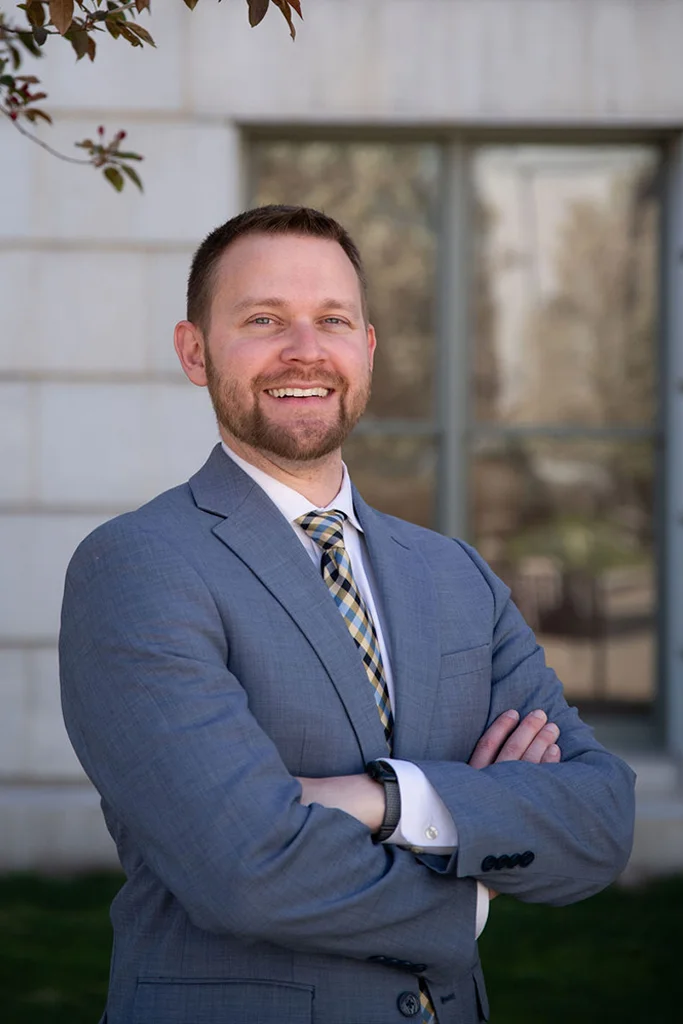
Reid DeChant built his practice around DUI and criminal defense, and the depth of experience he brings to each case is grounded in work that few private defense attorneys accumulate. As a former public defender, Reid handled DUI and impaired driving cases across Denver, Broomfield, and Adams County courts at a volume that gave him direct, sustained exposure to how these cases are built, how officers testify, and how prosecutors approach their evidence. That kind of courtroom-intensive background shapes an attorney’s ability to spot weaknesses in a DUI case quickly and build a defense around them.
Reid is a graduate of the Trial Lawyers College, a program founded by Gerry Spence that trains lawyers to bring genuine human connection and narrative advocacy into the courtroom. That training matters in DUI defense because juries make decisions not just about facts but about people. A client who submits to a chemical test and registers above the legal limit still has a story, and how that story is told, the circumstances of the stop, the conditions that night, what the officer actually observed versus what the report says, shapes how a jury weighs the evidence. Reid’s approach to DUI defense is built around preparing that story carefully and delivering it honestly.
The firm’s case results reflect this approach. DeChant Law has achieved dismissals of DUI charges out of Arapahoe County, Douglas County, Jefferson County, and Broomfield County, along with Not Guilty verdicts at trial in multiple DUI-drug cases and standard DUI cases. The firm has also successfully defended DMV express consent hearings, achieving dismissals in cases involving improper advisement, Miranda rights violations before express consent, and failures to administer chemical tests within the required timeframe after driving. These are not lucky outcomes; they are the product of careful case analysis and aggressive, informed preparation. Reid holds membership in the National Association of Criminal Defense Lawyers and the Colorado Criminal Defense Bar, reflecting a commitment to staying current with the evolving landscape of DUI defense strategy at the national level.
The DUI Charges and Related Consequences That Arise in Lake County Cases
- DUI (Driving Under the Influence): Colorado’s DUI statute applies when alcohol, drugs, or a combination substantially impairs a driver’s ability to safely operate a vehicle. A blood alcohol concentration of 0.08 or higher creates a permissible inference of DUI, though the charge can also be pursued on observational evidence alone.
- DWAI (Driving While Ability Impaired): A lower-threshold charge that applies when a driver is impaired to even the slightest degree. A BAC between 0.05 and 0.08 creates a permissible inference of DWAI, and these charges carry real criminal penalties even though they are treated as less severe than full DUI.
- DUI Per Se: Applies when a driver’s BAC meets or exceeds 0.08, regardless of observable impairment evidence. This is a separate legal theory the prosecution can pursue alongside a standard DUI charge based on officer observations.
- DUI-Drugs: Colorado law covers impairment from any drug, including cannabis, prescription medications, and controlled substances. The legal limit for delta-9-THC in blood is five nanograms per milliliter, but that threshold alone does not dictate the outcome of a case. Reid has achieved Not Guilty verdicts in DUI-drug cases at trial.
- Aggravated DUI circumstances: A BAC of 0.15 or higher, a minor in the vehicle, an accident causing injury, or a third or subsequent offense all trigger elevated consequences and more aggressive prosecution. The Fifth Judicial District takes repeat DUI charges and high-BAC cases seriously.
- DMV Express Consent hearings: A DUI arrest triggers a separate administrative process through Colorado’s DMV that can result in license revocation independent of the criminal case. A hearing request must be made within seven days of the arrest to preserve your right to contest the revocation. Missing this deadline surrenders your opportunity to challenge the administrative action.
- Commercial driver’s license implications: CDL holders face federal disqualification standards that are stricter than those applied to standard license holders. A DUI charge for a CDL driver in Lake County can end a commercial driving career even if the criminal case is ultimately resolved favorably.
What to Do in the Days Following a DUI Arrest in Lake County
The most consequential mistake people make after a DUI arrest is waiting too long to take action. The DMV hearing deadline creates an immediate pressure point. Colorado law requires that you request a hearing within seven days of receiving your notice of revocation if you want to contest the administrative suspension of your driving privileges. This deadline runs from the date of your arrest, not the date you hire an attorney, not the date of your first court appearance. If you miss it, the revocation proceeds automatically. An attorney at DeChant Law can request that hearing on your behalf and begin preparing to contest the license action while simultaneously working on your criminal defense.
Criminal proceedings in Lake County are handled at the Lake County Courthouse in Leadville. The courthouse serves the Fifth Judicial District, which includes other mountain counties as well. Your first court appearance will typically be an arraignment at which you enter a plea, and the timeline from arrest to resolution can vary significantly depending on whether the case goes to trial or resolves through plea negotiations. Gathering documentation early, including any receipts or records from where you were that evening, any witnesses who were present, and any medical or prescription records that may be relevant, gives your attorney more to work with as the case develops.
Anything you said to the officer during the stop, any admissions about drinking, where you had been, or how much you consumed, is in the police report and will be part of the prosecution’s case. Say nothing to investigators, prosecutors, or anyone else about the facts of your case after the arrest. That is not obstruction; it is your constitutional right, and exercising it does not make you look guilty to a jury. What it does is prevent further statements from being used against you before you have had the chance to speak with a defense attorney who can evaluate the full context of what happened.
Questions About DUI Defense in Lake County
What is the difference between a DUI and a DWAI in Colorado?
DUI requires that your ability to operate a vehicle was substantially impaired by alcohol or drugs. DWAI applies when impairment exists to even the slightest degree. Both are criminal charges with real consequences, including fines, points on your license, possible jail time, and mandatory education programs. The primary difference lies in the degree of impairment the prosecution must establish, but even a DWAI conviction carries consequences that can follow you professionally and personally.
Can I refuse a chemical test in Colorado and what happens if I do?
Colorado’s express consent law means that by driving in the state you have implicitly agreed to submit to a chemical test when lawfully requested following a valid DUI contact. Refusing the test is your right, but it carries automatic consequences: an immediate revocation of your driving privileges that is typically longer than the revocation resulting from a failed test. Refusal can also be used as evidence in the criminal case. Whether refusal makes strategic sense in a given situation depends on specific facts that an attorney needs to evaluate quickly, ideally before you make the decision.
How does altitude in Leadville affect a DUI case?
This is a genuinely relevant issue in Lake County cases. High altitude affects the body’s processing of alcohol and can influence balance, coordination, and physical performance on standardized field sobriety tests in ways that are distinct from sea-level conditions. The tests were designed and validated at lower elevations, and a person’s performance on them at 10,000 feet may not mean the same thing it would mean at lower elevations. This is not a frivolous argument; it is a documented physiological reality that a prepared defense can raise through expert testimony or cross-examination of the administering officer.
What happens to my driver’s license after a DUI arrest in Lake County?
Your license faces two separate threats: the administrative revocation processed through the Colorado DMV, and any license suspension or revocation imposed as part of a criminal sentence. The administrative action can be contested through a DMV hearing if you request one within seven days of arrest. The criminal court has independent authority over your license as part of any sentence. Both tracks proceed simultaneously and require attention. Winning the DMV hearing does not automatically resolve the criminal case, and vice versa.
Will a DUI conviction in Lake County affect my ability to work?
The employment consequences of a DUI conviction depend heavily on your profession and your employer’s policies. Commercial drivers, healthcare workers, childcare employees, government contractors, and anyone who holds a professional license through a state board may face licensing consequences that go beyond the criminal sentence itself. Certain security clearances are also affected by criminal convictions. These downstream consequences are part of why fighting the charge aggressively from the beginning, rather than accepting a plea quickly, is often the better long-term strategy.
How does a DUI drug case differ from an alcohol DUI in terms of defense?
DUI-drug cases present distinct evidentiary and scientific challenges. The metabolic timelines for drugs vary significantly from alcohol, meaning the presence of a substance in blood at the time of a draw does not necessarily correspond to impairment at the time of driving. For cannabis in particular, THC can remain detectable in blood well after any impairing effects have passed, creating the possibility that a driver with a detectable THC level was not actually impaired at the time of the stop. Expert witnesses who can explain these pharmacological realities to a jury are an important component of drug DUI defense.
Can a DUI charge in Colorado be reduced to a lesser offense?
In some cases, prosecutors will agree to reduce a DUI charge to a DWAI or even to a non-alcohol traffic offense like reckless driving, depending on the strength of the evidence, the driver’s prior record, and the specific circumstances of the case. These reductions are not automatic; they are negotiated outcomes that depend on the strength of the defense position and what weaknesses exist in the prosecution’s case. An attorney who has genuinely tried DUI cases and knows how prosecutors evaluate evidence is better positioned to negotiate from strength than one whose practice does not include real trial experience.
Is it worth contesting the DMV hearing even if I plan to plead guilty in the criminal case?
Yes, and for reasons that extend beyond the license itself. The DMV hearing takes place before the criminal case concludes, and the officer who made the arrest typically testifies. The hearing creates a transcript of sworn testimony from the arresting officer that can be used in the criminal case, either to lock the officer into statements that can be challenged later or to reveal inconsistencies between the report and the testimony. Waiving the DMV hearing means giving up that discovery opportunity before your criminal case even gets to the evidentiary phase.
What if the DUI stop happened in Lake County but I live in another county or state?
The county where the stop occurred determines where criminal charges are filed. If you live in Denver, Jefferson County, or out of state, you are still subject to the jurisdiction of the Fifth Judicial District for a Lake County DUI. Court appearances in Leadville may be required, though your attorney can often appear on your behalf for preliminary hearings. The administrative DMV action runs through the state DMV regardless of where you are licensed. If you hold an out-of-state license, interstate compact agreements mean the consequences can follow your license across state lines.
How long does a Lake County DUI case typically take to resolve?
Cases that resolve through a plea agreement can be concluded in a few months. Cases that go to trial take longer, particularly in a smaller jurisdiction like Lake County where court calendars operate on a different rhythm than an urban district court. The timeline also depends on how complex the evidentiary issues are, whether expert witnesses are needed, and how the prosecution responds to defense motions. There is no universal timeline, but cases that are actively contested and well-prepared move with more purpose than cases where the defendant simply waits for something to happen.
DUI Defense Representation Across Lake County and the Surrounding Mountain Region
DeChant Law represents clients facing DUI charges throughout Lake County, including in Leadville and the surrounding unincorporated areas of the county. The firm also serves clients in communities and counties throughout the mountain corridor and along the Front Range who may have been charged while traveling through Lake County. This includes clients from Buena Vista and Salida in Chaffee County to the south, clients from Summit County communities including Breckenridge, Frisco, Silverthorne, and Dillon, and clients from Eagle County including Vail, Edwards, Avon, and Eagle itself. The firm also works with clients traveling from Garfield County, including Glenwood Springs and Carbondale, as well as those from Clear Creek and Gilpin counties who pass through the central mountain region regularly. Front Range clients from Denver, Aurora, Lakewood, Thornton, Westminster, Arvada, Littleton, Englewood, and Castle Rock who are charged in Lake County can work with DeChant Law without needing to find a separate local attorney for each aspect of their case. Geographic distance from the courthouse does not diminish the quality of representation; it simply requires an attorney who is prepared to appear in Fifth Judicial District courtrooms and handle all related DMV proceedings regardless of where the client is located.
Talk to a Lake County DUI Attorney About Your Case
A DUI arrest on a mountain highway does not have to define the next several years of your life, but the window to build the strongest possible defense is narrow, particularly given the seven-day deadline to request a DMV hearing. Reid DeChant has tried DUI cases to Not Guilty verdicts, achieved dismissals across multiple Colorado counties, and successfully contested DMV express consent hearings on technical and constitutional grounds. As a Lake County DUI attorney, Reid approaches every case with the same preparation and care he brings to the most serious felony matters, because a DUI conviction is serious, and you deserve a defense that treats it that way. Contact DeChant Law to schedule a consultation and start building your defense before the deadlines that matter most have already passed.