Lake County Criminal Defense Lawyer
Lake County sits in the mountains west of Denver, and the criminal cases that arise there carry a distinct character shaped by the county’s geography, economy, and the realities of living in a small, rural jurisdiction. From charges arising on U.S. Highway 24 through Leadville to matters handled at the Lake County Courthouse on Harrison Avenue, defendants here face a legal environment that is less forgiving than many expect. A small county means a smaller pool of judges, prosecutors who know the local terrain intimately, and courtroom dynamics that require a defense attorney who can operate effectively outside the comfort of a major metropolitan courthouse. If you are looking for a Lake County criminal defense lawyer, the attorney you choose needs to understand both the substantive law and the specific landscape of this mountain jurisdiction.
Leadville, the county seat, sits at over 10,000 feet in elevation and is the highest incorporated city in the United States. It is a community with deep mining history, a transient population connected to seasonal work, outdoor recreation tourism, and the pressures that come with geographic isolation. Those realities shape the types of criminal charges that arise here, from DUI stops on the mountain passes and highways serving ski areas and recreation zones, to domestic violence allegations in a community where neighbors know neighbors and law enforcement resources are stretched across a wide area. Prosecutors at the Fifth Judicial District, which covers Lake County alongside Eagle, Clear Creek, and Summit counties, handle a caseload that spans some of the wealthiest resort communities in Colorado alongside working-class mountain towns. That combination produces a prosecutorial culture that takes charges seriously regardless of their context.
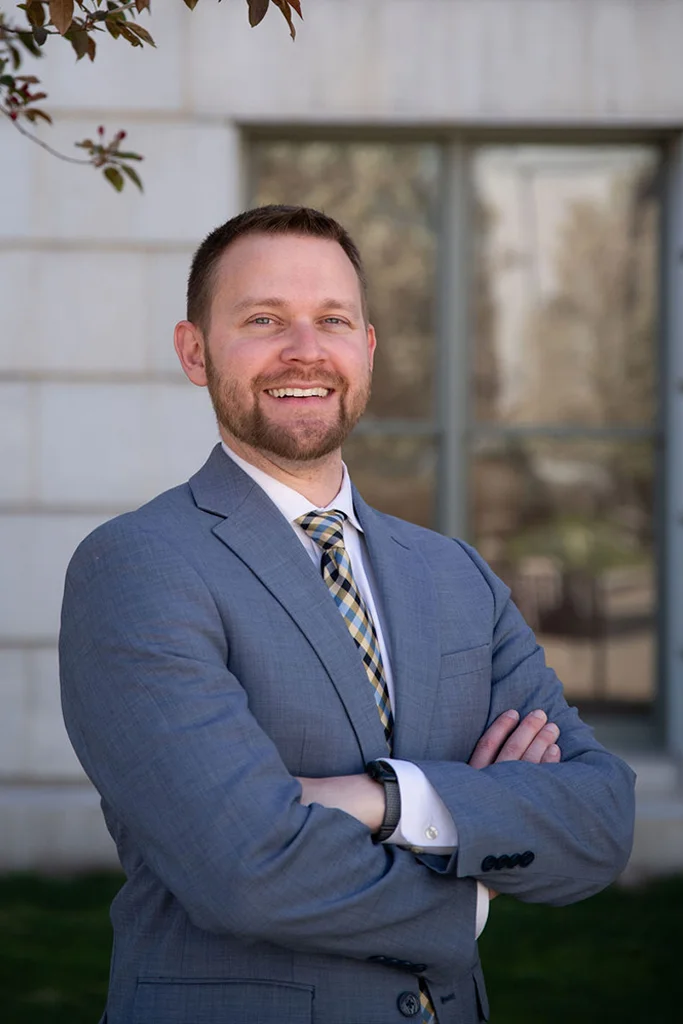
DeChant Law has represented clients across the Denver metropolitan area and surrounding Colorado jurisdictions, bringing the kind of courtroom experience and trial preparation that Lake County defendants need when they face charges that could affect their freedom, their records, and their ability to remain in this community. Reid DeChant’s background as a former public defender, combined with his training at the Trial Lawyers College, means he approaches every case as a story worth telling, not just a charge to manage.
Criminal Charges That Arise Most Often in Lake County Courts
- DUI and DWAI on Mountain Highways: U.S. Highway 24, which connects Leadville to Buena Vista, Minturn, and Interstate 70, sees significant enforcement activity, particularly during ski season and summer recreation months. Colorado’s DUI and DWAI statutes set distinct blood alcohol thresholds and impose escalating consequences for repeat offenses, including mandatory jail time, ignition interlock requirements, and license revocation proceedings that run parallel to the criminal case through the Colorado DMV.
- Domestic Violence Charges: Colorado law designates domestic violence as a sentence enhancer rather than a standalone charge, meaning virtually any offense committed against a household or intimate partner carries additional consequences including mandatory arrest policies, automatic protection orders, and restrictions on firearm possession. In a small county like Lake, these cases often involve community relationships that make dismissal more politically complicated for prosecutors, even when the underlying facts are disputed.
- Drug Possession and Distribution: Despite Colorado’s legal cannabis framework, possession of controlled substances including methamphetamine, fentanyl, heroin, and cocaine remains a serious matter. The transient population passing through Leadville and the proximity to major highway corridors mean drug-related stops and searches occur with some regularity, and the circumstances of the search often provide viable defense arguments.
- Assault and Menacing: Charges ranging from third-degree assault to felony menacing involving a deadly weapon require careful examination of the facts, witness credibility, and whether self-defense or mutual combat arguments apply under Colorado law. Reid DeChant has tried cases involving assault and weapons charges through verdict, including two counts of assault with a deadly weapon resulting in not guilty verdicts.
- Theft and Property Crimes: Colorado’s theft statutes classify offenses by the value of the property involved, with felony thresholds creating meaningful differences in potential penalties. In communities like Leadville where the cost of living and wage structures differ significantly from the Front Range, property crime charges deserve careful scrutiny of the alleged values and circumstances.
- Failure to Appear and Probation Violations: The geographic realities of Lake County, where transportation can be disrupted by weather, road closures, or simply the distance from population centers, contribute to failure-to-appear situations. Probation violations in rural jurisdictions often carry less flexibility than urban courts, making prompt legal intervention critical when a violation is alleged.
- Sex Offense Allegations: These carry the most severe collateral consequences of any category in Colorado criminal law, including mandatory sex offender registration and restrictions that can affect housing, employment, and residency for decades. Reid DeChant’s experience includes defending clients against sexual assault allegations and representing a client in a failure-to-register case that resulted in a not guilty verdict at trial.
What a Lake County Criminal Defense Attorney at DeChant Law Brings to Your Case
Reid DeChant built his practice on something relatively rare in private criminal defense: genuine trial experience accumulated across hundreds of courtroom appearances as a public defender in Denver, Broomfield, and Adams County. That volume of cases, spanning everything from traffic misdemeanors to felony assault and homicide, gives Reid a practical familiarity with how Colorado prosecutors think, how law enforcement witnesses behave under cross-examination, and where the weaknesses in a case tend to appear. Most private defense attorneys see trial sparingly; Reid has spent years in front of juries and judges in contested hearings and full trials.
Beyond that courtroom foundation, Reid is a graduate of the Trial Lawyers College, founded by Gerry Spence, which trains attorneys in methods of storytelling and authentic human advocacy that go far beyond legal argument. Juries return verdicts based on whether they understand and believe the person standing before them. That understanding does not come from legal briefs; it comes from a defense lawyer who has taken the time to know the client as a person and translate that person’s experience into something a jury of strangers can recognize and credit. This approach has produced not-guilty verdicts at trial in DUI cases, assault cases, domestic violence cases, and sex offense cases, results that appear in the firm’s documented case history.
DeChant Law also handles the DMV component of DUI cases, which runs as a separate administrative proceeding against a driver’s license entirely apart from the criminal charge. The firm has achieved multiple DMV Express Consent hearing dismissals, including cases dismissed for procedural violations in how the Express Consent advisement was given and cases dismissed where the chemical test was not administered within the required timeframe. For anyone charged with DUI in Lake County, both the criminal case and the license revocation matter must be addressed promptly and separately, and having a criminal defense attorney in Lake County who handles both simultaneously is essential.
Reid maintains active membership in the National Association of Criminal Defense Lawyers and the Colorado Criminal Defense Bar, professional communities that keep him connected to the latest developments in Colorado criminal law, emerging defense strategies, and the collective knowledge of defense attorneys across the state. These are not passive memberships; they reflect an ongoing commitment to the craft of criminal defense practiced at a high level.
How to Respond When You Are Charged in Lake County
The Lake County Courthouse is located at 505 Harrison Avenue in Leadville. Criminal matters in Lake County are handled by the Fifth Judicial District, which means your case may involve prosecutors and judges who also handle matters in Eagle County, Summit County, and Clear Creek County. The Fifth Judicial District Attorney’s Office has offices in those surrounding counties, and the professional culture there reflects the district’s mix of resort-economy wealth and working-class mountain communities. Prosecutors in this district are experienced, and they do not routinely offer generous plea agreements simply because a case involves a rural county.
One of the most important things to understand immediately after any arrest is that what you say to law enforcement will be used against you, and that protection applies regardless of where in Colorado you are charged. Lake County law enforcement, including the Leadville Police Department and the Lake County Sheriff’s Office, are required to follow the same constitutional standards that govern law enforcement everywhere. If officers stopped your vehicle without adequate legal justification, conducted a search without consent or a valid warrant exception, or failed to properly advise you of your rights, those circumstances can affect the admissibility of evidence against you. These are questions your attorney needs to analyze before any plea decision is made.
After a Lake County arrest, you will typically be taken to the Lake County Jail. Depending on the nature of the charges, you may face a bond hearing relatively quickly, or you may be held on a no-bond hold if the charges are serious. If bond is set, conditions often include restrictions on contact with alleged victims and requirements to appear at all scheduled court dates. Missing a court date in Lake County, even for reasons beyond your control, can result in a warrant for your arrest and additional criminal exposure, so establishing communication with an attorney before your first appearance is important.
Do not attempt to contact alleged victims, witnesses, or even co-defendants after an arrest, particularly in domestic violence cases where a mandatory protection order is likely already in place. Violating that order creates new criminal liability on top of whatever you are already facing. Preserve any text messages, voicemails, photographs, or other evidence that might be relevant to your case, and write down your own recollection of events as specifically and accurately as you can while memory is fresh. These steps are practical, not complicated, and they give your defense attorney the best possible raw material to work with when building your case.
Questions People Ask About Criminal Defense in Lake County
What court handles criminal cases in Lake County, Colorado?
Criminal cases in Lake County are filed in the Lake County District Court or Lake County Combined Court, located at 505 Harrison Avenue in Leadville. Lake County is part of Colorado’s Fifth Judicial District, which also covers Eagle, Summit, and Clear Creek counties. The District Attorney’s office for the Fifth Judicial District prosecutes cases throughout the district, meaning the prosecutors handling your case may be based in another county but are familiar with Lake County’s courthouse and procedures.
How quickly does a criminal case move through Lake County courts?
Rural county courts often move at a different pace than large urban jurisdictions. Lake County’s smaller docket can mean faster initial scheduling, but it also means fewer opportunities to navigate around trial dates if a case needs to go to verdict. Misdemeanor cases may resolve within a few months; felony matters typically take longer, particularly if pretrial motions are filed to challenge evidence or the admissibility of statements. An attorney who regularly handles criminal cases in Colorado mountain jurisdictions will have a realistic sense of the local timeline.
Will a criminal conviction in Lake County affect my ability to work in the outdoor recreation or resort industry?
Potentially, yes. Many employers in the tourism, hospitality, ski resort, and outdoor recreation industries conduct background checks as a standard hiring condition. A felony conviction, and in some cases a misdemeanor involving dishonesty, violence, or drug-related conduct, can disqualify applicants from positions that involve working with the public, handling property, or operating equipment. If you rely on seasonal resort employment or work in industries common to the Leadville and mountain corridor region, the employment consequences of a conviction deserve serious attention when evaluating how to proceed with your case.
Can a DUI charge from Lake County affect my CDL or professional license?
Yes. Commercial driver’s license holders face federal disqualification rules that operate separately from Colorado’s standard DUI penalties, and even a first DUI can result in CDL disqualification for a significant period. Other professional licenses issued in Colorado, including licenses in healthcare, education, law, real estate, and financial services, may be subject to mandatory disclosure requirements and disciplinary review following a criminal conviction. Reid DeChant addresses the full picture of consequences when advising clients on how to approach a Lake County DUI or criminal charge.
What happens if I live in another county or state but was charged in Lake County?
You are still required to appear at all scheduled court dates in Lake County unless your attorney obtains a waiver for certain routine hearings. Colorado courts do not excuse in-person appearances simply because a defendant lives far away. However, having a Lake County criminal defense attorney appear on your behalf for many pretrial matters is possible in appropriate circumstances, which reduces the burden of travel. The criminal case proceeds under Colorado law regardless of where you reside, and conviction carries consequences including fines, probation, and jail that can create significant logistical difficulties for out-of-area defendants.
Is it possible to get a domestic violence charge dismissed in Lake County?
Dismissal is possible, though Colorado’s mandatory prosecution policies make it more difficult than in some other states. Colorado law does not permit an alleged victim to simply “drop” a domestic violence charge; the decision to proceed or dismiss rests with the District Attorney’s office. However, prosecutors can decline to pursue a case or move to dismiss based on insufficient evidence, recanted testimony evaluated in context, credibility issues with the complaining witness, or circumstances suggesting the original charge was not supported by the facts. Reid DeChant has achieved dismissals and not-guilty verdicts in domestic violence cases, including a strangulation charge where the DA dismissed at trial and a harassment case out of Adams County where dismissal was obtained at trial.
What is the difference between DUI and DWAI under Colorado law, and does it matter for Lake County charges?
Colorado defines DUI and DWAI separately. DUI applies when a driver is substantially incapable of safely operating a vehicle due to alcohol or drugs, with a blood alcohol concentration at or above 0.08 creating a statutory presumption. DWAI, Driving While Ability Impaired, covers situations where the driver’s ability was impaired to even the slightest degree, and applies at blood alcohol concentrations between 0.05 and 0.08. DWAI carries lower penalties than DUI but still results in points on your license, fines, and potential license action. In Lake County, where DUI enforcement is active along major highway corridors, the distinction between these two charges can significantly affect plea negotiations and the overall outcome of your case.
Can evidence from a traffic stop on a mountain highway be challenged?
Absolutely. The constitutional requirements that govern traffic stops apply regardless of elevation or location. An officer must have reasonable articulable suspicion to initiate a stop, and any search of a vehicle requires either consent, a valid exception to the warrant requirement, or a warrant. Roadside sobriety testing involves standardized procedures, and deviations from those procedures can affect the reliability and admissibility of test results. If the stop itself lacked legal justification, evidence gathered during and after that stop may be suppressible. Reid DeChant has obtained DUI case dismissals, including cases where procedural violations in how chemical testing was conducted or how Express Consent advisements were given provided grounds for dismissal at both the criminal and DMV levels.
What is the Express Consent law, and what does it mean for my Lake County DUI case?
Colorado’s Express Consent statute provides that any person who operates a motor vehicle on Colorado roads has implicitly consented to a chemical test of their blood or breath if a law enforcement officer has probable cause to believe they are driving under the influence. If you refuse the test, your license faces revocation through a separate DMV process. But the law also imposes obligations on law enforcement: the advisement must be properly given, and the test must be administered within required timeframes. DeChant Law has obtained multiple DMV Express Consent hearing dismissals based on defects in how officers administered the advisement or failed to conduct the test within the required two-hour window from the time of driving. These administrative hearings are separate from the criminal case and have their own deadlines, making prompt legal action essential.
How does geographic isolation in Lake County affect a criminal case strategy?
Lake County’s remote location can affect witness availability, law enforcement documentation practices, and the resources available for evidence gathering. Defense investigation may require accessing remote locations, working with witnesses who are difficult to locate due to seasonal residence patterns, or addressing circumstances where patrol decisions in the field were influenced by limited backup and resource constraints. Understanding these practical realities shapes how a Lake County criminal defense attorney approaches case investigation, pretrial motion practice, and trial preparation in ways that differ meaningfully from Front Range cases.
Representing Clients from Leadville and Throughout the Lake County Region
DeChant Law serves clients charged with criminal offenses throughout Lake County and the surrounding mountain corridor. From Leadville and the surrounding unincorporated areas of Lake County, through the communities along U.S. Highway 24 toward Minturn and the Eagle County line, and south toward Buena Vista in Chaffee County, individuals facing Colorado criminal charges in mountain jurisdictions need representation that travels with them. The firm also serves clients in neighboring jurisdictions who may be navigating charges in multiple counties arising from the same course of conduct, a situation that requires coordinated defense strategy across different courtrooms and different prosecutorial offices. Clients from the ski resort corridor along Interstate 70, from Red Cliff, Gilman, and the Tennessee Pass area, and from communities throughout the greater Leadville region have access to the same quality of defense representation that DeChant Law brings to clients in the Denver metropolitan area.
Talk to a Lake County Criminal Defense Attorney About Your Case
Criminal charges in a small mountain county can feel more isolated and more exposed than they would in Denver or along the Front Range. There are fewer attorneys to choose from, fewer courtrooms to disappear into, and a community context that makes every case feel more personal. A Lake County criminal defense attorney from DeChant Law brings genuine trial experience, a track record of results across Colorado’s criminal courts, and the kind of individualized attention that allows Reid DeChant to build a defense that reflects who you actually are, not just the charge listed in a complaint. If you are facing criminal charges in Lake County or the surrounding Fifth Judicial District, contact DeChant Law to discuss your situation and understand what options are realistically available to you.