Elbert County DUI Defense Lawyer
Elbert County sits east of the Denver metro on the Eastern Plains, and the roads that run through it tell the story of who gets pulled over here. Highway 86 between Kiowa and Franktown, County Road 21 connecting Elizabeth to Castle Rock, and the stretch of State Highway 83 running south toward Colorado Springs are patrol corridors where law enforcement watches closely, especially late at night and on weekends. A stop on one of those roads can turn into a DUI arrest before a driver fully understands what is happening. When it does, the consequences reach far beyond the night of the arrest. An Elbert County DUI defense lawyer who understands how these cases are built, and where they fall apart, can make a significant difference in what happens next.
DUI prosecutions in Elbert County are handled in the 18th Judicial District, which also covers Arapahoe, Douglas, and Lincoln counties. The Elizabeth Combined Courts on Main Street in Kiowa is where most Elbert County criminal matters are processed, including DUI cases. The prosecutors who handle these cases are experienced, and they treat DUI charges seriously regardless of whether a defendant has a prior record. That means a driver arrested on a rural Elbert County road faces the same prosecutorial resources and the same potential penalties as someone arrested in a far larger urban county.
Colorado DUI law also carries a parallel administrative track. A DUI arrest triggers not just a criminal case but a separate DMV proceeding that can result in license revocation, often before a criminal court ever enters a judgment. These two tracks move on different timelines and demand different strategies. Missing a deadline on the DMV side can cost a driver their license even if the criminal case is eventually dismissed.
What a DUI Charge in Elbert County Actually Involves
Colorado separates impaired driving into two distinct charges: DUI (driving under the influence) and DWAI (driving while ability impaired). A DUI requires the prosecution to prove that a driver’s blood alcohol content was 0.08 or higher, or that alcohol or drugs substantially impaired their ability to operate a vehicle. A DWAI is a lower bar, requiring proof of impairment to the slightest degree, and it applies at BAC levels as low as 0.05. Both carry penalties, and both result in DMV action against the driver’s license.
Drug-impaired driving is also prosecuted in Elbert County. Colorado has a permissible inference level for THC in blood, though that standard does not operate as a hard legal limit in the same way that the 0.08 BAC standard does for alcohol. Officers trained in drug recognition may conduct evaluations at the scene, and those evaluations become part of the evidence presented to a jury. For prescription medication DUIs, the same framework applies, regardless of whether the medication was lawfully prescribed.
First-time DUI convictions in Colorado carry potential consequences including jail time, fines, community service, mandatory education programs, and probation. Subsequent offenses escalate substantially, and a third DUI can be charged as a felony. For anyone holding a commercial driver’s license, the threshold is lower and the licensing consequences are more severe. For drivers under 21, the express consent law applies at any detectable level of alcohol. Each of these situations calls for a defense built around its specific facts, not a generic approach.
Why DeChant Law Handles Elbert County DUI Cases Effectively
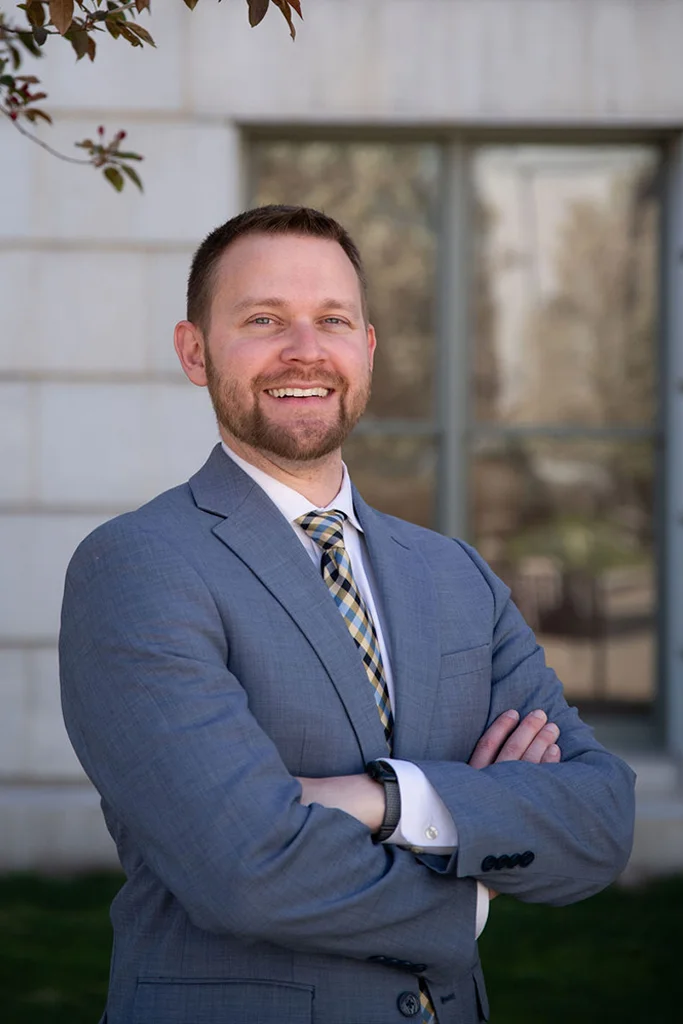
Reid DeChant built his practice around the kind of DUI defense work that most attorneys treat as a side area. His background as a former public defender in Denver, Broomfield, and Adams County gave him direct courtroom experience with DUI cases at volume, including DMV express consent hearings, suppression motions, and jury trials. The results on record tell part of the story: multiple DMV express consent actions dismissed for improper advisements, failure to administer the chemical test within the required window, and other procedural grounds. A jury trial DUI and careless driving case returned not guilty. DUI cases out of Arapahoe, Douglas, and Jefferson counties dismissed. DUI out of Broomfield County dismissed. Third DUI out of Douglas County not guilty at trial.
Reid is a graduate of the Trial Lawyers College, the program founded by attorney Gerry Spence that trains lawyers in genuine narrative advocacy and authentic connection with jurors. That training shapes how he approaches every case, including DUI cases that might seem routine on the surface. He also maintains membership in the National Association of Criminal Defense Lawyers and the Colorado Criminal Defense Bar, organizations that keep him current on developments in DUI defense strategy, field sobriety testing science, and breathalyzer and blood draw challenges.
For anyone searching for a DUI attorney serving Elbert County, working with a lawyer who has actually taken DUI cases to trial matters more than most clients initially realize. Most DUI cases resolve before trial, but the quality of pre-trial negotiation depends entirely on whether the prosecution believes the defense lawyer will actually try the case. Reid’s trial record gives him credibility in those conversations that a lawyer without trial experience cannot match.
Common DUI-Related Charges and Situations in Elbert County Cases
- Standard DUI (BAC 0.08 or higher): The most frequently charged offense, often following a traffic stop on Highway 86, State Highway 83, or rural county roads during nighttime patrol hours, with a breath or blood test as the centerpiece of the prosecution’s evidence.
- DWAI (Driving While Ability Impaired): Charged at BAC levels between 0.05 and 0.08, or when an officer’s field observations suggest impairment below the DUI threshold; carries its own criminal penalties and DMV consequences separate from a full DUI charge.
- DUI-Drugs: Charged when impairment is attributed to marijuana, prescription medications, or controlled substances rather than alcohol; often depends heavily on Drug Recognition Evaluator testimony and blood draw results that can be challenged at multiple levels.
- Felony DUI (Third or Subsequent Offense): Colorado can charge a DUI as a class 4 felony when it is a driver’s third or subsequent lifetime conviction; Elbert County cases involving repeat offenders are prosecuted in district court rather than county court.
- Underage DUI: Drivers under 21 face DUI charges at any detectable level of alcohol under Colorado’s express consent statute, with penalties including license revocation and mandatory education programs that differ from adult sentencing.
- Commercial Driver DUI: CDL holders face a 0.04 BAC threshold and disqualification from commercial driving that can result from a single arrest; Elbert County’s agricultural and transportation economy means CDL holders are a significant portion of rural DUI defendants.
- DMV Express Consent Hearing: The administrative license revocation proceeding that runs parallel to the criminal case; a request for a hearing must be made within seven days of a DUI arrest or the right to contest the revocation is waived.
What to Do After a DUI Arrest in Elbert County
The seven-day deadline for requesting a DMV express consent hearing is the first hard deadline that matters after a DUI arrest in Colorado. Missing it means the administrative license revocation proceeds without any opportunity to challenge it. Requesting the hearing preserves the right to contest the revocation and also creates additional time during which the existing license remains valid while the hearing is scheduled. An Elbert County DUI attorney needs to be contacted quickly enough to act on this deadline.
The Elizabeth Combined Courts handles Elbert County criminal matters, including arraignments and trials. The courthouse is located at 751 Ute Avenue in Kiowa. The 18th Judicial District Attorney’s Office prosecutes DUI cases in Elbert County. Understanding the local prosecutorial approach matters, because the 18th Judicial District operates with its own standards and tendencies that differ from Denver or Jefferson County practice.
After the arrest, document everything you can remember: where you were before the stop, what you consumed and when, how long it had been since your last drink, the conditions on the road, the officer’s basis for pulling you over, and exactly how the field sobriety tests were conducted. These details matter in building a defense. Do not discuss the case with anyone other than your attorney, and do not post anything about it on social media. Prosecutors do look at that material.
One of the most common errors people make after a DUI arrest is treating the DMV proceeding as less important than the criminal case. In reality, a license revocation has immediate, practical consequences for daily life in Elbert County, where driving is not optional. Public transportation does not serve rural Elbert County the way it serves urban areas. Fighting the revocation at the administrative level is often just as important as defending the criminal charge.
Questions About Elbert County DUI Defense
What happens at my first court appearance in an Elbert County DUI case?
The first appearance is typically an arraignment at the Elizabeth Combined Courts in Kiowa. At arraignment, the formal charges are read and a plea is entered. Most DUI defendants enter a not guilty plea at this stage to preserve time for reviewing discovery and evaluating defense options. The court may also address conditions of bond, including any alcohol monitoring requirements.
Can I refuse a breath or blood test in Colorado?
Colorado’s express consent law means that by driving on the state’s roads, you have already legally consented to a chemical test if lawfully arrested for DUI. Refusal to take a test is itself a violation that results in automatic license revocation and can be used as evidence against you in the criminal case. The revocation period for refusal is typically longer than the revocation for a failed test.
How long will a DUI stay on my Colorado record?
A DUI conviction in Colorado is not eligible for expungement or sealing for adults. It stays on a criminal record permanently. More importantly for DUI purposes, prior DUI and DWAI convictions can be used to enhance penalties on any subsequent offense for the rest of the driver’s life. This is one reason why fighting even a first DUI charge matters more than people initially realize.
What are the penalties for a first DUI in Elbert County?
A first DUI in Colorado is a class A traffic misdemeanor. Potential consequences include jail time, a substantial fine, license revocation, mandatory alcohol education and therapy programs, community service, and a period of probation. An ignition interlock requirement is typically imposed as a condition of license reinstatement. The exact outcome depends on the facts of the case, including BAC level, the presence of any aggravating factors, and whether the case resolves through a plea or goes to trial.
Is a DWAI worth fighting, or should I just plead guilty?
A DWAI conviction carries real consequences: criminal record, DMV points, potential probation, and the same lifetime lookback period that applies to DUI. Because it can be charged at very low BAC levels, DWAI cases often turn on the quality of the officer’s field observations, the conditions of the stop, and the accuracy of testing. Many DWAI cases have defensible issues worth evaluating before any plea is entered.
Can a DUI from another state affect a Colorado license?
Yes. Colorado participates in the Driver License Compact, which means out-of-state DUI convictions are typically reported to Colorado and treated similarly to in-state convictions for purposes of license status and repeat offense sentencing. If you hold a Colorado license and were convicted of DUI in another state, that prior conviction can potentially affect how a Colorado DUI charge is sentenced.
What if the officer stopped me without a valid reason on a rural Elbert County road?
A traffic stop must be supported by reasonable articulable suspicion that a traffic violation or other offense has occurred. If an officer lacked that basis, a motion to suppress can challenge the lawfulness of the stop. If the stop is suppressed, the evidence gathered as a result of it, including any breath or blood test results, may be excluded. Rural patrol stops sometimes have thinner documented justifications than urban stops, which is a factor a defense attorney will examine carefully in the discovery materials.
How does DUI affect a professional license in Colorado?
Many licensed professionals in Colorado, including healthcare workers, educators, real estate agents, attorneys, and others, are required to report criminal convictions to their licensing boards. A DUI conviction may trigger a disciplinary investigation separate from any criminal consequences. The seriousness of the professional licensing consequences often exceeds the criminal penalties themselves, which is one reason why professionals arrested for DUI need defense counsel who understands both tracks.
What is the difference between a county court DUI and a district court DUI in Elbert County?
Misdemeanor DUI cases are handled in county court at the Elizabeth Combined Courts. Felony DUI cases, typically third or subsequent offenses, are heard in Elbert County District Court. Felony DUI proceedings are more complex, carry greater potential penalties, and typically involve more extensive pre-trial litigation. The procedural differences between county and district court also affect how discovery is handled, how plea negotiations proceed, and what trial preparation looks like.
Can I get a restricted license during a DUI revocation in Colorado?
Colorado allows early reinstatement of a restricted license with an ignition interlock device during certain revocation periods, depending on the circumstances of the case. The availability of early reinstatement and the conditions attached to it vary based on whether it is a first or subsequent offense, whether the driver refused a chemical test, and other factors. Navigating those requirements precisely affects how quickly a driver can get back on the road legally.
DUI Defense Representation Across Elbert County and the Surrounding Region
DeChant Law serves clients throughout Elbert County, including residents of Elizabeth, Kiowa, Elbert, Simla, Matheson, Agate, and Calhan, as well as those in the rural unincorporated areas and ranch communities scattered across the county’s eastern plains. Clients who live near the Elbert and Douglas county line, in the Franktown corridor, or along the Highway 86 and Highway 83 corridors between Elbert County and the metro area are also well served by a DUI defense attorney who knows those patrol routes and the courts that handle cases arising from them.
Beyond Elbert County, DeChant Law handles DUI and DWAI cases across the broader Denver metro region, including Arapahoe County, Douglas County, Jefferson County, Adams County, Broomfield County, and Denver County. Clients from Parker, Castle Rock, Lone Tree, Highlands Ranch, Aurora, Lakewood, Westminster, and communities throughout the 18th Judicial District are represented at both the criminal and administrative DMV levels. The firm’s track record includes not guilty verdicts and case dismissals in courts across all of these jurisdictions.
Talk to an Elbert County DUI Attorney About Your Case
A DUI arrest in Elbert County puts two separate proceedings in motion at the same time, and both of them have deadlines that cannot be recovered once missed. The decisions made in the days immediately following an arrest shape the entire trajectory of the case. Reid DeChant is an Elbert County DUI attorney who has handled impaired driving cases at every level of seriousness, from first-time DWAI charges to felony DUI jury trials, and who brings genuine trial experience to every client’s defense. Reach out to DeChant Law to schedule a consultation and start building a real defense strategy around the specific facts of your case.