Park County DUI Defense Lawyer
Park County sits at the crossroads of some of Colorado’s most traveled mountain corridors. US Highway 285, which runs through Fairplay and connects Denver to destinations like Buena Vista and Salida, sees regular traffic from commuters, tourists, and outdoor enthusiasts year-round. So does Highway 9 heading toward Breckenridge. Colorado State Patrol and local law enforcement patrol these routes with focused attention, particularly during ski season, summer festivals, and holiday weekends. When a traffic stop on one of these roads turns into a DUI arrest, the consequences extend far beyond that night. A Park County DUI defense lawyer who understands how these cases actually develop, from the initial stop through chemical testing and into the courtroom, is not a luxury. It is the difference between a conviction on your record and a case that gets dismissed or significantly reduced.
DUI prosecutions in Colorado carry real weight. A first-offense conviction can result in jail time, substantial fines, mandatory alcohol education programs, ignition interlock requirements, and a license suspension that disrupts every aspect of your daily life. For commercial drivers, the stakes rise further. For anyone holding a professional license, the collateral consequences can outlast the criminal case itself. The Park County courts handling these matters are not large metropolitan dockets where cases disappear into the shuffle. They are smaller jurisdictions where outcomes depend heavily on the quality of the defense work done before anyone sets foot inside a courtroom.
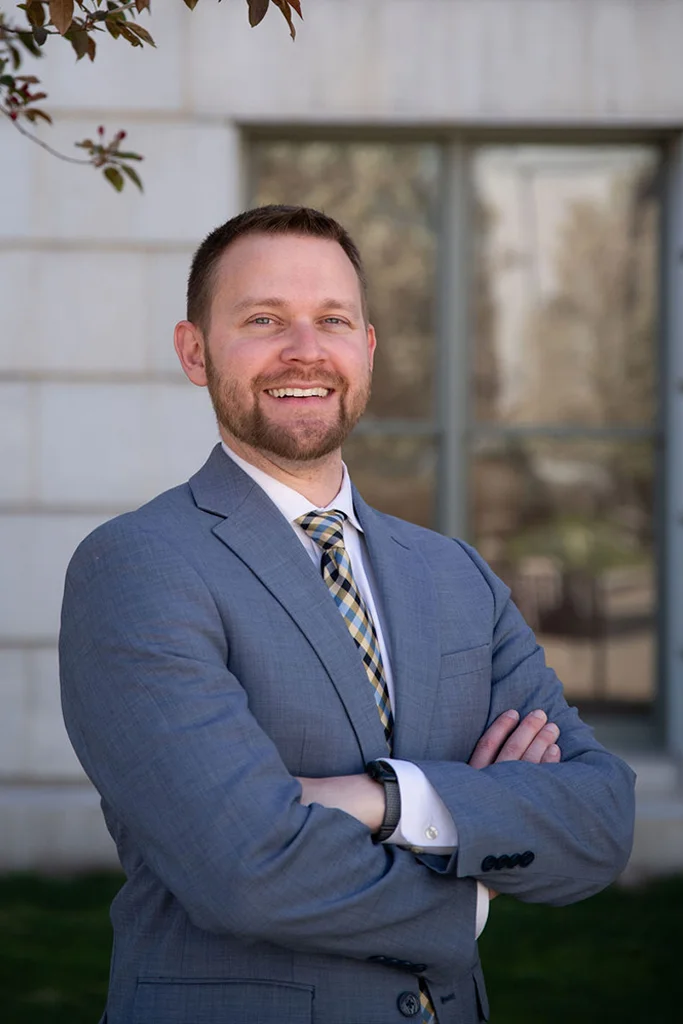
DeChant Law represents clients facing DUI and DWAI charges throughout the mountain corridor, including Park County. Attorney Reid DeChant brings the kind of focused DUI defense training and courtroom experience that most people assume they can only find in a large city firm. That assumption costs people in smaller counties their cases every year.
What DeChant Law Brings to Your Park County DUI Case
Reid DeChant built his practice specifically around DUI and criminal defense, developing deep trial experience as a former public defender handling cases in Denver, Broomfield, Adams County, and surrounding jurisdictions. That volume of courtroom time matters in a DUI context because the legal and scientific issues that arise in these cases, everything from field sobriety test administration to breathalyzer calibration to blood draw chain of custody, require a lawyer who has actually tested these issues before judges and juries. Reid has done exactly that, securing Not Guilty verdicts at trial in DUI cases, including DUI-Drugs charges and third-offense DUI matters where the penalties were severe.
Reid is a graduate of the Trial Lawyers College, the program founded by attorney Gerry Spence that trains lawyers in authentic courtroom advocacy and narrative persuasion. In a DUI case, where juries often arrive with assumptions about guilt, that training translates directly into how effectively a lawyer can challenge the government’s evidence and humanize the person charged. Reid is also an active member of the National Association of Criminal Defense Lawyers and the Colorado Criminal Defense Bar, maintaining access to the most current defense strategies and scientific challenges in DUI litigation.
DeChant Law also has a documented track record in DMV Express Consent hearings, which run parallel to the criminal case and determine whether your license gets revoked independently of any court outcome. Multiple Express Consent actions have been dismissed through Reid’s representation, including cases dismissed for improper advisements, procedural defects, and failures to administer chemical testing within the required timeframe. If you have received notice of a DMV Express Consent hearing following a Park County DUI arrest, that administrative process has its own deadlines that require immediate attention.
DUI Charges That Arise in Park County and How Colorado Law Applies
- Standard DUI (Driving Under the Influence): Colorado law defines DUI as driving when a person is substantially incapable of safely operating a vehicle due to alcohol, drugs, or a combination. A blood alcohol content at or above 0.08 creates a permissible inference of impairment under Colorado statutes, and prosecutors rely heavily on chemical test results as the centerpiece of their case.
- DWAI (Driving While Ability Impaired): Colorado’s DWAI charge covers drivers with a BAC between 0.05 and 0.08, or any level of impairment that affects driving to even the slightest degree. Because the threshold is lower, DWAI charges are brought in cases where the breathalyzer reading might otherwise seem modest, and they carry their own set of penalties and license consequences.
- DUI-Drugs: With Colorado’s legal cannabis market, drug-impaired driving prosecutions have increased across the state. Park County law enforcement is trained to identify drug impairment, and cases involving marijuana, prescription medications, or controlled substances present distinct evidentiary challenges because there is no equivalent to a per se BAC standard for most substances other than THC.
- Aggravated DUI and Repeat Offenses: A second or third DUI conviction in Colorado brings mandatory minimum jail sentences, longer license revocations, extended ignition interlock requirements, and felony exposure on a fourth offense. Prior convictions from any state count toward the repeat offense calculation, making early and aggressive defense essential.
- Underage DUI and DWAI: Colorado applies a zero-tolerance standard for drivers under 21. A BAC of 0.02 or higher can trigger a UDD (Underage Drinking and Driving) charge, with additional consequences for any BAC that meets standard DUI thresholds. These cases often involve college students traveling through Park County en route to ski resorts.
- Commercial Driver DUI: Commercial driver’s license holders face a lower BAC threshold of 0.04 while operating a commercial vehicle, and a DUI conviction can result in CDL disqualification that effectively ends a career. The consequences for commercial drivers who travel Highway 285 and Highway 9 through Park County are particularly severe.
- Express Consent DMV Hearings: A DUI arrest in Colorado triggers two separate proceedings: the criminal case and the DMV Express Consent hearing, which determines whether your license will be administratively revoked. These hearings have strict deadlines and require a different set of legal arguments than the criminal defense itself. Missing the request deadline forfeits your right to contest the revocation.
After a Park County DUI Arrest: Deadlines, Courts, and What Actually Matters
The most consequential thing you can do after a DUI arrest in Park County is not wait. Colorado’s Express Consent law requires that you request a DMV hearing within seven days of receiving notice that your license will be revoked. If that window closes without a request, the revocation takes effect automatically regardless of what happens in the criminal case. This is a hard deadline with no forgiveness for missing it, and it runs simultaneously with the shock and disorientation that often follows an arrest.
Criminal DUI cases in Park County are handled at the Park County Combined Courts, located in Fairplay at the Park County Courthouse on 4th Street. This is a small-docket court system compared to Denver or Jefferson County, which means cases receive individual judicial attention and procedural missteps by the defense, or opportunities for the defense, may be more visible. The local court culture and how the District Attorney’s office handles plea negotiations in DUI matters are things a defense attorney with regional mountain-corridor experience will understand in ways that a lawyer unfamiliar with the jurisdiction simply will not.
Beyond timing, the documentation you gather immediately after an arrest shapes the defense. Write down everything you can recall about the traffic stop: the reason the officer gave for pulling you over, the specific instructions given during field sobriety tests, whether you were read any advisements, how much time passed between the stop and any chemical testing, and the conditions of the road and weather. These details can become the foundation of a suppression motion or a challenge to test reliability, but they fade quickly. The officer will have written a detailed report. Your recollection should be documented just as promptly.
If a blood draw was performed rather than a breath test, request information about who drew the blood, where it was stored, and what lab analyzed the sample. Blood test results in DUI cases are not infallible, and chain of custody issues, contamination, fermentation in the sample, and laboratory error are all legitimate grounds for challenge. A defense attorney who understands how to subpoena and analyze this evidence can make the difference between a conviction on a number and an acquittal on the actual science.
Questions About Park County DUI Cases
What is the difference between DUI and DWAI in Colorado?
DUI (Driving Under the Influence) requires proof that a driver was substantially incapable of safely operating a vehicle due to alcohol or drugs. DWAI (Driving While Ability Impaired) requires only that the driver’s ability was impaired to the slightest degree. Colorado uses a BAC of 0.08 as the threshold for a permissible DUI inference and a BAC between 0.05 and 0.08 for a DWAI inference. Both charges carry penalties and license consequences, though DUI penalties are generally more severe for first offenses.
Will a Park County DUI automatically result in a suspended license?
Not automatically, but the administrative revocation process through Colorado’s DMV operates independently of the court case. If you do not request a hearing within the required window after receiving your Express Consent notice, your license will be revoked without any further review. Even if you request the hearing and lose, there are license reinstatement options including interlock-restricted driving privileges in many situations. The key is acting before deadlines pass.
Can a DUI from Park County be reduced to a lesser charge?
Plea negotiations in DUI cases do happen in Colorado, and outcomes depend heavily on the specific evidence, whether procedural issues affect the admissibility of chemical test results, the driver’s history, and the quality of the defense presentation. DWAI is a lesser included offense to DUI, and some cases result in reduction to DWAI or even careless driving depending on the facts. No outcome is guaranteed, but the quality of pre-trial investigation and legal argumentation directly affects what options become available.
What happens if I refused the chemical test after a Park County DUI stop?
Colorado’s Express Consent law means that by driving on Colorado roads, you have implicitly consented to chemical testing. Refusing a test does not eliminate the case against you. It can result in a longer license revocation period than a failed test would, and the prosecution can use the refusal as evidence at trial suggesting consciousness of guilt. However, refusal also means there may be less chemical evidence for the prosecution to rely on, which creates its own set of defense dynamics. The specific consequences of a refusal require careful analysis of your case facts.
How do field sobriety tests factor into a Park County DUI case?
Field sobriety tests, including the Horizontal Gaze Nystagmus test, the Walk-and-Turn, and the One-Leg Stand, are standardized by the National Highway Traffic Safety Administration but require precise administration to be considered reliable. Variations in how the officer explains or administers the tests, road conditions, lighting, physical conditions of the driver unrelated to alcohol, and footwear can all affect performance. Officers are required to follow specific protocols, and deviations from those protocols are legitimate grounds for challenging the weight of field sobriety evidence.
Does the altitude in Park County affect breathalyzer results?
This is a question that comes up specifically in high-altitude mountain counties like Park County, which sits at elevations above 9,000 feet in and around Fairplay. There is ongoing scientific and legal debate about whether altitude, hematocrit levels, and other physiological factors can affect breath alcohol test accuracy. Some research suggests that certain breathalyzer devices may produce readings that do not accurately reflect blood alcohol content in high-altitude environments. Whether this issue is viable in a specific case depends on the testing equipment used, the individual’s physiology, and the expert witnesses available. It is a defense avenue that deserves serious analysis in Park County cases.
Can a DUI conviction affect my professional license in Colorado?
Yes. Colorado licensing boards for professions including healthcare, law, education, real estate, and others have independent authority to investigate and sanction licensees who are convicted of DUI. The impact varies by profession and licensing board. Some boards treat a first DUI as a reportable event requiring disclosure without automatic discipline, while others take more aggressive action, particularly for repeat convictions or convictions involving aggravating circumstances. Anyone holding a professional license should factor this consequence into their analysis of how to respond to a DUI charge.
How long do Park County DUI cases typically take to resolve?
Park County is a smaller jurisdiction than Denver or El Paso County, and case timelines vary based on whether the matter proceeds to trial, how complex the evidence is, and court scheduling. Cases that are resolved through plea agreements may conclude within a few months after the arraignment. Cases that go to trial, including those involving contested chemical evidence or suppression hearings, take longer. Your attorney should give you realistic projections based on the current docket and the specific issues in your case, not generic timelines that do not account for the local court.
What are the ignition interlock requirements after a Colorado DUI?
Colorado requires ignition interlock devices as a condition of license reinstatement for DUI convictions, and the length of the requirement depends on factors including whether the driver is a first-time or repeat offender, whether there was a refusal, and whether the driver’s BAC was above certain thresholds. The interlock must be installed on any vehicle the driver operates, and violations, including failed tests or tampering, can extend the requirement. Understanding the full scope of post-conviction requirements before accepting any plea helps ensure that you are making informed decisions about your case.
Is it worth contesting a DUI charge in Park County if the breathalyzer result was above the legal limit?
Yes, and here is why: a BAC result above the legal threshold is a permissible inference of impairment under Colorado law, not an automatic conviction. The government still bears the burden of proving the charge, and that burden includes proving the reliability of the testing equipment, the proper administration of the test, the lawfulness of the traffic stop, and the chain of custody for any blood sample. Defense work in DUI cases involves challenging the government’s evidence, not merely accepting it. Cases that look straightforward on paper often have significant legal vulnerabilities once the discovery is reviewed and the officer’s conduct is examined carefully.
DeChant Law’s DUI Defense Representation Across Park County and the Mountain Corridor
DeChant Law represents clients facing DUI and DWAI charges throughout Park County and the surrounding mountain corridor. This includes Fairplay, the county seat where the Park County Combined Courts are located, as well as communities throughout the South Park basin including Alma, Jefferson, Como, Hartsel, Lake George, and Guffey. The firm also serves clients traveling through or residing near the US 285 corridor from Bailey and Pine through Kenosha Pass, as well as the Highway 9 corridor connecting to Summit County.
For clients whose DUI arrest occurred while traveling between Park County and adjacent jurisdictions including Jefferson County, Chaffee County, Teller County, Fremont County, and Summit County, DeChant Law has the regional experience to handle cases that arise anywhere along these mountain routes. Reid’s background defending cases across the Denver metro area and mountain corridor means that clients facing charges far from a major city still receive the same quality of representation they would expect from a well-resourced urban practice.
Talk to a Park County DUI Attorney Before Your Next Court Date
The window between an arrest and your first court appearance is when the most important decisions get made, and most people make them without the information they need. A Park County DUI attorney who has handled these cases through trial, who understands Colorado’s chemical testing requirements, and who knows how to contest both the criminal charge and the parallel DMV proceeding gives you the clearest path to the best outcome available in your specific situation. DeChant Law represents clients at every stage of the DUI process, from the moment of arrest through trial if that is what the case requires. Call Reid DeChant directly to discuss what happened and what your defense options actually look like.