Park County Criminal Defense Lawyer
Park County sits at the crossroads of Colorado’s mountain communities and its major recreational corridors, and that geography shapes the kinds of criminal charges that come through its courts. Highway 285 runs directly through the county, drawing DUI enforcement, traffic stops, and vehicle searches involving travelers headed to and from the Front Range. The towns of Fairplay, Alma, and Jefferson see everything from domestic violence calls to drug charges to wildlife-related offenses, and the Park County Combined Courts handle it all with the efficiency you’d expect from a rural jurisdiction where the same judge may know every prosecutor in the building. When you’re the one facing charges in that building, you want an attorney who understands how small-county prosecution actually works.
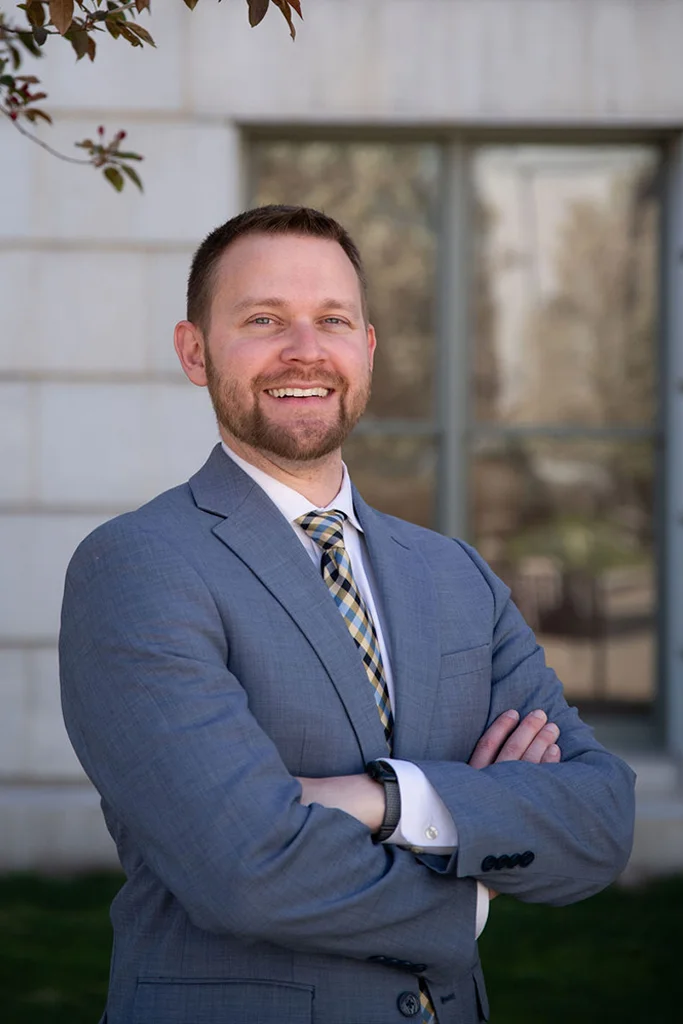
Reid DeChant is a Park County criminal defense lawyer who has spent his career inside Colorado courtrooms, not just filing paperwork from an office. His background as a former public defender means he has handled high volumes of cases across multiple Colorado jurisdictions, cross-examined law enforcement officers, and argued before judges who do not give defense attorneys the benefit of the doubt simply because they ask for it. In Park County specifically, where law enforcement agencies including the Park County Sheriff’s Office work closely with state patrol and federal agencies on certain cases, having defense counsel who understands interagency investigations matters.
This is not a county where charges get informally resolved over a handshake. The Park County District Attorney’s Office prosecutes cases seriously, and defendants who show up without legal representation, or with an attorney who has never set foot in a mountain jurisdiction, often find themselves unprepared for how quickly a case can move toward a bad outcome. Reid DeChant works with clients across the mountain corridor to build defenses that hold up from the first appearance through trial if that is where the case needs to go.
Charges Commonly Filed in Park County Courts
- DUI and DWAI on Highway 285: Colorado’s Highway 285 is one of the most heavily patrolled corridors in the state for impaired driving. Checkpoints and saturation patrols are common, particularly on weekends and around holidays. Colorado’s DUI statute creates serious consequences that escalate sharply with prior offenses, and any arrest also triggers a separate DMV Express Consent action that can revoke your license independently of the criminal case.
- Domestic Violence charges: Park County domestic violence charges carry mandatory arrest protocols under Colorado law, meaning officers have no discretion to walk away once a call comes in and probable cause is established. A domestic violence designation on any charge, even a misdemeanor assault, triggers firearm restrictions and can complicate custody proceedings in family court.
- Drug possession and distribution: Despite Colorado’s cannabis legalization, controlled substance charges involving methamphetamine, fentanyl, cocaine, and prescription medications remain aggressively prosecuted. Highway 285 is also a known transportation corridor, which means drug stops can quickly escalate from possession to distribution or trafficking allegations.
- Weapons offenses: Mountain communities have high rates of firearm ownership, and weapons charges arise from traffic stops, domestic calls, and hunting-related incidents. Colorado’s laws around concealed carry, felony possession of a firearm, and use of a weapon during a crime carry serious sentencing exposure.
- Theft and property crimes: Rural property crimes including trespass, theft of livestock or equipment, and burglary come before Park County courts regularly. Because property values define the severity of theft charges under Colorado statute, what appears to be a minor incident can cross into felony territory quickly.
- Wildlife and hunting violations: Colorado Parks and Wildlife officers are active throughout Park County, and poaching charges, illegal take of wildlife, and license violations can result in criminal charges, substantial fines, and loss of hunting privileges. In some cases, federal charges under the Lacey Act apply alongside state charges.
- Felony assault: Assault charges in Colorado are graded by degree, and the difference between a misdemeanor and a felony assault often turns on the alleged use of a weapon or the extent of alleged injury. Getting that classification right matters enormously because felony assault carries prison time where misdemeanor assault may result in probation.
What to Do After an Arrest in Park County
The first 48 hours after an arrest in Park County are the most consequential. If you were booked into the Park County Jail in Fairplay, your first court appearance, the advisement, will be scheduled quickly. At that hearing, a judge will inform you of the charges, enter a plea of not guilty on your behalf, and set bond conditions. Do not confuse this early hearing with something that does not matter. Bond conditions set at that first appearance can restrict where you live, who you contact, and whether you can possess firearms, and they can remain in place for the duration of your case.
Park County criminal cases are heard at the Park County Justice Center in Fairplay. The court handles both county court matters (misdemeanors and petty offenses) and district court matters (felonies), and the same physical courthouse handles both. If your case is a felony, it will eventually be assigned to the 11th Judicial District, which covers Park and Chaffee counties. Understanding which court and which judge will handle your case shapes the entire defense strategy from the beginning.
One of the most common mistakes people make in mountain-county cases is assuming that rural courts are more lenient than Denver courts. That assumption is wrong and expensive. Prosecutors in smaller counties often handle a more manageable caseload, which means they have more time to focus on individual cases. They also tend to have strong working relationships with local law enforcement, which can influence how evidence is presented and how seriously the office pursues a conviction.
If your arrest involved a vehicle stop and a DUI charge, you have a separate and urgent deadline related to your driver’s license. Colorado’s Express Consent law requires that you request a DMV hearing within a specific window after your arrest if you want to contest the revocation of your license. That hearing is separate from your criminal case and requires its own preparation. Missing that deadline means you lose the right to contest the revocation entirely. Reid DeChant has successfully dismissed DMV Express Consent actions across multiple Colorado counties and handles both the criminal defense and the DMV proceedings in parallel.
Gather and preserve everything you have from the night of your arrest: any receipts, text messages, photographs, witness contact information, dashcam or bodycam footage if you are aware of it, and the paperwork given to you at booking. Your attorney can issue preservation letters to ensure law enforcement does not overwrite dashcam footage before it is obtained through discovery. Do not post about your case on social media. Do not discuss it with friends, family, or cellmates if you were held in custody.
How Small-County Criminal Defense Actually Works
Defending a case in Park County requires a different approach than defending the same charge in Denver or Jefferson County. The courtroom dynamics are more intimate. The judge knows the prosecutor. The prosecutor may know the arresting deputy personally. Defense attorneys who appear rarely in that courthouse do not always read those dynamics correctly, and it costs their clients.
Reid DeChant built his practice on public defender experience across multiple Colorado jurisdictions before moving into private practice. That means he is not learning on the job when he walks into a mountain courthouse. He has appeared before rural judges, handled cases where the only law enforcement witness is a single deputy who was also the first responder, and negotiated with prosecutors in counties where the office’s standard offers are not what you would see at Lindsey-Flanigan. That experience translates directly into better outcomes for clients in places like Fairplay.
Reid’s training at the Trial Lawyers College also shapes how he approaches cases in front of smaller juries. Park County jury pools are drawn from a small population, which means jurors may have opinions about the area’s law enforcement or may know parties involved in the case. Voir dire, the jury selection process, becomes a critical tool for identifying bias and shaping how the jury understands the case from the first moment of trial. Most defense attorneys treat jury selection as a formality. Reid treats it as part of the defense itself.
His memberships in the National Association of Criminal Defense Lawyers and the Colorado Criminal Defense Bar also give him access to defense strategies, expert witnesses, and legal research that smaller-county cases sometimes require. A DUI case where the breathalyzer was improperly maintained, a drug case where the chain of custody of evidence was broken, a weapons charge where the stop itself was constitutionally questionable: these defenses require preparation and resources that go well beyond filing a standard motion. Reid brings that preparation to every Park County case he handles.
Questions About Park County Criminal Cases
What court handles felony cases in Park County?
Felony cases in Park County are handled by the 11th Judicial District, which serves both Park and Chaffee counties. District court proceedings take place at the Park County Justice Center in Fairplay. Misdemeanors and petty offenses are handled at the county court level in the same building. Both levels are prosecuted by the 11th Judicial District Attorney’s Office.
What happens at my first court appearance after a Park County arrest?
At your advisement hearing, a judge will formally inform you of the charges against you, advise you of your rights, and set bond conditions. In most cases, a not-guilty plea is entered automatically. Bond conditions can include restrictions on contact with alleged victims, requirements to remain in Colorado, prohibition on alcohol or drug use, and limitations on firearm possession. These conditions remain in place until the case resolves or a bond modification is granted.
Can I fight a DUI charge from a Highway 285 stop?
Yes, and the basis for that fight depends on the specific facts of your stop. Colorado DUI cases can be challenged on the legality of the initial traffic stop, the administration of roadside sobriety tests, the calibration and maintenance records of any breathalyzer used, the timing of chemical testing under Express Consent requirements, and the officer’s observations and documentation. Reid DeChant has obtained dismissals in DUI cases across multiple Colorado counties, including cases where DMV Express Consent actions were separately dismissed.
Does a domestic violence designation follow me even if the charge is later dropped?
In Colorado, a domestic violence designation attaches to the charge at arrest, not at conviction. However, if the underlying charge is dismissed, the DV designation does not result in a conviction on your record. The concern arises when charges are reduced or resolved through a plea to a lesser offense that still carries the DV designation. That designation, even on a misdemeanor conviction, permanently affects your right to possess firearms under federal law. This is why the plea negotiation in a DV case requires careful analysis, not just a focus on minimizing jail time.
What is the difference between DUI and DWAI in Colorado?
Colorado law distinguishes between driving under the influence (DUI), which involves impairment to a substantial degree, and driving while ability impaired (DWAI), which requires a lesser degree of impairment. A blood alcohol content at or above 0.08 supports a DUI charge, while a BAC between 0.05 and 0.08 can support a DWAI charge. DWAI is a lesser offense than DUI but still carries criminal penalties, license consequences, and a permanent record. Both charges also trigger separate DMV proceedings under Express Consent.
Are hunting and wildlife violations treated as serious criminal charges in Park County?
Colorado Parks and Wildlife takes wildlife violations seriously, and courts in Park County, which covers some of Colorado’s most significant hunting terrain, follow suit. Poaching charges can result in criminal convictions, significant fines, loss of hunting and fishing privileges for extended periods, and in cases involving interstate transport of illegally taken wildlife, federal charges under the Lacey Act. These cases sometimes involve Colorado Parks and Wildlife officers working alongside U.S. Fish and Wildlife Service agents, adding a layer of complexity that requires experienced defense counsel.
If I was arrested while passing through Park County but do not live there, do I have to appear in person for every hearing?
Colorado courts have different requirements for in-person appearances depending on the severity of the charge and the stage of proceedings. For some hearings, particularly in misdemeanor matters, your attorney may be able to appear on your behalf without you being physically present. For arraignments, trial, and sentencing, in-person appearance is typically required. An attorney who handles Park County cases can help you understand which appearances require your presence and can request waivers of appearance where the law and the judge permit.
How does Reid DeChant handle the DMV case alongside the criminal case?
These are two parallel proceedings with different deadlines, different standards of proof, and different decision-makers. The DMV hearing is an administrative proceeding where you can challenge the revocation of your license, and it must be requested within a strict deadline after your arrest. The criminal case moves through the courts on a separate track. Reid handles both simultaneously, using information and discovery from each proceeding to inform the strategy in the other. Evidence uncovered in a DMV hearing, including officer testimony, can be relevant to the criminal defense, and Reid coordinates both tracks to get the best possible result across the board.
What happens if I already gave a statement to law enforcement before I had an attorney?
Statements made to law enforcement can be used against you in court, but they are not always admissible, and even admissible statements can sometimes be challenged or reframed in context. The analysis depends on whether you were in custody at the time, whether Miranda warnings were given and waived, whether any coercion was involved, and what exactly was said. An attorney can evaluate the admissibility of prior statements and develop a strategy that accounts for what law enforcement already has. Making additional statements, particularly without an attorney, is something to avoid entirely while a case is pending.
Is it worth hiring a private defense attorney for a misdemeanor charge in Park County?
The question of whether to hire private counsel for a misdemeanor depends on the consequences attached to that specific charge. A misdemeanor domestic violence conviction creates a permanent federal firearms disability. A DUI conviction in Park County can result in license revocation, mandatory alcohol education programs, ignition interlock requirements, and increased insurance costs for years. A theft conviction can affect professional licensing and employment. The word “misdemeanor” reflects the charge classification, not the real-world consequences. Many clients who underestimated a misdemeanor learned that lesson the hard way after the conviction was entered and the consequences began.
Criminal Defense Representation Across Park County and the Mountain Corridor
DeChant Law represents clients throughout Park County and the surrounding mountain communities. Clients come from Fairplay, Alma, Hartsel, Jefferson, Como, Lake George, and Guffey, as well as from communities along the Highway 285 corridor including Bailey, Pine, Conifer, and Shawnee. Travelers passing through Park County from the Denver metro area, from Summit County, or from Chaffee County who face charges during their time in the county also work with Reid throughout their case. Because the 11th Judicial District spans Park and Chaffee counties, Reid’s representation extends across both jurisdictions for district court matters. Clients from Buena Vista and Salida who face charges connected to the 11th District are also served. The firm also handles DMV Express Consent proceedings arising from Park County arrests for clients throughout Colorado who cannot easily return to Fairplay for every hearing.
Park County Criminal Defense Attorney – Contact DeChant Law
A charge filed in Fairplay carries the same weight as a charge filed in Denver. The consequences for your license, your record, your employment, and your freedom are real regardless of the county. Working with a Park County criminal defense attorney who understands both the local courthouse and the full scope of what you are up against is not a luxury. It is the difference between a defense that actually accounts for the facts of your case and one that treats your case like it came off an assembly line.
Reid DeChant represents clients charged with crimes throughout Park County and the mountain corridor. He brings public defender trial experience, Trial Lawyers College training, and membership in the National Association of Criminal Defense Lawyers to every case he handles. Call DeChant Law to schedule a consultation and talk through your situation with an attorney who will listen, be honest about what you are facing, and give you a clear sense of what your options actually are.