Teller County DUI Defense Lawyer
Cripple Creek, Woodland Park, and the mountain communities scattered across Teller County sit along routes where Colorado State Patrol and local law enforcement maintain a consistent presence, particularly on Highway 24 and the roads connecting the Pikes Peak region to the Front Range. A traffic stop on one of these stretches can turn into a DUI arrest faster than most people expect, and the consequences that follow reach far beyond the courtroom. A Teller County DUI defense lawyer who knows how these cases are built, and where they can be challenged, gives you a fundamentally different outcome than trying to navigate the process alone or with someone who treats impaired driving cases as routine.
Colorado DUI law carries penalties that grow sharply with each subsequent offense. Even a first-time DUI conviction can mean a mandatory license revocation, fines, probation, alcohol education requirements, and an ignition interlock device installed in your vehicle. The criminal case is only part of the picture. Simultaneously, the Colorado Division of Motor Vehicles runs a separate proceeding to revoke your driving privileges through what is known as the express consent process. These two tracks move on different timelines, and missing a deadline on the DMV side can cost you your license before a judge ever rules on your criminal charge.
DeChant Law defends clients facing DUI and DWAI charges across Teller County, including in the district courts and before DMV hearing officers. Reid DeChant has handled a substantial volume of express consent hearings, and his track record in those proceedings reflects a detailed understanding of how officers must document the advisement process, administer chemical testing, and establish the conditions that make a test result legally valid. That knowledge translates directly into defense strategies that have resulted in dismissed DMV actions for DeChant Law clients, as reflected in the firm’s published case results.
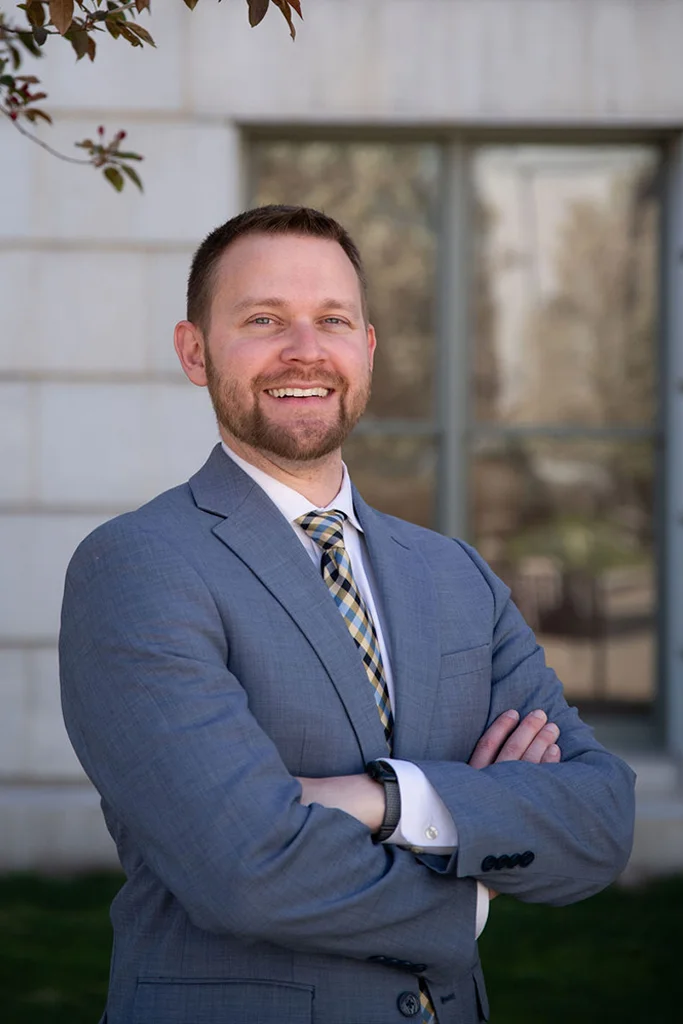
What Reid DeChant Brings to a Teller County DUI Case
Reid DeChant built his criminal defense foundation as a public defender in Denver, Broomfield, and Adams County courtrooms, handling DUI, felony, assault, and a wide range of other charges at a pace that private practice rarely matches. That volume of courtroom work, including cross-examining law enforcement officers on a regular basis, produced a level of trial readiness that matters when a Teller County DUI case heads toward a jury. Reid has also tried DUI cases to verdict and obtained not-guilty findings, including in cases charged as DUI-drugs and third offense DUI, as reflected in DeChant Law’s case results.
Reid is a graduate of the Trial Lawyers College, an intensive program founded by attorney Gerry Spence that focuses on authentic storytelling and human connection in the courtroom. Jurors respond to the person standing before them, not just the legal argument, and Reid’s training is built around presenting clients as full human beings whose circumstances deserve a fair hearing. He is a member of the National Association of Criminal Defense Lawyers and the Colorado Criminal Defense Bar, organizations that keep him current on evolving DUI science, suppression strategies, and testing methodology challenges.
If you are searching for a DUI attorney serving Teller County, the case results DeChant Law has published show a consistent pattern of dismissed express consent actions and not-guilty verdicts in contested DUI cases across multiple Colorado counties. Those results reflect the kind of preparation and courtroom presence that actually moves outcomes rather than just managing them.
DUI Charges and Situations Commonly Defended in Teller County
- Standard DUI and DWAI: Colorado distinguishes between driving under the influence and driving while ability impaired, with DWAI applying at lower blood alcohol thresholds. Both carry real consequences, and even a DWAI conviction adds points to your license and appears on your criminal record.
- DUI-Drugs: Teller County cases increasingly involve allegations tied to cannabis, prescription medications, or other substances rather than alcohol. Colorado law treats drug impairment the same as alcohol impairment for charging purposes, but the chemical testing methods and the science behind impairment are more contested and more defensible.
- Repeat Offense DUI: Second and third DUI charges in Colorado carry mandatory jail time, extended license revocations, and heightened probation conditions. The stakes in these cases are higher, and so is the value of a defense that puts every element of the prosecution’s case under genuine scrutiny.
- Express Consent DMV Hearings: When you are arrested for DUI in Colorado, you have a narrow window to request a DMV hearing to contest the revocation of your driving privileges. Failure to request the hearing in time results in automatic revocation. These hearings are procedurally distinct from the criminal case and require separate preparation focused on the arresting officer’s advisement and testing compliance.
- Underage DUI: Colorado has lower legal limits for drivers under 21, and a conviction at that age can affect education opportunities, financial aid, and professional licensing early in life. Defense in these cases often focuses on the reliability of the stop and the accuracy of the testing procedure.
- Commercial Driver DUI: CDL holders face different federal thresholds and consequences that extend beyond Colorado license action. A DUI conviction for someone holding a commercial license can end their career in transportation. The stakes justify a thorough defense of every element of the stop and the evidence collection.
- DUI Causing Injury: When a DUI arrest also involves an accident with injuries, the charge can escalate significantly and may involve both criminal prosecution and civil exposure. The overlap requires coordinated attention to how statements made in the criminal case may affect other proceedings.
What to Do After a DUI Arrest in Teller County
The first thing that matters after a DUI arrest in Teller County is time. Colorado law gives you seven days from the date of your arrest to request a DMV hearing to contest the revocation of your driver’s license. If that request is not made within seven days, the revocation proceeds automatically, and your ability to challenge it administratively disappears. Many people focus entirely on the criminal case in those first few days and miss this deadline entirely. Requesting the DMV hearing preserves your right to contest the revocation, and it also buys time during which your driving privileges may remain intact while the hearing is pending.
Criminal DUI cases in Teller County are handled in the Teller County Combined Courts, located in Cripple Creek. The court handles both misdemeanor and felony matters, so depending on how your charge is filed, your case may proceed through different dockets and timelines. Understanding which courtroom your case lands in and what the typical scheduling looks like in Teller County specifically helps you plan realistically for what is ahead.
Preserve everything you can from the night of the arrest. This includes any receipts from establishments where you may have been, the names of anyone who was with you, and your own clear account of what you consumed, when, and how you felt. Details that seem minor in the first few hours become important when a defense attorney begins looking at the timeline between your last drink and when you were actually tested. Colorado’s express consent law requires that chemical testing be administered within two hours of driving, and there are documented cases in the DeChant Law results where that timeline issue led to a dismissal of the DMV action.
Do not discuss the facts of your case with law enforcement beyond what is legally required, and avoid posting anything about the incident on social media. Statements made after an arrest, even casual ones, can be used in prosecution. Contact a Teller County DUI defense attorney as quickly as possible so those seven days are not wasted.
How Colorado DUI Stops and Testing Work, and Where Cases Get Challenged
Every DUI prosecution in Colorado starts with a stop, and the stop itself must be legally justified. An officer needs reasonable articulable suspicion of a traffic violation or other criminal activity to initiate a stop. If a stop is made without that foundation, any evidence gathered after it, including field sobriety tests, breath tests, and blood draws, may be suppressible. Traffic stops on Highway 24 through Woodland Park, on the roads in and out of Cripple Creek, and at sobriety checkpoints (which are permitted in Colorado under specific procedural requirements) are all subject to this analysis.
Field sobriety tests are standardized procedures developed by the National Highway Traffic Safety Administration, but they are not infallible. The Horizontal Gaze Nystagmus test, the Walk-and-Turn, and the One-Leg Stand are all subject to environmental conditions, instructions given by the officer, and the physical characteristics of the person being tested. High altitude, cold temperatures, uneven roadway surfaces, and medical conditions can all affect performance on these tests in ways that have nothing to do with impairment. Teller County’s elevation, often exceeding 8,000 feet in Cripple Creek and surrounding areas, is a genuine variable that experienced defense counsel considers.
Blood and breath testing both carry their own vulnerabilities. Breathalyzer calibration records, the officer’s certification to operate the device, the chain of custody for blood samples, and lab procedures at the Colorado Bureau of Investigation are all areas where defense attorneys look for deficiencies. DeChant Law’s results include dismissed express consent actions grounded in testing timeline violations and improper advisement procedures, which are exactly the kinds of technical defenses that require knowing what to look for in the record.
Questions About Teller County DUI Defense
What is the difference between DUI and DWAI in Colorado?
DUI, or driving under the influence, requires the prosecution to show that alcohol or drugs substantially impaired your ability to operate a vehicle safely, or that you had a blood alcohol content of 0.08 or higher. DWAI, or driving while ability impaired, applies at lower levels and requires showing that alcohol or drugs impaired your ability even to the slightest degree. DWAI is often charged alongside DUI and carries its own distinct penalties, including points on your license and criminal record consequences, even though it is treated as less serious than DUI.
Do I have to take a roadside breath test in Teller County?
The roadside portable breath test is a preliminary screening device, and Colorado law does not require you to take it. Refusing the portable test generally cannot be used against you in the same way as refusing the official chemical test. However, once you are arrested, Colorado’s express consent law requires you to submit to an official breath or blood test. Refusing the official chemical test triggers a separate automatic license revocation and can also be introduced as evidence in a criminal prosecution.
What happens to my driver’s license after a DUI arrest in Teller County?
After a DUI arrest in Colorado, the DMV initiates a separate civil proceeding to revoke your license. You have seven days from the arrest to request a hearing to contest that revocation. If you do not request the hearing, your license is automatically revoked after a short waiting period. If you do request the hearing, your driving privileges may remain in effect while the hearing is pending. The criminal case and the DMV case run on parallel tracks and must both be addressed.
Can a DUI charge be dismissed in Teller County?
Yes. DUI charges in Colorado can be dismissed for a range of reasons, including unlawful traffic stops, improper advisement of express consent rights, testing conducted outside the required two-hour window, deficiencies in breathalyzer calibration or maintenance records, and problems with blood sample chain of custody. DeChant Law has obtained dismissals in DUI cases across Colorado counties, including dismissed express consent actions and outright case dismissals in criminal proceedings.
How long does a DUI case in Teller County typically take?
Teller County is a smaller jurisdiction than Denver or Jefferson County, and docket timelines reflect that. A straightforward misdemeanor DUI case may move through the Teller County Combined Courts over several months, with initial hearings, pretrial conferences, and either a resolution or trial. Cases that involve contested evidence, suppression motions, or DMV hearings run longer. Planning for a process that takes anywhere from several months to over a year is realistic, depending on how complex the case becomes.
Will a DUI conviction affect my ability to work in healthcare, law enforcement, or other licensed professions?
A DUI conviction can trigger professional licensing consequences for nurses, EMTs, law enforcement officers, teachers, attorneys, and others whose licenses are regulated by Colorado agencies or federal requirements. Many licensing boards require disclosure of criminal convictions and have authority to impose disciplinary action, including suspension or revocation of the license. If your profession involves licensing oversight, the criminal case is not the only consequence you are managing, and that context should inform your defense strategy from the beginning.
Does the elevation in Teller County affect DUI defense arguments?
It can. High altitude is known to affect how individuals process alcohol, how they perform on standardized field sobriety tests, and even how breath testing devices measure alcohol content. Teller County’s elevation, with Cripple Creek sitting above 9,000 feet, is a genuine environmental factor that a prepared defense attorney considers when evaluating field sobriety observations and breath test results. This is not a universal defense, but in cases where the margin between legal and illegal is narrow, altitude and its physiological effects are a legitimate part of the analysis.
Can I get a restricted license to drive to work after a DUI revocation in Colorado?
Colorado has provisions allowing for early reinstatement with an ignition interlock device requirement for certain DUI offenses, which permits driving with restrictions even during a revocation period. The availability and conditions depend on your prior driving record, the specifics of the current offense, and whether you completed required testing. An attorney familiar with both the DMV process and the ignition interlock reinstatement procedures can help you understand what options are actually available in your specific situation.
Is it worth fighting a DUI charge if I failed the breath test?
Yes, in many cases it is. A breath test result above the legal limit is evidence, but it is not the end of the analysis. The reliability of that result depends on how the device was maintained, whether it was properly calibrated, whether the officer was certified to use it, whether the test was administered correctly, and whether there were physiological conditions that may have affected the reading. DeChant Law has obtained case dismissals and not-guilty verdicts in cases where chemical test results existed. The result matters, but so does everything that happened before and during the testing process.
What is an express consent advisement and why does it matter?
Colorado’s express consent law requires that officers advise drivers of their rights and the consequences of refusing chemical testing in a specific way. If the advisement is given incorrectly, incompletely, or before required Miranda warnings in certain circumstances, the resulting license revocation action can be dismissed. DeChant Law’s published case results include express consent dismissals based on improper advisement and other procedural deficiencies, which reflects how much the specifics of the advisement process actually matter in these cases.
Teller County DUI Representation Across the Pikes Peak Region
DeChant Law represents clients facing DUI and DWAI charges across Teller County and the broader Pikes Peak region. This includes drivers stopped or arrested in Woodland Park, Cripple Creek, Victor, Divide, Florissant, Lake George, and the communities along Highway 24 and Highway 67. The firm also serves clients who live in Teller County but were charged in neighboring El Paso County, Jefferson County, or other Colorado jurisdictions where they were stopped while traveling.
Whether your case originates from a traffic stop on the descent from Pikes Peak, a checkpoint near Cripple Creek’s gaming district, or a late-night encounter with a State Patrol unit on the Ute Pass, the legal issues that follow are the same, and the defense strategies are just as applicable in Teller County courts as they are in larger urban jurisdictions. The firm also handles DMV express consent hearings for Teller County residents regardless of where in Colorado the underlying arrest occurred, because the Colorado DMV process is statewide and requires the same focused attention no matter which county was involved.
Talk to a Teller County DUI Attorney About Your Case
A DUI charge in Teller County moves on two timelines at once, the criminal case and the DMV revocation proceeding, and the decisions made in the first days after an arrest shape how both tracks unfold. DeChant Law’s Teller County DUI attorney, Reid DeChant, brings genuine trial experience, a documented record of dismissed express consent actions, and training in courtroom advocacy that translates directly into better outcomes for clients facing impaired driving charges. The prosecution’s case deserves to be put to the test, and that starts with a conversation about what actually happened.
Reach out to DeChant Law to schedule a consultation about your DUI or DWAI charge. The sooner the DMV deadline and the criminal case details are in front of a defense attorney, the more options remain on the table.