Bailey DUI Defense Lawyer
The town of Bailey sits along US-285 in Park County, a stretch of mountain highway that Colorado State Patrol monitors closely, particularly on weekends when Denver residents head into the mountains and return home in the evenings. DUI stops along this corridor happen with regularity, and the drivers who get pulled over are not always people who made reckless decisions. Altitude affects alcohol absorption faster than most people realize, a drink or two at a brewery in Conifer or a winery near Pine can push a blood alcohol reading higher than a driver expected. When troopers run checkpoints or conduct traffic enforcement along 285 between Bailey and the Denver metropolitan area, the consequences of a stop can follow a driver for years.
Working with a Bailey DUI defense lawyer who understands how these cases are built and how they can be challenged is the difference between accepting a conviction that reshapes your life and mounting the kind of defense that results in a reduction or outright dismissal. DUI charges in Colorado carry consequences that extend well beyond fines and license suspension. They affect employment, professional licenses, insurance rates, and, for repeat offenses, can result in mandatory jail time and ignition interlock requirements that last for years. These outcomes are not inevitable, but avoiding them requires a defense lawyer who knows how DUI cases actually work in Colorado courts, not just the general law.
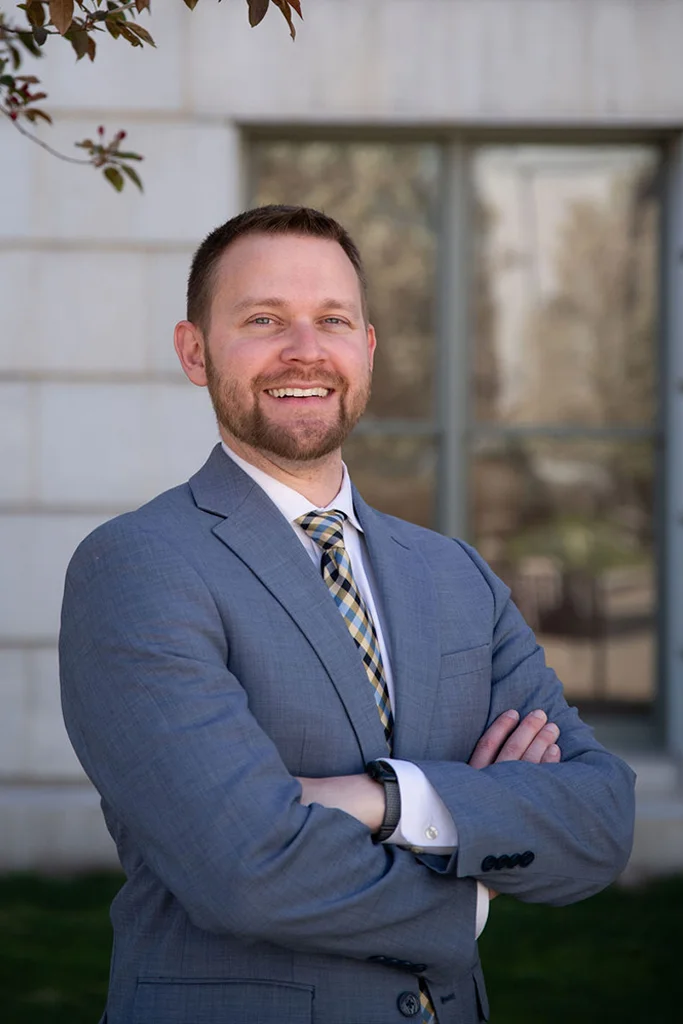
DeChant Law represents people charged with DUI and DWAI throughout the Denver metro area and into the surrounding mountain communities, including Park County cases that funnel through the local court system. Attorney Reid DeChant has dedicated significant focus to impaired driving defense, understanding not only the legal framework but the specific technical issues that arise in field sobriety testing, breathalyzer administration, blood draw procedures, and the DMV hearing process that runs parallel to the criminal case.
What DUI Charges Along US-285 and the Bailey Corridor Actually Involve
The mountain stretch of US-285 through Bailey, Pine, and the broader Platte Canyon area creates a particular enforcement environment. The road itself is windy, elevation is significant, and troopers frequently conduct traffic stops based on lane position, speed, or driver behavior they observe on the descent toward the Front Range. A driver fatigued from a day of hiking who drifts slightly in a lane can become the subject of a DUI investigation before they have any idea what is happening.
Colorado law distinguishes between DUI and DWAI (Driving While Ability Impaired), two separate offenses with different blood alcohol thresholds and different penalty structures. DWAI applies when a driver is impaired to even the slightest degree, at a blood alcohol concentration between 0.05 and 0.079, while DUI requires a BAC of 0.08 or higher. Both charges are taken seriously by Colorado courts, and both can be challenged on grounds that range from the validity of the initial stop to the accuracy of the chemical test administered at the roadside or at the station. In mountain settings, the reliability of portable breath testing equipment, which can be affected by altitude and temperature, becomes an important factual question.
Cases that originate in the Bailey area are processed through Park County’s court system. Park County Court and the Park County District Court handle criminal matters arising from the unincorporated areas around Bailey, Fairplay, and the surrounding communities. Understanding the local procedural environment, including how the district attorney’s office handles first-offense DUI negotiations versus aggravated cases, shapes the defense strategy from the first appearance forward.
Why DeChant Law for Bailey DUI Defense
Reid DeChant’s background in impaired driving defense is specific and deep. As a former public defender, he handled DUI and DWAI cases across Denver, Broomfield, and Adams County, working in courtrooms and in front of judges and law enforcement witnesses on a daily basis. That volume of trial experience means he understands how the prosecution builds its DUI case, which witnesses they rely on, how officers are trained to testify, and where the weaknesses in standard field sobriety test protocols actually appear. Most criminal defense lawyers handle DUI as one charge among many. Reid has trained specifically in impaired driving defense, focusing on the procedural and scientific dimensions that experienced practitioners know can unravel a prosecution’s case.
Reid is also a graduate of the Trial Lawyers College, founded by legendary trial attorney Gerry Spence, where the curriculum centers on genuine human connection with juries and the power of narrative advocacy rather than rote legal argument. In DUI cases that go to trial, that distinction matters. Juries evaluate credibility, context, and story, not just BAC numbers. Reid has tried DUI cases in multiple Colorado jurisdictions, achieving Not Guilty verdicts and dismissals across cases that include DUI-Drugs charges in Jefferson County, DUI third offense cases in Douglas County, and standard DUI dismissals in Arapahoe County, among others documented on the firm’s results record. He is a member of the National Association of Criminal Defense Lawyers and the Colorado Criminal Defense Bar, maintaining ongoing connections with the foremost DUI defense thinking in the country.
The DMV side of a DUI case demands equal attention. A DUI arrest in Colorado triggers an automatic license revocation process through the Colorado Department of Motor Vehicles that operates independently of the criminal case. Losing a hearing at the DMV means losing your license, even if the criminal charge is later reduced or dismissed. Reid has successfully challenged DMV Express Consent actions across multiple grounds, including improper advisements, failures to administer chemical tests within the required timeframe, and Miranda-related issues that invalidated the process. This dual-track defense approach, criminal court and DMV hearing together, is not optional if you want the best chance of preserving your driving privileges.
DUI Charge Categories a Bailey Defense Attorney Handles
- Standard DUI (BAC 0.08 or Higher): Colorado’s primary impaired driving offense, prosecuted under the state’s traffic statute, with penalties that escalate from fines and license suspension on a first offense to mandatory minimums involving jail time on subsequent convictions.
- DWAI (Driving While Ability Impaired): A distinct Colorado charge applying when impairment is present to any degree, even at BAC levels below the DUI threshold. Often prosecuted alongside or instead of DUI, and carries its own penalty structure including points, fines, and license consequences.
- DUI-Drugs: Impaired driving charges based on marijuana, prescription medication, or controlled substance use rather than alcohol. Colorado law applies the same legal framework, and prosecutors use Drug Recognition Expert testimony to support these cases, testimony that can be challenged on foundation and methodology.
- Aggravated DUI and Felony DUI: Charges involving prior convictions, extremely high BAC readings, or incidents involving serious bodily injury. Colorado’s habitual offender provisions convert third and subsequent DUI offenses into felony-level charges with prison exposure and lengthy mandatory supervision periods.
- DUID (Under the Influence of Drugs): Colorado established a permissible inference for THC at five nanograms per milliliter of whole blood, but that inference is rebuttable and the science around cannabis impairment testing remains genuinely contested, creating defense opportunities that a knowledgeable Bailey DUI defense attorney can pursue.
- DMV Express Consent Hearings: The administrative proceeding separate from criminal court where the Colorado DMV determines whether to revoke your license following a DUI arrest. Failure to request a hearing within seven days of arrest waives your right to contest the revocation. These hearings have their own evidentiary requirements and procedural grounds for dismissal.
- Underage DUI and Zero Tolerance Violations: Colorado law applies a lower BAC threshold to drivers under 21, and convictions carry consequences that include impacts on educational opportunities, financial aid eligibility, and future employment in licensed professions.
What to Do After a DUI Arrest in the Bailey Area
The first and most critical deadline you face after a DUI arrest in Colorado is the DMV hearing request. Colorado law requires that you request a DMV Express Consent hearing within seven days of your arrest or the Department of Motor Vehicles will automatically proceed with license revocation. This seven-day window does not pause while you find a lawyer or decide what to do. If you were arrested on US-285 or anywhere in Park County and given an Express Consent advisement, contacting an attorney as soon as possible after the arrest is not just advisable, it is functionally necessary if you want any chance of preserving your license.
On the criminal side, your first court appearance in a Park County case will be set in Park County Court, located in Fairplay at the Park County Courthouse on Fourth Street. The distance from the Bailey area to Fairplay makes hiring a lawyer familiar with the local process especially practical. Understand that DUI cases in mountain jurisdictions often proceed differently from metro cases in terms of pace and negotiation culture. Having a Denver DUI attorney who has handled cases across multiple Colorado counties, rather than one who has only practiced in a single courthouse, gives you broader perspective on where your case stands relative to others and what realistic outcomes look like at each stage.
Document everything you can remember from the stop immediately: the time, the road conditions, what you drank and when, how long before driving, whether the officer administered the field sobriety tests on a flat surface or on the slope of the highway shoulder, and whether you were advised of your rights before or after the Express Consent advisement. In mountain DUI stops, the physical conditions at the roadside are genuinely relevant to the reliability of field sobriety test results, and your recollection while it is fresh can become important supporting information for your defense.
Avoid discussing the case with anyone other than your attorney, including on social media or in text messages. Colorado’s discovery rules will provide the prosecution access to certain communications, and anything you say about the night of the arrest can be used to undercut your defense. The period between arrest and the first court appearance is one of the most important in a DUI case because it is when the defense lawyer evaluates the evidence, identifies the strongest challenges, and decides how to approach the DMV hearing.
Questions Bailey Residents Ask About DUI Charges
What happens if I refused the breathalyzer or blood test during my arrest?
Colorado’s Express Consent law means that by driving on Colorado roads, you have implicitly consented to chemical testing following a valid DUI arrest. Refusing the test results in an automatic license revocation and can be used against you in the criminal case as evidence of consciousness of guilt. However, refusal also means the prosecution cannot present a specific BAC number to the jury, which creates its own set of defense dynamics. The revocation period for refusal is longer than for a test failure, but a DMV hearing can still be requested and may result in the action being dismissed on procedural grounds.
Can I challenge whether the traffic stop itself was legal?
Yes, and this is one of the most powerful defenses in DUI cases. A Colorado law enforcement officer must have reasonable articulable suspicion of a traffic violation or criminal activity before initiating a stop. If the stop was based on vague or unsupported observations, a defense attorney can file a motion to suppress the evidence gathered during the stop. If the court grants suppression, the prosecution’s case collapses because the BAC test, field sobriety results, and officer observations all become inadmissible. This is a fact-specific inquiry that requires careful review of the dashcam footage, the officer’s report, and the circumstances of the stop.
How does altitude affect DUI cases along US-285 and in mountain areas?
Altitude affects both how alcohol is metabolized and how certain roadside testing equipment performs. Higher elevation means lower blood oxygen saturation, which can affect breathalyzer readings from portable devices. It also means drivers experience the effects of alcohol differently than they do at lower elevations, sometimes more intensely with fewer drinks. Both of these factors become relevant to evaluating the accuracy of a roadside BAC reading and the reliability of field sobriety test performance, where tasks like standing on one leg or walking a straight line may be harder to perform on an uneven shoulder at elevation regardless of alcohol consumption.
What is the difference between the criminal case and the DMV hearing?
They are two separate legal proceedings with different standards of proof and different consequences. The criminal case is prosecuted by the Park County District Attorney’s Office and determines whether you are convicted of DUI or DWAI, with consequences including fines, probation, and possible jail time. The DMV Express Consent hearing is an administrative proceeding run by the Colorado Department of Motor Vehicles and determines whether your driver’s license is revoked. Winning the criminal case does not automatically win the DMV hearing, and vice versa. You need to actively contest both proceedings to have the best overall outcome.
Will a DUI conviction appear on my permanent record in Colorado?
In Colorado, DUI and DWAI convictions are not eligible for expungement or sealing under current state law. They remain on your criminal record permanently. This matters significantly for professional license holders, people in security-clearance employment, and anyone in a field where background checks are routine. The only way to avoid a permanent DUI record is to avoid a conviction through dismissal, an acquittal at trial, or reduction to a lesser charge that does not carry the same long-term consequences.
What if I was driving a company vehicle when I was arrested?
A DUI arrest while operating a commercial or company vehicle adds layers of complexity. Colorado law applies a lower BAC threshold to commercial driver’s license holders, and a CDL disqualification operates separately from a standard driver’s license revocation. Beyond the legal consequences, your employer will likely be notified through standard DMV reporting processes, and many employers have internal policies that treat a DUI arrest as grounds for termination or reassignment. If a CDL is involved, contesting both the criminal charge and the DMV action is especially urgent.
Can a first-offense DUI be reduced to a lesser charge in Park County?
It depends on the facts of the case. Colorado prosecutors have discretion to offer plea agreements, and first-offense cases without aggravating factors are sometimes resolved through reduction to DWAI or through deferred judgment arrangements. However, plea offers vary significantly by county and by the specific facts of the arrest, and no outcome is guaranteed. A Bailey DUI attorney familiar with how Park County handles these negotiations can evaluate whether the offer on the table is reasonable or whether the case is worth taking further, including to trial if the evidence supports that approach.
What happens to my license while the criminal case is pending?
If you request a DMV Express Consent hearing within seven days of arrest, your license is typically not immediately revoked. You will receive a temporary permit allowing you to drive while the hearing is pending and the case is active. If you win the hearing, no revocation takes effect. If you lose, the revocation begins at that point. The duration of any revocation depends on factors including your BAC at the time of arrest, whether you refused testing, and whether you have prior DUI-related license actions on your record.
Does it matter that my arrest happened in an unincorporated part of Park County rather than inside a town?
Jurisdiction determines which law enforcement agency made the arrest, typically Colorado State Patrol for highway stops along US-285, and which court handles the case. Unincorporated Park County DUI cases are handled in Park County courts. The substance of the charges is governed by Colorado state law regardless of the specific location within the county, but knowing which court system, which judges, and which prosecutorial office is involved helps a defense attorney approach the case with an accurate understanding of the local environment.
How long does a DUI case in Park County typically take to resolve?
Mountain county courts often move at a different pace than high-volume metro courts. A straightforward first-offense DUI that resolves through a plea agreement may be concluded within a few months. Cases that involve contested evidence, suppression motions, or proceed to trial can take considerably longer. The DMV hearing process, which is independent, typically proceeds faster than the criminal case. A defense attorney handling both proceedings simultaneously helps keep the timeline coordinated and ensures that developments in one proceeding inform the strategy in the other.
DUI Defense Representation Across the Mountain Corridor and Denver Metro Area
DeChant Law represents clients facing DUI and DWAI charges throughout the region, from the mountain communities along US-285 through Bailey, Pine, Conifer, Evergreen, and Morrison to the suburban corridors of Jefferson County, Douglas County, and Arapahoe County closer to the metro core. Cases arising from the I-70 mountain corridor through Clear Creek County and the US-6 approaches to the foothills are also within the firm’s geographic reach. In the Denver metro area, Reid DeChant handles DUI matters arising out of Denver County, Adams County, Broomfield County, and the surrounding jurisdictions that generate significant impaired driving enforcement along major nightlife and event corridors including LoDo, RiNo, South Broadway, and Colfax Avenue. Whether a client was stopped by Colorado State Patrol on a mountain highway, a Jefferson County Sheriff’s deputy on an arterial road, or a Denver Police officer after a game at Ball Arena or a concert at Red Rocks, the firm’s defense approach draws on consistent experience across all of these jurisdictions and enforcement environments.
Contact DeChant Law: Bailey DUI Attorney Ready to Review Your Case
A DUI charge in the Bailey area is serious, but it is not a guaranteed conviction. From the validity of the initial traffic stop to the reliability of the chemical test, there are real legal and factual questions that a committed Bailey DUI attorney can investigate and, where appropriate, challenge. Reid DeChant has taken DUI cases through every stage of the Colorado process, from the DMV hearing room to jury trials in multiple counties, and has secured dismissals and Not Guilty verdicts when the evidence supported that outcome. That track record reflects years of focused work on exactly these kinds of cases, not general criminal defense work that includes DUI as an afterthought.
If you were arrested for DUI or DWAI in Bailey, Park County, or anywhere along the US-285 mountain corridor, reach out to DeChant Law promptly. The DMV deadline is seven days and it does not wait. A consultation gives you a clear picture of what you are facing, what the realistic defense options are, and what needs to happen next to give you the strongest possible outcome in your case.