Bailey Criminal Defense Lawyer
The town of Bailey sits along US Highway 285 in Park County, nestled in the foothills west of the Denver metro area. What feels like a quiet mountain community can become the setting for serious criminal exposure remarkably fast, whether the charge stems from a traffic stop on 285, an altercation at a local bar, a domestic dispute inside a home, or a drug-related investigation that draws state or federal attention. When criminal charges arise in Bailey or anywhere in Park County, the distance from the metro area does not make the stakes smaller. A conviction in Park County carries the same weight it would carry anywhere else in Colorado, with the same potential for incarceration, probation, fines, and a permanent criminal record that follows a person into every future job application, housing search, and custody dispute. That reality is what makes working with a Bailey criminal defense lawyer who has genuine courtroom experience so essential from the very beginning of the process.
Park County is a smaller jurisdiction than the Denver metro courts, and that context matters. Smaller court systems can feel less anonymous, which cuts both ways. Prosecutors in smaller counties often have their own approaches to charging decisions and plea negotiations, and local law enforcement agencies including the Park County Sheriff’s Office develop patterns in how they investigate and document cases. A defense attorney who understands those dynamics and has spent real time in Colorado courtrooms, cross-examining officers and presenting cases to juries, brings something fundamentally different to a Park County case than a lawyer who has mostly negotiated settlements from a conference room.
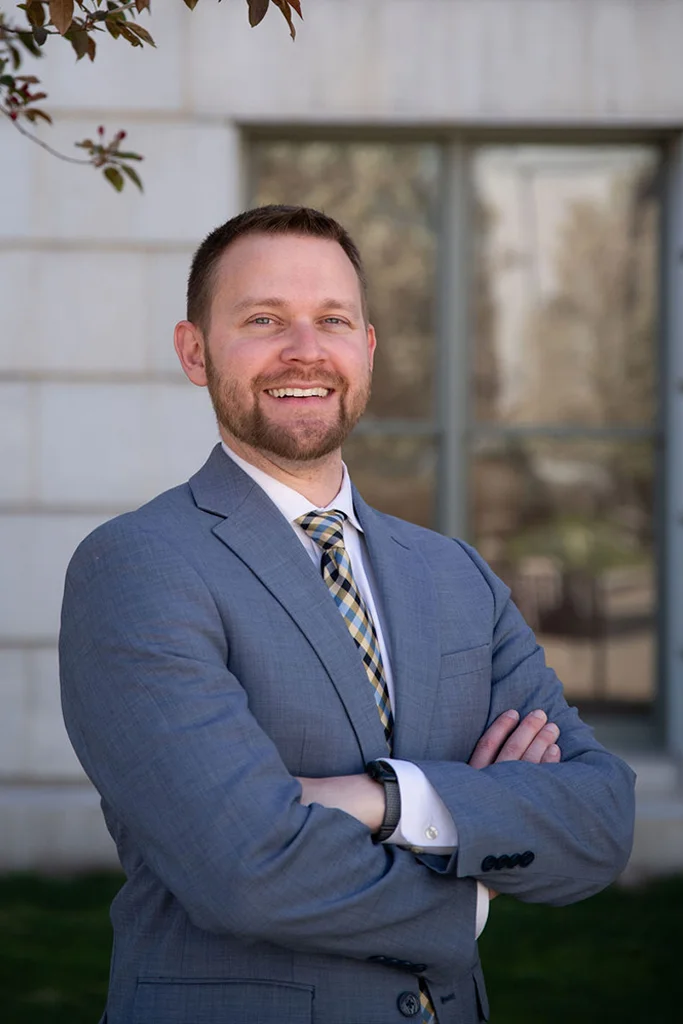
At DeChant Law, Reid DeChant has built a criminal defense practice grounded in the kind of trial experience that most private defense attorneys never accumulate. Working as a public defender across Denver, Broomfield, and Adams County courtrooms before entering private practice, Reid handled cases across the full spectrum of Colorado criminal charges, from misdemeanor traffic offenses to violent felonies. That depth of courtroom work means Park County clients are not getting a lawyer who will be learning the ropes at their expense.
What Actually Happens When Criminal Charges Are Filed in Park County
Criminal cases that originate in Bailey go through the Park County Combined Courts, located in Fairplay, the county seat. That drive from Bailey to Fairplay along US 285 is one most defendants will make multiple times over the course of their case, for arraignments, status hearings, motions hearings, and potentially trial. Understanding what happens at each of those stages before your first court date makes a substantial difference in how prepared you feel and how well-positioned your defense becomes.
After an arrest or the filing of a summons, the first formal court appearance is typically an advisement hearing where the charges are read and bond conditions are addressed. In Park County, bond decisions can carry real weight for people who live in mountain communities with jobs, families, and lives that cannot be put on pause. A defense attorney who appears at this stage and can speak to the court about a client’s ties to the community, their employment, and their lack of flight risk can meaningfully affect the conditions under which a person is released while the case moves forward.
From advisement, cases proceed through discovery, during which the prosecution discloses police reports, body camera footage, toxicology results if applicable, witness statements, and any other evidence they plan to use. Reviewing this material carefully and identifying weaknesses, inconsistencies, or constitutional problems with how evidence was gathered is where skilled defense work actually happens, often long before any jury is empaneled. Many cases resolve through negotiation after discovery is complete. Others proceed to motions hearings where the defense can challenge the admissibility of certain evidence. And some go all the way to trial. Having a lawyer who is genuinely prepared and capable at each stage changes what outcomes become achievable.
Charges That Arise Frequently in Bailey and Park County
- DUI and DWAI on US Highway 285: The stretch of 285 through Bailey and the surrounding foothills sees significant law enforcement activity, particularly on weekend evenings and during ski season. Colorado’s DUI statute makes it a criminal offense to operate a vehicle with a blood alcohol concentration at or above 0.08 percent, while DWAI applies at lower levels. Both carry criminal penalties and trigger separate DMV proceedings that can result in license revocation independent of the criminal case outcome.
- Drug Possession and Distribution Charges: Park County sees drug cases involving methamphetamine, fentanyl, heroin, and other controlled substances, sometimes connected to the interstate traffic along 285. Possession charges range in severity depending on the substance and amount, while distribution or intent-to-distribute allegations carry significantly heavier felony consequences under Colorado law.
- Domestic Violence Charges: Colorado’s mandatory arrest law means that when officers respond to a domestic disturbance and find probable cause, an arrest will typically occur. Domestic violence is a sentence enhancer in Colorado rather than a standalone charge, attaching to offenses like assault, harassment, or criminal mischief and bringing mandatory conditions, restrictions on firearm possession, and treatment requirements that affect every aspect of a person’s life.
- Assault and Menacing: Physical altercations in small communities, disputes between neighbors, and confrontations that escalate can result in assault charges ranging from misdemeanor third-degree assault to serious felony charges involving weapons. Felony menacing, which involves placing another person in fear of serious bodily injury often with a weapon, carries prison exposure and has been a charge Reid has successfully defended at trial.
- Theft Offenses: Theft charges in Colorado are graded by the value of the property allegedly taken. At certain thresholds, what might seem like a minor incident crosses into felony territory, with consequences that extend well beyond any fine or restitution order.
- Weapons Charges: Possession or use of a firearm in connection with another offense, or possession by someone legally prohibited from owning firearms, creates overlapping criminal exposure that can transform an otherwise manageable case into a serious felony matter requiring careful, strategic defense work.
- Traffic Crimes and Vehicular Offenses: Beyond DUI, reckless driving, vehicular assault, and leaving the scene of an accident are criminal charges that arise on Colorado mountain highways with real frequency. These carry not only criminal penalties but collateral consequences for driving privileges and, in some cases, professional licenses.
Why DeChant Law Handles Bailey Criminal Defense Cases Differently
Reid DeChant’s background as a public defender gave him something that most private criminal defense attorneys simply cannot replicate: volume trial experience across an enormous range of charge types in real Colorado courtrooms. Defending hundreds of cases as a public defender in Denver, Broomfield, and Adams County meant standing in front of judges, cross-examining police officers, challenging lab results, and speaking to juries as a constant professional practice rather than as an occasional event. That experience means Park County clients get a criminal defense attorney in Bailey who has already handled cases similar to theirs and knows exactly where the prosecution’s approach tends to be strongest and where it tends to break down.
Reid is also a graduate of the Trial Lawyers College, a selective program founded by legendary attorney Gerry Spence that trains lawyers in psychodrama, storytelling, and human-centered courtroom advocacy. The philosophy driving that training is straightforward: juries acquit human beings whose stories they understand, not defendants who hide behind legal arguments. Reid carries that approach into every case he handles, building a defense that presents the full context of a client’s situation in a way that resonates with real people sitting in the jury box.
Recognition from the National Association of Criminal Defense Lawyers, membership in the Colorado Criminal Defense Bar, and case results that include not-guilty verdicts on charges ranging from DUI to assault to domestic violence strangulation reflect a practice built on preparation, genuine advocacy, and a refusal to treat clients as case files moving through a system. If you are looking for a criminal defense attorney serving Bailey and the surrounding mountain communities, the combination of trial depth, training, and client-centered practice that Reid brings is genuinely uncommon in this region.
Steps to Take After a Criminal Arrest or Charge in Park County
The hours immediately following an arrest or the receipt of a criminal summons carry more weight than most people realize. Colorado law imposes deadlines that begin running almost immediately in some contexts, particularly if your case involves a DUI and a potential DMV license revocation. In Colorado, you have a limited window after a DUI arrest to request a DMV express consent hearing to contest the revocation of your driving privileges. Missing that window means the revocation proceeds automatically, separate from anything that happens in the criminal case. This is one of the first things to discuss with your attorney.
Before speaking further with law enforcement after an arrest, exercise your right to remain silent. This applies even if you believe you can explain away the situation or that cooperating will help your case. Statements made to officers before an attorney is involved have a way of appearing in police reports in forms that are incomplete, taken out of context, or simply damaging, even when made with entirely good intentions. The Park County Sheriff’s Office and Colorado State Patrol officers who work the 285 corridor are trained in interview techniques, and the safest approach is always to request an attorney before answering substantive questions.
Gather and preserve any evidence that might be relevant to your case. That means saving text messages, photographs, voicemails, receipts, or any other documentation that touches on the circumstances of the incident. Witnesses who observed what happened should be identified by name and contact information as quickly as possible, because memories fade and people become harder to locate over time. If the charge involves a traffic stop, the location, time, lighting conditions, and the sequence of events before the stop are all details worth documenting while they remain fresh.
The Park County Combined Courts in Fairplay handle all criminal matters arising out of Bailey and the rest of the county. Court appearances in this jurisdiction require planning for travel and scheduling that does not apply in the same way to metro-area cases. Having counsel who is already familiar with how cases move through this court system and what to expect from the local bench and prosecution removes one more source of uncertainty from a situation that is already stressful enough.
Common Questions About Bailey Criminal Defense Cases
What is the difference between a misdemeanor and a felony charge in Colorado?
Colorado criminal charges are classified as petty offenses, misdemeanors, or felonies, with felonies carrying the most serious consequences. Misdemeanor convictions can result in up to 364 days in county jail and significant fines. Felony convictions carry prison sentences that can range from a year or two for lower-level felonies to decades for serious violent offenses. Beyond incarceration, felony convictions in Colorado affect voting rights during supervision, firearm possession rights, and create permanent public record entries that appear in background checks indefinitely.
Can a DUI charge in Bailey affect my driver’s license even if I am found not guilty in court?
Yes. Colorado’s express consent law creates a parallel administrative process at the DMV that operates independently of the criminal case. A finding of not guilty in Park County court does not automatically reverse a license revocation that proceeded through the DMV process. Successfully challenging both the criminal charge and the DMV action requires specific, separate strategies, which is one reason it matters to have counsel involved from the earliest possible stage after a DUI arrest.
What happens if the arresting officer made a mistake during the stop or investigation?
Constitutional violations during a stop, search, or arrest can result in the suppression of evidence gathered as a result of that violation. If a court finds that law enforcement lacked reasonable suspicion to make a traffic stop, lacked probable cause for a search, or failed to properly advise a suspect of their rights at a required moment, the evidence obtained through that unlawful conduct may be excluded. Depending on how central that evidence is to the prosecution’s case, suppression can result in a dismissal or a substantially weakened case. Identifying these issues requires a thorough review of police reports, body camera footage, and applicable case law.
Will a domestic violence charge in Park County show up permanently on my record?
A domestic violence conviction in Colorado creates a permanent record entry that is visible in background checks. In addition to the standard criminal record consequences, a domestic violence conviction under federal law prohibits a person from possessing firearms, which has significant implications for anyone who works in law enforcement, the military, or any field that requires firearms access. Colorado’s expungement laws are limited, and domestic violence convictions are generally not eligible for sealing. This makes fighting the charge from the beginning, rather than accepting a plea without fully understanding the consequences, critically important.
How long do criminal cases typically take to resolve in Park County?
The timeline varies considerably based on the complexity of the charge, whether the case goes to trial, and the current caseload of the Park County courts. Simple misdemeanor matters that resolve through negotiation can sometimes be resolved within a few months of the initial filing. Felony cases involving significant evidence, multiple witnesses, or a path toward trial commonly take a year or longer from the initial filing to final resolution. Cases that involve complex forensic evidence, expert witnesses, or novel legal issues may take even longer. Understanding the realistic timeline for your specific charge helps in planning work, family, and other obligations around court appearances.
Can I be charged with a crime in Park County for something that happened on federal land near Bailey?
Much of the land surrounding Bailey falls within national forest boundaries administered by the federal government. Criminal conduct occurring on federal land can give rise to federal charges prosecuted in federal court rather than, or in addition to, state charges in Park County court. Federal cases involve different prosecutors, different judges, different sentencing frameworks, and different procedural rules. The distinction between where an incident occurred and which jurisdiction has authority to prosecute is something worth clarifying with your attorney early in the process.
What is the express consent law and what happens if I refuse a chemical test after a DUI stop?
Colorado’s express consent law means that by driving on Colorado roads, you have implicitly agreed to submit to chemical testing if a law enforcement officer has probable cause to believe you are driving under the influence. If you refuse a blood or breath test after a lawful DUI stop, the refusal itself triggers a license revocation through the DMV that is typically longer than the revocation triggered by a failed test. The refusal can also be introduced in the criminal case as evidence. However, the legality of the stop, the adequacy of the express consent advisement given by the officer, and the procedures followed in administering the test are all issues that can be examined and challenged in both the DMV hearing and the criminal proceeding.
Is it possible to avoid a criminal conviction even after being charged with a serious offense in Park County?
Yes. The criminal justice process includes numerous points at which charges can be reduced, dismissed, or result in a not guilty verdict. Charges are sometimes dismissed during the discovery phase when evidence problems come to light. Motions to suppress can eliminate key evidence. Plea agreements can reduce charges to less serious offenses or to non-criminal petty offenses in some circumstances. And at trial, the prosecution must prove every element of every charge beyond a reasonable doubt, which is a genuinely demanding standard. Reid DeChant has secured not-guilty verdicts and dismissals across a wide range of charge types, including DUI, domestic violence assault, strangulation, and felony menacing, demonstrating that serious charges do not automatically lead to convictions when the defense is prepared and aggressive.
Do I need a lawyer even if I plan to plead guilty?
Entering a guilty plea without counsel reviewing the evidence, evaluating potential defenses, and negotiating the terms of any plea agreement is one of the most common mistakes people make in the criminal process. Prosecutors have no obligation to offer the most favorable plea terms to an unrepresented defendant, and defendants without counsel frequently accept pleas to charges with collateral consequences they did not anticipate, including effects on immigration status, professional licenses, firearm rights, or eligibility for housing and employment. Having an attorney review the case before any plea is entered ensures that you understand exactly what you are agreeing to and that the agreement reflects the actual strength and weakness of the evidence.
What role does body camera footage play in Bailey criminal defense cases?
Body-worn cameras are now standard equipment for many Colorado law enforcement agencies, including Park County Sheriff’s deputies and Colorado State Patrol troopers working the 285 corridor. Footage captured by these cameras often tells a materially different story than what appears in a written police report, sometimes to the benefit of the defendant. Obtaining, preserving, and carefully reviewing body camera footage before it is deleted according to agency retention policies is an early and important step in many criminal defense investigations. Footage can reveal whether an officer had actual grounds for a stop, how a field sobriety test was administered, what was said and by whom, and whether the scene matched the description in the arrest report.
Bailey Criminal Defense Representation Across Park County and the Surrounding Region
DeChant Law represents clients charged with criminal offenses throughout Bailey, Conifer, Pine, Evergreen, Morrison, Shawnee, Grant, Fairplay, Lake George, Hartsel, Woodland Park, and the full stretch of communities along US Highway 285 and into the broader Park County region. The firm also handles cases arising in Jefferson County communities adjacent to the foothills corridor, including Conifer, Kittredge, and Indian Hills, as well as cases in Teller County, Douglas County, and across the Denver metro area including Jefferson, Arapahoe, Adams, Broomfield, and Denver County courts. Criminal charges do not stop at county lines, and neither does the firm’s representation. Whether the arrest happened on a remote mountain road, at a trailhead parking lot, or at a convenience store on the edge of Bailey, Reid DeChant is prepared to defend the case wherever it is filed in Colorado.
Contact a Bailey Criminal Defense Attorney at DeChant Law
The path through a criminal charge in Park County is not one you have to walk without guidance. Reid DeChant is a Bailey criminal defense attorney who brings the kind of courtroom experience, trial training, and genuine commitment to client representation that changes outcomes. From the first court appearance in Fairplay to a jury verdict if it comes to that, DeChant Law prepares every case as if it will go to trial, because that preparation is what creates real leverage at every stage. Call DeChant Law today to schedule a consultation and talk through exactly where your case stands and what the defense strategy should look like from here.